My parents laughed at me at the family reunion—until a helicopter landed: “Admiral… We need you.”Uncle Roberto’s farm that day was a sea of paper plates, “church-lady” potato salad,
and those little conversations where everyone politely compared their accomplishments to everyone else’s.I only came home because my grandmother was celebrating her eightieth birthday
—and she still called me “my steady girl.” I had always been the steady one. The quiet one. The one people could always count on.The one who sent money when the roof leaked.
The one who paid for Diane’s tuition when her scholarship ran out.The one who never expected thanks.But reliability—I had learned—was like air: invisible when everything was fine, unbearable when people assumed it was no longer needed.
So there I stood in the grass, one hand holding a glass of iced tea, the other brimming with patience, as the parade of good newsbegan.Marcus got promoted.Diane bought a new house.
Heads nodded, hands clapped.Then Aunt Linda turned to my parents:—“And your daughter? How’s she doing?”My mother’s smile didn’t reach her eyes.
—“Oh, still unemployed,” she said lightly, as if it were a harmless joke.My father leaned in:—“Maybe now she can finally help with the dishes!”Laughter swept across the tables like a sudden gust.
It could have been nothing. Just a little jab.But no.This was the culmination of years of quiet humiliations—the wire transfers, the favors, the conversations carefully avoiding the truth:
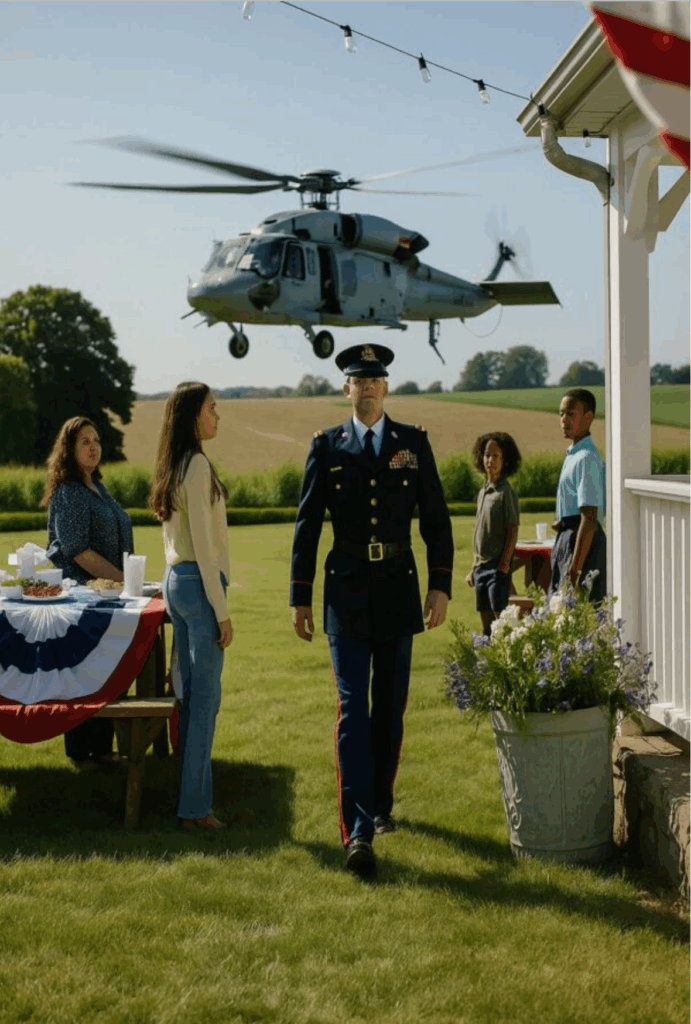
“She’s still finding her way.”A helicopter circled, then touched down in the field, sending paper plates flying like startled birds.The side door opened.A perfectly uniformed officer stepped out,
cutting straight through the quiet crowd.He stopped in front of me, looked me in the eye, and shouted over the roar of the rotors:—“Admiral… We need you.”
The grass fell silent. The conversations died. Even the wind seemed to hold its breath.I felt every gaze lock on me—the same people who had been laughing just seconds ago.
My father chuckled nervously.—“Admiral? Surely you’re mistaken.”The officer didn’t look away.—“No, sir. We know exactly who she is.”I stood. Instinct took over—the reflex forged from years of service,
commands barked in the rain, decisions made between heartbeats.The mask fell. The obedient daughter they thought they knew vanished.I stepped forward, hands clasped behind my back, and simply asked:
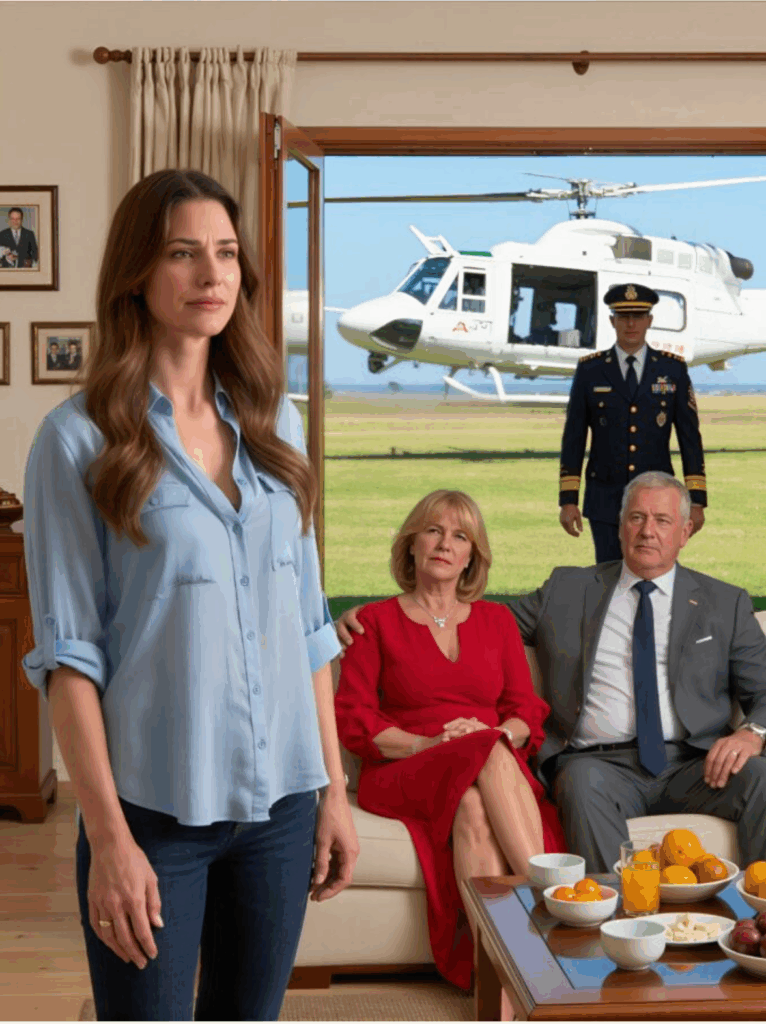
—“Situation?”The officer nodded.—“Urgent, ma’am. A covert rescue operation. Your team won’t move without you.”Behind me, my mother covered her mouth.
Uncle Roberto muttered under his breath.The helicopter vibrated like a caged beast.I cast one last look at my family—the people who never really wanted to know who I was.
—“See,” I said quietly, “I wasn’t unemployed. I was on leave.”I said no more. I climbed aboard.The rotor wash lifted tablecloths, sent napkins flying, and rattled their fragile certainty.
The helicopter rose, taking the invisible girl with it—and leaving behind the suddenly silent laughter.I didn’t correct them.No one can shout louder than a story that people have already decided to believe.
I simply walked toward the kitchen of the house, watching the reunion continue without me.The children played ball. Someone strummed a guitar. The afternoon carried that golden
Virginian light that softens everyone’s edges.Then came the sound.First distant, like thunder.Then clearer, stronger—the steady wump-wump-wump of a military helicopter drowning out all conversation.
Heads lifted. Napkins flew.Above the trees, it appeared—low, precise, kicking up dust and leaves.