
“Pack your things,” the lieutenant said wearily, looking at my son. “If your mother really poses a threat to you and has been abusing you, you’ll be taken to a youth rehabilitation center while we investigate.”
My son, Matthew, was sitting on the sofa in his room.
Just a minute earlier, he had been squeezing tears from his eyes, rubbing his reddened shoulder and telling the juvenile officer how I supposedly terrorized him at home.
But the moment he heard the words “rehabilitation center,” his face changed.
He stopped sobbing.
His mouth fell open.
Then he looked at me.
Confused.
Frightened.
He had expected me to panic.
He thought I would throw myself at the officers’ feet, cry, beg them not to take my precious boy away and swear that I was a good mother.
Maybe I would even promise him the new iPhone he had been demanding for weeks.
Instead, I stood in the doorway and looked at him.
Inside, I felt nothing.
No fear.
No pity.
Only a strange, cold exhaustion.
The exhaustion of a mother who had finally realized that something had to change.
“Go, Matthew,” I said calmly. “Pack your things. Toothbrush, towel, clean underwear. Take what you need.”
His eyes widened.
The script had not gone according to plan.
—
The truth was, this hadn’t started that night.
It had probably started months, maybe years earlier.
I just hadn’t wanted to see it.
I had raised Matthew alone since he was ten. His father disappeared into a new family shortly after our divorce. He paid child support, but it barely covered school lunches and swimming lessons.
Everything else was on me.
The mortgage.
The bills.
The groceries.
The clothes.
The endless expenses of raising a child.
I worked as the chief accountant at a small logistics company. At night, I took extra accounting jobs home and worked until midnight, sometimes later.
I told myself it was all worth it.
Because I wanted my son to have everything I had never had.
A good computer.
Expensive sneakers.
Branded clothes.
The latest phone.
I kept telling myself:
“I never had these things. At least my son will.”
And then Matthew turned fifteen.
Something changed.
He stopped asking.
He started demanding.
At first, it was small.
“Mom, send me twenty dollars. We’re going to a burger place.”
“Matthew, I gave you pocket money yesterday. I still have the mortgage payment to make.”
“Then borrow it from someone.”
He didn’t even look up from his phone.
“You’re my mother. It’s your job to provide for me.”
And I transferred the money.
Because I was his mother.
Then came the computer.
His old one was barely two years old, but according to Matthew, it was “garbage” and couldn’t run his games properly.
When I told him I couldn’t afford a new one, he stopped speaking to me.
For days.
Then one evening, I sat on the edge of his bed and tried to explain our finances.
He looked at me without emotion.
“That’s your problem.”
I stared at him.
“What did you say?”
“You shouldn’t have had me if you couldn’t afford me.”
I will never forget those words.
My own son had said them.
Then he added:
“I read online that children have the right to a decent standard of living. So you should probably do your job.”
That was the first time I felt genuinely afraid.
I wasn’t talking to an ordinary rebellious teenager.
I was talking to someone who had learned how to manipulate his own mother using guilt, threats and things he’d read online.
—
The final breaking point came three weeks later.
I got home two hours earlier than usual because a meeting had been canceled.
As I walked down the hallway, I heard Matthew talking in his room.
The door was slightly open.
He was playing an online game and talking to his friends through his headset.
“This old woman has completely lost it,” he laughed.
“She won’t buy me the new Jordans. Says she has a mortgage to pay.”
His friends laughed.
“I told her if she doesn’t buy them, I’ll make her life miserable. She’ll give in eventually. That’s what she always does.”
More laughter.
“She has no backbone. She’s a pushover.”
I froze in the hallway.
I was still holding a grocery bag.
A loaf of bread and a carton of milk were sticking out of it.
“Old woman.”
“Pushover.”
“She’ll give in.”
I didn’t feel anger.
I didn’t even feel hurt.
I felt empty.
I walked into the kitchen.
Put the groceries away.
Sat down.
And stared out the window for nearly an hour.
That night, I didn’t confront him.
I didn’t yell.
I didn’t punish him.
I simply made a decision.
—
The next morning, while Matthew was still sleeping, I opened my banking app.
I blocked the card linked to his account.
Then I placed a small amount of cash on the kitchen table.
Enough for his school lunch and transportation.
And I went to work.
Around noon, my phone started ringing.
“What the hell is this?” Matthew shouted the moment I answered. “Where’s the money on my card?”
“There’s cash on the kitchen table.”
“How much?”
“Enough for lunch and the bus.”
“Are you kidding me? Unlock the card!”
“No.”
“Mom, don’t mess with me!”
“I’m not. Your basic needs are covered. You have food, a home, clothes and everything necessary. But I am no longer paying for luxuries.”
Silence.
Then his voice became quieter.
“You heard me?”
“I heard everything.”
The line went dead.
—
That evening, Matthew was waiting for me.
“Listening to private conversations is a violation of my personal boundaries,” he announced.
I took off my coat.
“Living off someone else’s money while insulting the person who supports you is called being ungrateful.”
“You don’t have the right to take my money away!”
“No more expensive sneakers. No more restaurants. No new phone. If you genuinely need something, we’ll discuss it. But I am not working late every night so you can show off to your friends.”
Matthew jumped to his feet.
“You’re going to regret this.”
I had no idea how serious he was.
—
The next day, my former mother-in-law called.
“Matthew called me crying! He says you’re starving him!”
“I’m not starving him.”
“He’s fifteen! He needs money!”
“If you feel sorry for him, take him to live with you.”
Silence.
“With me?”
“Yes.”
“I can’t handle a teenager!”
“I see.”
“But he’s your son!”
“Exactly. And I’m his mother. That’s why I decide what the rules are in my home.”
I hung up.
Matthew quickly realized his grandmother wasn’t going to rescue him.
So he decided to escalate.
—
It happened on a Friday evening.
I had just come home from work.
I was exhausted.
All I wanted was a shower and my bed.
Matthew stepped in front of me in the hallway.
“I need three hundred dollars.”
“For what?”
“We’re renting a house outside the city this weekend. It’s for a friend’s birthday. Everyone is contributing.”
“No.”
“What do you mean, no? I already promised!”
“Then tell them you’re not going.”
He stepped closer.
“Are you sure?”
“Yes.”
He pulled out his phone.
“You know what I read online? If I tell the police you’re beating me, psychologically abusing me and starving me, they can take you to court. They can take away your parental rights.”
My stomach tightened.
“And then I’ll get taken somewhere and the government will pay for me.”
He smiled.
“So transfer the money.”
I said nothing.
“Or I’m calling 911.”
Then he suddenly slammed his own shoulder against the doorframe.
Hard.
He winced dramatically.
Before I could say anything, he grabbed my favorite ceramic vase and smashed it onto the floor.
It shattered.
Then he called the police.
And the moment someone answered, his voice changed completely.
“Please help me! My mother is drunk! She hit me! I’m scared!”
He gave them our address.
Then he looked at me.
The tears vanished.
That smug little smile returned.
“You have about fifteen minutes to send me the money.”
I stared at him.
Something inside me finally broke.
And at the same time, something became crystal clear.
I walked into the kitchen.
Poured myself a glass of water.
Sat down.
And waited.
—
Twenty minutes later, the doorbell rang.
Two police officers stood outside, along with a child welfare worker.
Matthew immediately began his performance.
“She attacked me! She threw things at me! She hit me! She told me to leave!”
The officer looked at me.
“Ma’am, is this true?”
“No.”
“What happened?”
“My son deliberately hurt his own shoulder against the doorframe. He smashed the vase himself. Then he called the police because I refused to give him money.”
“She’s lying!” Matthew screamed. “I don’t want to stay with her! I’m afraid of her!”
The child welfare worker turned toward me.
“If a minor says they are afraid to remain in the home, we may have to place him somewhere safe temporarily while the situation is investigated.”
Matthew looked at me.
And I saw it.
That little spark of triumph in his eyes.
“Go ahead,” it seemed to say.
“Beg them.”
“Beg me.”
“Pay me.”
Instead, I said:
“I agree.”
The room went silent.
The officer looked up.
“You agree?”
“My son says he is afraid of me. He says I am abusing him. Then please take him somewhere safe. I don’t want anything to happen to him.”
Matthew’s face went pale.
“Mom?”
“You said you didn’t want to live with me.”
“I didn’t mean it!”
“You called the police.”
“I just wanted the money!”
The officer sighed.
“Young man, you don’t call emergency services as a joke.”
Matthew began shaking.
“Mom, tell them I didn’t mean it!”
I said nothing.
“Mom, please!”
He grabbed my arm.
“I don’t want to go!”
I gently pulled his fingers away.
“You wanted freedom from me, Matthew.”
His eyes filled with tears.
“You’re getting it.”
—
When the door closed behind him, I was alone.
Broken pieces of the vase were still scattered across the floor.
I swept them up.
Then I went into the bathroom.
Sat on the edge of the bathtub.
And cried.
I wasn’t crying for the teenager who had just left.
I was crying for the little boy who used to wrap his arms around my neck and ask:
“Mom, you’ll always stay with me, right?”
—
The following days were awful.
Child welfare meetings.
School calls.
Police interviews.
A psychologist.
And my former mother-in-law called almost every day.
“You’re a monster! Matthew is in a center!”
“He called the police.”
“He’s just a child!”
“Then take him.”
“I can’t!”
“Then don’t tell me how to be his mother.”
I ended the call.
I didn’t go to get him.
I didn’t buy him gifts.
I didn’t beg anyone to release him.
For the first time in my life, I let my son experience the consequences of his own decision.
—
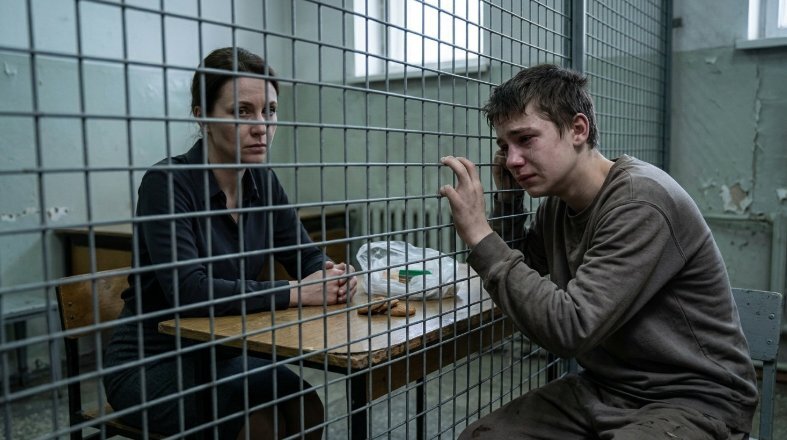
A week later, I was allowed to visit him.
When Matthew walked into the room, I barely recognized him.
No expensive sneakers.
No designer clothes.
Just a simple tracksuit from the center.
There were dark circles beneath his eyes.
The moment he saw me, his face crumpled.
“Mom!”
He ran into my arms and burst into tears.
“Please take me home! I understand now! I swear I’ll never ask for money again! I don’t need a phone! I don’t need sneakers! Just take me home!”
My heart broke.
Every instinct inside me screamed to hug him, sign whatever papers were necessary and take him home.
But I didn’t.
“I’m glad you understand now.”
He wiped his eyes.
“So we’re going home?”
“No.”
His face changed.
“What?”
“You’ll stay here until the required period is finished.”
“But I apologized!”
“I know.”
“Then why?”
“Because an apology doesn’t erase what you did.”
He started crying again.
“Mom, please…”
I took his hand.
“I love you, Matthew.”
He looked at me.
“But I will never again allow you to use my love against me.”
—
A month later, he came home.
He was different.
Not perfect.
He still got lazy sometimes.
He still forgot to take out the trash.
He still complained about school.
But something fundamental had changed.
The arrogance was gone.
The entitlement was gone.
He stopped treating me like an ATM.
He got a weekend job as a delivery driver and began saving for a new graphics card himself.
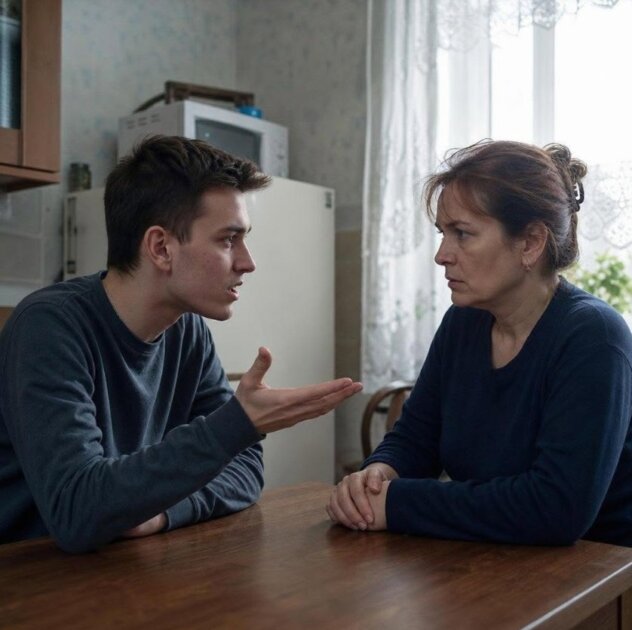
One evening, he sat across from me at the kitchen table.
“Mom?”
“Yes?”
“I finally understand why you didn’t take me home that first week.”
I looked at him.
He lowered his eyes.
“At first, I hated you. I thought you were cruel.”
He paused.
“But then I heard the stories of the other kids.”
“Some of them were actually beaten at home. Some were thrown out. Some didn’t even have anyone waiting for them.”
He swallowed.
“And I realized what I’d become.”
I didn’t say anything.
He smiled sadly.
“You know what I’m most grateful to you for?”
“What?”
“That you didn’t come running to save me.”
My eyes filled with tears.
“Why?”
“Because if you had taken me home that first day, I probably would have done it all again.”
He stood up.
Picked up his empty plate.
And carried it to the sink.
Then he washed it.
I watched his back as he stood there at the sink.
And I finally understood something.
A mother’s love isn’t always about protecting her child from every painful consequence.
Sometimes love means stepping back.
Letting them fall.
Letting reality hurt.
Because if a child never learns where other people’s boundaries are, life will eventually teach them.
And life is a much harsher teacher than a mother.
That night, I realized I hadn’t lost my son.
I had finally stopped protecting him from the consequences of becoming someone I didn’t recognize.
And sometimes the greatest act of love a mother can give her child is not another gift.
Not another rescue.
Not another sacrifice.
Sometimes it is simply saying:
“Enough.
This is where the line is.”
And refusing to step back across it.

