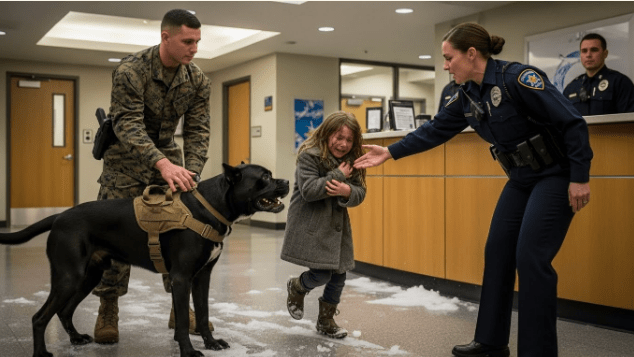
“Is your father-in-law bringing another piece of firewood?”
My father-in-law said it casually as he speared a mushroom with his fork.
I was cutting bread at the time. The knife caught in the crust, and I pulled it free harder than I meant to.
Sunday lunches at the Lomakin family home had followed the same script for thirteen years.
Eduard Stanislavovich always sat at the head of the table. Larisa Petrovna moved constantly between the kitchen and the plates. And Gleb and I nodded.
I had been nodding for thirteen years.
By now, I think my neck had learned to do it without asking permission.
“Dad, enough,” Gleb said.
“What did I say?” my father-in-law protested. “The man is turning sixty-five. It’s his anniversary. Important guests will be there. Kravets might even come.”
Then he looked at me.
“And your father will probably bring another little wooden board with leaves carved into it.”
Kravets had been his former boss. My father-in-law had spent his entire career as a deputy at the district road administration, and he had learned to speak as if every sentence were an official order.
The roads in our district had never improved much.
But in that house, Kravets’s name was spoken with the reverence people usually reserved for priceless museum pieces.
“My father makes things by hand,” I said. “And they’re beautiful.”
“Yes, yes, very beautiful,” he replied dismissively. “Inna, go to the garage and bring two stools. Larisa’s sister is coming, and there aren’t enough seats.”
The garage stood directly beneath the kitchen window. Its doors were open because my father-in-law had been working on his car all morning.
Inside, it smelled of gasoline, rubber, and old oil.
I found the stools immediately.
And then I saw the shelf.
I recognized it instantly.
It was made of pale wood, with rowan leaves carved along the sides. My father had spent weeks making it. My mother had chosen the varnish because she wanted the wood to remain light.
Seven years earlier, the two of them had brought it to my father-in-law as a birthday gift.
My mother had still been alive then.
Now the shelf held screwdriver bits, loose screws, and an open container of grease.
Some of the grease had already stained the carved leaves.
I looked around.
My father’s bread box was being used to store rags and work gloves.
The birdhouse he had carved was filled with nails.
His book stand was supporting a fuel canister.
A cutting board with a delicate burned pattern had become a base for a car battery.
I counted everything.
Eleven.
Exactly eleven things my father had given my father-in-law since our wedding.
All eleven were in the garage.
Not one was in the house.
And suddenly I remembered how many times my father had asked me on the phone:
“Does your father-in-law actually use the things I make?”
And I had always answered:
“Of course, Dad.”
I hadn’t meant to lie.
I simply hadn’t known.
I had never checked.
My hands went cold.
I took the shelf off the wall and removed everything from it. I put the grease on the floor and began wiping the carved leaves.
My father-in-law appeared in the doorway.
“What’s taking you so long? The guests…”
He stopped.
“What are you doing?”
“I’m taking it.”
“What do you mean, taking it?”
“Taking the shelf.”
“That was a gift!”
“Exactly,” I said. “My father’s gift. If it has been sitting in the garage covered in grease all these years, then clearly you don’t need it.”
His face turned red.
Gleb appeared behind him, followed by Larisa.
“Inna, please,” my mother-in-law began. “Edik simply didn’t have anywhere to put it.”
“Not one of my father’s gifts found a place in this house for thirteen years?”
“Inna, put it down,” Gleb said. “We’ll talk at home.”
“We will.”
But I put the shelf in my car.
“I’m taking this home.”
My father-in-law gave a bitter laugh.
“What? Going to complain to your father?”
“No,” I said. “Not yet.”
I carried the stools inside like he had asked.
Then I wrapped the shelf in an old shopping bag and put it in the back seat of my car.
While everyone inside drank tea, I sat alone in the car.
The shelf still smelled of grease.
There was a black streak across my palm.
Strangely, I didn’t feel ashamed.
I felt calm.
Gleb came out later.
He got into the car and said nothing for a long time.
Then, at the first red light, he spoke.
“I knew.”
“Knew what?”
“About the garage. I knew. I just didn’t want a fight.”
I looked at him.
“And how did that work out?”
He didn’t answer.
That evening, I washed the shelf with hot water and cleaning solution.
The carved rowan leaves appeared again.
They were just as beautiful as they had been when my father made them.
I put the shelf in my kitchen.
That night, a message appeared in the family group chat.
My father-in-law had written:
“I’ll arrange the seating for the anniversary myself. Kravets may come. Everything needs to be done properly.”
At the time, I had no idea that those words would be the beginning of the end.
Three weeks later, he sent the bill for the celebration.
Twenty-four guests.
Four thousand five hundred rubles per person.
A total of 108,000.
Then came the message:
“Gleb, half is yours. You’re young. You both work.”
Fifty-four thousand rubles.
Exactly the amount I had saved for Savva’s summer camp.
Gleb looked at me.
“I can tell him we can’t afford it right now.”
“No,” I said. “You only turn sixty-five once.”
That evening, I transferred the money myself.
From my own card.
The payment note said:
“For the anniversary.”
My father-in-law responded with a thumbs-up emoji.
He didn’t even type “thank you.”
A few days later, Larisa posted the seating plan.
At the main table were my father-in-law, my mother-in-law, Gleb, me, Savva, Vika and her husband, and several of his former colleagues with their wives.
And at the bottom of the page, next to the kitchen:
“Third table: host, photographer, DJ, Gennady.”
Gennady.
My father.
No last name.
Just his first name.
Next to the DJ.
“Gleb,” I said.
I showed him the list.
He read it.
“Maybe there just wasn’t enough room at the main table.”
“There is plenty of room. Look. His colleagues and their wives are there.”
“Inna…”
“My father isn’t sitting beside the DJ.”
Then I noticed the empty seat.
It was for Kravets.
The man who had supposedly said he wasn’t coming.
So I wrote in the family chat:
“Dad will sit next to me. I paid for half of this dinner.”
My father-in-law answered:
“Well, well. Whoever pays gets to decide who sits where.”
I didn’t reply.
Not yet.
Ten days before the anniversary, my father called me.
“My son-in-law called.”
Something tightened inside me.
“What did he want?”
“He said I shouldn’t bring anything handmade. He said there would be important guests. He told me to bring money instead, like everyone else.”
He paused.
“I’ve saved five thousand.”
I knew what that meant.
His pension was only thirty-one thousand.
Almost one-sixth of his monthly income.
“Dad…”
“It’s fine, sweetheart. I’m not a child. There’s nothing shameful about bringing an envelope.”
Then he added:
“But I’ll show you what I made.”
A photograph arrived.
Inside the picture was a beautiful wooden chess set.
Thirty-two handmade pieces.
Light pear wood and dark walnut.
The knights had carefully carved manes.
The queens wore tiny crowns.
“I worked on it for four months,” Dad said. “Every evening. I had to redo the knights three times.”
I stared at the picture and saw the garage again.
The greasy shelf.
The bread box filled with rags.
The birdhouse filled with nails.
I knew I couldn’t let this chess set end up there too.
I immediately posted the photograph in the family chat.
“Dad made this for Eduard Stanislavovich. Four months of work. If he doesn’t want it, please say so now. Dad will keep it.”
The chat exploded.
Vika wrote:
“It’s beautiful!”
Her husband sent several exclamation marks.
Larisa wrote:
“Gennady Ilyich, you’re a real craftsman!”
My father-in-law remained silent for a long time.
I could see he was online.
I saw “typing…”
Then nothing.
Finally, he wrote:
“Let him bring it.”
That was all.
And for the first time, I smiled.
Not because I had won.
But because my father’s work could no longer be ignored.
The night before the anniversary, Dad arrived.
He had driven 190 kilometers in his old Niva.
The chess set had spent the entire journey strapped into the passenger seat with the seat belt.
“I’m protecting this better than I protect myself,” he joked.
On the day of the celebration, we went to the Old Harbor restaurant.
Dad wore the gray suit he had worn when we buried Mom.
The envelope was in his inner pocket.
The chess set was beside him.
As soon as we arrived, I went to the organizer.
“I need one more chair at the main table. Next to me.”
She checked her tablet and brought one over.
But at the third table, next to the kitchen, there was still a little card:
“Gennady.”
Beside the DJ.
Forty minutes later, Kravets arrived.
My father-in-law’s entire face lit up.
He rushed over, hugged him, and personally escorted him into the dining room.
Then he looked at the main table.
Every seat was occupied.
Except one.
Mine.
He came up behind us.
“Gennady, move over there, next to the photographer. A serious person needs this seat.”
Silence.
My father looked down at the chess set.
Then he stood.
Slowly, he buttoned his jacket.
He took the envelope from his pocket.
Placed it on the table in front of my father-in-law.
“As you asked,” Dad said. “Like everyone else.”
Then he picked up the chess set.
And walked toward the door.
Nobody said a word.
I watched my father walk away.
For thirteen years, everyone had expected me to stay quiet.
This time, I didn’t.
I stood up.
I walked to the microphone.
The host was eating when I took it from the stand.
My hands were shaking.
But my voice wasn’t.
“Eduard Stanislavovich, happy birthday.”
The room fell silent.
“All evening, everyone has been talking about respect. I’d like to say something about respect too.”
Nobody moved.
“My father has spent thirteen years making handmade gifts for you. Eleven gifts. Every single one ended up in your garage. One of them was covered in grease. Tonight, you placed him at a table beside the kitchen, next to the DJ and photographer, using only his first name. And now you’ve sent him away from the main table in front of everyone.”
I took a breath.
“I paid fifty-four thousand rubles for half of this celebration. So I suppose my father has already paid for his own chair.”
My father-in-law’s face darkened.
“And now he has given it back.”
I placed the microphone down.
“Dad, wait for us!”
He stopped at the entrance.
He didn’t turn around.
But I saw his shoulders tremble.
Savva immediately grabbed his jacket.
Gleb looked at me.
“I’m staying,” he whispered. “It’s my father’s birthday.”
I nodded.
I went outside to my father.
Cold, damp air drifted in from the river.
Dad stood by the railing with the chess set under his arm.
“The garage,” he said quietly. “Was that true?”
“Yes, Dad.”
He nodded.
He didn’t ask anything else.
We drove home in silence.
When we arrived, Dad put the chess set on the kitchen table.
He opened the box.
Then he pushed it toward Savva.
“Well, grandson. The white pieces are yours.”
Savva sat across from him.
And that night, nobody talked about “important guests.”
A month passed.
My father-in-law still doesn’t speak to me.
He returned the five-thousand-ruble envelope.
Untouched.
Gleb gave it back to Dad.
Dad stared at it for a long moment, then slipped it beneath the chessboard.
The wooden shelf now hangs in my kitchen.
There is no grease on the carved leaves anymore.
I keep cinnamon, bay leaves, and peppercorns on it.
The chess set sits on top of our refrigerator.
Whenever Grandpa arrives, Savva runs to him shouting:
“Grandpa! Let’s play chess!”
Gleb and I still argue about that evening.
He always says:
“My father was wrong.”
Then he adds:
“But the microphone was too much.”
Maybe he’s right.
Maybe taking the microphone at someone else’s birthday was too much.
But for thirteen years, I thought keeping the peace meant staying silent.
That night, I finally understood something.
Sometimes silence has a much higher price than speaking up.
So perhaps the real question isn’t whether I went too far with the microphone.
Perhaps the real question is why it took thirteen years for my father to finally stand up from that table.
And why I had to stand up beside him.