
“I’m not taking this baby home.”
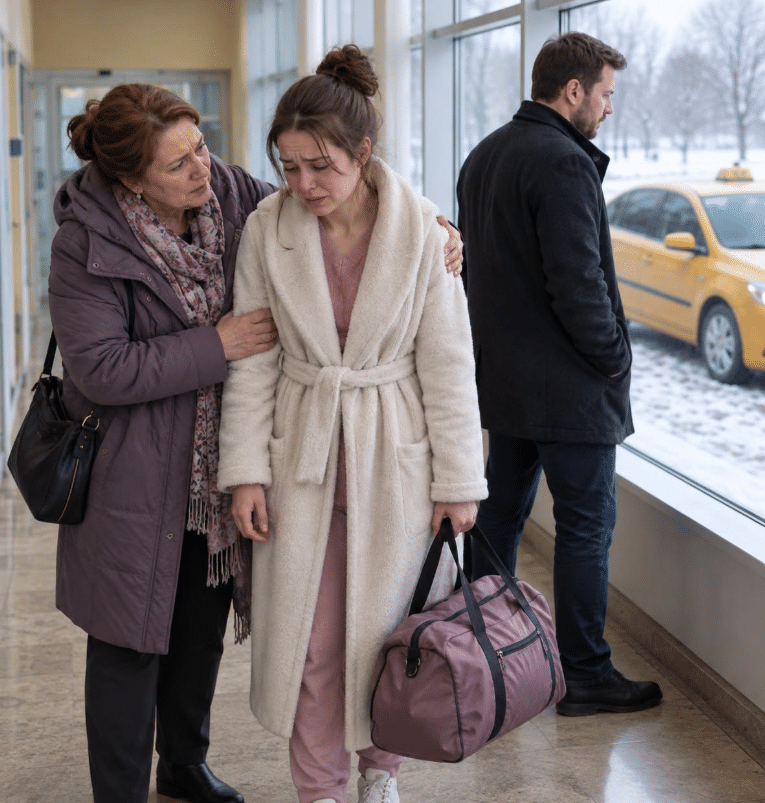
Nikolai stood in the maternity hospital corridor, holding a bouquet of carnations. Outside, heavy snow was falling. He stared through the window while his wife, Lyudmila, looked at him in disbelief.
“What do you mean, you’re not taking her home? The taxi will be here at twelve.”
Nikolai finally turned toward her.
“Did you even see what’s on her face?”
“Of course I did. The doctor said it’s a hemangioma. It might fade with time.”
“‘Might!’” the man laughed bitterly. “But it might not. I have to live among people. What are they going to say?”
Lyudmila looked at him calmly.
“Nothing. She wasn’t born for them.”
But Nikolai still refused to take his own daughter home.
In the end, their third-floor neighbor, Valentina Petrovna, came to pick them up in a taxi, paying for it with her own money. When she saw the baby, she gently unwrapped the blanket and smiled.
“What a beautiful little girl! And that mark doesn’t decide what kind of person she’ll become.”
But that mark would determine how people treated Nina for years.
The dark-red discoloration covered almost half of the left side of her face. Doctors recommended expensive laser treatments, but there was no way Lyudmila could afford them on her salary.
One day, Nina asked:
“Mom, if I don’t eat lunch at school, will we save the money faster?”
“Of course not. You’re going to eat lunch,” her mother replied. “And we’re never talking about this again.”
But in the courtyard, the other children showed no mercy.
“Here comes Spotty!”
“Not Spotty. Dalmatian!”
At first, Nina cried. Later, she realized that when she cried, the mark on her face seemed even more noticeable. She learned to walk with the left side of her face turned toward the wall.
That was when Valentina Petrovna stepped in.
One day, she saw the crying girl sitting outside the building.
“Why are you crying?”
“They said nobody will ever marry me.”
The older woman helped Nina up from the bench.
“Come with me.”
In her apartment stood an old sewing machine. Valentina showed Nina how to sew. Nina’s first stitch came out crooked.
“It’s ugly,” Nina said sadly.
“Of course it is. Everyone makes mistakes the first time.”
Then she squeezed the girl’s hand.
“Look at your fingers! You have a seamstress’s hands. And remember this: people look at a person’s face for three seconds, five at the most. But what you create with your hands can stay with them for a lifetime.”
Nina never forgot those words.
Years later, she was sewing clothes for her classmates.
But when Nina was seventeen, her mother suffered a stroke.
Nina never went to university. For sixteen years, she devoted herself to caring for her mother.
During that time, she met a young man named Artem. He was the first man who never asked about the mark on her face. For a while, they were happy.
Then Artem met Nina’s sick mother.
“How long is this going to last?” he asked.
“I hope for a long time,” Nina replied. “I want her to live as long as possible.”
A few days later, Artem’s mother called her.
“Nina, you have a mark on your face, and you’re caring for a sick mother. Think about it. What kind of future can you offer my son? Let him go.”
Nina looked down at the buckwheat simmering on the stove.
“He’s your son. If you want to tie him down, you can untie him yourself. I have dinner cooking.”
Then she hung up.
Finding a job wasn’t any easier.
“You would be the face of the company,” they told her at one salon.
“Have you ever considered covering it up?” they asked at another.
Eventually, Nina started sewing at home.
At first, she altered trousers for neighbors. Then their friends began coming to her. One dress she posted online unexpectedly brought her first major success.
Nina worked through the nights and cared for her mother during the day.
She bought an industrial sewing machine, then an overlock machine. Years later, she had her own workshop with twenty-two seamstresses.
But her mother did not live long enough to see what Nina had built.
Before she died, she whispered:
“Nina… forgive me for taking your life away from you.”
Nina held her hand tightly.
“You gave me my life. That’s not the same thing.”
Two years later, Nina returned to her old neighborhood and learned that Valentina Petrovna had been placed in a nursing home.
She went there immediately.
When Nina saw the elderly woman, she could barely recognize her. Valentina was sitting in a wheelchair, thin and fragile.
Then she saw Nina’s face.
“Ninka… is that you?”
“It’s me.”
“Why did you come?”
“For you.”
“Where are you taking me?”
“Home.”
Tears filled the old woman’s eyes as she shook her head.
“I don’t have a home anymore.”
“Yes, you do,” Nina said. “You have one with me.”
She took Valentina home.
And a few months later, Valentina was sitting beside a sewing machine again.
One day, Nina hired a young woman at the workshop. The girl shyly pulled her hands out from inside her sleeves.
White patches covered her fingers.
“Vitiligo,” she said quietly. “It’s not contagious. Several places told me they didn’t want to hire me because clients would notice.”
Nina was about to answer, but Valentina Petrovna spoke first.
She took the young woman’s hand and carefully looked at her fingers.
“What beautiful hands you have!”
The girl stared at her in confusion.
Valentina smiled.
“Listen to me. People look at a person’s face for three seconds. Five at most. But what you create with your hands, they can remember for the rest of their lives.”
Tears filled the young woman’s eyes.
Valentina looked at Nina.
“Are we hiring her?”
Nina smiled.
“Yes.”
Valentina nodded.
“Then I’ll teach her.”
And so she passed on the words that had once changed a little girl’s life.
Because sometimes, one person is all it takes to teach us something important:
It doesn’t matter what people notice about us first.
What matters is what we eventually create with our own two hands.

