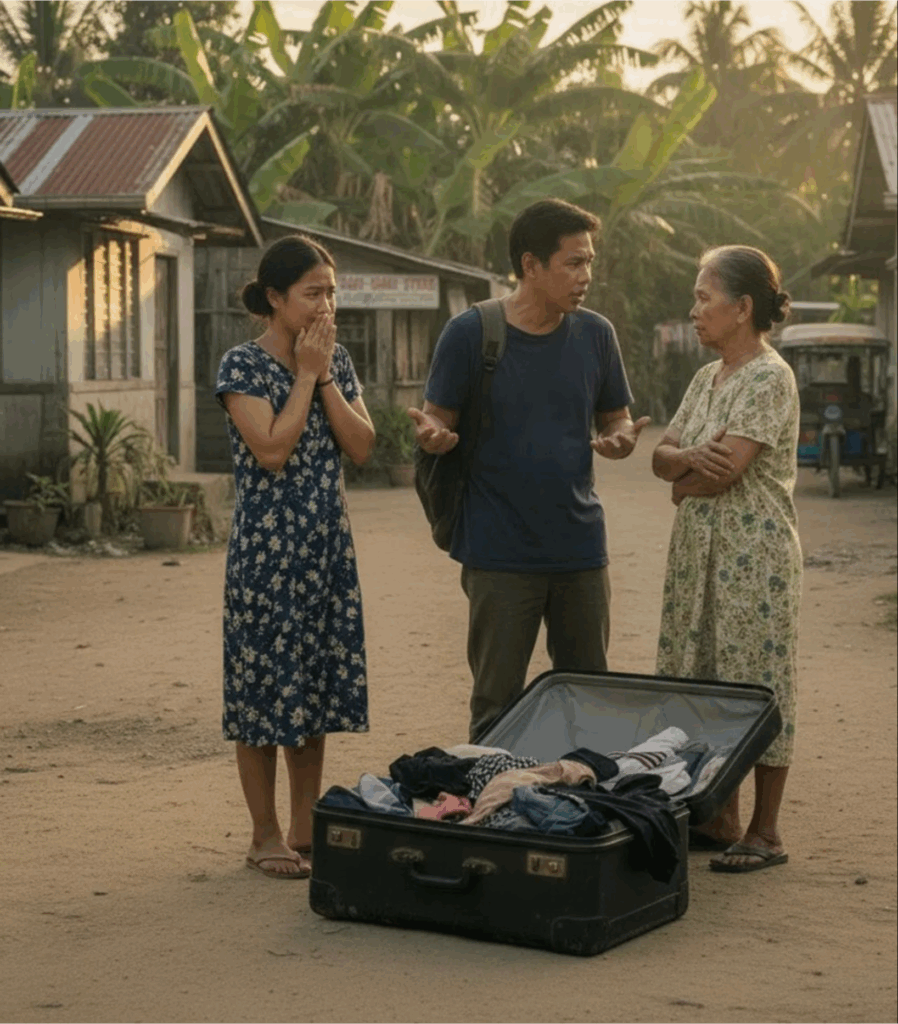
For three years, I had been setting my alarm for six in the morning.
Not because I had to go to work. I had been retired for a long time.
I set it so I could get to my grandchildren before my son left for work.
On Friday evening, my daughter-in-law accidentally sent me a message. One short sentence.
About me.
I replied with just: “Good night.”
And then I did something I hadn’t done even once during those three years.
I turned off my alarm.
My phone vibrated at exactly the moment I was pressing “6:00 – repeat every day” on the screen.
The message was from Monika.
At 10:14 p.m., a message from my daughter-in-law could only mean something urgent.
“Zuzia has a fever.”
“Antek woke up again.”
“Could you buy some drops in the morning?”
That was why I opened the message instinctively.
And for several seconds, I couldn’t understand what I was actually reading.
There was no request.
There was no information about the children.
There was one sentence.
One sentence that wasn’t meant for me.
“Tomorrow it’s my mother-in-law again from the morning. I don’t know how much longer I can stand this constant supervision.”
I read it several times.
As if, on one of those readings, its meaning might somehow change.
It didn’t.
For three years, almost every morning of my life had looked exactly the same.
Six o’clock.
I drank my coffee in a hurry, often still standing.
Two slices of bread with cheese, because there was no time for a proper breakfast.
Then ten minutes to the bus stop, a bus across half of Radom, and another fifteen minutes on foot from the terminal to the apartment block on the estate beyond the railway tracks.
At seven, I pressed the intercom.
A moment later, Grzegorz would open the door.
Always already dressed, keys in his hand.
“Hi, Mom. Zuzia is still sleeping. Antek ate half a banana; the rest is in the fridge.”
And he would leave.
That was my life for three years.
It began not long after I retired.
I had worked for thirty-eight years in an internal medicine ward. Night shifts, holiday shifts, hundreds of patients, and thousands of hours spent helping others.
And then suddenly, everything became quiet.
My calendar was empty.
My phone stopped ringing.
Henryk had been gone for two years.
My daughter lived abroad.
I was sixty years old, with entire days I didn’t know how to fill.
Then Monika became pregnant with her second child.
One evening, Grzegorz called me.
I remember his voice.
The same hesitant tone he had when he was a child.
“Mom… I don’t want to ask you because I know you have your own life, but…”
He didn’t have to finish.
I didn’t have my own life.
I had silence.
And an apartment in which, after Henryk’s death, every room seemed larger than before.
I agreed.
Maybe out of love for my son.
Maybe out of love for my grandchildren.
Or maybe, above all, because someone needed me again.
For three years, I learned their lives by heart.
I knew that Zuzia would only eat cereal with milk from the green carton.
I knew that Antek wouldn’t touch yogurt unless he had his blue spoon.
I knew their nap schedules.
Their allergies.
Their favorite cartoons.
I knew which playground had a broken swing and which part of the park was full of stinging nettles.
I could pack the children’s backpacks faster than I could pack my own handbag.
Monika never specifically said “thank you.”
But back then, I thought I didn’t need thanks.
It was enough when Antek heard the intercom and ran to the door shouting:
“Grandma!”
It was enough when Zuzia drew little hearts on pieces of paper and secretly slipped them into my handbag.
I thought that was what family meant.
That you helped one another without keeping score.
That if you loved someone, you didn’t count how many times they said “thank you.”
Today, I know that there were certain signs I simply didn’t want to see.
Monika began leaving little notes on the refrigerator.
“Please don’t give Antek juice after four.”
“Zuzia needs to wear a hat if the temperature drops below fifteen degrees.”
“Please put the shoes on the mat.”
I read them.
I followed the instructions.
And threw the notes in the trash.
One day I said to Grzegorz:
“Son, Monika could simply tell me these things sometimes. She doesn’t have to write to me as if I were a stranger.”
He lowered his eyes.
“Mom… that’s just how she is. Don’t take it personally.”
So I didn’t.
At least, that’s what I told myself.
Because a person can spend a very long time pretending to themselves that something doesn’t hurt.
There was also the mug.
An ordinary white mug with the words:
“World’s Best Grandma.”
At first, Monika would put it in front of me when she came home from work.
“Would you like some tea?”
She would sit at the table for a few minutes.
Then, more and more often, she would go straight into the children’s room.
The mug was first kept on the first shelf.
Then on the second.
Until eventually it ended up on the very top shelf, behind other things.
I never asked why.
I didn’t want to take that personally either.
Then Friday came.
One message.
One sentence.
And suddenly, everything began to make sense.
“Tomorrow it’s my mother-in-law again from the morning. I don’t know how much longer I can stand this constant supervision.”
The word that hurt the most was:
Supervision.
For three years, I had gotten up at six.
I traveled across half the city.
I watched over their medicines, food, hats, naps, and the time they came home.
I did it because I thought I was helping.
But she saw me as supervision.
I closed the message.
A moment later, I opened it again.
Then once more.
As if the phone screen could somehow tell me something I hadn’t noticed before.
Finally, I wrote:
“Good night.”
Nothing else.
A moment later, her reply came:
“Good night ❤️”
That heart hurt more than the first sentence.
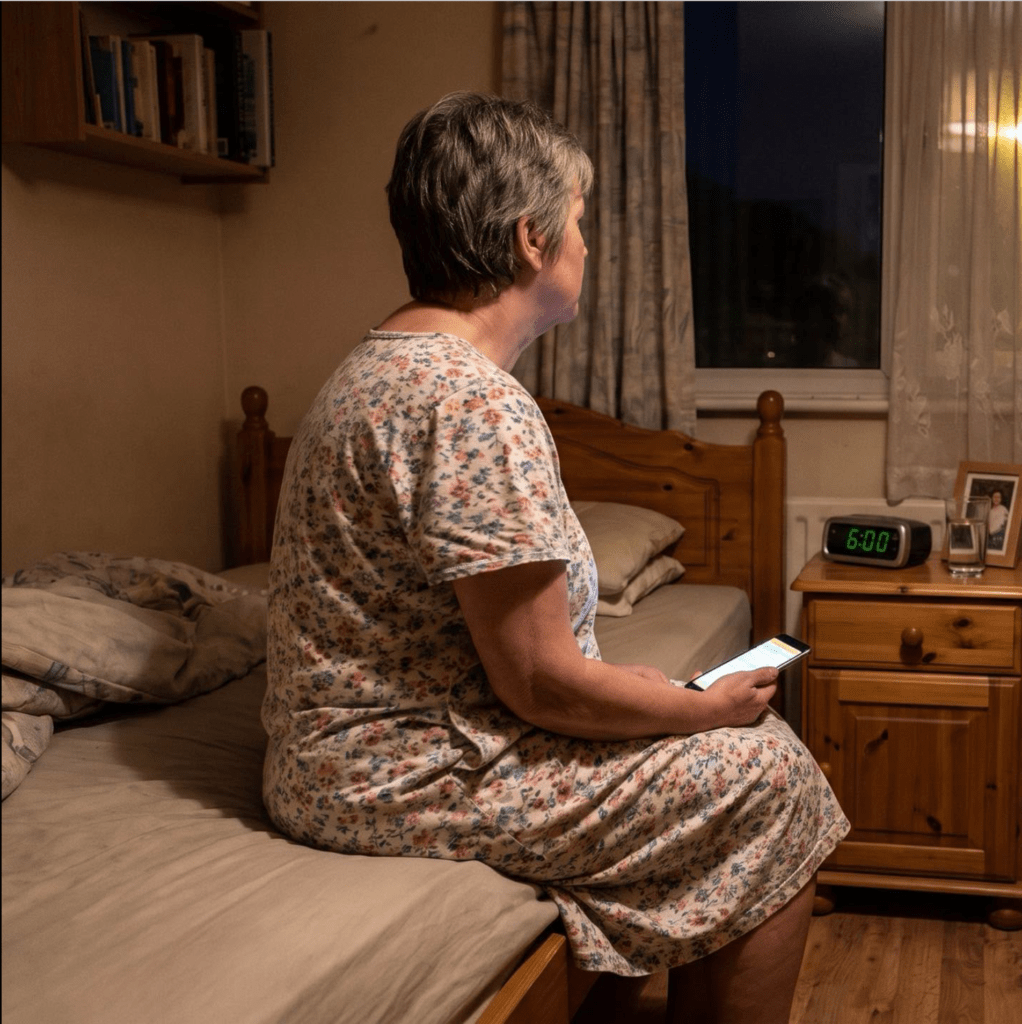
I put my phone on the bedside table.
In the dark room, the alarm clock screen was glowing.
“6:00 – ON.”
I stared at it for a long moment.
Then I reached out my hand.
And turned it off.
For the first time in three years.
That night, I barely slept.
I tossed and turned, thinking about Henryk.
“Kryśka,” he used to say sometimes. “You’re too needed by everyone. One day it will break you.”
Back then, I laughed.
Now I didn’t.
I remembered the notes on the refrigerator.
The mug pushed farther and farther back on the shelf.
All those mornings when I left the house before sunrise.
And suddenly, I understood something very simple.
For three years, I had been building myself a place in their lives.
Only, apparently, no one except me thought it was my place.
At six-thirty, Grzegorz called.
“Mom? Is everything okay? I’m standing here with the keys.”
“I’m not coming today.”
“What?”
“I don’t feel well.”
There was silence.
Brief.
Three seconds.
Then I heard:
“Then… what am I supposed to do with the children?”
I closed my eyes.
Not:
“What’s wrong with you, Mom?”
Not:
“Do you need a doctor?”
Not:
“Should I come to you?”
Only:
“What am I supposed to do with the children?”
“You’ll manage, Grzesiek,” I answered calmly. “People somehow always manage.”
I didn’t tell him about the message.
I didn’t tell him about the word “supervision.”
I didn’t tell him that something inside me had just broken.
Since that Friday, Grzegorz has called every morning.
On the first day, he was worried.
On the second, he was upset.
By the third, he was clearly irritated.
And every time, I ask myself when he will finally ask:
“Mom, but what really happened?”
Monika hasn’t called even once.
Not once has she asked if I’m okay.
And for the first time in three years, I don’t set my alarm.
And I think only now am I beginning to understand that retirement didn’t take my life away from me.
I was the one who gave away three years of my life so that I could be needed by someone else.
Now I sit by the window in the morning with a cup of coffee.
Without rushing.
Without a bus.
Without an intercom.
Without notes on the refrigerator.
And for the first time in a very long time, I’m not thinking about what my grandchildren need.
I’m thinking about what I need.
Because maybe I’m still “Grandma.”
But I no longer have to be available from six in the morning.
And perhaps that is what one accidentally sent sentence taught me:
Sometimes what speaks the loudest isn’t what someone says to our face, but what they write when they think we will never see it.