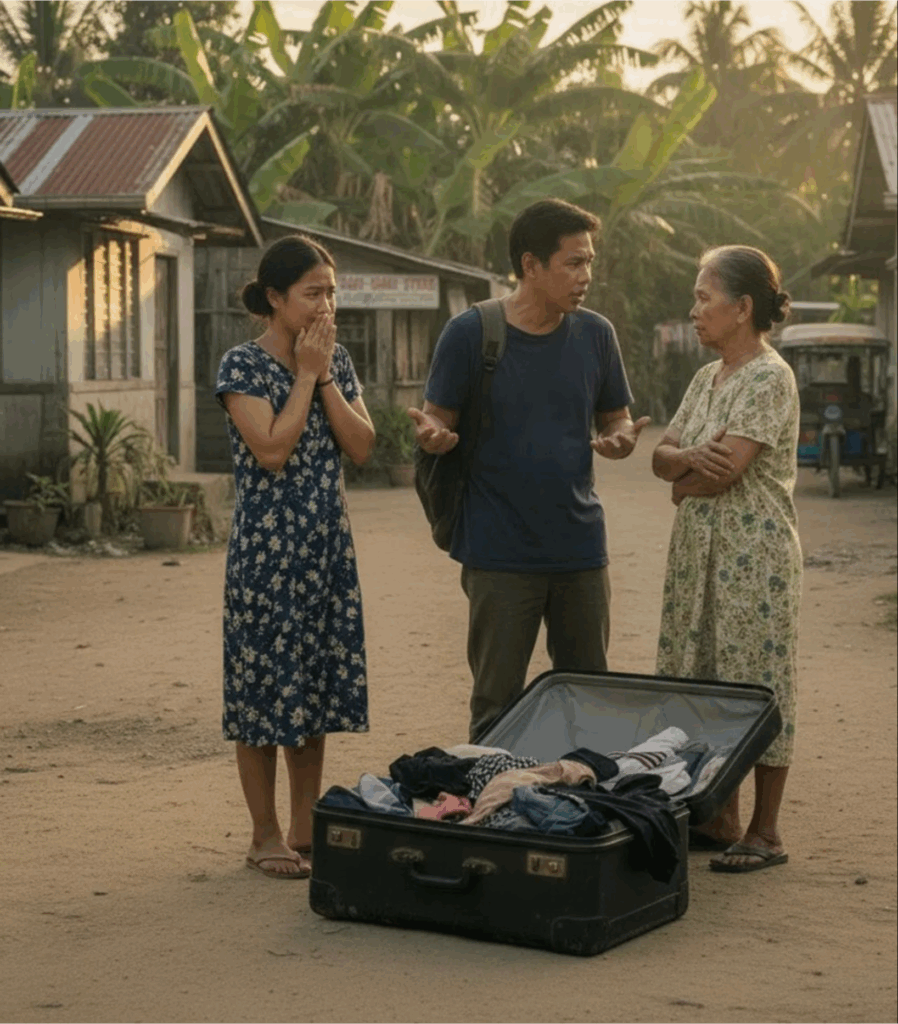
“I’m going to my mother’s. Something’s wrong with the fence again,” my husband, Andrei, said as he took the car keys from the hook.
It was Saturday, the beginning of September. I was flipping pancakes in the kitchen when my hand froze in midair.
The fence.
The week before, it had been the gate. Before that, the gutter. And a few weekends earlier, Andrei had spent two entire Saturdays rebuilding the path from the porch.
“Andrei, we were supposed to visit my parents today,” I reminded him. “I’ve been promising Dad for a month and a half. His blood pressure is bad, and Mom can’t get him to the doctor by herself.”
“We’ll go another Saturday,” he said, already pulling on his sneakers. “My mother’s alone with that whole house. You don’t want everything falling apart, do you?”
Our eight-year-old son, Misha, appeared in the doorway. “Dad, you promised we’d go fishing.”
“Next weekend, buddy. I promise.”
Five-year-old Polina ran over and grabbed his trouser leg, but Andrei was already opening the door.
A minute later, his car disappeared down the street.
“Mommy, when is Daddy coming back?” Polina asked.
“Tonight,” I said.
But I knew better.
Late tonight.
I was left with two children, a pile of cooling pancakes, and another Saturday that somehow belonged to everyone except me.
Andrei’s mother, Galina, had moved from the city to a house in Dubrovka two years earlier. Her husband had been gone for years, and her younger son, Oleg, lived in another city and visited only once a year.
So, somehow, the house had become Andrei’s responsibility.
Every weekend there was another emergency.
The pump was making strange noises. The roof needed fixing. Mice had gotten into the basement. Firewood had arrived and needed chopping.
And every weekend, Andrei went.
He would come home exhausted, covered in dirt, collapse into bed, and fall asleep almost immediately.
I never complained.
For two whole years, I told myself the same thing: she’s his mother, the house won’t repair itself, and she’s alone.
Then, one Saturday, I called my parents.
“Dad, we won’t make it today,” I said. “Andrei went to his mother’s.”
“That’s all right, sweetheart,” Dad replied. “We’ll be here. Come whenever you can.”
That sentence hurt more than any accusation could have.
Come whenever you can.
As if he had already stopped expecting me.
The following Friday, Andrei brought home a huge box.
“A generator,” he announced proudly. “For Mom. The electricity goes out in Dubrovka during winter, and she sits there alone in the dark. It cost more than thirty thousand, but at least the whole house will have power.”
More than thirty thousand.
At that exact moment, I was trying to figure out how to afford a private cardiologist for my father. He had already been waiting three months for an appointment through the public clinic.
“You could have discussed this with me,” I said. “That’s our money.”
“What was there to discuss? If my mother is left without electricity, how am I supposed to sleep peacefully?”
“And if my father goes without a cardiologist?”
He looked at me as though the comparison made no sense.
“Your parents live in the city. They have hospitals nearby. My mother lives alone in an old house.”
That was when I realized we didn’t have the same definition of family.
Then Andrei broke another promise.
He had promised to take Misha fishing.
The night before, they had prepared everything: fishing rods, bait, a thermos.
But that morning Andrei said the generator had to be installed.
Misha quietly put the fishing gear away.
Something inside me finally snapped.
The next Saturday, I took both children to my parents by bus.
Two transfers. More than an hour each way.
Mom opened the door as if we had returned from the dead.
Dad hugged the children.
Misha immediately sat beside his grandfather and helped repair an old radio. Polina happily ate Grandma’s homemade pie.
Later, Mom took my hand.
“What happened to you, sweetheart?”
I couldn’t explain.
I simply sat there holding her hand.
For two years, I had deprived my children of this.
Their grandfather’s stories.
Their grandmother’s pies.
Family Saturdays.
All because Andrei was busy repairing someone else’s fence.
A few days later, Galina called.
“Natasha, the pump stopped working. There isn’t a drop of water in the house. Andrei is away. What am I supposed to do?”
I picked up the children and took a taxi to Dubrovka.
But when we arrived, the scene was nothing like the disaster I had imagined.
The potatoes had already been dug up and neatly packed into sacks. Laundry was hanging on the line.
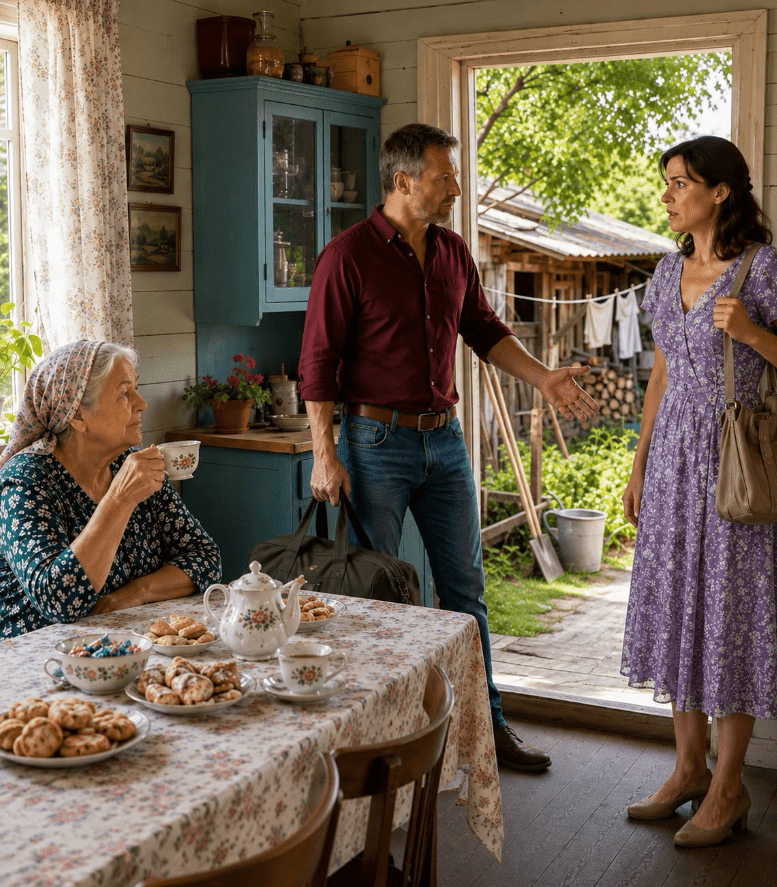
Galina was sitting in the spotless kitchen, drinking tea with her neighbor, Lyuda.
“The pump?” I asked.
“Oh, I fixed it myself. I turned a valve.”
Lyuda laughed.
“Galina can handle everything. She just misses her son. She likes giving him reasons to come.”
Then she added, “Vitya lives two houses away. He fixes everything for next to nothing. I’ve told her a hundred times: why drag Andrei forty kilometers when Vitya can do it?”
Galina frowned.
“Andrei likes doing these things.”
Then she casually mentioned the next job.
“He promised to fix the bathhouse door on Sunday.”
That was when I understood.
The house wasn’t falling apart.
Galina simply missed her son.
The broken pump, the fence, the firewood, the bathhouse were excuses.
When Andrei returned, I told him everything.
But the next Saturday, he still reached for the keys.
“Mom says I need to take the potatoes down to the cellar.”
“The potatoes are already in sacks. I saw them.”
He froze.
“You went there?”
“Yes. On Wednesday. Because she said there was no water. When I arrived, she was drinking tea.”
His phone rang.
His mother.
“Yes, Mom. I’m coming.”
He hung up.
I took a deep breath.
“From now on, Saturday is mine.”
“Have you lost your mind?”
“No. On Saturdays, I’m going to my parents with the children. You’re staying home with them. Misha, Polina, lunch, homework, everything.”
“And my mother?”
“Sunday is yours. Go help her. But Saturday belongs to me.”
“You’re dividing me up like I’m some kind of object!”
“For two years, you divided my life between being your wife, your children’s mother, and the person who was always expected to wait. Now I want one day that belongs to me.”
A month and a half passed.
The new routine held.
Every Saturday, I visited my parents.
I took Dad to a cardiologist. We caught the problem in time, and after his medication was adjusted, he became himself again. He started repairing the old radio with Misha.
Mom stopped asking whether I was coming.
She simply baked a pie.
She knew I would.
Andrei went to his mother’s on Sundays.
The bathhouse was eventually repaired by Vitya.
The expensive generator was never needed.
Not once.
The house in Dubrovka may have been functioning perfectly.
But there was less warmth in ours.
Andrei became polite and distant.
Galina stopped calling me altogether.
Still, I didn’t regret my decision.
Because I had won back one day.
Not a house.
Not an argument.
My father.
Last Saturday, Dad beat me at chess three times in a row.
He laughed so loudly that Mom came running from the kitchen to see what was going on.
I laughed with him.
And in that moment, I understood something.
There are things you cannot postpone forever.
Sometimes “whenever you can” quietly becomes “when it’s too late.”
My Saturday wasn’t simply a day off.
It was another chance to be there for the people who had spent their whole lives waiting for me.