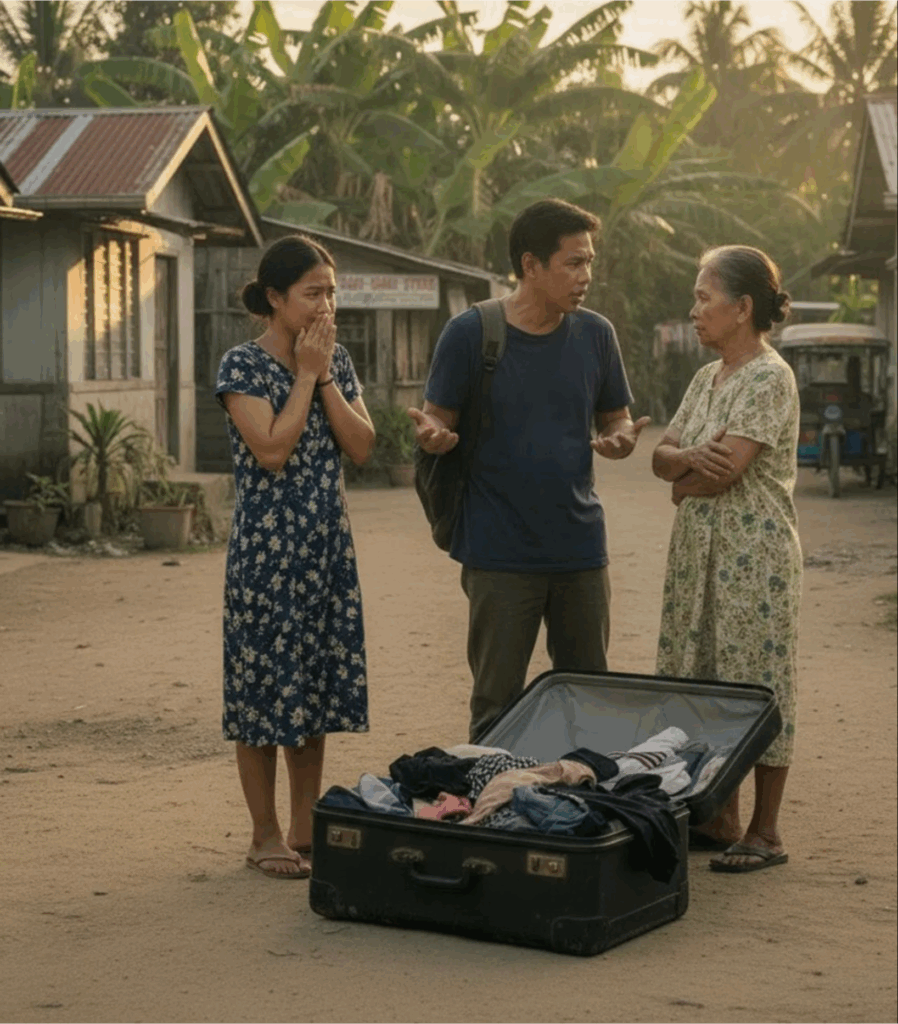
— Understand, Vera, you don’t have anyone to take care of anyway, someone you could spend your time and energy on — Larissa, her sister-in-law, said so calmly, as though they were merely discussing the weather. — You have no children, and you’ll never have grandchildren. The apartment you share with Kolya is so quiet that it makes a person want to scream. But Mom needs someone to look after her after the surgery. So she’ll stay with you. Permanently. And we’ll transfer her two-room apartment into my son Nikita’s name. It’s time he had a place of his own instead of living in rented apartments.
Vera stood with her back to her in the kitchen, scrubbing a plate that had been clean for ages as though she were trying to wash away her own bitterness instead of some stubborn stain.
She was fifty-six years old. At that age, a person learns to endure life’s blows. But the subject of her childlessness still struck the same place every time.
Right in the heart.
— What did you say? — a deep male voice, trembling with anger, suddenly came from the doorway.
Nikolai stood there. He had just come home from work, his coat unbuttoned, his chest rising and falling heavily. He had been Vera’s husband for thirty years, and in all that time, he had never once allowed anyone to humiliate his wife.
— Pack your things, Larissa — he said quietly.
So quietly that even the cups in the display cabinet seemed to tremble.
— Please, Kolya… — Larissa began.
— Pack your things.
— Kolya, wait! — someone called from the background.
Nina Pavlovna stood in the doorway. She was seventy-nine years old and had undergone major knee surgery a month earlier. She was gripping her walker tightly with both hands.
Vera froze.
She expected her mother-in-law to reprimand her daughter. To finally say that what Larissa had said was cruel and unfair.
But Nina Pavlovna simply looked at her son.
— Let Larissa finish her tea — she finally said. — Then she can leave. You and I will talk later.
Vera felt as though someone had poured a bucket of ice-cold water over her head.
So it was true.
Her mother-in-law thought the same thing: that Vera was nothing more than a convenient, free caregiver. A childless woman who supposedly had “plenty of time.”
Vera wiped her hands, silently walked past her husband and mother-in-law, and closed the bedroom door behind her.
For the first time in thirty years, she felt like a stranger in her own home.

And yet, just a month and a half earlier, everything had begun so differently.
Nina Pavlovna had suffered a terrible fall, and her already damaged knee had been completely shattered. The doctors left her no choice: she needed a total knee replacement.
Larissa visited her in the hospital exactly once. She brought a bag of oranges that her diabetic mother could not even eat, complained for a while, then left, saying she had far too much work and, on top of that, had to organize her son’s wedding.
The rest was left to Vera and Nikolai.
Nikolai worked to cover the cost of the medication and rehabilitation.
Vera took unpaid leave and brought her mother-in-law home.
The first few weeks were brutally difficult.
Nina Pavlovna could not even turn over in bed without help. Several times a day, Vera helped her change position to prevent bedsores. She carefully helped her into the bathroom, bathed her, dried her, and helped her get dressed.
And Nina Pavlovna, who had been a strong and independent woman all her life, struggled terribly with having to depend on someone else.
— The water is too hot!
— This soap smells awful!
— That’s not how you’re supposed to do it!
But Vera remained silent.
Not because the words didn’t hurt.
But because behind the harsh, complaining mother-in-law, she could see a sick and helpless old woman.
Vera even learned how to put on compression stockings.
— Nina Pavlovna, let’s put these on now.
— Get them off me! They’re squeezing me like a vise!
— We have to. The doctor said so. There’s a high risk of thrombosis after surgery.
Vera learned how to gather the stocking into a neat accordion, how to pull it up carefully, and how to position the leg so that circulation would not be impaired.
She did none of this because she expected praise.
She simply didn’t know how to behave any other way.
And perhaps that was exactly what Larissa had never understood.
But after the conversation in the kitchen, something changed.
Vera continued caring for Nina Pavlovna, but now she did it only out of duty. She no longer sat and talked with her in the evenings. She stopped making her favorite tea. She no longer asked how she was feeling unless it was absolutely necessary.
Nikolai tried several times to talk to his mother.
But Nina Pavlovna always said only one thing:
— The time will come.
And two weeks later, it did.
Larissa organized a “family lunch” for Sunday.
Vera spent the entire morning in the kitchen. She roasted meat, prepared salads, and baked an apple pie.
Her heart was full of bitterness, but she did not want anyone saying she couldn’t even receive guests properly.
Larissa, of course, arrived elegantly dressed.
Nikita came with her, her twenty-eight-year-old son, along with his quiet, pregnant fiancée, Dasha.
Instead of a proper gift, they brought a cheap store-bought cake.
Nina Pavlovna sat at the head of the table. She was already able to get up on her own, and Vera had even styled her hair.
For half an hour, everyone pretended it was a peaceful family lunch.
Then Larissa put down her teacup.
— Well, Mom. You’re almost running around already. Your knee is healing beautifully, and you’re living here as though you were in a private rehabilitation center.
She pulled a thick folder from her expensive handbag.
— Nikita and I spoke to a lawyer. We decided the simplest thing would be to prepare the deed of gift now. We’ll transfer your apartment into Nikita’s name. The baby will be born soon, and they need a secure start in life. You can stay here with Kolya and Vera. Vera is home anyway. It shouldn’t be a problem for her.
Nikolai shoved his chair back so hard that it scraped across the floor.
— Not this again.
— Kolya! — Nina Pavlovna’s voice rang out so sharply that everyone fell silent.
The elderly woman looked at Larissa.
— A deed of gift?
— Yes.
— And did your lawyer explain to you the difference between a deed of gift and a will?
Larissa hesitated for a moment.
— Of course. A gift is simpler. After that, no one can challenge it.
Nina Pavlovna smiled.
But there was nothing kind about that smile.
— Very good. Then let me tell you what your lawyer somehow forgot to mention.
Everyone around the table stiffened.
— A will only takes effect after my death. A deed of gift, however, takes effect as soon as it is registered. In other words, the moment I sign it, I am no longer the owner of my apartment.
She paused.
— My dear grandson will be.
Nikita finally put down his phone.
— But Grandma, why would we ever put you out?
Nina Pavlovna looked at him coldly.
— You? The same grandson who hasn’t called me once in a month and a half to ask whether I’m even alive?
Nikita turned red.
— How many elderly people have believed promises like these? — Nina Pavlovna continued. — They transfer their apartments to their children or grandchildren, and then the young ones sell them, take out loans against them, start businesses with them, and suddenly the old person finds themselves out on the street.
Larissa’s face turned bright red.
— Mom! Are you accusing us of fraud?
— No. I am protecting myself.
Larissa then turned toward Vera.
— But you’re staying here with her! It’s not difficult for you. You don’t have children, you have nothing else to do!
Vera slowly raised her head.
For the first time, she did not swallow her pain.
— Did you ask me, Larissa?
Her voice trembled.
— Did you ask whether I wanted to spend the rest of my life as a caregiver? Did you ask what I wanted? No. You simply made the decision for me.
A heavy silence filled the room.
— Because I’m the “childless one” who supposedly has all the time in the world, right?
Nikolai walked over to her and placed a hand firmly on her shoulder.
Nina Pavlovna lowered her head.
When she spoke again, her voice was completely different.
— No one is going to decide that for you, Verochka.
Vera froze.
It was the first time in thirty years that her mother-in-law had ever called her by an affectionate nickname.
Nina Pavlovna raised her head.
— And you will not be my caregiver.
Larissa stared at her in confusion.
— I’m going home next Friday — Nina Pavlovna announced.
— What?! Who’s going to look after you?
— No one who is obligated to.
The old woman continued calmly:
— I have hired a professional caregiver. She will come every day. I have a pension and savings. I can afford it.
Larissa nearly gasped.
— You’re going to spend your savings on a caregiver?!
— Yes.
— That money should go to Nikita!
Nina Pavlovna’s eyes hardened.
— Nikita is young, healthy, and capable of working. He can earn his own money.
Then, slowly, emphasizing every word, she added:
— And I am not giving my apartment to anyone.
Larissa jumped to her feet.
— So you’re going to deprive your own daughter and grandson of their inheritance for the sake of some stranger?!
Nina Pavlovna did not answer.
Larissa angrily grabbed her handbag.
— Come on, Nikita! We’re leaving!
The door slammed behind them so hard that an old umbrella fell from the coat rack.
Only three people remained in the kitchen.
Nikolai buried his face in his hands.
Vera sat motionless.
Nina Pavlovna slowly stood up, walked over to her, and gently touched her shoulder with a trembling hand.
— Forgive me, Vera.
Vera looked up.
Her mother-in-law’s eyes were filled with tears.
— I was an old, bitter woman. I thought family was bound together only by blood. I thought that because you had no children, you were incapable of truly loving anyone.
Silent tears rolled down Vera’s cheeks.
— Do you know what I saw when I was lying in the bathroom? — Nina Pavlovna continued. — I saw Larissa looking at me with disgust. But you… you washed me as though I were your own child. You weren’t disgusted. You never complained. And yet for thirty years, I never gave you a single kind word.
Then Nina Pavlovna squeezed Vera’s hand.
— I heard what Larissa said to you that day in the kitchen. That is why I stopped Kolya from confronting her immediately. I wanted everyone to see who she really was.
A long silence followed.
Then Nina Pavlovna spoke the words Vera had perhaps never expected to hear in her entire life.
— I have two daughters.
Nikolai raised his head.
— One I gave birth to. The other, for thirty years, I foolishly called only my daughter-in-law.
Nina Pavlovna’s voice broke.
— Forgive me, my girl. If you can.
By then Vera could no longer hold back her tears.
She threw her arms around her mother-in-law and sobbed as though thirty years of pain had suddenly broken free all at once.
Nina Pavlovna stroked her graying hair.
Nikolai wrapped his arms around both of them.
Three months later, Nina Pavlovna was walking with only a single cane.
Her prosthetic knee was functioning perfectly. Her rehabilitation had gone so well that even the doctor looked impressed.
Vera stood beside her in the examination room, holding her mother-in-law’s coat.
The doctor examined the X-ray.
— Excellent result. She has healed beautifully.
Then he looked at Vera.
— Are you a professional? Who handled her rehabilitation?
Vera smiled.
— We did it ourselves. Every day we exercised her leg, massaged it, and made sure she wore her compression stocking properly.
The doctor nodded approvingly.
— And what is your relationship? Caregiver? Social worker?
Nina Pavlovna straightened her back.
She leaned on her cane with both hands and looked at Vera with such pride that it seemed as though she had been waiting her entire life for this moment.
— She is my daughter.
Vera’s fingers tightened slightly around the collar of the coat.
And in that moment, a warmth filled her heart unlike anything she had felt in thirty years.
She was no longer a stranger.
At last, someone had said aloud what Vera had known for a very long time:
Family is not always bound by blood.
Sometimes love is the strongest inheritance of all.