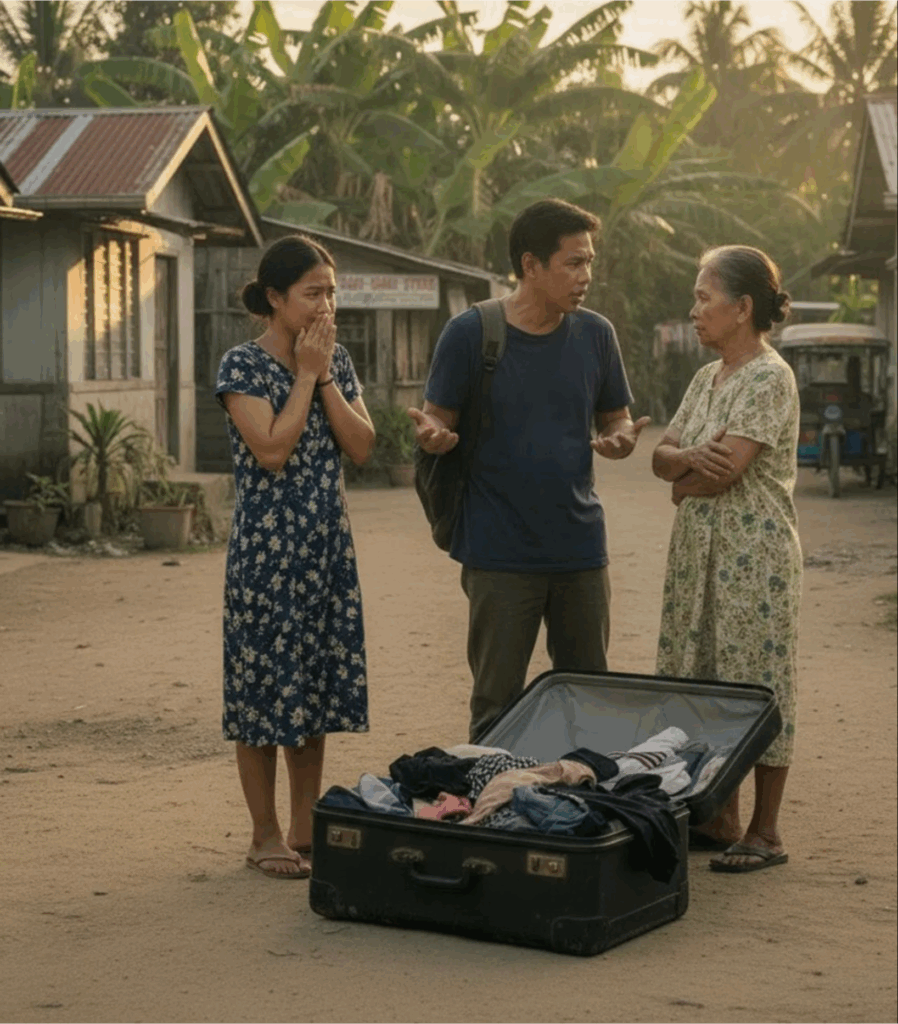
“Marina needs the money more, and you already have a house of your own,” my mother-in-law declared. She gave my sister-in-law the one million rubles she had promised us, while we were left with the loan.
— You already have your own house, Denis. What more do you need? Marinachka keeps moving from one rented apartment to another. She needs a home of her own.
Galina Petrovna carefully stirred the sugar in her mug, tapped the spoon against the rim, then took a small sip. She was sitting at our kitchen table, which at the time consisted of a wide sheet of OSB board laid across two trestles, and she looked at her son with a gentle, almost condescending reproach.
The house smelled of fresh plaster and primer. Directly behind my mother-in-law, the brand-new white enamel gas boiler gleamed. The very boiler for which my husband had taken out a consumer loan of 750,000 rubles from the bank about a month earlier.
I stood by the window with a cup of coffee in my hands, listening and waiting for Denis to answer her himself. This was his mother. His agreement. And his loan.
The “house of our own” that Galina Petrovna spoke about so casually had not come to us as an inheritance or a gift. Two years earlier, we had sold the small apartment I had owned before our marriage, added all our savings, taken out a three-million-ruble mortgage, and bought a partially finished house in a good location. The brick structure had a roof over it, but there were no windows, doors, or utilities.
Since then, we had lived in a never-ending construction project. I worked in the purchasing department of a construction company, so I personally searched for materials, suppliers, and the best prices. We saved on everything. Denis, who worked as a service engineer for industrial refrigeration systems, took on extra jobs, drove around supermarkets and warehouses in neighboring areas, repaired compressors and refrigeration units, and spent every weekend with a drill or putty knife in his hands.
I also tried to cut household expenses. To spend less on food, I started baking at home. I made cottage-cheese-and-cheese pastries that Denis took with him on his trips, and quick-pickled cabbage instead of buying salads from the store. Every thousand rubles we saved went toward the house: bags of construction mix, wiring, fasteners.
By summer, we had managed to finish the rough interior work on the ground floor, install the windows, bring in water, and move in so we wouldn’t have to pay rent anymore. We had only one major problem left: heating. Winter was approaching, and all we had were two electric convectors.
In July, Galina Petrovna invited us—Denis, his sister Marina, and me—to a family dinner. The occasion was serious: my mother-in-law had found a buyer for the old family country house. The plot was large, but the house had long needed a complete renovation, something Galina Petrovna didn’t want to deal with. The buyer offered 4.2 million rubles.
“We’ll divide the money fairly,” my mother-in-law announced solemnly as she sliced the cake. “One million for Marina, as a down payment on her mortgage. One million for you, Denis, for your house. And I’ll put 2.2 million in the bank. That will be my retirement savings. Dentists are expensive these days, and sanatoriums aren’t cheap either.”
Denis was genuinely touched at the time. That million would have been an enormous help. Our heating system estimate came to 890,000 rubles. We had only managed to save 140,000.
In August, Galina Petrovna visited us, shivered in the chilly house, and started putting pressure on us.
“Denis, what are you waiting for? September is almost here! Start the heating now.”
“Mom, we don’t have enough money yet,” my husband explained. “We’re waiting for you to sell the country house.”
“But the sale is already scheduled for September 10! The buyer has even paid a deposit! Take out a loan, hire a crew. In three weeks I’ll get the money, transfer the million to you, and you’ll pay off the loan immediately. At least you’ll spend the winter somewhere warm. Don’t be foolish, son.”
I was still doubtful. I suggested that we wait and, for the time being, install underfloor heating in just one room. But Denis believed her. She was his mother. She had never openly deceived him like this before, and besides, the deposit really had been paid.
Denis immediately took out the loan through the bank’s app: 750,000 rubles at an annual interest rate of 22 percent. We calculated that the monthly interest would be around 15,000 rubles. It seemed like an acceptable price to get the complicated system installed before the cold weather arrived.
The workers started. We bought the materials. Pipes spread throughout the house, and radiators appeared on the walls.
On September 10, Galina Petrovna really did sign the sale agreement.
Then she disappeared for two weeks.
She stopped answering calls and sent only brief messages: “I’m at the MFC,” “I’m exhausted,” “I’m helping Marina with the paperwork.”
And on September 25, just three days before our first loan payment was due, my mother-in-law came to visit us. She was carrying a cake.
“Galina Petrovna,” I said calmly, although I was boiling inside, “we have a house because we pay 42,000 rubles every month for it. And Denis now has a 750,000-ruble loan. He took it out because you firmly promised that you would repay it from the money from the country house sale.”
My mother-in-law put down her cup and looked at me as though I had said something outrageously inappropriate.
“Vera, you’re adults,” she sighed. “Who takes out a loan if they can’t afford to repay it? You have to calculate what you can afford.”
“We relied on your word, Mom,” Denis said quietly. “You told me to take it out now and that the money would be there in September. I showed you the budget. If you’d honestly told me then that there wouldn’t be any money, I wouldn’t have gone to the bank.”
“Oh, come on! Who remembers what I said in July?” Galina Petrovna raised her voice. “Circumstances changed. Marina found an amazing two-bedroom apartment in a new development. Beautifully renovated! She couldn’t pass up the opportunity.”
Denis’s face tightened.
“And how much did you give her?”
“3.2 million,” his mother replied calmly. “I put the remaining million in the bank to earn interest. I need it for my health.”
“So you bought my sister a house, and left me here with a loan at 22 percent?”
“Don’t twist my words! I didn’t leave you with any debt. The loan is in your name. You spend millions on this house, you already have everything you need. You’re a man, you’re good with your hands. Vera earns a good salary. You’ll manage. Marina is alone, without a husband. It’s hard for her.”
Denis said nothing.
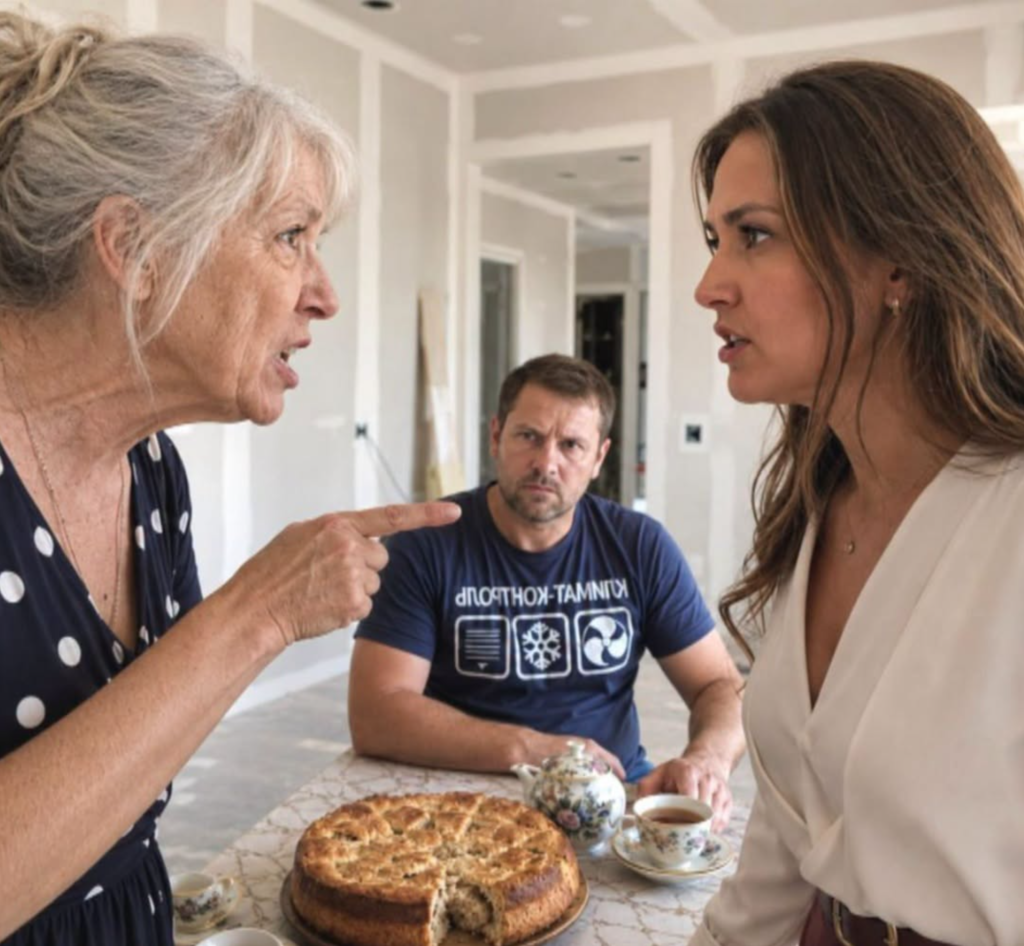
I saw his jaw tighten. It wasn’t just about the money. It was about how casually his mother had dismissed him.
“So we’re supposed to be happy for her,” Denis said slowly. “I understand.”
“Son, don’t be offended. Money is like water. It’s not there today, but you’ll earn it tomorrow. The important thing is that we’re family. Marina is having a housewarming party on Saturday. She expects you to come.”
“We won’t be there,” my husband replied. “I’m working Saturday.”
“How can you be working? It’s your day off!”
“That’s how it is now, Mom. To pay off this loan, I’ll have to take jobs in the countryside every weekend from now on. So drink your tea, take the cake with you, and all the best.”
Galina Petrovna left with deep hurt written across her face. She genuinely didn’t understand why we were upset.
When the gate closed behind her, Denis came back into the kitchen. He walked over to the new radiator, touched the hot white metal, and smiled.
“Okay, procurement lady. Give me your laptop. Let’s do the math.”
I took out my laptop and opened a blank spreadsheet. We sat next to each other.
The principal balance was 750,000 rubles. The interest rate was 22 percent. The calculations quickly showed that if we repaid it over five years, the overpayment would be substantial.
“No. I’m not feeding this garbage for five years,” Denis said firmly. “What about our income?”
We started building a budget. My salary and his base salary went toward the mortgage, gasoline, food, and utilities. His bonuses and my freelance work were what remained.
“If I take on two more supermarket chains in Tver and Ryazan, that’s another 40,000 gross a month. Minus fuel, minus taxes. Thirty thousand left net.”
“I can take on two or three private purchasing jobs a month. That’s another 30–35,000.”
“If we pay 60,000 a month toward the loan, how long will it take to close?”
I entered the formula.
“About fourteen months.”
Denis nodded.
“Fine. One year and two months. We can handle it.”
For the next several months, we lived like robots.
On Friday evenings, Denis packed his tool bag, put spare parts in the trunk, and headed to neighboring regions. He would return late Sunday night smelling of motor oil, gasoline stations, and cheap coffee.
I came home from my main job, had dinner, opened my laptop, and worked late into the night.
We didn’t go to the movies. We didn’t order food. We didn’t buy new clothes.
Every month, on payday, Denis quietly transferred 60,000, sometimes 70,000 rubles to the loan account.
Galina Petrovna tried several times to break through our defenses. She would show up unannounced, bring pickles, and behave as though nothing had happened.
“Vera, where’s Denis?”
“In Ryazan, Galina Petrovna. He’s replacing a sensor.”
“Oh, why is he working himself so hard? Tell him not to take any jobs next weekend. I need him to assemble a cabinet for me on the balcony.”
“I’ll tell him. But he’s busy until the end of the month.”
Marina didn’t call at all. She was seriously offended by her “stingy brother.”
Fourteen months passed.
In November, on a cold, slushy Tuesday, Denis came home earlier than usual. He walked into the house, took off his coat, went into the kitchen where I was peeling potatoes, and placed his phone on the table.
A bank notification was glowing on the screen:
**“Loan fully repaid. A confirmation of closure has been sent to your email address.”**
I wiped my hands on a towel, walked over to my husband, and hugged him.
Denis rested his face against the top of my head and let out a long, relieved breath.
“It’s done. We did it,” he said quietly. “Starting next month, we’ll begin buying drywall for the second floor. And for the New Year holidays, let’s rent a little house in Karelia for a few days. We just need to sleep and recover.”
I nodded. For the first time in more than a year, I felt as though I could breathe freely.
We did it.
On our own.
A week later, on Sunday, the phone rang. It was Galina Petrovna.
Denis looked at the screen, sighed, then answered and put the call on speaker.
“Denyushka, my boy, hello,” his mother’s cheerful voice said.
“Hi, Mom.”
“Listen, I have a little problem. The faucet in the bathroom broke, and it’s dripping right onto my head. And the washing machine is making a strange noise during the spin cycle. You’re free today, right? Will you come and take a look? We’ll have lunch too. I made borscht.”
Denis looked at me, then through the window at the large, soft snowflakes falling onto our still-unfinished but already warm and completely ours house.
“Mom, I’m not coming.”
“Are you working again?”
“I paid off the loan on Tuesday.”
“Well, that’s wonderful! Then you can come to your mother and fix the faucet.”
“No, Mom. Find a plumber online. And call a repairman for the washing machine.”
“Denis! Why should I pay strangers when my son is an engineer?”
Denis smiled.
“During the year I spent paying off the debt that came into existence because of your promises, one hour of my work became very valuable. I’m not working for free anymore, Mom. Not even for relatives. Call a professional.”
“You’re cruel, Denis! I’m your mother! I gave you life!”
“I’m not holding a grudge, Mom,” Denis said calmly. “I just drew my conclusions. You decided that my problems were only my problems. I agree with you. From now on, your faucets are only your faucets.”
He hung up.
Then he looked at me and smiled.
“Well, let’s go upstairs. I think we still have some primer left.”
I picked up the roller and followed my husband upstairs.
The house was warm.
And we had paid for every last ruble ourselves.
Maybe that’s exactly why it felt so special.
There was no maternal gift in it. No reproach. Not a single ruble that someone could later use to demand gratitude in return.
It contained only our work. Our exhaustion. Our sacrifices. And, in the end, our freedom.
That evening, as we stood in front of the freshly painted wall, Denis took my hand.
“You know, Vera, I think Mom taught me one thing after all.”
“What?”
“That family isn’t about who promises what. It’s about who stays beside you when you have nothing left to give them.”
I didn’t answer.
I simply squeezed his hand.
Because I knew he was right.
The one million rubles were gone.
But we paid off the loan.
And along the way, we learned something much more important: from now on, we would never again allow anyone to put a debt on our shoulders in the name of love.
The house still wasn’t finished. The walls upstairs still needed plastering, there were boxes in the rooms, and we had a lot of work ahead of us.
But that evening, none of it mattered.
Because for the first time, we truly felt that this house wasn’t simply our property.
It was the place that no one could give away to someone else.
No one could take it away from us.
And most importantly, no one could ever again decide how much we were worth to each other.