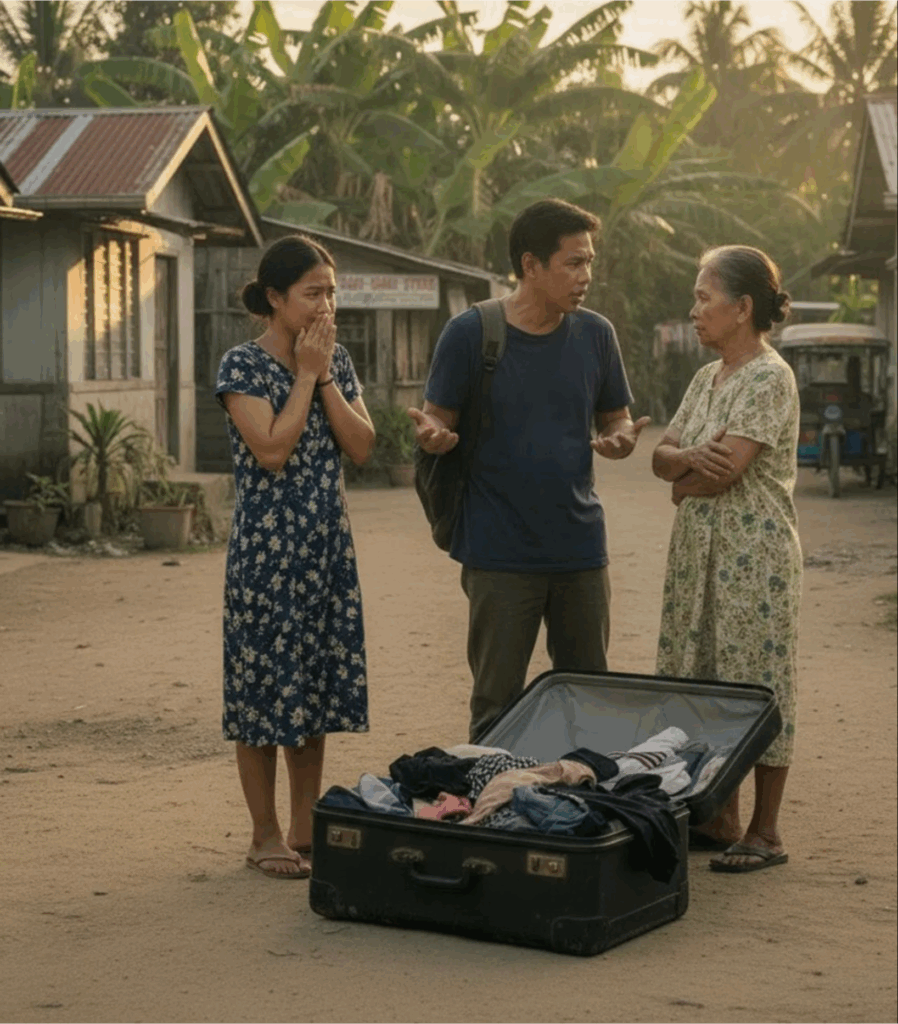
— Think about it. What is your daughter going to do all alone in an entire apartment? She’s still too young! Give the apartment to your sister, and that’s that! — my mother demanded. 🤨🤨🤨
— She’s still too young to live independently. She’s only nineteen. Give the apartment to Svetka, and that’s the end of the discussion — Nadezhda Semyonovna snapped into the phone in her usual firm, uncompromising tone.
For Larissa, this conversation had become so familiar that it almost made her nauseous. It was the third time in a single month. And that was precisely what made it so unbearable.
It was hard for her to understand how easily her mother could make decisions about an apartment that she and Vadim had spent nearly six full years working for, saving for, and giving up everything for.
— Mom, the apartment belongs to Masha — Larissa said, carefully controlling her voice. — It’s her property.
— So what? What is a nineteen-year-old girl going to do with an apartment all by herself? Svetka has three children and genuinely has nowhere to live. You have empty square footage. Why shouldn’t she use it? It’s simply unfair.
Larissa felt a dull pain in her right temple.
It had all started in the summer, when Masha graduated from high school and moved into the small apartment her parents had spent years specifically buying for her.
Since then, Nadezhda Semyonovna had not let the matter rest for a single moment.
Larissa and Vadim Sokolov met during their third year at a technical university. They both lived in the dormitory on Zavodskaya Street, in the same wing.
One evening, the electricity went out in the hallway. Vadim walked through the darkness with a flashlight, and Larissa asked him to walk her to her room.
That was how it began.
Two years later, they got married.
They had almost no money.
In the evenings, Larissa cleaned an office building, while Vadim loaded trucks at a wholesale warehouse. They rented a room in a communal apartment where five people shared a single bathroom. Every morning they stood in line waiting for the bathroom, while the neighbor’s paper cigarette smoke constantly filled the kitchen.
When Masha was born, they moved into a tiny one-room rental apartment on the outskirts of town.
It was an old panel building. The radiators barely gave off any heat in winter, and condensation constantly gathered in the corners.
One February evening, Vadim was staring at the window, where water was streaming down in rivulets.
— It’s cold — he remarked.
— But one day it will be warm in our own apartment — Larissa replied, continuing to knit.
It wasn’t an empty reassurance.
They both knew that the only way forward was to save consistently for years.
They didn’t go on vacations.
They didn’t buy a car.
They bought clothes on sale or through classified ads.
Larissa could calculate in her head, almost down to the ruble, how much they could spend on food, utilities, rent, and how much they needed to put aside.
Vadim took a second job, working nights as a security guard.
— When was the last time you actually got enough sleep? — Larissa sometimes asked him.
— I’ll catch up on sleep later. We’re still short of the down payment.
Eight years later, they bought their two-room apartment with a mortgage.
It was an old building, but a decent one. Good neighbors, with a tram stop right in the courtyard.
And Masha finally had her own room.
The girl was twelve years old, and she walked around it as if she had been given an entire castle.
— Dad, can I choose the color of the walls?
— You can. Just not orange. It gives me a headache.
Masha chose pale green.
Vadim painted the room himself. He spent three weekends working on it, using a roller and a bucket of paint bought from a hardware store.
A year later, they began saving separately for an apartment for Masha.
This time, deliberately.
They opened a savings account and transferred the same amount into it every month.
They didn’t miss a single month.
For six full years.
Nadezhda Semyonovna, Larissa’s mother, lived two hundred kilometers away in a small town where everyone knew everyone.
She honestly couldn’t understand why people needed to save so much when you could simply share what you had.
Her younger daughter, Svetlana, got married at twenty. Later, she had three children, and somehow she was constantly struggling with debt.
Her husband, Roman, worked at construction sites sometimes and nowhere at other times.
— Lar, just try to understand Svetka — her mother said again and again. — It’s very difficult for her with three children. Help her a little.
— Mom, we’re still paying the mortgage.
— A loan is a loan, but your sister is still your sister!
Larissa usually stayed silent.
There was no point explaining.
Her mother only heard what she wanted to hear.
In her mind, the equation was simple:
If her older daughter had something, then she was obligated to share it with her younger sister.
The fact that everything they had was earned through night shifts, sacrifices, and years of saving somehow never mattered.
They bought Masha’s apartment one year before she was supposed to apply to university.
It was newly built, smaller, but very practical.
A large window in the room, a good layout, a well-kept courtyard.
For six months, they worked on it in the evenings and on weekends.
Vadim assembled the furniture himself.
Larissa visited building-supply stores, choosing tiles, faucets, and light fixtures.
— Look at the shelves Dad made! — she once showed Masha pictures on her phone.
— Mom, this is amazing! — Masha smiled. — All my books will fit.
When she finally received the keys, she couldn’t say a word for a long time.
She simply stood in the middle of the apartment and looked out the window at the poplar trees lined up in front of the building.
— You saved for this for all those years… — she began, but couldn’t finish.
— Six years — Vadim corrected her.
— I didn’t know something like this existed. That parents…
— It does — he simply replied.
Masha laughed and hugged them both.
Larissa thought at the time:
It had been worth enduring even the lack of vacations for this.
But after another phone conversation with her mother, Larissa couldn’t sleep all night.
She lay in the darkness, and it wasn’t anger she felt.
It was more like exhausted disbelief.
Again and again, she remembered all those years when her mother had made comments after every purchase:
“You could have given that money to Svetka.”
“You have enough, while your sister is suffering.”
Once, when Masha was still little, Nadezhda Semyonovna had asked her to pay for a vacation in Turkey for Svetka.
“Poor thing needs a break. She’s completely exhausted with the children.”
Larissa had explained that they had a mortgage and simply didn’t have any extra money.
Her mother didn’t speak to her for two weeks.
Now she could see it with crystal clarity:
Her mother had never truly stood by her.
She loved both daughters, but in different ways.
She felt sorry for Svetka.
And she expected Larissa to pay the price for that sympathy.
Early the next morning, Vadim woke up and noticed that his wife was still awake.
— Her again?
— Again.
Vadim was silent for a few seconds.
— Lar, the papers are all in order. Masha is the owner. No one can do anything without her permission. Even if your mother brings Svetka there with all their suitcases, Masha can simply refuse to let them in.
— Mom will go there herself.
— Then Masha will call us. And we’ll tell your mother that this is private property. If someone tries to move in without permission, that’s a matter for the police.
— There’ll be a storm.
— Let there be one.
Vadim shrugged.
— We have a title deed in our hands, not a promise written in a family notebook.
Larissa stared at the ceiling.
She wasn’t afraid of her mother.
She wasn’t even afraid of the scandal.
She was afraid that something she had once called a family would finally break apart.
Then she realized:
That something had broken a long time ago. She simply hadn’t wanted to notice.
On Friday afternoon, Nadezhda Semyonovna showed up at their house.
She hadn’t warned them.
Larissa opened the door and found her mother standing there with a large travel bag.
She clearly intended to stay.
— I came to talk — her mother declared, already stepping inside as if she were entering her own apartment.
— Larissa, I’ve made my decision. Svetka and the children are moving in with Masha. Temporarily. Until Roman finds a job. They’ll fit in there. The space can be divided into two areas.
— Mom. It’s a one-room apartment.
— So? I read online that you can zone a space very cleverly.
Larissa simply stared at her.
Her mother stood there completely calm, as if everything had already been decided and she was merely waiting for it to be carried out.
— Mom, it’s not my apartment. And it’s not yours either. It belongs to Masha. She decides whom she lets in. And I will not question that decision.
Nadezhda Semyonovna put down the bag.
— What a heartless woman you’ve become! Svetka is wandering around with three children, while you guard your square meters!
— The apartment isn’t empty, Mom. Masha lives there.
— Masha is nineteen! What can she possibly do on her own?
— Live. Study. Be independent. Exactly what we wanted for her.
— You have so much property that you don’t know what to do with it, and yet you don’t care about your own family! — her mother shouted. — I raised you my entire life, and this is how you talk to me?
Larissa took a deep breath.
— Mom, don’t start with “my entire life.” Yes, you raised two daughters. That’s true. But you always carried one of them along, while telling the other that it was her duty to help. I’m tired. Vadim and I worked for our own daughter. Not so that we could make decisions for other people.
— Other people?! Svetka is nobody to you?
— Svetka made her own decisions. When she had children. When she got married. When she chose not to start saving. Those were her decisions, Mom. Not mine.
The argument grew louder.
A cough could be heard from behind the neighbor’s door.
Someone was clearly listening.
Nadezhda Semyonovna began to cry.
Not quietly.
Loudly, dramatically, the way people cry when they want everyone to hear them.
— You’re selfish! You’ve always been selfish!
Larissa was silent for a moment.
Then she said simply:
— Mom, I love you. But Masha’s apartment belongs to Masha. You can be angry with me, you can stop calling me, you can do whatever you want. Nothing will change that.
Her mother picked up the bag and left without a word.
She closed the door almost silently.
Strangely, that was worse than if she had slammed it.
That evening, Larissa took out the old family photographs.
Not intentionally.
She found the box on top of the wardrobe while vacuuming.
She sat down on the hallway floor and began looking through them one by one.
She and Svetka in their grandmother’s garden.
A New Year’s photograph from sometime in 1998.
Her mother when she was young, laughing.
The first day of school.
Larissa with an enormous schoolbag.
She wasn’t sad because of the argument.
She was sad because she realized that the people in those photographs were no longer the same people.
And perhaps they hadn’t changed on a single particular day.
Life had simply passed.
Vadim sat down beside her.
He picked up a photograph.
— Is this your grandfather’s land?
— My grandmother’s. Grandpa had already passed away by then.
Vadim nodded.
— Did you and Svetka get along when you were children?
— Yes. We were best friends. At least until we grew up and realized that maybe we were only close because we lived in the same house.
Vadim didn’t answer.
He simply squeezed Larissa’s hand.
Sometimes, that was enough.
The next day, Larissa called her daughter.
— Your grandmother was here yesterday. I want you to know.
— I figured this would happen.
— Don’t worry, Mom — Masha reassured her. — If Aunt Svetka shows up at the door, I simply won’t let her in. And if they start pressuring me, I’ll call the police. There’s even an emergency call button in the stairwell.
— Masha, I feel terrible that you have to deal with this…
— Mom, stop. You gave me an apartment. A normal start in life. And I’ll handle Grandma. It’s not even comparable. Instead, tell me, are you coming on Sunday? I’ll make your famous pancakes.
For the first time in two days, Larissa genuinely laughed.
— We’re coming. We’ll bring groceries.
— You don’t have to. I’ll manage. Just come.
After the call, Larissa opened the family group chat.
Her mother, Svetka, and several cousins were in it.
Larissa wrote a single short message:
“The apartment at 14 Zelenaya Street is the exclusive property of Maria Sokolova. No third party may move in without the owner’s written consent. Please take note of this.”
The group immediately exploded.
Svetka wrote long, emotional messages.
Her mother sent a voice message that lasted more than three minutes.
One of the cousins started talking about how “heartless young people are these days.”
Larissa read the first two messages, understood the point, and turned off the notifications.
She didn’t leave the group.
Let them talk.
Six weeks passed.
Her mother didn’t call.
Svetka wrote once, in a dry tone, asking whether Larissa would return their grandmother’s old dinnerware set.
Larissa replied that the set was in the cupboard and she could take it whenever she wanted, as long as she let her know beforehand.
No more messages came.
And life went on.
Work.
Grocery shopping.
The neighbor’s cat, which sometimes needed feeding.
A dental checkup that Larissa had been putting off for six months.
Nothing special.
And yet everything was fine.
Masha slowly settled into her new life.
She found a small side job giving online English lessons to schoolchildren.
She didn’t earn much, but it was her own money.
She bought a tiny lavender-scented air freshener.
She installed a spice rack in the kitchen.
And she even bought a hamster.
It was gray and fluffy, and she spent a long time thinking about its name.
In the end, she simply called him Gray.
One Sunday, Larissa and Vadim visited her.
Masha opened the door wearing an apron.
— I’m making pancakes — she announced proudly, then ran back to the kitchen. — I tried your recipe, Mom. I just used whole-wheat flour. I don’t know how they’ll turn out.
— They’ll be fine — Vadim said as he sat down at the table. — You just have to heat the pan properly.
— I heated it. And I didn’t skimp on the oil either.
The pancakes turned out perfectly.
The three of them sat around the table, drinking tea while Masha talked about university.
Exam season was approaching.
A new professor had joined the department.
He was strict, but interesting.
When Masha cleared the table, she suddenly spoke.
— Mom, Dad…
They both looked at her.
— I know it was difficult for you because of me. Because of Grandma.
Larissa shook her head.
— It wasn’t because of you. This had been building for a long time.
— Even so, I want you to know that I don’t take it for granted. The apartment either. None of what you’ve done for me. I know how hard you worked for it.
Larissa simply looked at her daughter.
At the way she rinsed the plates.
At the way she put them away.
At the way she moved naturally around her own kitchen.
Her own dishes.
Her own shelves.
Her own little hamster in the corner.
Nineteen years old.
And already living her own life.
That was when Larissa understood:
That was exactly why they had worked for six years.
They hadn’t bought their daughter an apartment.
They had given her the opportunity to begin her own life freely.
And no one could take that away from her now.
That evening, as they drove home, Larissa was silent for a long time.
Then she looked through the car window at the passing streetlights and spoke softly.
— Vadim?
— Yes?
— Do you think I’m a bad mother?
Vadim looked at her and smiled.
— No. Quite the opposite.
— Why?
— Because you taught your daughter that she doesn’t need anyone else’s permission to live her life.
Larissa turned away from the window.
Then her phone vibrated.
A single new message had arrived.
From her mother.
“Today I saw Masha at the store. She was shopping alone. She was laughing. She looked happy.”
Larissa stared at the screen for a long time.
A second message arrived only a few seconds later:
“Maybe I really did try to make too many decisions for her.”
Larissa’s eyes filled with tears.
Not because her mother had apologized.
But because, perhaps for the first time in her life, she had finally seen what Larissa had known for a long time:
Not every act of help is love.
Sometimes true love is precisely about stepping back and allowing another person to stand on their own feet.
Larissa put down the phone.
She didn’t reply immediately.
She simply squeezed Vadim’s hand.
And for the first time in a long while, she felt that she no longer had to prove to anyone that she was a good daughter, a good sister, or a good mother.
It was enough to know that what they had built over six years was not merely four walls and a title deed.
It was a door.
A door they had opened for their daughter so that she could finally step into her own life.
And now, as it closed behind her, Larissa knew exactly:
She hadn’t protected the apartment. She had protected her daughter’s freedom.