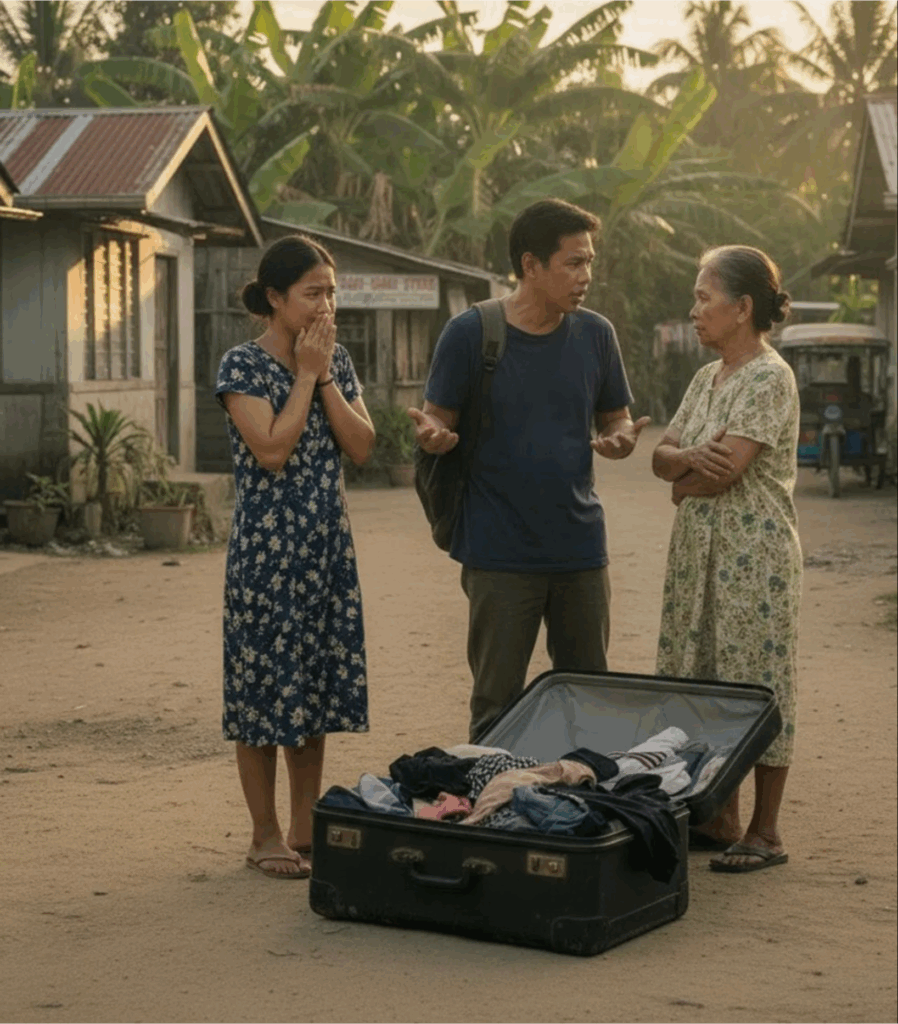
The train jolted as it passed over the switch, and Peter froze in the aisle.
The woman sitting by the window slowly raised her hand to her temple and tucked a loose strand of hair behind her ear.
Exactly the same way.
With the same slight tilt of her head.
Peter’s temples began to throb.
Five years had passed since Inna’s death, yet he remembered that tiny gesture as clearly as if he’d seen it yesterday.
Inna always did that when she was nervous.
Before he knew what he was doing, Peter’s feet carried him forward. He sat across from the stranger and stared.
Her coat hung loosely from her shoulders, far too large for her. Her face was pale and distant.
But her hands…
Thin fingers folded neatly in her lap.
The gentle movement of her foot inside her worn shoes.
Everything about her reminded him of Inna.
The woman eventually noticed his stare and looked up.
Peter immediately became embarrassed.
“Excuse me. Which station are you getting off at?”
“Sosnovka.”
Her voice was low, slightly hoarse, completely unfamiliar.
“Me too. May I walk with you?”
She gave him a brief, skeptical smile.
“Why?”
Peter answered honestly.
“I don’t know. I just want to.”
She studied him for a long moment. She clearly didn’t believe a word he was saying.
Finally, she shrugged.
“Fine.”
When they got off the train, she almost hurried across the platform as if trying to escape him. Peter followed.
“Are you always this persistent with women?”
“If I were trying to bother you, I’d have chosen someone more noticeable.”
She stopped.
“What?”
“My wife died five years ago,” Peter said. “You move exactly like she did.”
The woman’s expression changed.
“So you’re looking for a replacement?”
“No. I don’t want to replace her. I just… want someone to talk to.”
She continued staring at him suspiciously.
“Tomorrow. Six o’clock. Building seventeen, apartment forty-two. But if you’re late, I won’t open the door.”
Peter simply nodded.
The next evening, he arrived five minutes early.
He was carrying a bouquet of dark red chrysanthemums and a box of cookies.
The stairwell smelled of cabbage soup and damp plaster.
Anna opened the door without a word.
The apartment was tiny. One room, stained wallpaper, a sewing machine in the corner. Pieces of fabric covered the table.
“Come in. I’ll put the kettle on.”
She walked into the kitchen without taking off her coat.
Peter frowned.
“Are you cold? The radiator is practically burning.”
“I’m more comfortable like this.”
There was something tightly wound in her voice.
Anna brought tea, cups, and sliced bread to the table. Then she sat across from him, wrapped in her coat like armor.
“Tell me about yourself,” Peter said.
“There’s nothing to tell. I sew at home. I live alone.”
“Family?”
“I don’t have one.”
“Why?”
Anna put her cup down so sharply that the porcelain clinked against the table.
“Because not everyone gets lucky in life. Understand? There are women men don’t even notice. Or they notice them, and then they see who they really are and walk away.”
Peter said nothing.
There was so much old pain in her voice that no comforting phrase could possibly touch it.
“Take your coat off. It’s warm in here.”
“I’m not taking it off.”
“Anna, don’t be ridiculous.”
“Go home, Peter.”
She stood and turned toward the window.
Her shoulders were trembling.
Peter stepped closer and gently placed a hand on her shoulder.
Then he froze.
There was something uneven beneath the thick fabric.
A distinct raised area.
His hand instinctively jerked back.
Anna immediately turned around.
There was no shame in her eyes.
Only anger.
“There. Now you can leave. Everyone leaves at this point. You’re not the first, and you won’t be the last.”
With one sharp movement, she pulled off her coat.
A small but noticeable curvature showed along her upper back.
Anna stood before him with her chin raised, as though she were standing before a judge.
“Had a good look? Then go.”
Peter couldn’t speak.
Anna waited.
With every passing second, her face grew redder.
“I’m sorry,” he finally managed. “I didn’t mean…”
“Nobody ever means anything. Goodbye, Peter.”
He left.
At home, he collapsed onto the sofa and closed his eyes.
Again and again, he saw Anna’s hands.
Her movements.
The tilt of her head.
Inna’s movements.
And then her back.
He tried to imagine what it would be like to hold Anna, and something inside him tightened.
His phone rang.
It was his sister, Tamara.
“Petya, where have you disappeared to? I’ve been looking everywhere! I convinced Valentina Stepanovna from the third building to meet you. She’s a wonderful woman! Cheerful, healthy, a great cook. Come on Sunday.”
“Tamara, leave me alone.”
“How long are you going to live like this? You’ve been mourning Inna for five years! If she were alive, she’d be the first to scold you for shutting yourself away. A man without a woman isn’t a man!”
“Tamara…”
“You work at the warehouse, go home, and that’s it! That’s not living, Petya!”
Peter muted the phone.
But her words continued echoing in his head.
Maybe she was right.
Maybe he really was clinging to a ghost.
To the memory of a dead woman.
To a stranger who moved like Inna but carried an entirely different life inside her.
That night, however, he couldn’t sleep.
All he could see was Anna’s face.
Her dry, defiant eyes.
Her raised chin.
The woman who had spent her entire life waiting for someone not to turn away from her.
The next morning, Peter went downtown.
He bought a bouquet of expensive, deep-red roses.
And a beautiful leather handbag.
Around noon, he returned to Sosnovka and waited outside her building.
Anna appeared around three o’clock, carrying a heavy bag filled with fabric.
When she saw Peter, she stopped.
“What are you doing here?”
“We need to talk.”
“I said everything yesterday. Go home.”
She tried to walk past him, but he stepped in front of her.
“Anna, give me another chance.”
“For what?”
“To not judge each other by one terrible moment.”
Her eyes narrowed.
“Do you pity me?”
“No.”
“Then what do you want?”
Peter took a deep breath.
“Yesterday I was scared. I was a coward. But I spent the entire night thinking about you.”
“I don’t need your pity.”
“I’m not pitying you. I want to get to know you.”
Anna stared at him for a long time.
Finally, she took the roses.
She leaned down and smelled them.
For one brief moment, her expression softened.
“Aunt Liza would have said yesterday that if someone is capable of feeling sorry for another person, then their heart hasn’t completely died.”
Anna lowered her eyes.
“But I’m tired of believing people.”
“Then don’t believe me yet. Just let me come back tomorrow.”
Anna slowly nodded.
And Peter did come back.
Then the next day.
And the next.
Every evening after work, he arrived with bread, apples, milk, or some other small thing.
He sat in Anna’s kitchen and watched her work.
At first, they barely spoke.
Later, Anna began to open up.
She told him about Aunt Liza, who had raised her after her parents rejected their child because of her deformity.
She told him about school, where children mocked her.
She told him about the young man who promised to love her, only to laugh about her behind her back with his friends.
Peter listened.
And with every story, his anger grew toward the people who had spent Anna’s entire life teaching her that she was worth less than everyone else.
One evening, the doorbell rang.
Anna opened the door.
Tamara stood outside.
“Petya! I’ve been looking everywhere for you! You’re never home, you don’t answer your phone. The neighbor saw you coming here.”
She looked Anna up and down.
“Who is she?”
“Tamara, go home.”
“Wait. Let me take a look at her.”
Tamara’s eyes hardened as she examined Anna.
“Peter, have you completely lost your mind? You chose this woman instead of someone normal?”
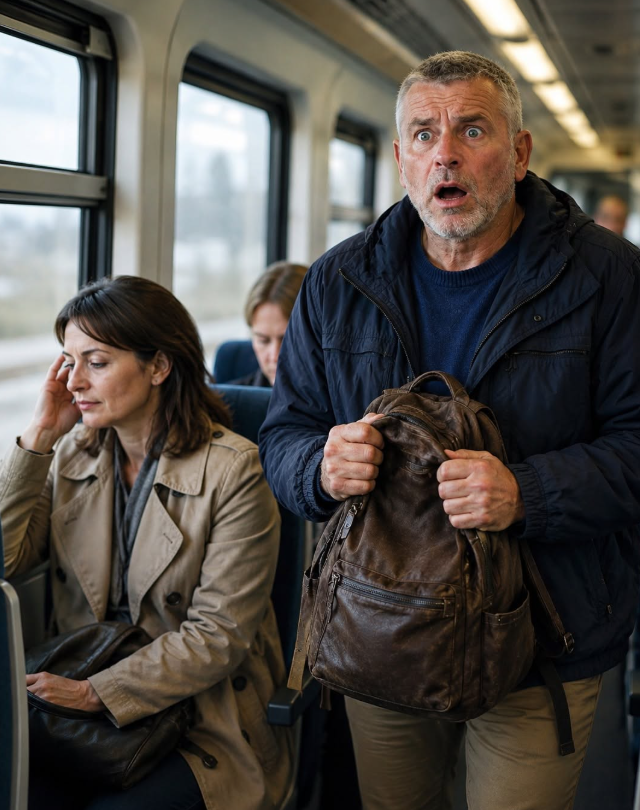
Anna went pale.
“Please don’t…”
But Tamara didn’t stop.
“Just look at her! She’s a hunchback! There are thousands of women in this city, and you had to choose her?”
Peter’s face changed.
He turned toward his sister.
“Shut up. And get out.”
“I’m only trying to help you!”
“I don’t need your help!”
His voice was so sharp that even Tamara flinched.
“You’ve spent my entire life telling me how to live. Who to be friends with. Who to marry. How to mourn Inna. How long I should cry. It’s over now.”
Tamara stared at him in disbelief.
“Petya…”
“Leave.”
“You’ll regret this! Everyone will laugh at you!”
“Let them.”
Peter opened the door.
“This is my life, Tamara. Not yours.”
Tamara finally left.
Peter closed the door behind her.
When he turned around, Anna was sitting on the floor.
She was crying silently.
Peter knelt beside her and awkwardly pulled her into his arms.
“She’s right,” Anna whispered. “I’m not good enough for you. You’ll regret this one day.”
“Please, just be quiet for a moment.”
Anna flinched.
Peter gently turned her face toward him.
“Listen to me. I don’t care what’s on your back. Do you understand? That’s not what matters. What matters is that you’re here. That when I’m with you, I don’t feel empty anymore. That I can breathe again when you’re beside me.”
Tears rolled down Anna’s cheeks.
“But I’m not Inna.”
“I know.”
Peter gently touched her face.
“You’re Anna. And I want to know Anna.”
He kissed her.
Anna leaned into him.
This time, she wasn’t crying from shame.
She was crying because someone had finally stayed.
A week later, Peter brought her home.
His apartment was spacious, but it had felt empty for years.
Three days earlier, he had put away Inna’s photographs in a box.
Anna slowly walked through the rooms.
She touched the curtains.
Ran her fingers over the books on the shelves.
Then she whispered:
“I can breathe here.”
Peter looked at her.
“Then this is your home now. With me. If you want it.”
Anna was silent for a long moment.
“And Tamara?”
Peter smiled faintly.
“Tamara will have to learn that my life doesn’t belong to her.”
Anna sat beside him.
“She’ll never forgive you.”
“I don’t need her forgiveness.”
And she didn’t forgive him.
Tamara called every day.
She shouted.
She said Peter was bringing shame on the family.
She said the neighbors were talking about him.
She said Anna had ruined his life.
Peter simply hung up every time.
A month later, Tamara showed up at the apartment with two neighbors.
She stood in the stairwell shouting.
“Peter! You’ve gone crazy! This woman has bewitched you!”
Peter stepped outside.
For a long moment, he simply looked at his sister.
“Are you finished?”
“No! I won’t let you—”
“Yes, you will.”
Tamara fell silent.
“This is my life, Tamara. Not yours.”
“Petya…”
“If you come here again to scream at us, I’ll take legal action. Now go home.”
The two neighbors exchanged embarrassed glances.
Tamara stood there with her mouth open.
She hadn’t expected this.
Slowly, she turned and left.
After that, she never called again.
Peter eventually heard from acquaintances that Tamara complained to everyone about her ungrateful brother.
He wasn’t happy about it.
But neither did he feel guilty anymore.
At the end of the month, Anna officially moved in.
She brought her sewing machine, two suitcases, and a framed photograph of Aunt Liza.
She had died two years earlier, but Anna always believed she had been the only person who loved her without conditions.
“She would have liked you,” Anna said as she placed the photograph on the dresser.
Peter smiled.
“I wish I could have met her.”
“She would have said you’re stubborn as a mule.”
“And?”
“And that it’s a good thing.”
Peter wrapped his arms around Anna from behind.
This time, she didn’t try to hide her back.
She didn’t shrink away.
She wasn’t ashamed of herself.
She simply leaned against him.
“I spent my whole life thinking I would die alone,” she whispered. “I thought one day they’d find me in that little apartment… maybe only after the neighbors started noticing the smell.”
“Don’t talk like that.”
Anna looked up at him.
“And now I wake up every morning and still can’t believe this is really happening to me. That you’re here.”
Peter turned her toward him.
“Then believe it.”
Anna smiled.
For the first time, she truly smiled.
Not perfectly.
Not like in the movies.
A little crooked.
A little uncertain.
But completely genuine.
Outside, November rain tapped against the window.
Peter watched the street for a long time.
Inna had been gone for five years.
And for five years, he had lived as though he had buried his own life alongside hers.
But now Anna was standing beside him.
A woman life had humiliated too many times.
A woman who had learned to believe that every kind of love came with conditions.
A woman with a visible scar written into her body.
Yet somehow, her heart still had room for love.
Peter didn’t know what tomorrow would bring.
He didn’t know what difficulties were waiting for them.
But he knew one thing for certain:
He hadn’t found Inna again.
He had found Anna.
And perhaps that was why, for the first time in five years, he finally felt as though he had come home.