The Key
I always assumed the young goth woman who visited my seventy-three-year-old mother every Saturday was simply an unusual new friend.
Then Mom died.
At her funeral, that woman—Raven—pressed a tiny brass key into my hand and whispered:
“Your mother told me to give you this only after she was gone.”
I had no idea that key would uncover an eleven-year-old family secret.
And the deeper I dug, the more I realized my mother had spent years regretting something none of us had ever understood.
Raven waited until almost everyone had left the funeral.
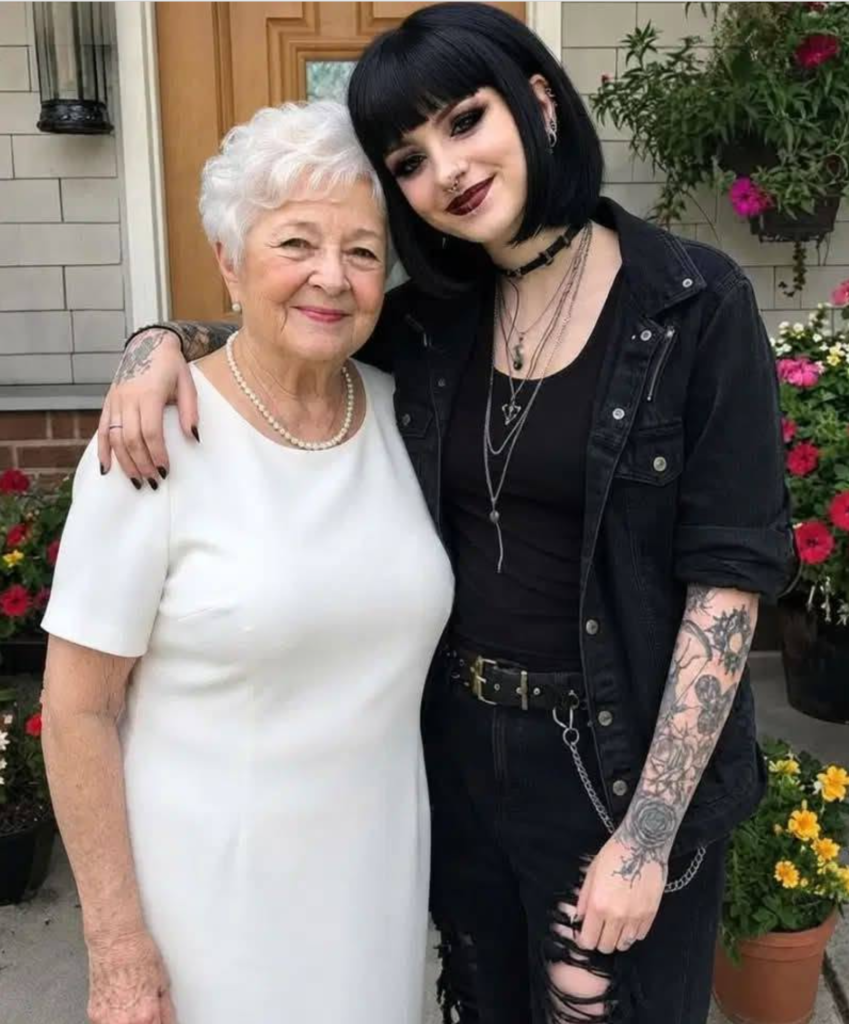
She stood near the back of the room in a long black coat. Silver rings covered her fingers, and several facial piercings caught the light whenever she moved.
I had seen her like that countless times before.
Every Saturday, sitting at my mother’s kitchen table.
Drinking tea.
Laughing.
Whispering about things I was never allowed to hear.
I had never understood their friendship.
Now Mom was gone.
Raven slowly walked toward me.
“Maeve.”
I turned.
Her eyes were red and swollen.
“Thank you for coming,” I said awkwardly.
She nodded.
Then she opened her hand.
A tiny brass key lay in her palm.
I stared at it.
“What is that?”
“Your mother told me to give it to you after she died.”
My stomach tightened.
“What does it open?”
Raven looked at me for several seconds.
“She said you’d understand once you found it.”
“Why didn’t she give it to me herself?”
“Maybe because she knew you’d put it somewhere safe and never look for what it opened.”
The words irritated me.
“You barely knew me.”
“No,” Raven said quietly. “But Doris did.”
I felt my jaw tighten.
“Then why did she trust you with this?”
Raven looked down at the key.
“I didn’t know your mother better than you did.”
“Then why do you have it?”
She looked directly into my eyes.
“Because I knew a part of her you never saw.”
Before I could ask what she meant, my husband, Tom, appeared with my coat.
Raven stepped backward.
“Whatever you do,” she said, “don’t hide that key in a drawer.”
Then she walked away.
I stood there staring after her.
The brass key felt strangely heavy in my hand.
One question kept repeating in my mind:
What had my mother been hiding from me?
### The Girl in My Mother’s Kitchen
I first met Raven several months earlier.
I had walked into Mom’s kitchen carrying groceries and stopped dead.
She was sitting in my father’s old chair, drinking tea from Mom’s best china.
“Mom?”
Doris looked up.
At seventy-three, my mother still loved that little kitchen more than anywhere else in the world.
“There you are, Maeve.”
The young woman beside her turned.
She couldn’t have been older than twenty-five.
She wore black from neck to boots.
Tattoos covered both forearms, and silver piercings lined one side of her face.
“This is Raven,” Mom said. “She’s a friend.”
Raven stood.
“Nice to meet you.”
“You too.”
But I kept looking at Dad’s chair.
Raven noticed.
“Am I sitting somewhere I shouldn’t?”
“No. It’s fine.”
I put the groceries down.
“How exactly do you two know each other?”
“We met at a café,” Mom said.
“At the bookstore café,” Raven added. “Your mother told me the novel I was reading was terrible.”
Mom smiled.
“It was terrible.”
I forced a laugh.
Then I looked at Mom.
“I thought we were spending the afternoon together.”
Her smile disappeared.
“We can do that next Saturday.”
I blinked.
“You’re asking me to leave?”
“We’re discussing something private.”
Raven immediately stood.
“I can go.”
“No,” Mom said.
She didn’t even look at me.
Something inside me cracked.
“Fine.”
“Maeve—”
“I’ll get out of your way.”
As I reached for my purse, I noticed a small wooden box beside Raven.
Mom immediately covered it with a dish towel.
That only made things worse.
I looked at her.
“What’s in the box?”
“Nothing important.”
“Then why hide it?”
Mom sighed.
“There it is again.”
“What?”
“That word you use when nothing is actually fine.”
I left.
That night, I complained to Tom.
“She’s there every Saturday.”
“Raven?”
“Yes.”
“What bothers you about her?”
“She’s young. Mom barely knows her. They have private conversations. And Mom looks happier with her than she does with me.”
Tom studied me.
“Do you think Raven is taking advantage of her?”
“I don’t know.”
“Has your mother given you any reason to think that?”
“No.”
“Then what’s really bothering you?”
I stared at my tea.
Finally, I admitted the truth.
“I’m jealous.”
Tom reached across the table and squeezed my hand.
“Then stop guessing.”
“Stop guessing what?”
“Pay attention.”
So I did.
Raven kept coming.
Every Saturday.
And eventually, I stopped trying to interrupt them.
But I noticed things.
Mom began buying different tea.
Raven brought books.
Sometimes they laughed for hours.
Other times, they spoke so quietly that I couldn’t hear them.
Then one afternoon, I arrived early and found birthday cards scattered across Mom’s kitchen table.
The moment Mom saw me, she swept them into the wooden box.
“What are those?”
“Old things.”
I started wiping the counter.
Mom touched my wrist.
“Not everything needs you to fix it.”
“I’m not fixing anything.”
She smiled sadly.
“You usually are.”
I didn’t understand then.
I do now.
Because a few weeks later, I accidentally left my phone at her house.
When I returned, I heard voices from the kitchen.
Raven was speaking.
“You tell me every week to call my mother.”
“I know.”
“Then call your sister.”
I froze.
My aunt.
Elaine.
Mom hadn’t spoken to Elaine in eleven years.
Their relationship had exploded after Grandma became sick.
Mom had taken care of her almost alone and resented Elaine for living far away.
Then, during one terrible argument, Elaine had said:
“You don’t help people because you’re generous, Doris. You help them so they owe you.”
Mom never forgave her.
Grandma died soon afterward.
And the sisters never spoke again.
Until Raven came along.
“You tell me to call my mother,” Raven said. “So why haven’t you called Elaine?”
“That’s different.”
“How?”
Mom was silent.
“Have you ever tried?”
“Once.”
“And?”
“I picked up the phone.”
“Did you call?”
“No.”
Raven laughed softly.
“So you picked up the phone.”
“And put it down.”
“That isn’t exactly following your own advice.”
Mom laughed.
“No. It isn’t.”
Then Raven’s voice softened.
“Why do you keep telling me to contact my mother?”
There was a long silence.
Finally, Mom answered.
“Because sometimes you can be right, Raven, or you can still have your family.”
I stopped breathing.
“Sometimes,” Mom continued, “life doesn’t let you have both.”
“That’s pretty rich coming from you.”
“I know.”
I stood behind the kitchen door, listening.
I could have walked in.
I could have said Elaine’s name.
I could have forced my mother to explain everything.
Instead, I walked away.
That night, I wrote Elaine:
**I saw Mom today. I think she misses you.**
I stared at the message.
Then I deleted it.
I told myself I was staying out of their business.
The truth was uglier.
I was afraid.
The Funeral
Two months later, Mom suffered a stroke.
She died that morning.
After the doctor left, I stood outside her hospital room in complete disbelief.
Tom held me.
For a moment, I wanted to call Mom.
Then reality hit.
She was gone.
I opened my contacts.
My finger stopped over Elaine’s name.
This time, I called.
She answered on the fifth ring.
“Maeve?”
“Mom died this morning.”
Silence.
Then I heard her inhale sharply.
“Oh, God.”
“The funeral is Friday.”
“I don’t think I can come.”
Normally, I would have accepted that.
This time, I didn’t.
“I want you there.”
“I can’t promise.”
“Then don’t promise. Just think about it.”
She didn’t come.
After the funeral, I stared at the brass key Raven had given me.
Tom watched me.
“You’re going to put it away?”
“I was.”
“What changed?”
I closed my hand around it.
“I’m tired of protecting things instead of understanding them.”
We drove to Mom’s house.
I searched her desk.
Nothing.
Her sewing cabinet.
Nothing.
Then I remembered the wooden box.
Upstairs, behind several folded blankets in her closet, I found it.
My hands shook as I inserted the brass key.
It fit.
The lock clicked.
Inside were dozens of envelopes.
Every one addressed to:
Elaine.
I stared at them.
Tom picked one up.
“Eleven years?”
I nodded.
“She wrote to her for eleven years.”
“But never sent them.”
My phone was already in my hand.
I called Elaine.
“I found something Mom spent eleven years hiding from both of us.”
Elaine arrived the next afternoon.
When she saw the envelopes spread across Mom’s bed, she stopped.
“You found them?”
I looked at her.
“You knew?”
“Not those.”
She picked up one of the birthday cards.
“I have a box too.”
“A box of what?”
“Letters to Doris.”
I couldn’t speak.
“Christmas cards. Birthday cards. Things I wrote but never mailed.”
“Why?”
Elaine looked down.
“Because every time I finished one, I imagined her sending it back unopened.”
I looked at her.
“So you spent eleven years writing to each other without speaking?”
Her eyes filled.
“Apparently.”
Then she asked:
“Do you remember when I called you five years ago on Doris’s birthday?”
My stomach tightened.
“You asked how she was.”
“I asked whether she ever talked about me.”
I knew exactly what I had said.
“Not really.”
Elaine’s face crumpled.
“Do you know what I heard when you said that?”
I said nothing.
“I heard that my sister had forgotten me.”
“Aunt Elaine…”
“Was it true?”
“No.”
Mom had talked about her constantly.
She remembered Elaine’s birthday.
She saw clothes in store windows and said Elaine would love them.
She remembered childhood stories.
She missed her.
Elaine stared at me.
“So when I asked if she ever mentioned me…”
“I gave you the easiest answer.”
“Why?”
“Because I was exhausted from being caught between you.”
Her voice hardened.
“I wasn’t asking you to repair our relationship.”
“I know.”
“You let me believe she was finished with me.”
“I did.”
Silence filled the room.
Elaine suddenly stood.
“I need to leave.”
“Aunt Elaine—”
“Not now.”
She walked out.
I sat on Mom’s bed alone.
Then I noticed something.
One envelope was wedged beneath the fabric lining of the box.
It was sealed.
Elaine’s name was written across the front in Mom’s handwriting.
I could have opened it.
I didn’t.
The Truth About Raven
That evening, I asked Raven to come over.
She sat in the same chair where I’d first seen her months before.
“How did you and Mom really become friends?”
Raven smiled.
“She insulted my book.”
I laughed despite myself.
“That sounds like her.”
“We started talking. I told her my mother and I weren’t speaking because she hated that I left college to become a tattoo artist.”
“And Mom told you about Elaine?”
“Yes.”
“So she kept telling you to call your mother.”
“Every Saturday.”
“And you kept telling her to call Elaine.”
“Pretty much.”
I looked down.
“Why didn’t she tell me?”
Raven was quiet for a moment.
“She was embarrassed.”
“About what?”
“She’d been telling me for months that she should call Elaine.”
Raven looked at me.
“Then one day she admitted something.”
“What?”
“She was terrified.”
“Mom?”
“Yes.”
Raven’s voice softened.
“She was afraid Elaine would reject her.”
I swallowed.
“Why would she admit that to you?”
“Because I’d never watched her spend eleven years pretending she wasn’t scared.”
That sentence hit me harder than anything else.
Raven leaned closer.
“Maeve, your mother didn’t choose me instead of you.”
I looked up.
“She simply found it easier to admit her fear to someone who hadn’t known her forever.”
The Letter
The next morning, I drove to Elaine’s house.
Mom’s sealed letter was in my purse.
When Elaine opened the door, she looked annoyed.
“I told you I needed time.”
“I know.”
“Then why are you here?”
I held out the envelope.
She saw her name.
“Did you read it?”
“No.”
She stared at the letter.
“There’s nothing left to repair between Doris and me.”
“No,” I said quietly.
“There isn’t.”
“Mom died before either of you found the courage to speak.”
Elaine looked away.
“I can’t change that.”
“Neither can I.”
“Then what do you want?”
“Nothing.”
She looked surprised.
“I just needed to tell you something.”
My throat tightened.
“Five years ago, when you asked if Mom talked about you, I knew she did.”
Elaine went still.
“I knew she missed you.”
I took a breath.
“And I lied.”
Her eyes hardened.
“You let me believe she didn’t care.”
“Yes.”
“Why?”
“Because I was afraid of what would happen if I admitted the truth.”
I swallowed.
“I’m not asking you to forgive me.”
I placed the envelope beside her.
“But I’m done pretending silence doesn’t have consequences.”
Then I left.
What Happened Next
Three weeks later, Elaine came to Mom’s house.
She sat across from me at the kitchen table.
The wooden box was beside her.
“I read the letter.”
I waited.
“She said she’d wasted years waiting until she knew exactly what she wanted to say.”
Elaine looked down at her coffee.
“Then she wrote that maybe waiting was the whole problem.”
“What else did she say?”
Elaine’s eyes filled.
“She missed me.”
I finally understood.
My mother hadn’t been hiding a secret affair.
She hadn’t been manipulated.
She hadn’t chosen a strange young woman over her daughter.
She had simply found someone who gave her the courage to admit something she was too proud to say to the people who loved her most.
Elaine reached into her bag.
“I wrote almost the same thing to her last year.”
I looked at her.
“You did?”
She nodded.
Neither of us spoke for a while.
Then my phone buzzed.
A message from Raven.
I finally called my mom. We’re having dinner tomorrow. Wish me luck.
I smiled.
Then I looked across the table at Elaine.
“I don’t know what happens between us now.”
“Neither do I.”
“But I’d like to see you again.”
She studied me.
“No pressure,” I added.
“I think I’ve spent enough years trying to control how everyone else fixes their problems.”
Elaine smiled faintly.
“Call me next week.”
“I will.”
And this time, I meant it.
Because I finally understood something my mother had spent years trying to teach me:
You can spend your entire life trying to fix everyone else because it’s easier than admitting the person who needs fixing is you.
I had been jealous of Raven.
I had thought she had somehow taken my place in my mother’s life.
But she hadn’t.
She had simply discovered a hidden part of my mother that I had never known existed.
Maybe loving someone for a lifetime doesn’t mean knowing every corner of them.
Maybe it means accepting that some corners belong to them alone.
And maybe the greatest regret isn’t the argument that broke a family.
Maybe it’s all the years afterward when everyone was too afraid to say:
“I miss you.”