
# “At Last, That Broke Woman Has Moved Out!” My Mother-in-Law Bragged to Her Friends at the Restaurant. But Then the Waiter Approached Their Table and Quietly Told Her One Sentence…
“Why does the whole apartment smell like food again?” Emma Markovna complained, angrily throwing open the kitchen window. “You could at least leave your work jacket on the balcony, dear. The rest of us shouldn’t have to smell your kitchen all day!”
I was sitting on a low stool beside the stove, massaging my aching feet. The wedding reception I had worked the previous night, with ninety guests, had ended at half past two in the morning. By the time we had packed everything away, checked the kitchen, and finally left, it was almost four. Yet at eight in the morning, my mother-in-law was already banging pots and pans around as though the apartment were on fire.
I had, of course, left my chef’s jacket at the restaurant. The smell wasn’t coming from my clothes anyway. It was in my hair, where the smoke from the grill, roasted meat, and hot oil had lingered throughout the night.
I had been living in her three-bedroom apartment on Zarechnaya Street for five years. Five years of listening to the same insults, just phrased in slightly different ways.
“Well, let’s see what we have here!” Emma Markovna adjusted the glasses hanging from a chain around her neck and stood by the window, looking as though she were about to interrogate an entire classroom. “Fifty-one years old. No apartment of her own, no savings. Five years ago, she arrived here with a single suitcase, and she’s still living out of it. What’s more, that miserable suitcase is taking up an entire shelf in the loft. It’s time you put it somewhere else!”
The suitcase was brown, had wheels, and its lock had barely worked even when I first brought it through the apartment door. It really had been all I owned when I moved in: a few clothes, some personal belongings, and the hope that perhaps I might finally have a peaceful home of my own.
I was forty-six when I married Vitaly, who was forty-nine. After years of loneliness, I had finally believed that perhaps I, too, could have a real home, somewhere I wouldn’t have to eat dinner alone every evening.
I wasn’t naive. I knew living with my mother-in-law wouldn’t be easy. Even before the wedding, Vitaly had made it perfectly clear that he wasn’t going to waste money on rent. Why pay strangers when his mother had a three-bedroom apartment?
A year later, I suggested taking out a mortgage.
He simply waved his hand.
Another year passed before I showed him the calculations on my phone: the deposit, the monthly repayments, everything.
“Zhanna, Mum struggles enough as it is. We can’t just leave her alone,” he said, considering the conversation closed.
Once, after a particularly nasty argument about my night shifts, I spent an entire week staying with a colleague. Vitaly came to see me every evening, bringing mandarins and standing beneath the window, promising that he would talk to his mother.
Eventually, I moved back.
To this day, I have no idea whether he ever actually spoke to her.
At that moment, my mother-in-law’s phone rang.
“Fayochka, darling!” Her voice instantly turned sugary sweet. “Wednesday? Of course, at Verkhovie! Where else would we go? I have a fifteen percent discount there! Vitalik arranged it, you know. He has connections there. And naturally, we’ll order the honey cake, too. Nobody makes it as deliciously as they do there, I guarantee it!”
Silently, I folded the kitchen towel into quarters and placed it on my lap.
If only she knew who those connections belonged to!
Two years earlier, I had been promoted to head of banquets and events at Verkhovie Restaurant. Along with my promotion, I had received a family discount card that my relatives could use.
Vitaly had asked me to give it to his mother.
“Let her have something to enjoy, Zhanna!” he had said.
So I gave it to her.
The very next day, Emma Markovna was telling everyone in the apartment building what a thoughtful son she had, a man who even arranged restaurant discounts for his mother.
And that famous honey cake she was so proud of? It was made using my recipe. Twelve thin sponge layers, delicate sour-cream frosting, and at least twenty-four hours resting in the refrigerator so all the flavors could blend perfectly.
My mother-in-law was convinced I was still handing out meat patties in some factory cafeteria. Vitaly never corrected her.
If he had told her the truth, he would have had to admit that his wife earned almost twice as much as he did. But in that household, his mother had long ago assigned him the role of breadwinner.
And that role didn’t leave much room for a wife who earned more than her husband.
“Well, there you have it! You could learn something from him!” Emma Markovna placed her phone on the windowsill. “My son takes care of his mother. And what do you contribute to this family? You live in my apartment and eat from my refrigerator!”
I glanced at the refrigerator.
The day before, I had spent almost six thousand rubles stocking it with groceries. Cheese, fish, fresh vegetables, and the homemade cottage cheese my mother-in-law loved so much. I always bought it from the same market vendor.
My fingers tightened around the kitchen towel.
No. Enough was enough.
I took out my phone, opened my banking app, and placed it on the table with the screen facing up.
“What’s that?” Emma Markovna asked, narrowing her eyes.
“Automatic payments for the utility bills. Your apartment’s bills, Emma Markovna. Sixty consecutive monthly payments since July 2021. A total of 414,000 rubles. Feel free to check them. I’ll wait.”
She took off her glasses and lowered them to her chest. Leaning closer to the phone, she scrolled through the transactions. Then she straightened up as though she had touched something hot.
“And so what?” she finally said. “You paid. People have to pay for somewhere to live. This isn’t a hotel!”
“You’re right,” I replied calmly. “But then please don’t call me penniless. A penniless woman doesn’t spend years paying the utility bills for someone else’s three-bedroom apartment.”
“And what about that suitcase?”
“The suitcase is staying. I’ll need it again.”
My mother-in-law opened her mouth, but no words came out. She pressed her lips together, ran her hand over the oilcloth-covered table as though she wanted to wipe away my words, and stormed into her bedroom.
The door slammed so hard that the cups on the drying rack rattled against one another.
I was alone in the kitchen.
Water dripped slowly from the tap, and two pigeons were arguing on the windowsill. My feet were still aching from the night shift, but inside I felt an unusual sense of calm.
It was like the feeling you get when a long wedding banquet finally ends, the guests stand up together, and give you a long round of applause for your work.
That afternoon, the restaurant manager called. She told me how delighted the newlyweds had been with the previous night’s reception. The bride’s mother had already expressed interest in holding their autumn family anniversary celebration at our restaurant.
I was sitting on the minibus on my way home, watching the rain-slicked linden trees pass by the window, and smiling.
For the first time in my life, I said aloud what I had always known about myself.
That evening, Vitaly was eating buckwheat porridge with meat patties, staring at his plate for an unusually long time.
“Zhanna, please don’t upset Mum!” he finally said. “Her birthday is on the fourth. She’ll be seventy-six. Could you at least let her have one normal day?”
I nodded.
At that point, I still believed that something called normal existed in that household.
—
The broken tip of the knife was lying on the balcony, on a cutting board beside a half-thawed chicken.
I recognized it immediately.
I knew that dark walnut handle. It was a Japanese gyuto chef’s knife with a twenty-one-centimeter blade. There was a small engraving near the base of the handle:
“To Zhanna, from the Verkhovie team.”
The restaurant owner had given it to me on the day I was promoted to head of the banquet department.
It had cost 34,000 rubles. I remembered the exact price because the shop assistant had accidentally left the receipt inside the box.
But the tip of the knife was gone. An irregular, ugly piece was missing from the end of the blade, as though someone had simply bitten it off. Among the pinkish pieces of ice on the cutting board, the broken piece of steel was glinting, about the size of a fingernail.
“Emma Markovna!”
My mother-in-law emerged from her bedroom wearing a dressing gown. A scarf covered her head, with hair rollers underneath.
“What?” she asked innocently.
“What have you done to my knife?”
“Oh, nothing special! The chicken was completely frozen, so I had to cut it up. Your other knives wouldn’t do the job. This one was sharp, at least!”
“You must never use this knife to cut through bones! Especially not frozen meat!”
“Oh, don’t be so dramatic. It’s just a knife!” She waved her hand dismissively. “Vitalik will buy you another one.”
Vitalik will buy one.
With his fifty-five-thousand-ruble salary, most of which disappeared into his old Skoda, petrol, and constant repairs.
I picked up the broken piece of metal. It was cold, and the smell of raw meat clung to it.
I stared at it for a long time.
I wondered how many more things had to be broken in that apartment before I finally stopped keeping quiet.
“Look at me instead!” my mother-in-law suddenly said, breaking into a wide smile. Her teeth really were beautiful, white and perfectly aligned. “It’s been a year, and they still look brand-new! Now that’s what I call having a son! Vitalik paid for my new teeth. Fayochka is still green with envy! And what have you ever done for me? You begrudge me even one miserable knife!”
Vitaly was standing in the bathroom doorway, a towel around his neck.
He had heard everything.
I looked at him and waited. I wasn’t expecting a grand speech or an argument. Just one sentence that would show me he remembered the truth.
“Come on, Mum…” he said, then smiled at her and looked away.
The blood roared in my ears like an industrial kitchen extractor running at full power.
My mother-in-law’s dental implants had cost 140,000 rubles.
A year earlier, she had barely been able to chew. She had been living on pureed food, and at night I often heard her crying quietly through the wall.
At the time, Vitaly had simply shrugged.
“Where am I supposed to get that kind of money, Zhanna?”
I had paid for everything out of my annual bonus.
I had asked for just one thing: that we not make a big deal out of it. I didn’t want anyone to feel obliged to thank me.
“Let’s just say we paid for them together,” Vitaly had suggested.
I agreed.
But somehow, without anyone noticing, “together” had gradually turned into “Vitalik.”
I placed the broken knife tip on the windowsill, wiped my hands on my apron, and opened my emails.
I searched for the folder labeled “Clinic.”
Then I found the message from the previous June.
“Emma Markovna, could you please read this?”
My mother-in-law adjusted her glasses and leaned over the screen. Her lips moved silently as she read the lines.
“Payer: Zhanna Olegovna Kovalyova. Amount: 140,000 rubles.”
Slowly, she turned her eyes toward her son.
“What does this mean?”
Vitaly twisted the edge of his towel in his hands.
“Mum, does it really matter who paid? We’re a family!”
“Yes, Vitaly. It matters,” I said. “That was my annual bonus. I never expected anyone to thank me for it. But I will no longer tolerate you making it sound as though your son paid for everything when you’re talking to your friends.”
My mother-in-law’s eyes darted between the phone and her son.
For the first time in my life, I saw that she genuinely had no idea what to say.
Eventually, she turned on her heel and walked back into her bedroom, deliberately dragging her slippers noisily across the floor.
I was alone on the balcony again.
The air smelled of poplar fluff, raw chicken, and the meat patties our neighbor on the third floor was preparing.
My heart was beating fast, but my thoughts were perfectly clear.
As clear as knowing exactly when to take a baking tray out of the oven before everyone else assumes the food has burned.
Vitaly came out behind me and stopped.
“Zhanna, why did you have to do that? In front of my mother?”
“And how should I have done it, Vitaly? Should I have kept quiet for another five years?”
He shrugged and went back to the living room to watch football.
The next day, I took the knife to a professional sharpener who visited Verkhovie once a month with his own equipment.
He examined the blade under a lamp for a long time, then gave a thoughtful hum.
“We can save it. I’ll reshape the tip. It’ll be about a centimeter shorter, but it’ll cut just as well as before. It’s yours, isn’t it? It would be a shame to throw it away.”
On my way home, I carried the wrapped knife in my bag and, for some reason, felt cheerful.
Perhaps I could be sharpened again, too, I thought.
That night, after Vitaly fell asleep in front of the television, I opened the rental listings.
I found a one-bedroom apartment near the Central Market. Fourth floor, 26,000 rubles a month. The landlady was an elderly woman, and her advertisement specifically stated: “No pets and no loud noise.”
I saved it to my favorites.
The security deposit and first month’s rent.
I wouldn’t even have to touch the money I’d been saving for a down payment.
It would be enough.
The following morning, Vitaly spent a long time stirring sugar into his tea, carefully avoiding my eyes.
“Mum asked me for something,” he finally said. “She wants you to prepare her birthday dinner on the fourth. You’re a chef, after all. There’ll be six guests. Just this once, for the last time. Would you do it?”
—
Preparing a festive dinner for six people takes about three hours if you don’t rush.
I didn’t rush.
I made jellied beef tongue, fish roulades with spinach, roasted beetroot salad with goat cheese, and veal stuffed with prunes.
Emma Markovna had chosen the menu herself. She had added the same comment after every dish:
“Just make sure it doesn’t taste like cafeteria food!”
The ingredients cost 11,000 rubles. Vitaly promised to reimburse me for half out of his salary.
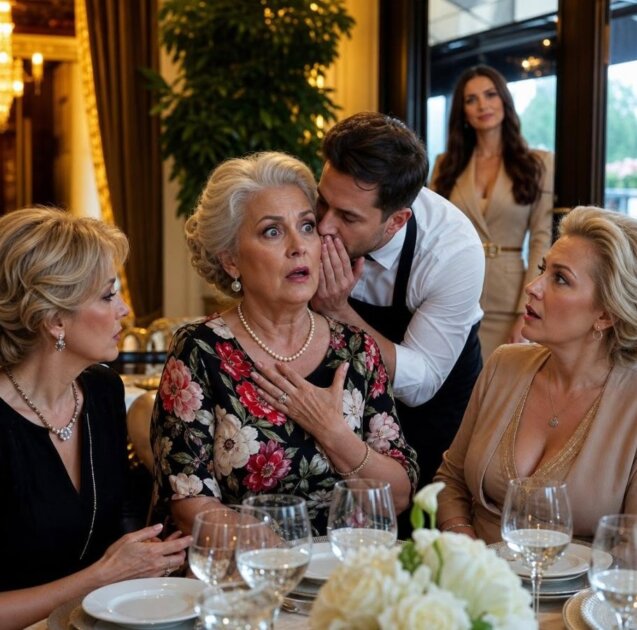
Among the guests were Fayina, two neighbors from the apartment building, and one of my mother-in-law’s cousins, who had traveled from Rybinsk.
Emma Markovna sat at the head of the table, wearing her amber necklace. She proudly accepted compliments about the fish roulades, nodding with satisfaction as though she had spent the entire morning preparing everything herself.
After her third glass of wine, she stood up and tapped her glass with a fork.
“I’d like to propose a toast to my son, the breadwinner of our family! To the man who even paid for my teeth, arranged a discount for me at Verkhovie, and carries this entire household on his shoulders! And on top of everything else…” She paused dramatically, as though she were about to announce the results of an annual school examination. “He’s managed to put up with a penniless woman for five whole years, a woman who arrived here with nothing but one suitcase!”
The guests laughed awkwardly. Fayina hid her smile behind her napkin.
“Don’t believe me?” Emma Markovna became even more animated. “Vitalik, go and bring it down from the loft!”
Vitaly blushed but stood up without saying a word.
A minute later, the brown suitcase was standing in the middle of the dining room, right beside the table, between the chairs occupied by the two neighbors.
“Here it is!” Emma Markovna spread her arms. “This is her entire dowry! She’s reached the age of fifty and this is all she’s managed to accumulate!”
This time, everyone laughed out loud.
Even Vitaly.
My husband looked at his mother, burst out laughing, and winked at Fayina, as though to say: Well, what did you expect from a woman like her?
I stared at my husband.
I felt my fingers slowly turning cold, even though the room was stuffy with the heat from the food and burning candles.
I could still taste the slightly vinegary flavor of the jellied meat I’d sampled half an hour earlier.
I wouldn’t have cried over the suitcase.
But that laughter…
That was unbearable.
And in that moment, I finally understood.
For years, I had convinced myself that Vitaly was simply weak. A man who didn’t dare stand up to his mother.
But that wasn’t it.
He had always taken her side.
Always.
I stood up, adjusted the scarf on my head, and walked over to the suitcase.
“Thank you, Emma Markovna,” I said calmly. “I’m glad you finally had it brought down. I might not have managed to reach the loft by myself.”
The laughter stopped abruptly.
I grabbed the suitcase handle and walked toward the bedroom. One of its wheels squeaked in protest, just as it always had.
It took me twenty minutes to pack.
My chef’s jacket, documents, laptop, the knife wrapped in a towel, and my mother’s photograph, which stood in a small frame on the shelf.
I would collect the rest later.
Vitaly appeared in the doorway.
“Zhanna, what are you doing? It was just a joke! Mum had a little too much to drink.”
“I’m moving out, Vitaly. I found an apartment last week. Come with me!”
He glanced back toward the living room, where I could still hear glasses clinking and people talking.
“Where would I go? It’s my mother’s birthday!”
“Then carry on celebrating!”
I called the landlady, Anna Ilyinichna, after nine that evening. At first, she seemed surprised that I was calling so late, but then she kindly said:
“Come whenever you like, dear. The key is with the neighbor.”
The taxi arrived seven minutes later.
As I walked through the hallway with my suitcase, the guests in the living room suddenly fell silent.
Only my mother-in-law called after me:
“Go on, then! Good luck!”
The new apartment smelled of fresh paint and unfamiliar laundry detergent.
I sat down on the sofa without even taking off my shoes. I left the suitcase beside the door.
The refrigerator hummed steadily. Down below, near the market, delivery workers were arguing about something.
And nobody told me I was taking up someone else’s space.
I must have sat there for an entire hour. I wasn’t thinking about anything. I wasn’t making plans, calculating expenses, or trying to figure out how to please someone else.
I was simply sitting.
The next morning, I bought a coffee from the little kiosk beneath my window. I drank it standing up, watching the market vendors arrange fresh, young potatoes on their stalls.
The coffee wasn’t particularly good.
But it was the first coffee I’d ever drunk in my own home, even if that home was rented for the time being.
Two weeks later, Vitaly called.
“Zhanna…” His voice sounded remorseful, almost like it had in the old days. “Mum is crying. She says she went too far. She wants to apologize. Come back, okay? Let’s meet on Sunday and talk things through calmly!”
I remained silent for a long time.
Perhaps she really had got carried away. She was seventy-six, surrounded by guests, and had drunk a little too much.
Perhaps I had overreacted, too.
Five years is a long time. You can’t forget everything in a single evening.
“All right,” I finally said. “We can meet on Sunday.”
“Wonderful!” I could hear the relief in his voice. “Oh, one more thing! The utility bill arrived. You didn’t cancel the automatic payments, did you?”
“I did. I don’t live there anymore.”
There was silence at the other end of the line.
Then he cleared his throat.
“Oh… well, of course. Never mind. It’s not important.”
I hung up and stared at the screen for a long time.
For some reason, those three words, “It’s not important,” hurt more than all the insults that had come before.
On Saturday, we hosted an eighty-person wedding reception.
There was only one day left until Sunday.
—
At one in the afternoon, the banquet kitchen was filled with the aromas of fresh dill, melted butter, and caramelizing sugar.
Eighty portions of the main course were waiting to be prepared, along with a three-tier wedding cake and two enormous trays of bite-sized sandwiches.
Two of my chefs were chopping vegetables while I checked the sauces and repeatedly glanced at the clock.
The guests would arrive at five. Everything had to be ready by four.
Gleb entered the kitchen without knocking.
That was completely unlike him.
His ears were red, and he looked as though he had something unpleasant to tell me.
“Ms. Kovalyova, Zhanna Olegovna, I’m sorry to disturb you. There are four ladies sitting at table seven in the main dining room. I prepared their preliminary bill, and they used the family discount card. Your name appears in the system.”
“My mother-in-law,” I said. “Or rather, almost my former mother-in-law. What happened?”
“She was talking about you. Quite loudly, actually. I thought you should know.”
For two years, only the cashiers and restaurant manager had known that the card was registered in my name.
We never discussed family relationships in front of guests. Emma Markovna usually came on weekday afternoons, when I was in the banquet department working on budgets for upcoming events.
Gleb had started working for us in the spring.
Apparently, he was the first person to hear my mother-in-law talking about me.
I wiped my hands, folded the kitchen towel into quarters, and followed him.
Table seven was directly behind the bar, separated by a wooden slatted partition. Through the gaps, I could clearly see the white tablecloth and the amber necklace sparkling around my mother-in-law’s neck.
“At last, I’ve got rid of that penniless woman!” Emma Markovna was raising her glass toward Fayina. “It’s been three weeks, and I finally have some peace! The room is empty, the kitchen is clean, and there’s no horrible smell of food anywhere!”
“And what about Vitalik?” one of her friends asked.
“What about him? He keeps calling her, trying to lure her back! I actually told him to say that I’m crying and missing her. Otherwise, who’s going to pay the bills? Seven thousand rubles a month is no small amount!” She laughed. “Let her keep paying if she wants, while living in her little hole. Should I apologize to her, too? Don’t be ridiculous!”
“And what about your discount?” Fayina pointed toward the card lying beside the napkin holder.
“My son arranged that! Everyone here knows me, Fayochka. I get fifteen percent off. You won’t find a deal like that anywhere else!”
So that was why her mother was crying.
Not because she missed me.
But because of the automatic payments.
I stood behind the bar, resting my palm against the polished wooden partition. The aroma of coffee mingled with the sweet scent of my honey cake, which was being served for dessert.
I didn’t feel angry.
I felt something strangely cold and clear.
It was like standing inside an enormous walk-in refrigerator, where everything was in its proper place and even the farthest shelf was perfectly visible.
I took out my phone and called the duty administrator.
“Svetlana, please cancel the family discount card registered in my name, the one being used at table seven. Right now!”
“Of course. I’ll cancel it,” she replied without asking a single question.
Half a minute later, Gleb glanced at his tablet and nodded.
The discount had disappeared from the preliminary bill.
“Gleb, please go over to their table. Be polite, and tell her exactly one sentence!”
I dictated the words.
Gleb repeated them, adjusted his apron, and walked toward table seven.
He leaned down toward my mother-in-law and spoke so quietly that I could only understand what he was saying from his movements.
“Emma Markovna, this discount was provided to you for the past two years by our head chef, Ms. Zhanna Olegovna Kovalyova. She asked me to inform you that it has been discontinued as of today.”
Emma Markovna raised the glasses hanging from her neck closer to her eyes, as though that would help her understand what she had just heard.
“What head chef?”
“Zhanna?” Fayina put down her spoon. “Your Zhanna? Emma, you told us she worked in a factory cafeteria handing out meat patties!”
At that moment, I stepped out from behind the wooden partition.
I was wearing my white chef’s jacket, with my familiar headscarf and a kitchen towel tucked around my waist.
A few guests at the neighboring tables fell silent.
“Good afternoon, ladies!” I said calmly. “Emma Markovna, don’t worry. I only came out for a moment. I’m currently supervising preparations for an eighty-person wedding reception.”
My mother-in-law stared at me.
“Yes, I’m the head of banquets and events at Verkhovie. I have been for almost three years. I also arranged your family discount card. Vitaly simply brought it to you. Under my name, you’ve saved almost sixty thousand rubles over the past two years.”
I paused for a moment.
“For five years, I paid the utility bills for your apartment. I never missed a single payment. The dental implants you proudly talk about were financed from my annual bonus. And the honey cake on your table was made using my recipe.”
Emma Markovna didn’t move.
She pressed her lips together and kept running her fingers over the same small section of the tablecloth.
“I’m not penniless, Emma Markovna,” I continued. “I simply spent five years paying for the privilege of letting you call me that. But from today onward, I won’t be paying anymore.”
Then I turned to Gleb.
“Please put the honey cake on my account. All the other items should remain at their regular prices. Enjoy your meal, ladies!”
I had almost returned to the kitchen when I heard Fayina’s quiet voice.
“Emma… and what about the teeth? You told me all year that Vitalik paid for them!”
My mother-in-law didn’t answer.
Her fingers trembled as she tried to dial a number on her phone, repeatedly pressing the wrong buttons.
Then I heard her shouting her son’s name into the receiver.
“Vitalik, transfer money to my card! Right now! Don’t ask questions! As much as you can!”
The kitchen still smelled of dill, butter, and caramel.
My chefs pretended they hadn’t heard anything, although the service window was wide open.
I picked up my newly sharpened knife.
The blade was one centimeter shorter, but the handle still fitted perfectly into my palm.
I began slicing the veal into thin pieces for the sandwiches.
The blade glided effortlessly through the meat. The delicate pink slices fell neatly beside one another on the serving tray.
I felt as though I had spent years holding an enormous, heavy tray with my arms stretched out, and only now, after all that time, was finally able to set it down.
About twenty minutes later, Fayina appeared in the kitchen doorway.
She was holding her handbag tightly beneath her arm, looking embarrassed.
“Zhannochka, please forgive me!” she said quietly. “I genuinely didn’t know the truth. By the way, could I order a cake from you for a birthday in September? It’s for my grandson. I’d like one just like this honey cake.”
“Of course, Fayina Petrovna. You can place your order through the administration. Just tell them I sent you.”
She nodded and left.
At five o’clock, the newlyweds arrived in the banquet hall.
And I sent out the hot dishes at exactly the scheduled time.
—
In early October, our divorce became official.
We had submitted the application together through the government services portal back in August. After the incident at the restaurant, Emma Markovna told her son that she never wanted to see me again.
And Vitaly, apparently, couldn’t forgive me for revealing the truth in front of Fayina, either.
At the registry office, he signed the documents with his head lowered.
He said only:
“Well, then. All the best!”
Since then, Emma Markovna has been paying the utility bills for her apartment herself, using her pension. Vitaly spends his evenings driving his old Skoda as a taxi to earn enough money for groceries.
My mother-in-law has never set foot in Verkhovie again.
Fayina told all her friends what had happened. Apparently, the women who gather on the bench outside the apartment building no longer gossip about my brown suitcase. These days, they talk about Vitaly’s famous “restaurant connections.”
Fayina really did order the birthday cake for her grandson.
It was a honey cake with twelve layers.
I still live in the little one-bedroom apartment near the market.
I haven’t had to touch the money I’d saved for my down payment. In fact, my savings have grown because my salary is no longer disappearing into other people’s utility bills, groceries, and comfort.
In the spring, I’ll go to the bank and arrange a mortgage on my own.
That apartment will belong to me alone.
Every morning, I drink coffee by the window. In the evenings, I use my sharpened knife to slice bread.
The blade is one centimeter shorter, but it fits my hand just as perfectly as before.
Yesterday, I finally unpacked the last of my boxes.
I placed the brown suitcase on top of the wardrobe. The same old suitcase with wheels and a lock that still refuses to work properly.
Now it sits there empty.
And nobody can ever accuse me of taking up someone else’s space again.
There is nowhere else it needs to go.
Perhaps it doesn’t need to.
Because I have finally arrived somewhere I no longer need anyone’s permission to feel at home.
Have you ever had someone call you penniless while secretly living off your money?

