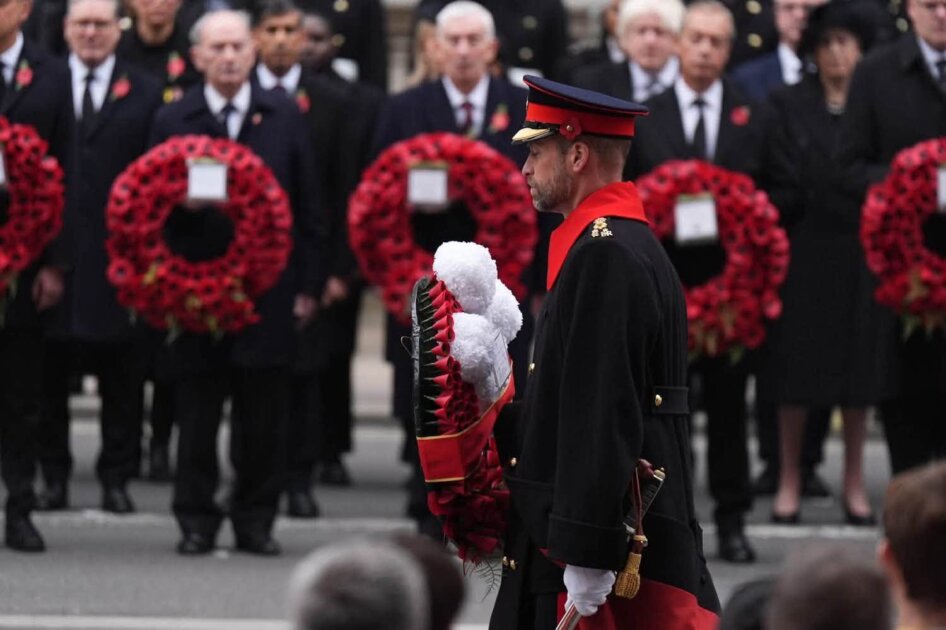
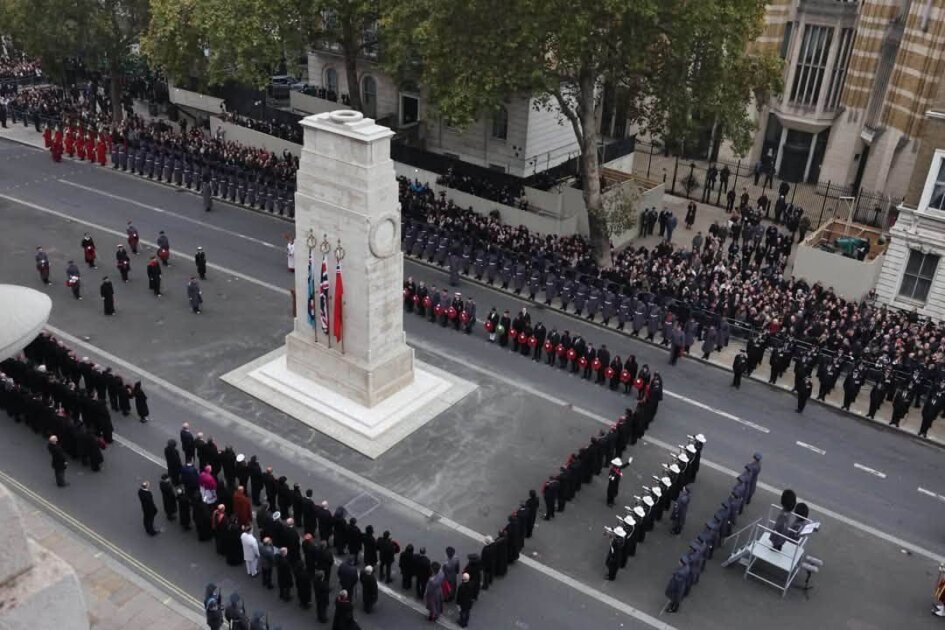
On November 8, London once again became the centre of one of the most important events in the British royal calendar. King Charles III, Prince William, Kate Middleton and Queen Camilla gathered at the Cenotaph on Whitehall to honour the members of the British and Commonwealth armed forces who lost their lives in the two World Wars and other military conflicts.
As always, the ceremony was filled with solemn traditions and deeply moving moments. But this year, royal watchers noticed something more than the formal proceedings. Two small details attracted particular attention: Kate Middleton’s carefully chosen jewellery and the three red poppies worn by both the Princess of Wales and Queen Camilla.
Why exactly three flowers? Is it simply a military tradition, or could there be a much more personal meaning behind them? In Kate’s case, the answer may be connected to a heartbreaking chapter in her own family history. Her appearance also included a touching tribute to Princess Diana.
Meanwhile, while the senior royals gathered in London, Prince Harry made an unexpected appearance at a completely different Remembrance Sunday event, thousands of eyes away from the capital.
King Charles and the future king lead the national tribute
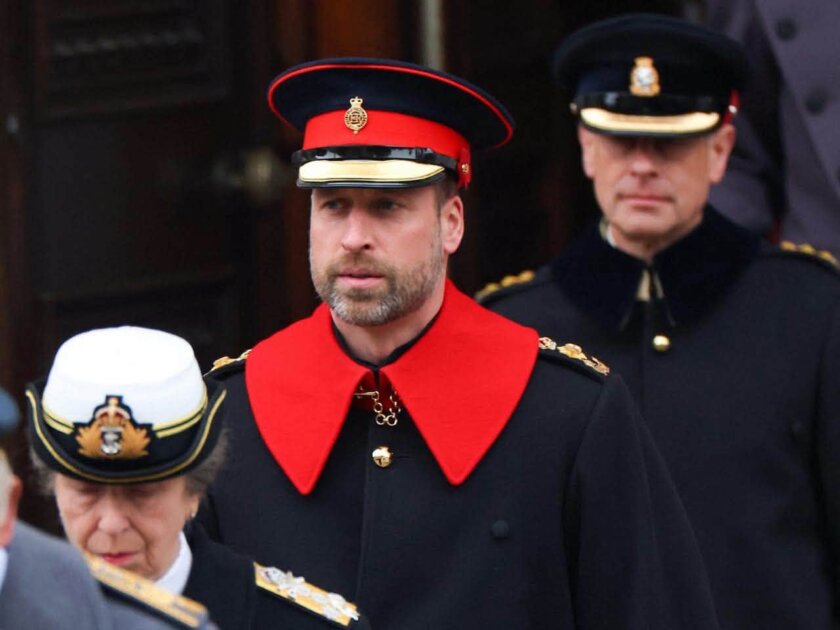
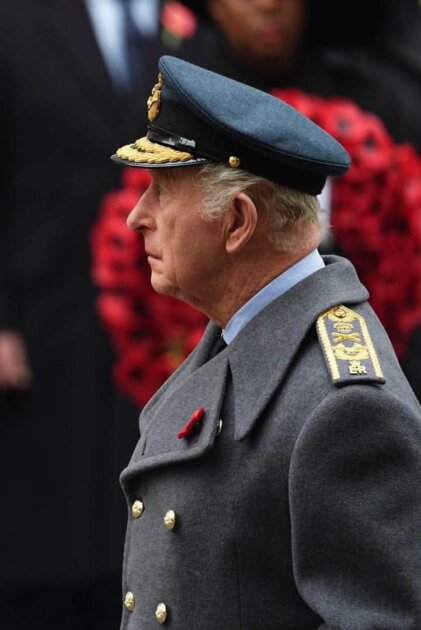
The ceremony began at 11 a.m. with the traditional two-minute silence. King Charles III led the national act of remembrance and was the first to lay a wreath at the Cenotaph.
Prince William followed him. His wreath featured the Prince of Wales’s feathers and a red ribbon in Welsh colours, traditional symbols associated with his royal title as heir to the throne.
A representative then laid a wreath on behalf of Queen Camilla. Prince Edward, the Duke of Edinburgh, and Princess Anne also paid their respects.
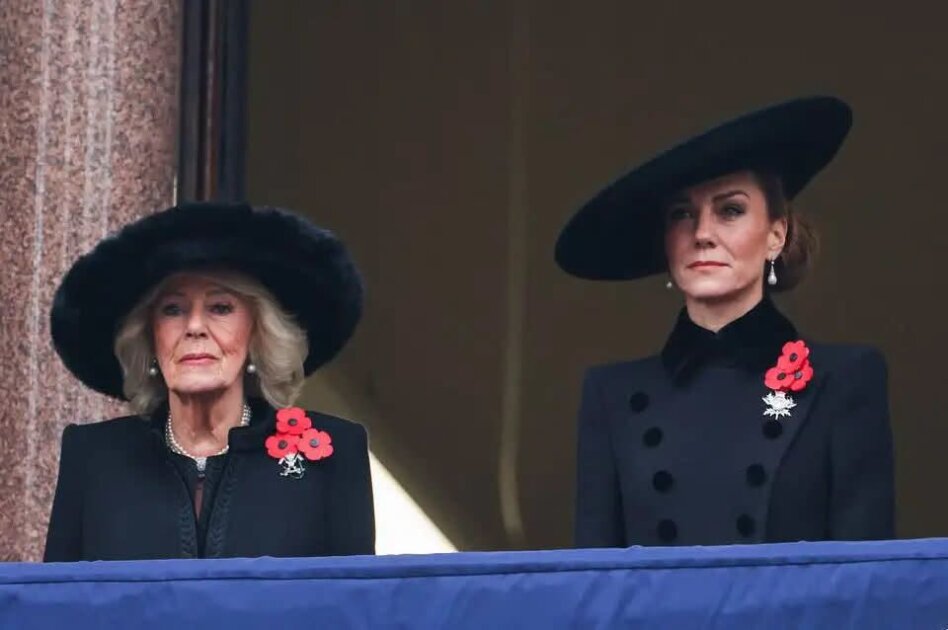
Queen Camilla and Kate watched the proceedings from the balcony of the Foreign, Commonwealth and Development Office building, directly opposite the memorial. On another balcony were Sophie, Duchess of Edinburgh, the Duke of Kent and Vice-Admiral Sir Timothy Laurence, Princess Anne’s husband.
After the wreath-laying ceremony, the traditional march past took place, with veterans and representatives of military organisations paying tribute to those who never returned home.
Kate’s outfit carried memories of three generations
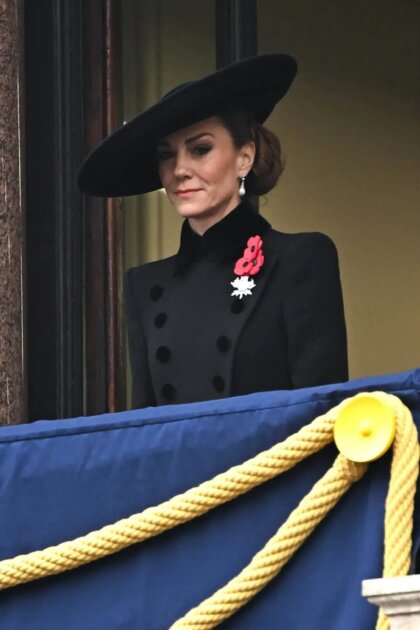
For the solemn occasion, the Princess of Wales chose a black coat by her favourite British designer, Catherine Walker, paired with an elegant wide-brimmed hat by Jane Taylor.
However, it was the details of her outfit that attracted the most attention.
On the lapel of her coat, Kate wore three red poppies alongside a special HMS Glasgow brooch. The brooch is particularly meaningful because the princess serves as the honorary sponsor of the Royal Navy ship. Its design also reflects Scotland’s heritage and Britain’s long maritime traditions.
But perhaps the most touching part of her appearance was the jewellery she wore.
In her ears were the pearl and diamond earrings that once belonged to Princess Diana.
These Collingwood earrings are among the most sentimental pieces in Kate’s jewellery collection. Diana received them as a wedding gift from jewellers ahead of her 1981 marriage to Prince Charles.
Following Diana’s death, the earrings became part of the family’s jewellery history. Kate has worn them on several important royal occasions, quietly keeping the memory of her husband’s late mother alive.
This year’s combination was particularly meaningful. The HMS Glasgow brooch represented her connection to the Royal Navy, Diana’s earrings carried a deeply personal family memory, while the red poppies united her with millions of people honouring those who died in military service.
It was a restrained royal outfit, but almost every detail told a story.
Why do Kate and Camilla wear exactly three red poppies?
This is one of the most intriguing details of the royal family’s Remembrance Sunday traditions.
Buckingham Palace has never officially explained why some female members of the royal family choose to wear three poppies rather than a single flower. Nevertheless, several explanations have become popular among royal commentators.
The best-known interpretation links the three flowers to Britain’s three main armed services: the Army, the Royal Navy and the Royal Air Force.
Both Kate and Camilla have honorary military connections, making this explanation particularly plausible.
However, there is another interpretation that makes the three poppies especially significant for Kate.
According to family history, the Princess of Wales’s great-grandmother had three brothers who were killed during the First World War. Maurice, Lionel and Francis all died on the battlefield between 1915 and 1917.
Imagine a family losing three young men during the same devastating conflict. Their deaths became part of the family’s history, passed down through generations.
Although there has never been official confirmation that Kate wears three poppies specifically in memory of these relatives, some royal observers believe the flowers may carry a deeply personal meaning for her as well.
There is also a much more practical explanation: several poppies simply stand out better against dark clothing, particularly during televised ceremonies.
Interestingly, wearing multiple poppies was also a familiar tradition for the late Queen Elizabeth II. She often appeared at remembrance events wearing five flowers.
One widely circulated interpretation suggests that the five poppies represented the three armed services, civil defence and women’s military services.
Whatever the precise explanation, the flowers have become one of the most recognisable symbols of Britain’s national remembrance traditions.
The jewellery that reveals Kate’s hidden family history
Kate has repeatedly shown that her jewellery choices are about much more than fashion. Some of her most memorable accessories have been carefully selected to honour relatives whose contributions to history might otherwise have remained largely unknown.
One particularly touching example dates back to 2019.
At that year’s Cenotaph service, the Princess of Wales wore a special accessory known as the Codebreakers Brooch.
The brooch paid tribute to the women who worked at Bletchley Park, Britain’s secret codebreaking centre during the Second World War.
Among these women were Kate’s grandmother, Valerie Glassborow, her twin sister Mary and the princess’s great-aunt.
Their work involved decoding intercepted enemy communications. It was an extraordinarily important contribution to British intelligence and Allied military operations.
In May 2019, Kate personally visited Bletchley Park, where she met former female employees of the secret wartime centre.
During the visit, she spoke about her grandmother and explained that, because of strict secrecy rules, she had rarely discussed her wartime work with the family.
The brooch therefore became much more than an elegant accessory. It was a personal tribute to women whose courage, intelligence and contribution had remained hidden from the wider public for decades.
In 2025, Kate once again chose a combination of accessories filled with family significance. She wore Diana’s earrings, a hand-embroidered poppy and a Royal Air Force badge.
The RAF badge was a tribute to her paternal grandfather, Peter Middleton, who served as a pilot in the Royal Air Force during the Second World War.
Through these carefully chosen details, Kate has honoured several different branches of her family history: Diana, the women who worked at Bletchley Park and her grandfather, whose wartime service connected him to British military aviation.
It is perhaps one of the most interesting aspects of her public style. Behind her elegant and often understated outfits, there are frequently deeply personal stories.
Prince Harry makes an unexpected appearance in a small English town
While the senior members of the royal family attended the official ceremony in London, another member of the House of Windsor attracted attention elsewhere.
Prince Harry appeared at a local Remembrance Sunday service in Brackley, a small market town in Northamptonshire.
Unlike the senior royals in London, he arrived without an official royal entourage and did not wear military uniform. Instead, he chose a dark civilian suit, with his military medals and a red poppy displayed on his lapel.
According to reports in the British media, Harry stood among local residents and watched the ceremony. Afterwards, he spent time speaking with people and shaking hands.
For the Duke of Sussex, military remembrance has always carried particular significance.
Harry spent ten years serving in the British Army, eventually reaching the rank of captain. He also completed two tours of duty in Afghanistan.
Even after leaving military service, he remained closely involved in supporting veterans and wounded service personnel. He went on to establish the Invictus Games, an international sporting competition for wounded, injured and sick military personnel and veterans.
His appearance in Brackley was particularly notable because it marked his first participation in Remembrance Sunday events in the United Kingdom since returning to the country in August 2026.
There was also an earlier chapter to this story.
In 2020, after Harry and Meghan stepped back from their roles as senior working members of the royal family and moved to North America, they chose to honour fallen service personnel in their own way.
The couple visited the Los Angeles National Cemetery, where they placed flowers gathered from their own garden on the graves of two Commonwealth soldiers: one who had served in the Royal Australian Air Force and another from the Royal Canadian Artillery.
Harry also laid a wreath bearing a message:
“To all those who have served and continue to serve. Thank you.”
The couple’s last appearance together at the official royal Remembrance Sunday ceremony at the Cenotaph had been in 2019.
This year, Harry chose a smaller local event rather than the central London ceremony. Nevertheless, his presence, military medals and red poppy became some of the most discussed details of the day’s commemorations.
A tradition that connects generations, even across royal differences
The British monarchy has countless ceremonies where every detail matters. The order in which family members appear, the clothes they wear and even the smallest accessories are often carefully considered.
But Remembrance Sunday occupies a special place in the royal calendar.
On this day, titles and royal status become less important. The red poppy represents something shared by everyone: respect for those who made the ultimate sacrifice and never returned home.
For Kate, this year’s appearance offered an opportunity to connect the history of the royal family with the history of her own relatives.
Diana’s earrings, the naval brooch and the three red poppies each carried a different message. Together, they told a story of family memories, military service and the importance of remembering those who came before us.
Harry’s appearance in Brackley offered another reminder that remembrance does not belong exclusively to royal ceremonies or grand national memorials. Sometimes, standing quietly among ordinary people and paying respect is just as meaningful.
Perhaps that is what makes these small details so fascinating. A brooch, a pair of inherited earrings or three simple red flowers can sometimes reveal more about a family than an entire speech.
Do you notice these little details in royal outfits? And what do you think: could Kate’s three red poppies be a personal tribute to her three relatives who died in the First World War, or are they primarily a symbol of Britain’s armed forces?