
“You bought this one again?” Rimma Arkadyevna pinched the little box between two fingers and lifted it out of the shopping bag, holding it at arm’s length as if it were a dead mouse.
“This one,” I said. “Exactly what was on your list.”
“I wrote down the proper one! But you always buy whichever is cheaper!”
I kicked off my shoes in the hallway and walked into the kitchen without even taking off my coat. It was Wednesday, half past six in the evening. It was already dark outside, and I had been working at the optical shop since nine that morning, barely getting a lunch break.
I had spent twelve years grinding lenses, adjusting frames, and helping customers choose the right glasses. In all that time, I had learned how to keep a straight face in front of even the most difficult customers.
But my mother-in-law wasn’t a customer.
My mother-in-law was Wednesday itself.
For eight years, every single Wednesday, I had driven to her apartment on Kirov Street with two bags of medicine from the pharmacy. It had all started the year her husband, Pyotr Matveyevich, died and she was left alone in their two-room apartment.
At first, she had said, “Verochka, please help me out. My legs are giving me trouble.”
Then helping her became a habit. The habit became an obligation. And eventually, it turned into a weekly appointment that nobody ever questioned.
Just like my shifts at the optical shop.
“Eight hundred and forty rubles,” she announced, already holding out the little piece of paper on which she recorded her expenses in blue ink. “Last time it was only six hundred and ninety!”
“The manufacturer changed. They no longer supply the other brand.”
“Of course! Everything gets more expensive except my pension!”
I arranged the boxes on the plastic tablecloth in the same order I arranged lenses in the shop: morning medication on the left, evening medication on the right.
Eye drops, adhesive bandages, two boxes of blood pressure pills, and vitamins she had prescribed for herself after watching television advertisements.
Naturally, I slipped the receipt into my pocket. At home, it would go into the old Georgian tea tin I kept on the top shelf, behind the jars of flour and sugar.
Why had I been saving those receipts for eight years?
I had no idea.
Perhaps because you don’t like throwing away proof of everything you have done for someone.
“I still haven’t received last month’s money,” I reminded her.
“Oh, Verochka!” She waved her hand dismissively, as though the money might be hiding inside the refrigerator. “I’ll pay you back! My pension comes on the twentieth. I’ll give you everything then!”
The twentieth had already come and gone the previous month. And the month before that.
Twenty-eight thousand four hundred rubles. I knew the number by heart because she repeated it at every opportunity, always with the tone of someone who was about to end up begging in the street.
On average, I paid an extra 4,300 rubles a month out of my own pocket to cover her medication.
I had never sat down and deliberately calculated the total. When you pay with the same bank card at the same pharmacy every Wednesday for eight years, the numbers simply settle into your memory.
She didn’t even glance at the receipt. She never did. She cared only about the boxes.
“Tamarka from apartment six told me her daughter-in-law doesn’t bring her so much as a single pill,” my mother-in-law continued, settling onto a stool. “I told her, ‘Well, your daughter-in-law is a city girl. Mine is a simpler sort.’”
Just like that. Casually.
She didn’t mean to offend me, heaven forbid! She was merely reminding everyone of their proper place in the family hierarchy.
I picked up the pill organizer from the windowsill. It was a plastic box designed for seven days, with four compartments for each day. Twenty-eight little sections in total, each labeled in my handwriting with a fine marker: morning, noon, evening, night.
I had bought it myself. I had labeled every compartment myself. And for eight years, every Wednesday, I had filled it with her medication for the coming week so she wouldn’t confuse the yellow pills with the white ones.
The lid snapped open easily. I knew that little latch by heart.
My wrists ached after nine hours on my feet. They ached from the work, from the exhaustion, and from that one sentence:
“Mine is a simpler sort.”
Something dry and hard lodged in my throat.
Finally, I put the pill organizer back on the windowsill.
Empty.
“You can fill it yourself this week, Rimma Arkadyevna.”
She looked up sharply.
“What?”
“You. The compartments are labeled. Morning, noon, evening, night. I’ve arranged the boxes in order, from left to right. You can read perfectly well. You even read the newspaper without your glasses.”
“But I get confused!”
“No, you don’t. You just don’t want to do it.”
I said it calmly, in the same voice I used when explaining to elderly ladies why the floor might look strange for the first three days in a new pair of glasses.
Then I went into the hallway and put on my shoes.
The door closed softly behind me. I walked down one flight of stairs and stopped on the landing beside a barred window.
Below, someone was walking a dog. The streetlamp swayed in the wind.
My shoulders suddenly dropped.
I hadn’t even realized how tightly I had been holding them up.
Nothing extraordinary had happened. I hadn’t shouted, slammed the door, or said anything unforgivable.
I had simply stopped touching my mother-in-law’s pills for the first time in eight years.
***
When I got home, Gena was frying himself four eggs. He always did that after returning from a long-distance delivery run.
While taking off my coat, I briefly told him what had happened with the pill organizer.
“Oh, come on, Vera!” he said through a mouthful of eggs. “Mom’s getting old.”
I reminded him that his mother was seventy and that just the previous Sunday she had traveled across the entire city to shop at the market all by herself.
“Vera, please. Don’t start. Let’s not make a scene.”
Gena wasn’t a quiet man. Quite the opposite. In eighteen years of marriage, I had listened to at least a thousand different explanations for why he shouldn’t have to do anything.
He delivered every one in detail, complete with examples, dramatic pauses, and a lengthy introduction.
That night, a message arrived from my mother-in-law.
“I expect you both here at two on Sunday. Zhanna will be coming.”
***
Zhanna was already sitting at the head of the table when we arrived.
My sister-in-law visited her mother three times a year: at Easter, on her birthday, and whenever she “simply missed her.” That last occasion usually happened in December.
She lived just twenty minutes away.
But in the family Telegram group she had created and named “Us,” Zhanna was the undisputed expert on conscience, her mother’s health, and exactly who had failed to give enough.
“Verochka, hello! You look so pale. Are you taking vitamin D?”
I told her I was and placed the salad I had spent the entire morning preparing on the table.
The table looked as though we were celebrating some grand occasion, although there was no special reason for the gathering.
Jellied meat, herring, roast chicken, and three salads, two of which I had made myself.
Tamara Guryevna, the neighbor from apartment six, had brought some little pies. She immediately settled beside the radiator because, as usual, her back was bothering her.
For the first half hour, everything seemed perfectly normal.
Then my mother-in-law poured herself a little homemade liqueur and turned toward the neighbor.
“Tamara, do you remember when Vera’s mother came to our wedding? She arrived on a regular bus! With pies! She spent an hour and a half bouncing along the road with two huge bags, as if she were going to the market!”
Tamara Guryevna gasped politely.
“Oh, Rimma Arkadyevna, really!”
“I’m not criticizing her! I’m just saying that some people are simple. What can you expect?”
I stared at my plate.
Eighteen years earlier, my mother really had arrived at our wedding by bus. She had never owned a car, and she still didn’t. She brought two enormous trays of cabbage pies because that was how people in her village congratulated newlyweds.
“She’s sixty-eight,” I said. “And she still works in the school cafeteria.”
“Exactly! A hardworking woman!” My mother-in-law put down her glass. “But don’t take offense, Verochka. Your relatives are not my relatives. I have children of my own.”
Someone at the table gave a little snort.
Gena reached for the bread with exaggerated concentration.
I said nothing. I simply felt my fingers clench beneath the tablecloth.
Then came her favorite performance: money.
How difficult it was to live on 28,400 rubles. How everything had become more expensive. How she denied herself so many things.
And how, despite all this, she had managed to save money that nobody was ever allowed to touch.
“Half a million rubles in the bank!” she announced proudly, looking at Zhanna. “For a rainy day and my funeral. Nobody is getting a penny of it! It’s a fixed-term deposit. If I withdraw it early, I lose all the interest.”
Zhanna told her mother that perhaps she shouldn’t discuss such things in front of guests.
Her mother merely waved her away.
“Why not? I saved it honestly!”
Tamara Guryevna nodded approvingly over her pie.
Gena watched the television, where a hockey game was playing without sound.
And that was when I took out my phone.
I don’t even know exactly when I made the decision. My hand simply slipped into my pocket, opened the banking app, and placed the phone faceup on the table beside the saltshaker.
“Rimma Arkadyevna, please transfer the money for Wednesday’s medication. Nine thousand four hundred rubles.”
Silence fell over the table instantly. Forks stopped halfway to mouths.
“What?” my mother-in-law asked.
“Nine thousand four hundred. Last Wednesday, in addition to the usual medication, we bought eye drops and an extra month’s supply of your blood pressure pills. Here’s my phone number. You can transfer the money from any bank. Or Gena can show you how.”
“You’re doing this in front of everyone?”
“Did I bring you the money in front of everyone?” I asked. “I brought it every Wednesday for eight years. Tamara Guryevna can confirm that. She sees me in the stairwell more often than your own son does.”
The neighbor buried her face in her tea.
Zhanna put down her fork and never picked it up again.
My mother-in-law lifted my phone between two fingers, just as she had held the medicine box a few days earlier.
“Gena!”
My husband spent a long time tapping his own screen, sighing and explaining where his mother needed to enter the number.
Three minutes later, my phone chimed.
Nine thousand four hundred rubles.
For the first time in eight years, I had received my money back on the very day I asked for it.
“Thank you,” I said.
“Choke on it,” she muttered, not to me exactly, but somewhere in the direction of the herring.
We drove home without saying a word.
Strangely enough, I found the silence almost pleasant.
I watched the wet asphalt through the window and thought about how I could have done this in 2019. Or in 2021. Or on any of the four hundred Wednesdays that had come and gone.
At half past eleven that night, my phone rang.
It was my mother.
Her voice sounded suspiciously cheerful. My mother always tried to sound cheerful when something was seriously wrong.
“Verochka, please don’t panic, all right? I’m at the district hospital. They’ve admitted me.”
***
I took time off work starting Wednesday.
I drove to see her alone. Gena was always on the road on Wednesdays, driving his delivery van along the same regional route he had followed without a single change for eighteen years.
It was ninety kilometers to the hospital. The journey took about an hour and twenty minutes if I didn’t get stuck behind trucks.
My mother was lying in a four-bed room beside the window. She was wearing the nightgown I had brought her two winters earlier.
She had lost a great deal of weight over the previous few days. Her face looked drawn, and dark circles shadowed her eyes.
The doctor took me aside in the corridor.
He spoke calmly and avoided frightening words.
Her condition was stable, but she needed a course of medication. The hospital didn’t have the required drug, so the family would have to buy it.
The entire course would cost 46,000 rubles.
I stood by the window and started calculating.
I had sixteen thousand rubles. My salary wouldn’t arrive until the twentieth, twelve days later.
Where was I supposed to find the remaining thirty thousand?
At 12:20 p.m., my phone vibrated.
“Verochka, where are you?” My mother-in-law never wasted time saying hello. “I’ve run out of my morning pills. Bring them today!”
“I’m at the district hospital. My mother has been admitted.”
There was a short pause.
“And what does that have to do with me? My blood pressure is 170!”
“Ask Gena to stop by this evening. He’ll be back in town at seven.”
“He’s been driving all day! He’ll be exhausted after his route! I’m not going to bother him!”
But bothering me was perfectly acceptable.
I didn’t answer. I simply watched a cleaner push her mop across the linoleum, tracing figure eights.
“Fine,” I finally said. “Transfer the money, and I’ll stop at the pharmacy on my way home. It’s 3,750 rubles.”
“Oh, that’s terribly expensive!”
I stayed beside my mother until the end of visiting hours, then left at six.
The bank notification arrived as I was leaving the district. I pulled over before reaching the turnoff.
Two thousand three hundred rubles.
I stared at the screen much longer than necessary.
Not 3,750.
Two thousand three hundred.
No explanation. No promise to send the rest later. Just that amount, leaving me to figure out the difference myself.
What was I supposed to do? Add the missing 1,450 rubles from my own pocket again, as I had done for eight years?
And suddenly, something inside me clicked into place.
Quietly. Completely. Irrevocably.
Exactly like a lens settling into a glasses frame.
At half past seven, I walked into the pharmacy on Lenina Street. The cashier already knew me by name. I had been a regular customer for eight years.
“Are we collecting loyalty points today?” she asked.
I nodded.
I took out my mother-in-law’s list, covered in blue ink, and quickly named the items that would fit within the 2,300 rubles she had sent.
Blood pressure medication. Morning pills. Adhesive bandages.
I didn’t buy the eye drops.
They cost 1,450 rubles.
“That’s everything?” the young woman asked, surprised. “You usually get the eye drops too.”
“Not today.”
I arrived at the apartment on Kirov Street at a quarter past eight.
My mother-in-law opened the door wearing her dressing gown. The smell of buckwheat filled the apartment.
“Where are the eye drops?”
“There aren’t any.”
“What do you mean, there aren’t any? They’re on the list!”
“They’re on the list, yes. But not in the transfer. You sent me 2,300 rubles, so I bought 2,300 rubles’ worth of medication.”
I placed the bag on the hallway cabinet without taking off my shoes.
“You’ll get the eye drops next time, when you send the full amount.”
“So now you’re billing me?!” Her voice rose, taking on that familiar tremor she could summon as easily as flicking on a turn signal.
“I’m not some stranger to you!”
“You’re not a stranger,” I agreed. “That’s why I’ve been coming here for eight years. But I’m no longer going to pay for your medication with my own money.”
“What do you mean, my medication?! Those are my medicines!”
“The medicines are yours. The money is mine.”
She stood in the doorway, wearing a dressing gown fastened with the wrong buttons.
I noticed.
Eight years earlier, I would have reached out automatically to straighten them.
This time, I felt nothing.
That night, after Gena fell asleep in front of the television, I took the old Georgian tea tin down from the top shelf.
The lid barely closed anymore. Eight years’ worth of receipts had been compressed inside.
I emptied everything onto the kitchen table and began sorting the receipts by year.
The newest ones still smelled faintly of the pharmacy. The oldest had faded to gray, and many of the numbers were almost impossible to read.
But the receipts I could still decipher were more than enough.
Fifty-one thousand six hundred rubles a year.
Multiply that by eight.
Four hundred and twelve thousand rubles.
At two in the morning, I sat on a kitchen stool surrounded by the paper mountain, thinking that nobody had forced me to do any of it.
I had done it myself.
Every single Wednesday, I had chosen to do it myself.
On Saturday, my mother-in-law would celebrate her seventy-first birthday.
I finally decided to ask her for a loan. Thirty thousand rubles, just twelve days until payday.
She wasn’t a stranger to me.
At least, that was what I had always believed.
I put the tea tin in my bag that morning, although I couldn’t explain to myself why.
I bought a honey cake from Vatrushka, the bakery opposite the optical shop. It cost 940 rubles.
By the time we arrived, the guests were already seated: Zhanna and her husband, Tamara Guryevna, my mother-in-law’s cousin from Saratov, and the upstairs neighbor, whom I had probably seen only twice in my life.
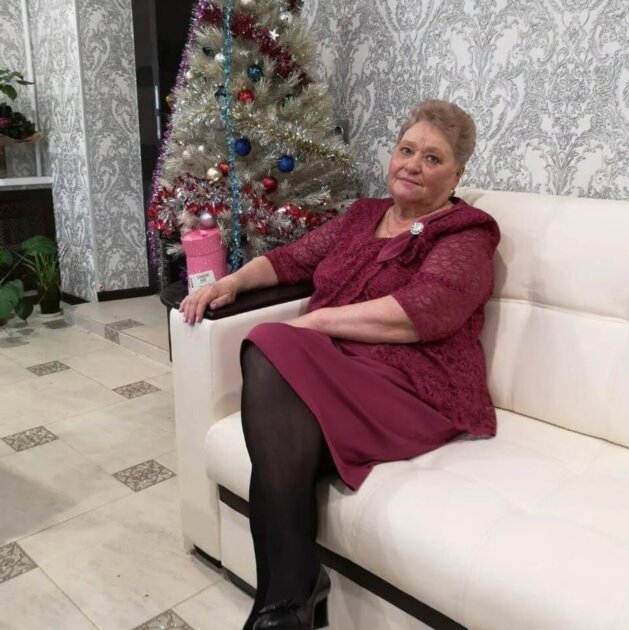
My mother-in-law was wearing a burgundy sweater with a decorative brooch. She was in a wonderful mood.
She loved birthdays. On days like these, everyone praised her aloud, one after another, and she could bask in the attention to her heart’s content.
I waited until the hot food had been served, then asked her to come into the kitchen with me.
She held the kettle beneath the tap without even turning around.
“My mother has been prescribed a course of treatment. It costs 46,000 rubles. I have sixteen thousand. Could you lend me thirty thousand until the twentieth? I’ll pay you back the same day I receive my salary.”
The water rushed into the kettle.
Then she turned off the tap and faced me.
“Thirty thousand rubles?”
“For twelve days.”
She laughed.
Not cruelly, but with genuine surprise, as though I had asked her to buy me a spaceship.
“Verochka, I can’t! I have a fixed-term deposit. I can’t touch it until autumn. If I withdraw the money early, I’ll lose every penny of interest!”
“I know about your deposit. But I only need the money for twelve days.”
“What do twelve days have to do with anything?!” Her voice rose.
I realized she was no longer speaking just to me. She wanted everyone in the next room to hear.
“Let her own family help her! Doesn’t she have anyone besides you? Let them figure it out! Your relatives are not my relatives! I’ve told you that a hundred times!”
The room fell silent immediately.
Nobody had turned on the television that day, so there was nothing to cover the silence.
I stood beside the kitchen table, my fingers resting on the ridges of the plastic tablecloth. I could feel every tiny groove beneath my fingertips.
I wasn’t angry.
I wasn’t even humiliated.
I simply saw everything clearly.
Eight years. Nearly four hundred Wednesdays. Half a million rubles in the bank. Thirty thousand rubles for twelve days.
And still, she wouldn’t help me.
I picked up the pill organizer from the windowsill and returned to the living room.
I didn’t sit down.
My bag hung from the back of a chair beside the door. I took out the old tea tin, walked to the table, and emptied it onto the tablecloth between the salad bowl and the cake.
The receipts scattered in every direction. Several drifted onto the floor.
“What is that?” Zhanna asked.
“This,” I said, “is eight years.”
Nobody spoke.
Tamara Guryevna half rose from her chair, then sat down again.
“Since 2018, I have brought Rimma Arkadyevna her medication every Wednesday. Nearly four hundred times. At best, I got half the money back, and even then, never on time. I paid more than four thousand rubles a month out of my own pocket. Fifty-one thousand six hundred a year. Four hundred and twelve thousand over eight years.”
I looked around the table.
“Here are the receipts. Count them if you like. I haven’t rounded a single figure in my favor.”
“Vera,” Gena said, getting to his feet. “Vera, please. Don’t do this.”
“I’m doing it.”
I didn’t even turn toward him.
“Today, I asked your mother to lend me thirty thousand rubles for twelve days because my own mother needs treatment costing forty-six thousand. You all heard her answer. The fixed-term deposit. And the fact that my family isn’t her family.”
My mother-in-law stood in the kitchen doorway, holding the kettle. Red patches spread across her face.
“I’m a sick, elderly woman!” she shouted. “I’m seventy-one years old!”
“Yes. And you need medication.”
I placed the pill organizer in front of my husband. The same one I had filled for his mother for eight years.
The twenty-eight little compartments still carried my handwritten labels.
I placed her medication list on top.
“Gena, this is your responsibility now. Wednesday, the pharmacy on Lenina Street. The list is here. Morning, noon, evening, night. I’ve labeled everything. You can manage.”
“But I’m out driving every Wednesday!”
“Then go on Tuesday. Or ask Zhanna. She lives twenty minutes away.”
Zhanna opened her mouth, then closed it again.
“Starting this week, your mother’s medication will no longer be bought by her daughter-in-law,” I said. “Her son or daughter can do it. Just as they would in any normal family where relatives actually treat one another like family.”
My mother-in-law lowered the kettle onto the table so forcefully that it landed with a loud clatter beside the stand.
“How dare you do this on my birthday?!”
I looked at her.
“And which day should I have chosen? I’ve spent eight years waiting for the right moment.”
I picked up my coat and bag and walked out.
The honey cake remained untouched on the table, sitting in its open cardboard box.
Outside, the air was cold, and the street was unusually quiet.
I walked to the corner of the building, stopped beside the electrical transformer, and stood there for a minute.
My hands weren’t shaking.
I deliberately looked at them because, in the movies, a woman’s hands always shake at moments like this.
Mine were steady. Just as steady as they were at work when I fitted a lens into a frame and knew that one wrong movement could ruin everything.
I called a taxi and went home.
On the way, I texted my mother.
“We’ll figure everything out. Don’t worry!”
She replied with a smiling emoji. My mother has always used those at the wrong moments.
At home, I boiled some dumplings, ate them straight from the pot, and went to bed at eleven.
Gena arrived around two in the morning. He slept on the living room sofa without saying a word.
I could hear him tossing and turning.
But I slept.
For the first time in eight years, I didn’t care what day tomorrow would be.
Two months passed.
Wednesday became just another Wednesday again.
The day I worked until six and then went home.
Gena now visited his mother himself. Twice, he had already bought the wrong medication because he had chosen a substitute that didn’t suit her. She spent half an hour on the phone complaining about it.
Once, he forgot the eye drops altogether, and they argued about it for two weeks.
But I stayed out of it.
He asked me just once whether I could “go over there this one time, just to calm her down.”
I said no.
He understood. He never asked again.
My mother-in-law no longer calls me.
Not once in two months. Not even on International Women’s Day on March 8, although she used to be the first to call so she could be the first to receive congratulations herself.
Of course, the entire apartment building knows the story.
Whenever I run into Tamara Guryevna, she looks away.
Gena reluctantly told me the version circulating among the neighbors: the daughter-in-law abandoned a sick old woman, caused a scene at her birthday party, and threw money in her face.
Zhanna sent three consecutive voice messages to the “Us” family group. Eleven minutes in total, explaining the meaning of conscience and why I had no right to humiliate her mother in front of other people.
I replied with a single message without even finishing the recordings.
“Wednesday is free. The list is with Gena.”
Nobody has mentioned me in the group since.
My mother was discharged from the hospital at the end of February. She has already returned to work in the school cafeteria.
We eventually managed to pay for her treatment. I used 6,200 rubles’ worth of points accumulated on my pharmacy loyalty card.
Those points had been earned by buying my mother-in-law’s medication for years, and the card was registered exclusively in my name.
Gena told his mother about the points himself. I never asked him to.
Her response came through him.
“Vera measures everything in money.”
I didn’t call her back.
Still, sometimes, when I walk home from the optical shop on Wednesdays, I think about that birthday.
The untouched honey cake. The scattered receipts. The pill organizer with its twenty-eight compartments.
And the sentence I had heard for eight years:
“Your relatives are not my relatives.”
Perhaps I shouldn’t have exposed everything in front of the guests. Perhaps it would have been better to settle the matter quietly, in the kitchen, without an audience.
Perhaps, in a normal family, a person shouldn’t have to wait eight years before finally being allowed to say no.
But if I had stayed silent that day, when would my side of the story ever have been heard?
What would you have done in my place? Was I right to tell everyone the truth, or would it have been more dignified to settle things privately, without embarrassing my mother-in-law in front of her guests on her birthday?

