
“Please sign here to confirm receipt,” the courier said, holding out his worn terminal.
I silently tapped the screen and took the cardboard box.
It was surprisingly light.
The sender’s name made my stomach tighten.
Denis Saveliev.
My son.
The package had been returned a month after I sent it. A stamp on the label read: “Recipient refused delivery.”
I placed the box on the kitchen table and cut through the tape.
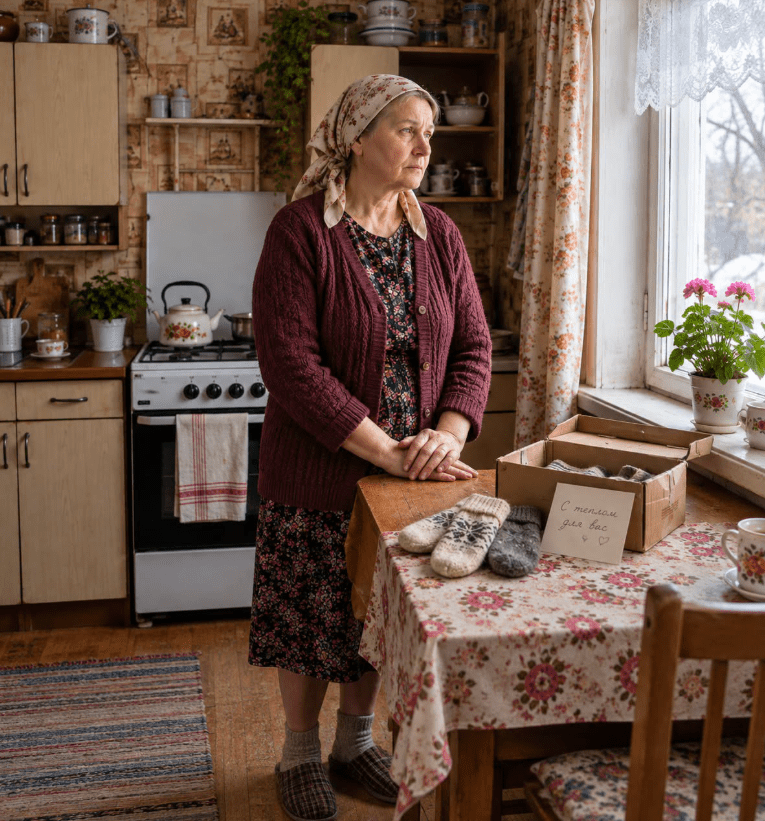
Inside were seven pairs of tiny children’s mittens.
I had knitted them from expensive merino wool. Three pairs were blue, two were gray, and two had little red bullfinches knitted into the pattern.
For Mark and Matvey.
My grandsons.
I had seen them exactly once in four years—when they were discharged from the maternity hospital.
At the bottom of the box was a crumpled sheet of notebook paper.
I unfolded it.
The handwriting wasn’t Denis’s.
It was Alina’s.
“Antonina Pavlovna, stop sending this garbage. The children wear proper designer clothes. They are allergic to your cheap wool and mothballs. Stay out of our family.”
I folded the note carefully and put it aside.
Then I picked up my phone.
Denis’s number was in my favorites, although I rarely called him anymore. Twelve calls over the past year had gone unanswered.
This time, he picked up.
“Yes, Mom. What is it?”
“Hi, Denis. The package came back.”
“What package?”
He sighed irritably.
“Oh, those knitted things? Mom, Alina already asked you to stop. Why are you deliberately provoking her?”
“How am I provoking her? By knitting gloves for my grandsons? Winter is coming. You get strong winds where you live.”
“We can buy our own clothes for our children! I have to go. I’m driving.”
“Denis, wait.”
“What?”
“When are you bringing the boys to see me? Four years have passed. They’ll be old enough to read soon, and they don’t even know what their grandmother looks like.”
“You brought this on yourself,” he said coldly. “Alina still hasn’t forgiven you for how you behaved at the christening. We’ve talked about this a hundred times. If you want a relationship with us, apologize to her properly.”
The line went dead.
That evening, my neighbor Lyuba sat with me in the kitchen.
“What a woman your daughter-in-law is,” she muttered. “And your son lets her control everything.”
“He listens to his wife,” I said quietly.
Lyuba looked at me.
“And yet they had no problem taking two million eight hundred thousand rubles from you.”
That number still hurt.
Last year, I sold the country house I had inherited from my parents. I gave every penny to Denis and Alina for their apartment.
But I had insisted on one condition.
Half of the apartment would remain in my name until they paid off the mortgage.
“And your share is still yours?” Lyuba asked.
“Yes.”
“Then don’t give it to them.”
As if her words had summoned him, my phone rang.
Denis.
“Mom, we’ll come tomorrow at noon. We need to talk. Alina is coming too.”
“Are you bringing the boys?”
“No. This is an adult conversation.”
The next day, they arrived exactly at noon.
Denis stood at my door in an expensive coat, avoiding my eyes. Beside him was Alina, holding a thick leather folder.
They sat at my kitchen table.
Denis took out several documents.
“Mom, we want to move. The boys are growing up and need separate rooms. We found a beautiful four-bedroom apartment.”
“I’m happy for you. What does that have to do with me?”
“We need to sell our current apartment to get the new mortgage,” Alina said. “We already have a buyer. But your share is in the way.”
She pushed a document toward me.
“This is a gift agreement. You sign over your share to us. There’s also a power of attorney for Denis. Then we sell the apartment and buy the new one in our names.”
I looked at my son.
“And the two million eight hundred thousand rubles I gave you?”
“Mom, that money was for the family! For your grandchildren! You’re not seriously asking for it back?”
“So I’m supposed to give you my money and my half of the apartment?”
Alina sighed dramatically.
“Please don’t make this emotional. You’re toxic and manipulative. This is your chance to do something for your grandchildren’s future.”
“And if I refuse?”
“Then we’ll go to court,” she said, pulling out another document. “We have receipts showing we spent one and a half million rubles renovating the apartment.”
I read the papers slowly.
Then I looked up.
“All right. I’ll sign.”
Denis visibly relaxed.
“But tomorrow,” I added. “Today, I’m coming to your apartment. I want to see the boys.”
Alina stiffened.
“The children don’t know you!”
“Then I hope you won’t be too surprised if I don’t sign anything.”
That evening, I arrived at their apartment.
Denis opened the door.
The boys were racing through the hallway.
“This is your grandmother,” Denis said awkwardly.
The boys stared at me.
“Where’s the present?” Matvey asked.
“I knitted you some mittens,” I said with a smile. “They’re very warm.”
Mark wrinkled his nose.
“Gross. Mom says you smell old.”
Alina laughed softly.
Denis said nothing.
Something inside me finally broke.
I walked into the kitchen.
Alina followed.
“How much longer are you staying? The children are tired.”
I turned around.
“I’ve changed my mind.”
“What?”
“I’m not giving you my share.”
Denis appeared behind her, his face turning red.
“But you promised!”
“I said I would think about it.”
I pulled a document from my bag and placed it on the counter.
Alina picked it up.
Her face went pale.
“What is this?”
“The sale agreement for my share of the apartment.”
Denis stared at me.
“You sold it?”
“Yes. This morning. Officially, through a notary.”
“To whom?”
“An investment company.”
Silence filled the kitchen.
“You sold half of our apartment?”
“Yes. I sold it for less than it was worth, but I received the money immediately.”
Alina’s hands began to tremble.
“You brought strangers into our home! Do you know what they could do to us?”
I looked at her calmly.
“Funny. Now the family matters?”
Denis stepped toward me.
“Mom, my children live here!”
I pulled my arm away when he tried to grab me.
“They were my grandchildren when I wanted to see them too.”
I picked up my coat.
“For four years, you kept me out of your lives. You returned my gifts. You called me toxic. Then you came asking me to give up everything I owned.”
I opened the door.
“I didn’t take anything from you. I simply protected what was mine.”
And I walked away.
Later, some neighbors stopped speaking to me. They said adults can fight, but children should never be caught in the middle.
Maybe they’re right.
But every winter, I look at those seven tiny pairs of mittens and think about the same question:
If your own son shuts you out for years, then suddenly comes back because he needs your money, how much do you still owe him?
Would you have given him the two million eight hundred thousand rubles?

