The bass thumped from the restaurant’s speakers as if it were beating its own cruel rhythm between Diana’s ribs. In the half-light, she stood beside the heavy cloakroom rack, instinctively pressing one hand to her right side, because the tight corset turned every breath into pain.
Her body still hadn’t recovered from the weeks in the hospital, but no one cared about that now. The doctors had ordered rest, but she couldn’t rest—because the “Elite-Wood” furniture factory she had built from nothing together with Artúr knew no pause.
At night Diana drew plans, by day she negotiated with suppliers, in the evening she checked contracts, while her body slowly but steadily began to protest. Every pain was a signal she ignored.Today was the fifth anniversary. Artúr’s message had been brief:
“There will be important guests. Come at eight. And dress properly, not in your usual meaningless clothes.” She came, and now she stood at the dark edge of the hall, watching her husband raise a glass, while next to him stood Snezsana—striking, confident, in an open-back dress,
too close, too comfortable, laughing and leaning possessively against Artúr’s shoulder as if she had always belonged there. Diana knew her: she was the daughter of a major construction investor, and for months she had been like a slowly forming shadow behind their business deals.
The music faded. Artúr took the microphone. The room’s attention turned to him, and smiling, he began:“Five years ago we started in a garage. Today, ‘Elite-Wood’ is a name…” Applause erupted, echoing off the walls. Diana did not move. Artúr’s gaze then caught her in the dark corner, and he continued coldly:
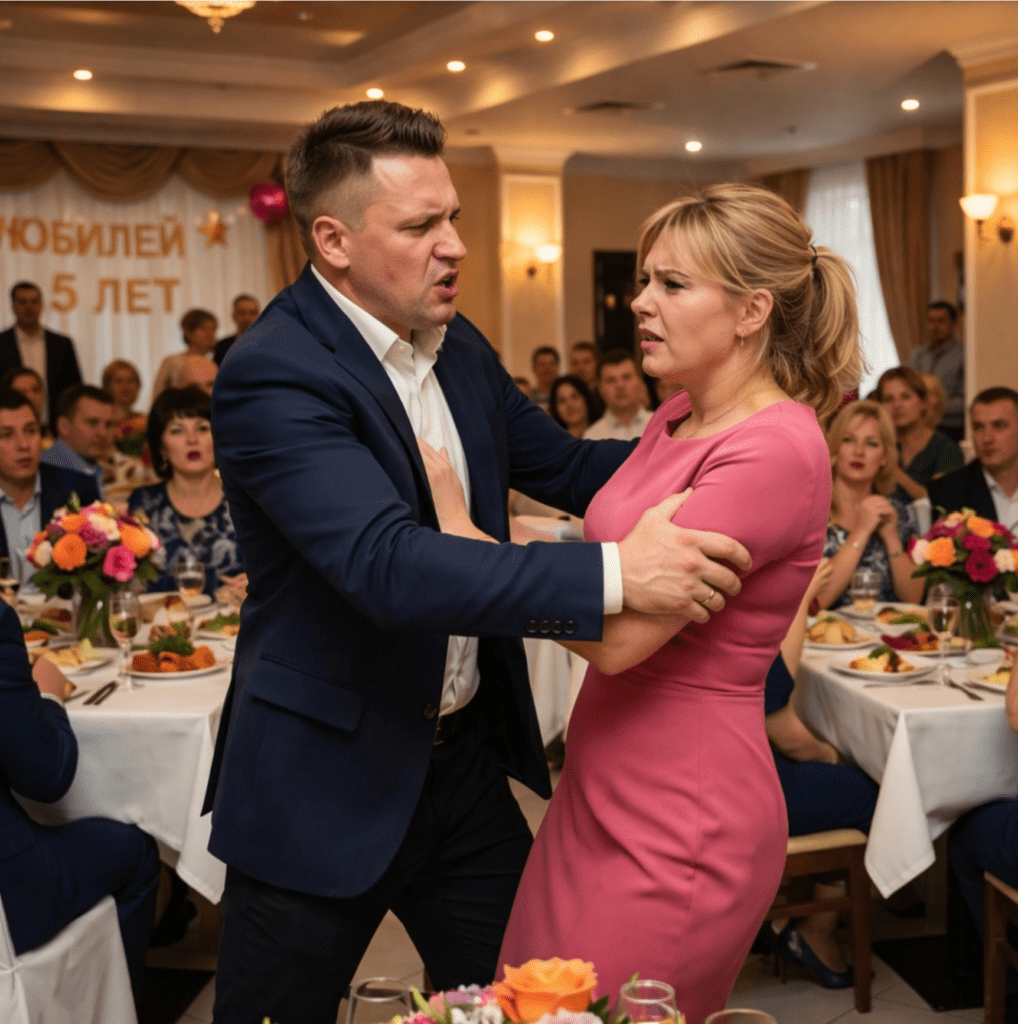
“Growth requires quick decisions, and sometimes you have to cut what is unnecessary.” Silence fell, the air freezing. “My wife, Diana… she started with me. But her time is over. We need a new level now.” He raised his glass: “I introduce Snezsana, our new development director.
” Smiles, applause, mocking glances. Diana’s face remained still, but something in her chest tightened more and more, as if the corset were crushing her from the inside as well.“Diana, from tomorrow my lawyer will handle the divorce. The company is mine. And you are fired.”
The room froze. No one knew if it was a joke, but Artúr wasn’t smiling.Diana slowly exhaled, then turned without a word and walked out. No one stopped her. Outside, the cold air hit her face like the door to another world closing behind her. Artúr caught up with her and grabbed her arm.
“Don’t try anything. You’ll lose everything.”Diana looked at him with tired but clear eyes.“Without my connections and my plans, you couldn’t even design a chair.”He swallowed his anger, then spat:“Get lost.”And she left.
In the parking lot, a black car was waiting. Beside it stood Boris Nikolayevich, calm, as if this were just a scheduled meeting.“Did it work?” he asked.“He fired me,” Diana replied.Her father smiled.“Then let’s begin.”
The next morning, panic swept through the company. Emails, notices, immediate repayment demands: 48 hours.“This is impossible!” Artúr shouted, pacing the office. The lawyer turned pale as he flipped through the contracts. It turned out that every line they had signed years ago now converged in Diana’s hands—guarantees,
securities, decisive signatures, all pointing to her.Artúr ran to his father.“Call her! Now!”Boris slowly picked up the phone. Minutes later, the answer arrived: the entire system had collapsed.
“She is the owner,” the director said quietly, pointing at Boris. Artúr’s face went blank; his confidence vanished.
“This… is my company…”“Not anymore,” came the reply.Boris took off his jacket as if the long day had finally ended.“There is a price for what you did to my daughter. And it has been paid.”Two years later, cranes roared at the industrial site.
The air was dusty, filled with the smell of machine oil and metal. Artúr worked in uniform, silent, invisible. His past existed only on paper.One day, a black car entered the yard. Diana stepped out—elegant, calm, confident. She was no longer the woman who once stood in the corner.
Their eyes met for a moment, but Artúr couldn’t speak. Diana did not approach, did not smile, was not angry—only indifferent, as if Artúr were just part of the factory’s gray walls. Then she turned and walked away.
He remained there in the wind, in the noise and the silence, with the realization that sometimes a downfall is not loud—only final.