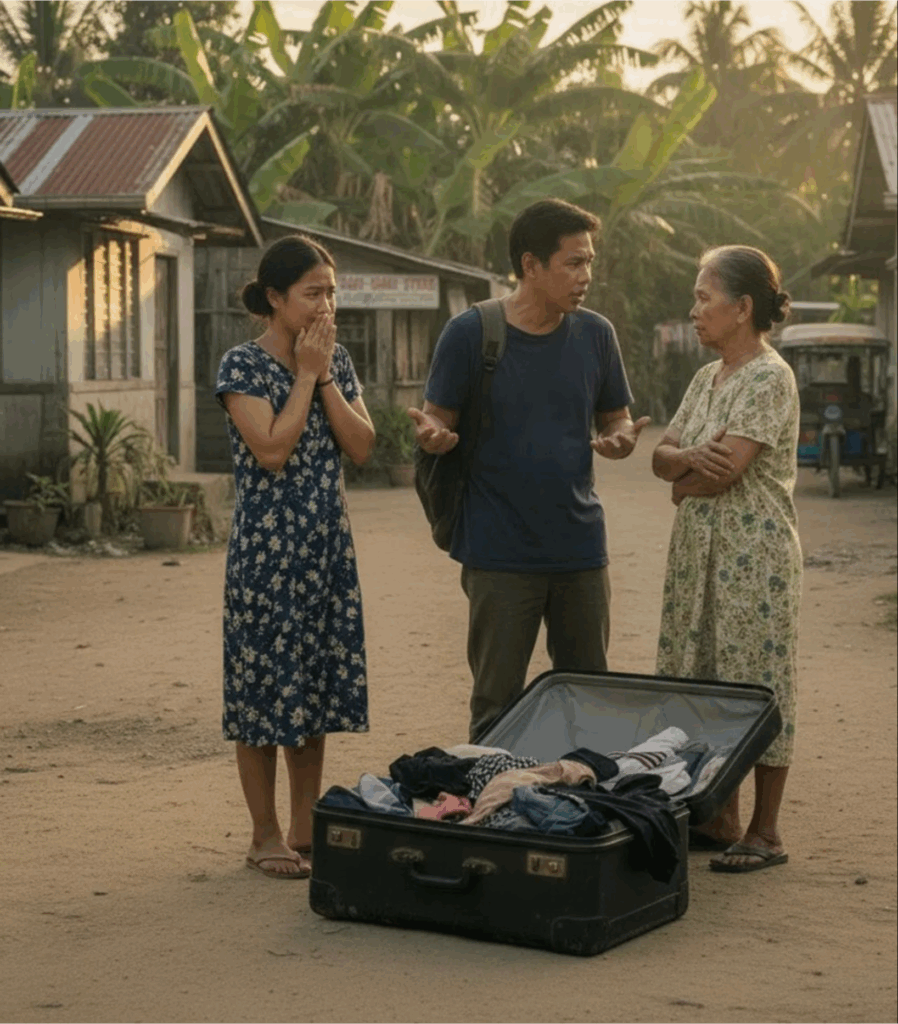
Two years ago, I lent my son and daughter-in-law twelve thousand złoty to finish their kitchen.
I didn’t ask them to sign anything.
There was no written agreement, no repayment date, no receipt tucked away in a drawer.
After all, they were family.
My son.
I believed that within a family, money should never need to be reduced to signatures and pieces of paper.
Then, in August, my refrigerator broke down.
When I asked them to return at least part of the money, my daughter-in-law answered in the calmest voice imaginable:
“Mom, at your age, you really should have some money put aside for emergencies like this.”
I remember every word.
Not because she shouted.
She didn’t.
She wasn’t angry.
She didn’t insult me.
She simply said it as though she were giving me perfectly sensible financial advice.
And perhaps that was what hurt the most.
She was telling me that I should have prepared for a broken refrigerator.
As if the twelve thousand złoty I had given them two years earlier had never existed.
As if it had never been mine.
If someone had told me back then that one sentence from my daughter-in-law would keep me awake at night, I would have laughed.
At the time, I still believed that money within a family was merely a practical matter.
I didn’t yet understand that sometimes money becomes a test of character.
My name is Lucyna Maj. I am sixty-two years old, and I have been retired for a year.
For thirty years, I worked in a pharmacy in Opole. I started as a pharmacist and eventually became the manager.
I saved my entire life.
I never spent money on expensive holidays. I didn’t buy a new car every few years. When something broke, I always tried to repair it before replacing it.
My mother used to say:
“Lucynka, save something. You never know when hard times will come.”
So I listened.
I saved every extra bit of money I could.
My thirteenth-month salary.
My anniversary bonus.
Small rewards and occasional extra payments.
I wasn’t saving because I dreamed of becoming rich.
I was saving because I wanted to feel safe.
To me, money was never about luxury.
It was about peace of mind.
When Darek and Agnieszka bought their apartment, I was genuinely happy for them.
Finally, they had a place of their own.
It was a three-room apartment on a new housing estate beyond the bypass. The walls were freshly plastered, the floors were still bare concrete, and cardboard boxes seemed to be everywhere.
The mortgage had swallowed almost all of their savings.
There was barely anything left for the kitchen.
Darek worked as a mechanic at an authorized car service center. Agnieszka worked as a cashier at Biedronka. They had two children: five-year-old Oliwka and three-year-old Kubuś.
They weren’t wasteful people.
I knew that by the end of the month, things could get tight.
One Sunday evening, Darek called me.
“Mom… I’m embarrassed to ask.”
I immediately sat down at the kitchen table.
“What happened?”
He was quiet for a moment.
“It’s the kitchen. Agnieszka is trying to cook on two portable burners. Oliwka doesn’t even have a proper place to do her homework because the table is in the living room. There are boxes everywhere. We wanted to finish everything, but after the down payment on the apartment, we simply don’t have anything left.”
I didn’t ask any more questions.
The next morning, I went to the bank.
I withdrew twelve thousand złoty from my savings and gave it to them.
It was money I had spent years putting aside.
“Pay me back when you can,” I told them.
We didn’t write anything down.
At the time, I thought that was what family meant.
A few weeks later, Agnieszka sent me photographs of the finished kitchen.
White cabinets.
A wooden countertop.
A new sink.
A shiny stainless-steel extractor hood.
It was beautiful.
Bright, clean, modern.
“Thank you, Mom! The kitchen looks like something from a magazine!” she wrote.
There were three heart emojis underneath.
I looked at those photographs and smiled.
I thought about Oliwka finally being able to eat breakfast properly.
About little Kubuś having somewhere to play.
About Darek coming home from work to an apartment he could finally feel proud of.
For two years, I never mentioned the money.
Not once.
I didn’t want to become the kind of mother-in-law who reminded everyone at every family dinner:
“Don’t forget you still owe me twelve thousand.”
I didn’t want to keep score.
So I helped them whenever I could.
I bought Oliwka notebooks and colored pencils. I bought Kubuś building blocks. I bought Agnieszka hand cream for Women’s Day.
Sometimes I even did a larger grocery shop and brought bags of food to their apartment because I knew money could be tight toward the end of the month.
I never counted.
They were family.
And then, one August morning, my refrigerator gave up.
It started with a strange sound.
A metallic grinding noise.
It sounded almost as if someone had poured a handful of gravel inside and was slowly crushing it.
By evening, the noise had stopped.
The next morning, I opened the refrigerator door.
Warm air greeted me.
The milk had gone sour.
The butter was soft.
The meat had to be thrown away.
I called a repairman.
He arrived later that day, inspected the appliance, sighed, and shook his head.
“The compressor is gone.”
“Can it be repaired?”
He shook his head again.
“Ma’am, this refrigerator is twenty-two years old. It’s not worth repairing. You’ll spend more fixing it than the whole thing is worth. You should buy a new one.”
I sat down at the kitchen table.
I took out my pension money and my bills and began calculating.
Electricity.
Medication.
The eye doctor.
Groceries.
Housing expenses.
And then I thought about those twelve thousand złoty.
If Darek and Agnieszka returned even half of it, I could buy a decent refrigerator.
I spent three days debating whether to call.
I didn’t want to sound bitter.
I didn’t want to pressure them.
I didn’t want them to think I was throwing my past generosity in their faces.
Finally, one evening, I called.
Agnieszka answered.
“Hi, Mom.”
“Agnieszka, I know you have a lot of expenses right now. I don’t want to cause any trouble, but my refrigerator broke down. I have to buy a new one. I was wondering if you could return at least part of the money I gave you for the kitchen.”
There was silence.
Then she said:
“Mom, at your age, you really should have money put aside for emergencies like this.”
I froze.
In the background, Kubuś was singing.
The television was playing.
Someone moved a chair.
It was an ordinary evening in their home.
But something inside me had just broken.
“Agnieszka…”
“I’m not saying it to be mean, Mom. We have a mortgage too. There’s preschool, and Oliwka is starting school now. A backpack, shoes, school supplies… We simply can’t suddenly come up with that kind of money.”
“I’m not asking for all of it.”
“But Mom, that was help, wasn’t it? Family helps family.”
Help.
That word hurt more than anything else.
“I thought it was a loan.”
She didn’t answer.
And I didn’t have the strength to continue.
I pressed the red button and ended the call.
I placed the phone on the table.
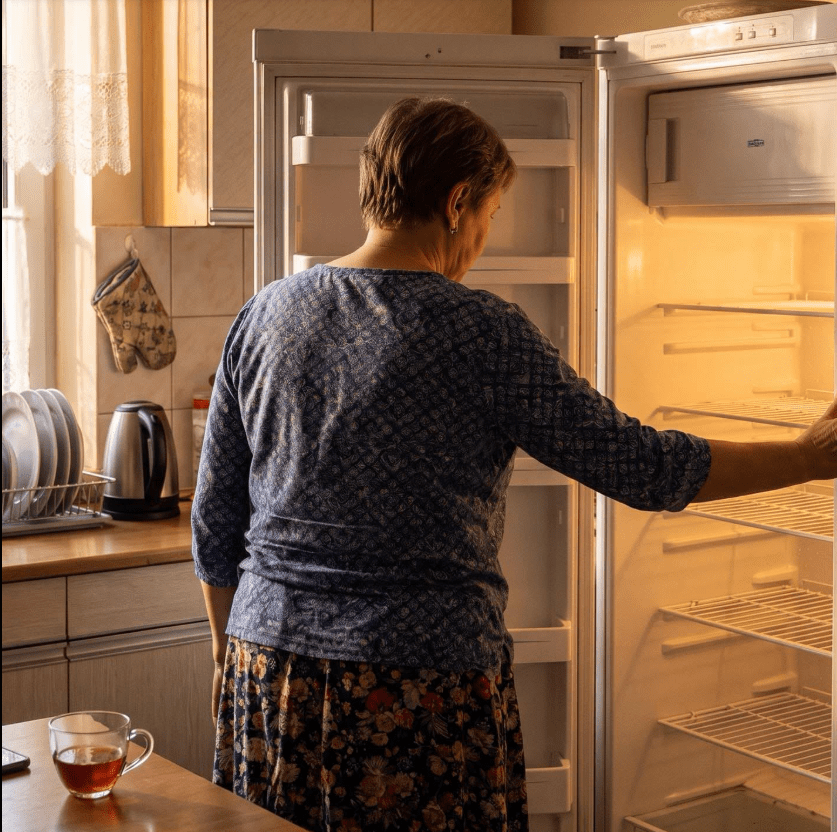
Beside it stood the empty refrigerator.
For twenty-two years, it had stood in exactly the same place.
Jurek, my husband, and I had bought it together.
He had been gone for years.
He always used to tell me:
“Lucynko, you give too much and ask for too little.”
Back then, I would simply wave him off.
Now, for the first time, I wondered if he had been right.
The next day, Darek called.
“Mom, Agnieszka didn’t mean it that way.”
“Then what did she mean?”
Darek sighed.
“She only meant that we can’t pay you back right now.”
“When can you?”
Silence.
“Someday.”
That one word stayed between us.
Someday.
Not “next month.”
Not “after payday.”
Not “we’ll return half now and the rest later.”
Just:
Someday.
In the end, I bought the refrigerator myself.
The cheapest one I could find.
Small.
White.
Designed to fit underneath a countertop.
It was barely large enough for the things I truly needed.
The salesman helped me carry it up to the third floor because the elevator in my building was broken again.
When we finally placed it in the kitchen, I stood there looking at it for a long time.
It was small.
Quiet.
New.
And it stood in exactly the same place where my old refrigerator had stood for twenty-two years.
The next day, my neighbor Basia came over with a cake.
She saw the new refrigerator.
Then she looked at me.
She didn’t ask anything.
The following day, however, she brought me a jar of pickles from her garden.
At the door, she said:
“Lucyna, remember one thing. You love your children for free. But you lend money on paper.”
I gave her a sad smile.
“Even to your own children?”
Basia nodded.
“Especially to them.”
On Friday, Oliwka called me.
“Grandma! Are you coming to my birthday? There’ll be chocolate cake!”
I closed my eyes.
“Of course, sweetheart. I’ll be there.”
I put the phone down.
Then I opened one of the drawers in my dresser.
Under the bills and old photographs from our holidays in Kołobrzeg was an envelope.
That envelope.
The one in which I had kept the twelve thousand złoty two years earlier, before giving the money to Darek.
Now it was empty.
I ran my fingers over it.
I sat there for a long time.
Then I thought about Darek.
About Agnieszka.
About Oliwka and Kubuś.
And about myself.
I will go to Oliwka’s birthday.
I’ll buy her the backpack she really needs.
I will never make my grandchildren pay for the way their parents treated me.
I love them.
That won’t change.
But something in me has changed.
When Agnieszka eventually says:
“Mom, stay the night. Why would you go home?”
I’ll smile and answer:
“Thank you, but I’d rather go home.”
Because my little refrigerator will be waiting for me.
And every evening I’ll have to plan carefully what to buy, how much to buy, and how to arrange everything so that it all fits inside.
Maybe Agnieszka will understand.
Maybe she won’t.
But I no longer intend to explain myself.
I don’t want to prove how much I gave.
I don’t want to list all the times I helped.
I don’t want to remind her about the twelve thousand.
For once, I’ll let her think about her own words.
“At your age, you should have money put aside for emergencies.”
She was right.
Just not in the way she thought.
At my age, I really should have savings.
But they should be savings for me.
For my security.
For my peace of mind.
Because I finally understood something I should have learned years ago:
We can love our children with our whole hearts without sacrificing our own security for them.
And loving your family does not mean you have to keep paying the price for everyone else’s choices.