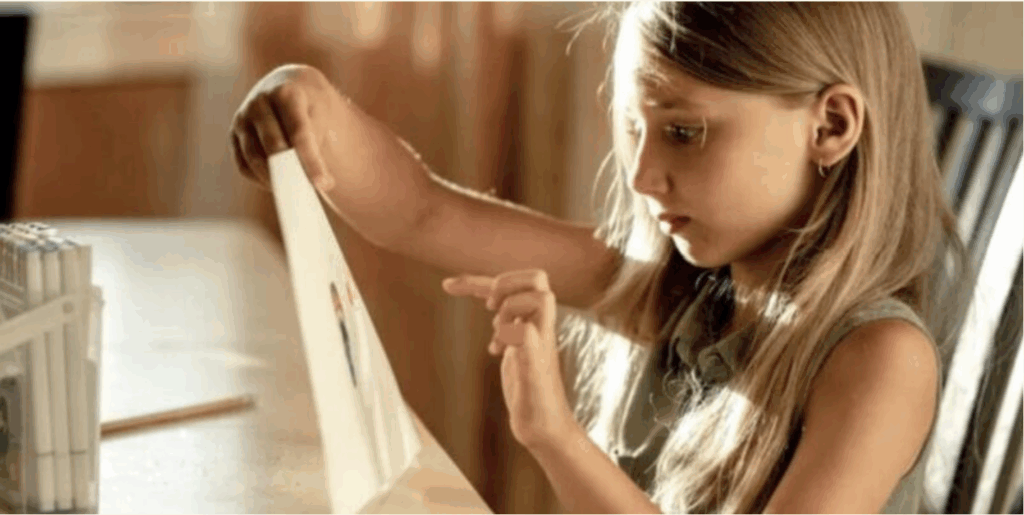
The widowed millionaire’s twin sons hadn’t eaten a single bite for weeks—until their new nanny did something no one had expected, something that would quietly, irrevocably change their lives.
When Mariana stepped out of the sleek black car in front of Ricardo Navarro’s enormous mansion, a shiver ran down her spine—not just from nerves, but from anticipation. The house loomed before her, a monolith of glass and stone, impossibly grand yet eerily cold.
It wasn’t the luxury that unnerved her; it was the silence. A suffocating, almost tangible stillness seemed to seep from the walls.
The front doors opened to reveal a long hallway that stretched farther than Mariana’s eyes could reach. Giant portraits of elegantly dressed ancestors gazed down, their eyes sharp and unblinking. Light poured in through high, uncurtained windows,
illuminating every corner with brightness that felt more sterile than warm. A faint scent of polished wood and dust hung in the air. The staff barely glanced at her, offering a curt greeting and quickly disappearing back into their routine.
Everything here was perfectly still, almost rehearsed, and yet Mariana sensed something deeply wrong.
Ricardo Navarro appeared then, tall and impeccably dressed, his expression unreadable. There was a subtle furrow in his brow, a weight to his presence. Mariana didn’t offer her hand—she simply greeted him, soft yet deliberate, signaling that she was here to work, not chat.
He introduced the children: Emiliano and Sofía, eight-year-old twins, identical in appearance, yet the air around them felt heavy with absence. Ricardo’s voice was flat as he told Mariana she would be their caretaker. No emotion, no warmth—just a simple statement of fact.
The children mirrored their father, silent and still. Mariana’s heart sank. This would not be an easy job.
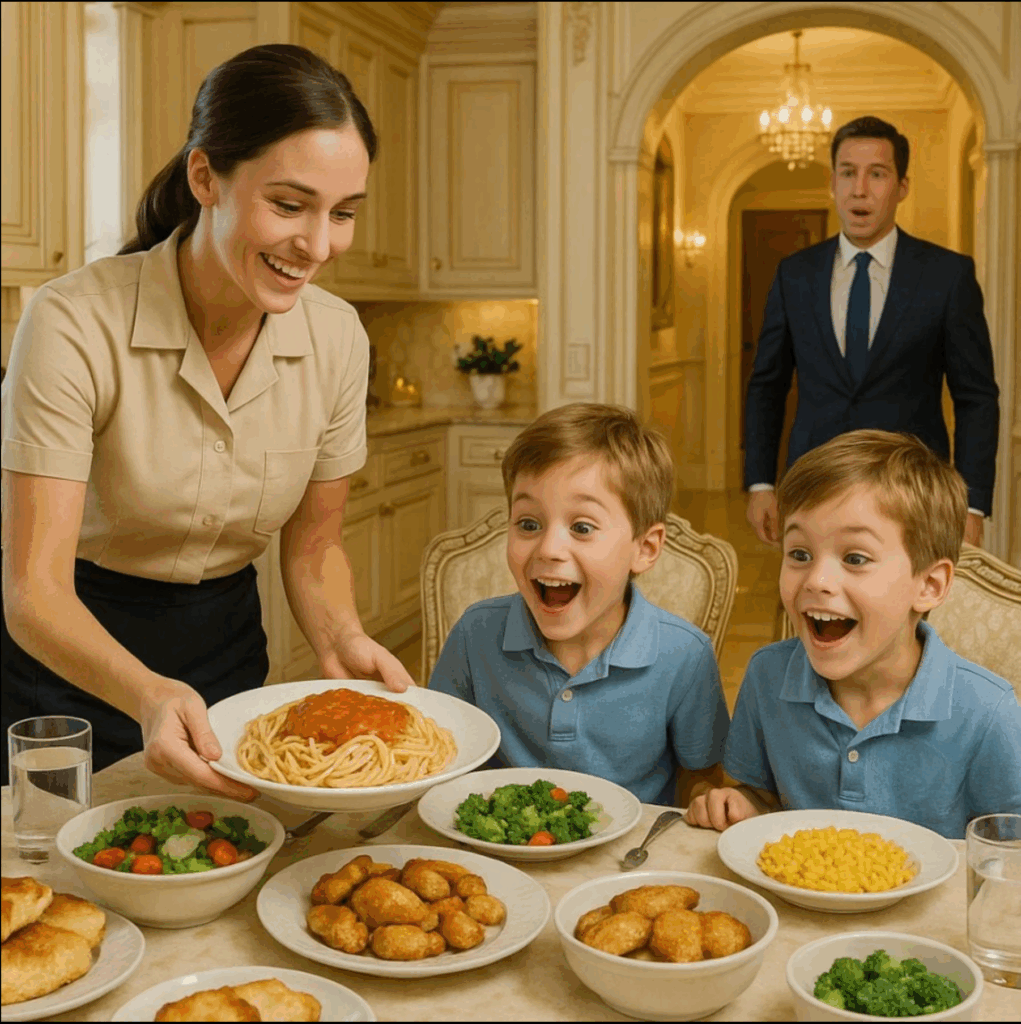
The twins stared at her with expressionless faces, arms folded, eyes calculating. She tried a small smile and asked what they wanted for dinner. Sofía said nothing. Emiliano merely mirrored her silence. The weight of loss hung around them,
and Mariana realized their refusal to eat wasn’t about hunger—it was about grief, and perhaps, fear. Five previous nannies had tried. All had failed.
Ricardo led her on a tour of the house. The dining room sparkled with silverware, gleaming on a table that could seat twenty, but no food ever touched it. In the living room, plush armchairs sat untouched, as though they existed only to be admired.
Outside, the garden sprawled with old toys and a round table, long abandoned. The children passed everything without acknowledgment, as if they were ghosts themselves.
Mariana had planned to bake cookies, to use warmth and familiarity to coax them out of their silence, but as she walked through the house, memories of the late Lucía—Ricardo’s wife—surfaced in photos. Smiling, tender, loving.
The twins reminded her painfully of her, especially Sofía, whose stillness belied an ocean of sorrow. A lump rose in Mariana’s throat.
Later, in the kitchen, she met Chayo, the cook, a woman in her sixties with a stern expression. “Why dress so nicely? The kids won’t notice. He won’t either,” Chayo remarked bluntly. Mariana simply smiled, politely choosing her battles.
Dinner was an exercise in restraint. The children picked at their food, tasting the dishes their mother had once made. Even so, their bites were cautious and measured, as if eating were a ritual they had long abandoned.
Mariana realized this house wasn’t cold because of walls or furniture—it was cold because no one had tended to the children’s hearts.
Determined, Mariana decided to approach them differently. She arranged plates with playful animal designs, introduced meals as adventures, and gently encouraged the twins to interact with the food. Sofía tentatively placed an apple wedge on her plate.
Emiliano mimicked her, hesitating, then daring a small, brave gesture. For the first time, they weren’t just touching food—they were touching life again.
The next morning, Mariana arrived in jeans and a light blouse, a deliberate contrast to the formality of the house. Knocking on their door with a breakfast tray, she said, “No rules today. Let’s do something different.”
The children followed her to the kitchen, curious but cautious. Flour, eggs, milk, and sugar were laid out. “We’re making pancakes,” she said, “and you’re the chefs. I’m just helping.”
The room slowly came alive. Sofía touched the flour first, hesitant yet intrigued. Emiliano cracked an egg with surprising skill. Tentative giggles escaped their lips. When the pancakes were ready, Mariana served them with honey, bananas, and a swirl of whipped cream.
For the first time in what seemed like forever, the twins ate with joy, without compulsion, without resistance.
Ricardo arrived and froze, watching them eat. His children were smiling. That simple act—allowing them choice, letting them lead—broke the mansion’s silence.
In the following days, Mariana introduced games, art, and discovery. She found a locked playroom, opened it, and revealed dusty treasures that the twins eagerly explored. Even the quietest corners of the mansion became alive with laughter and imagination.
She discovered Lucía’s notebook, filled with observations, recipes, and small details about her children. It was as if Lucía were guiding Mariana from beyond, giving her tools to unlock the twins’ hearts.
Step by step, Mariana nurtured a household that had long been frozen in sorrow. The ice slowly melted, and Ricardo watched silently, the house subtly shifting around him, though he remained silent about it.
One morning, Sofía approached Mariana with a longing in her eyes. “I want a diary like Mom’s,” she said.“How do you know she had one?” Mariana asked softly.“She told me that when she was sad, writing made her feel less alone,”
Sofía said, her small fingers curling around Mariana’s hand. Mariana handed her a new notebook. “She wanted someone to do the same,” she whispered. Sofía smiled. “I don’t want to write sad things. I want to tell you what I like about you.”
Mariana hugged her tightly, realizing that something fundamental had shifted—not only in the children, but in herself. She now understood that Lucía’s death had left a shadow, questions, and secrets that were never spoken aloud.
Adriana arrived soon after, carrying suitcases and a pointed presence that unsettled the fragile equilibrium. The children shrank in her presence, Sofía ceasing to speak, Emiliano withdrawing. Mariana noted the tension but remained steady, refusing to relinquish the progress she had made.
Overhearing a conversation, Mariana realized Lucía had suspected Adriana of something—something unspoken. Chayo, with his cautious wisdom, confirmed what Mariana had begun to suspect: Lucía had been smart, careful, vigilant.
Ricardo eventually admitted the truth: he and Adriana had had something years ago, long before Lucía, something unresolved. Mariana felt a wave of emotions but remained composed. She realized that love, guilt, and memory intertwined in complex ways in this house.
That evening, after the children had fallen asleep, Mariana and Ricardo shared a rare, intimate moment. Alone in the dim kitchen, he tucked a strand of hair behind her ear, and they kissed—not a dramatic, cinematic gesture, but a simple, human connection.
Warm, real, grounding. Neither needed grand words; the kiss said everything that had been too difficult to voice.
Mariana washed the last dishes, Ricardo drying them silently beside her. The mansion no longer felt like a prison. It felt lived in, vulnerable, fragile—but alive. The children’s laughter, once almost unimaginable, now echoed in its halls.
Mariana had done more than feed them. She had rekindled hearts long dulled by grief.
In the quiet of the night, Mariana reflected on what she had learned: love is not always grand gestures; sometimes it is patience, presence, and courage. Sometimes it is simply allowing children—or adults—to be seen, heard, and nurtured.
The house was no longer just a mansion. It was a home again, warm with laughter, memory, and a future slowly being written.