I’m 74 years old, and I live in a nursing home—the very place my own grandson, Timofey, sent me after deceiving me into selling my house “for his girlfriend’s surgery.” Years later, when I suddenly inherited a fortune, he slithered back into my life, expecting his “share.”
I handed him fifty dollars, with a message written across the bills that left him only one choice: spend a full year working as a low-paid caregiver—or lose every penny forever.
My name is Galina. I’m 74, a widow for over twenty years, and I never imagined I’d tell a story about my own grandson. I raised Timofey from the age of twelve, after his mother, my daughter Elena, died giving birth, and his father,
Vadim, sank deeper into casinos and cheap motels.I worked nights at a laundromat and weekends cleaning offices, just so he’d always have food, school clothes, and a warm bed. “Timofey is my second chance at family,”
I used to tell my friend. “He is my everything.”Elena never got to hold him; she never even opened her eyes after the doctors delivered him. His father arrived late to the funeral, smelling of smoke and cheap liquor, more concerned about insurance payouts than his own son.
After that, he disappeared, like a stain on a cheap shirt: hard to see, but never truly gone. So when Timofey’s behavior turned wild at twelve—school calls about fights and stolen phones—the judge looked at me and asked, “He needs help.
Can you take him home and raise him properly?”I said “yes,” without hesitation. I moved Timofey into my late husband’s small brick house, its white fence peeling, and tried to give him the stability I had never truly known.
I cooked real meals, checked his homework, sat on the couch every time he broke curfew. I attended every parent-teacher meeting, every game, even when he only sat on the bench.I told myself love had to mean something, that effort could patch the holes left by grief and neglect.
Somewhere between his eighteenth birthday and mine, Timofey slipped out of my grasp. He moved in with friends, then girlfriends, then strangers I never met.
Text messages replaced real visits. He showed up only a few times a year for quick drop-ins that felt like ordering a “to-go coffee.” I always had tea ready, his favorite cookie, a little wrapped gift—socks I knitted, a scarf, a sweater the color of his eyes.
He smiled, casually said “thanks,” stuffed the gift into his pocket, kissed me on the cheek, and left before I could ask anything.Every time the door closed behind him, the house felt too big. I slowly washed his cup, folded the unused napkin,
and told myself he was just busy—that young people live differently now. “It’s the internet, maybe the city, or his friends,” I whispered. Anything but the truth: that he simply didn’t care.
I kept knitting, wrapping little gifts in leftover Christmas paper, hoarding folders full of unsent cards. I talked to his photo on the mantel more than I ever spoke to the man sitting across from me for years.
Then one gray day, the doorbell rang. There he was, on my porch: Timofey, older around the eyes, thinner, jittery in a way that made my stomach knot. A woman waited in the car, sunglasses on, engine running.
He walked in, sat on the edge of the couch as if it might bite him, and folded his hands.“Grandma,” he said, not meeting my eyes, “I need your help. Natasha needs surgery. I’m out of money. Could you give me something so she can have the operation?”
His voice trembled, but his eyes were dry.I’d seen him lie before—small-boy lies about homework and broken windows—but this was different. The word “surgery” echoed in my mind, tangled with the memory of hospital lights over Elena’s pale face.
“Is she very sick?” I asked. “Have you talked to her parents?” Timofey swallowed, shook his head, rattling off details in a rushed, half-hearted way.
I wanted to believe him so badly that I let go of reason. My savings were modest, but the house was worth real money. I signed the papers and sold it for what he called a necessity.
Part of the unspoken deal was that I would move in with Timofey and Natasha. On paper, it made sense. I wouldn’t be alone; they wouldn’t have to pay rent; we could finally be a family under one roof again.
I packed my life into boxes, donated furniture, said goodbye to the walls. When Timofey arrived in his old sedan and loaded my suitcases, I felt a spark of hope. Maybe this was a new beginning, a late miracle squeezed from all the pain that still haunted our steps.
The apartment they shared was small and cluttered, faintly smelling of cheap cologne and old takeout. But I told myself it was cozy. I cleaned until the countertops gleamed, opened windows for fresh air, and stocked the fridge with real vegetables.
Natasha watched me like a cat wary of a stranger—polite smile, cold eyes. Timofey called me his “savior” when dinner appeared at six, his laundry folded. I made myself useful, because usefulness had always justified my place in the world, from childhood to old age.
Three weeks in, cracks appeared. No one mentioned the hospital. No appointments, no prescriptions, no paperwork on the table. Instead, Natasha had new clothes, a new TV, glossy resort brochures scattered among junk mail.
When I asked about her health, she pressed her hand to her stomach, sighed theatrically, and changed the subject.One day, I was watering the pitiful little plants on the balcony when I heard her voice through the sliding door
—sharp enough to cut through the softest parts inside me:“I can’t wait to get rid of her,” Natasha hissed. “She’s a burden. She doesn’t work; she just sits there reading those sad little books and judging us.”
I froze, hand still on the watering can. The soil drank the water as my heart stopped. Then Timofey’s voice spoke quietly, familiarly, in a way that made me ache:
“Relax,” he said. “Once she’s out of the way, we can finally enjoy life. Hawaii, remember? First trip, no interference. We didn’t drag her here to babysit us forever.” They laughed, and the sound hollowed me out.
I stood there on that balcony, fifty years of memories of being abandoned weighing down my bones, and felt something inside me crack like thin glass. They never needed money for surgery. They only needed the first installment of freedom from me.
I put away the watering can, wiped my eyes, and pretended I knew nothing. A week later, Timofey announced we were going to see a “nice place.” I already knew, before we even pulled into the parking lot: a nursing home. My new address, whether I liked it or not.
They gave me a brochure, showed me around, but all I saw was the door closing behind us. Timofey carried my single suitcase as if doing me a favor; Natasha checked her phone in the hallway. In the room they’d assigned me, he kissed my forehead:
“Don’t worry, Grandma,” he said. “I’ll visit every week. You’ll like it here. They have activities.” As if I were a bored child at summer camp.Weeks became months, months became years. His visits dwindled to holidays, then vanished entirely.
I won’t pretend the nursing home was a nightmare. It was clean; the food was salty but warm, and there were kind people who treated me as more than forgotten luggage.
Sofya, my favorite aide, always found a moment to adjust my hair or ask about my day. I learned the names of other residents, their stories, their losses. Life shrank to four walls and a gray courtyard, but it was still life.
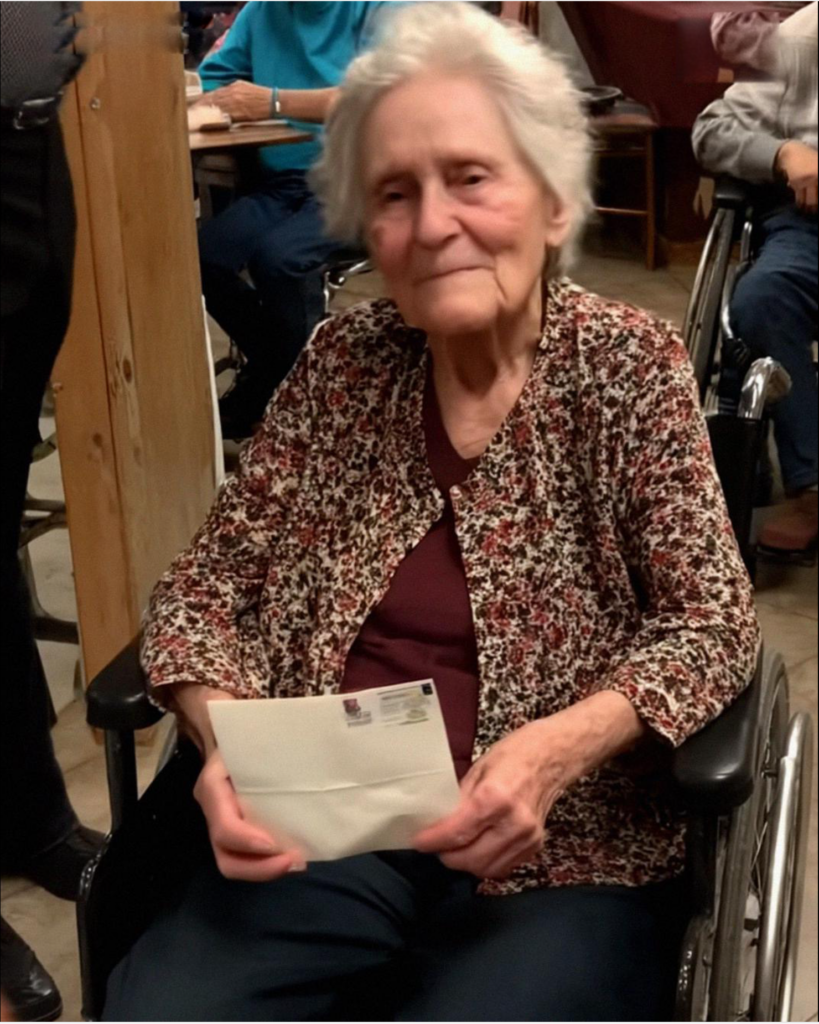
Then one morning, the director entered my room holding a letter, carefully pinched between her fingers like fragile news. “Good news, Galina,” she said, handing it to me.
My hands shook as I opened it, half-expecting bad test results out of old habit. Instead, I read that my cousin Denis, the last wild branch of our family tree, had died and left me a substantial inheritance.
Land, investments, things I barely understood. Suddenly, money appeared—more than I had ever seen in my name.I sat on the bed, the letter in my lap, and knew, as surely as I knew my own name, that Timofey would come, drawn like iron to a magnet.
I didn’t even have to call him. News like this spreads faster than any phone line when you have relatives who talk. Within two weeks, Timofey appeared in the lobby, nervous energy, expensive jacket. Natasha didn’t come; I suspected she was busy spending what they already had.
Timofey awkwardly hugged me, sat on a visitor’s chair, and began his spiel: “Grandma, I heard about Denis. I’m so happy for you. Look, I wouldn’t ask, but Natasha needs another surgery. Can I get my share early this time?”
I watched his face as he spoke. No shame, no real concern for the woman he allegedly loved—only calculation. Once, it would have drained me completely. Now, it just layered over old scars.
“Timofey,” I said, “I can help you, but not today. The lawyers are still sorting it out. Come next week, I’ll meet with them, and we’ll do it in cash to make it simple.”
His eyes lit up like Christmas morning. He thanked me, called me an angel, and rushed off, spending money I hadn’t yet handed over.
After he left, I asked Sofya to take me to a small conference room where legal volunteers met with residents. I told the young lawyer everything—from the fake surgery to the house I sold. Saying it out loud hurt more than I expected, but it cleared the fog from my mind.
We rewrote my will. Most of Denis’s gift would go to the nursing home if Timofey refused my condition. If he agreed, he would only receive his share after a full year of work here, caring for residents.
I still couldn’t slam the door completely on him. Some stubborn, old part of me clung to the hope he might grow, like plants reaching for any patch of light. So I asked for fifty dollars in small bills from the lawyer.
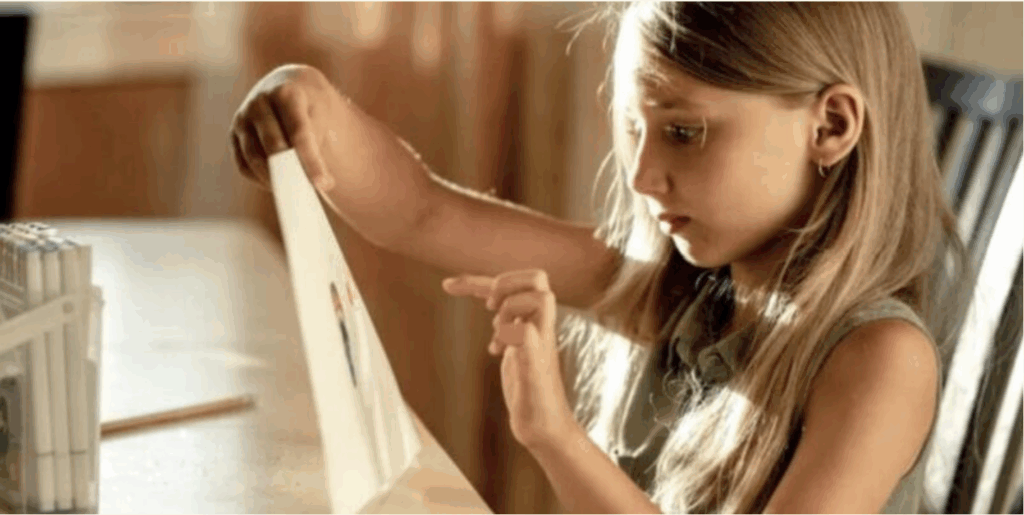
Back in my room, I sat at the little table and, with my trembling hand, wrote the terms on each bill. Together, they formed a message—the final lesson I knew how to give my grandson, who had forgotten me long before I faded.
A week later, he returned, as promised. He walked into the lobby, smelling of cologne and hope, rubbed his hands, and asked if everything was ready. I could see the other residents looking over their card games and magazines, curious, perhaps protective.
I handed him the envelope with fifty dollars inside. “Here,” I said. His fingers tore it open before I could say a word, hungry eyes searching for stacks that weren’t there.
“Fifty dollars?” he barked, too loud for the quiet room. “Where’s the rest, Grandma? Stop playing games. I know how much Denis left you.” His face flushed dark red with rage.
For a moment, I thought he might crumple the money and toss it at my feet. Then his eyes narrowed. He noticed the ink on the bills. “What’s this?” he muttered, smoothing one out.
The writing was large enough he had to read it aloud. Word by word, bill by bill, the message left his mouth like something bitter he could not spit out:
“Timofey, you know I love you, but you have forgotten how to care for anyone but yourself. Money will not buy you love, respect, or peace. If you want your inheritance, there is only one path. You must work here, in this home, for one full year.
Feed people, clean their rooms, listen to their stories, and learn to see them as humans, not burdens. When the year ends, if the staff confirms your effort, the lawyers will give you everything that was meant to be yours. If you refuse, the nursing home receives it all.”
The room held its breath. Timofey stared at me, fists clenched around the money, knuckles white. “You can’t be serious,” he finally said. “You expect me to play caregiver for a bunch of strangers just to get what’s mine? This is twisted, Grandma.”
I met his gaze and saw the little boy he once was, the man he had decided to become, and the thin bridge I offered between them. “It’s your choice,” I said. “Leave, and the nursing home gets everything. Stay, and you can earn more than money. Think, then answer.”
He stormed off that day, muttering in fury. I honestly thought I had lost him forever. But greed is a strange teacher, and perhaps some buried conscience answered too.
Two days later, he returned, bloodshot eyes, jaw clenched. “Fine,” he said. “I’ll do it. One year. Then I leave.”
The administrator hired him as an apprentice aide. I watched from my doorway as he learned to change sheets, push wheelchairs, and feed trembling mouths. At first, he moved as if serving a sentence, not building himself.
Days became weeks, and something shifted quietly. I caught him laughing with Mr. Alvarez over a card trick, staying late to sit with Mrs. Green in her pain, fixing Sofya’s broken watches in his free time.
He began visiting me off-schedule, bringing coffee, asking about my memories, really listening.By the time the year ended, the man sitting by my bed was no longer the one who had left me here. When the lawyer arrived with the final papers,
Timofey looked at me and said, “I want to do this right, Grandma.” For the first time, I believed him.