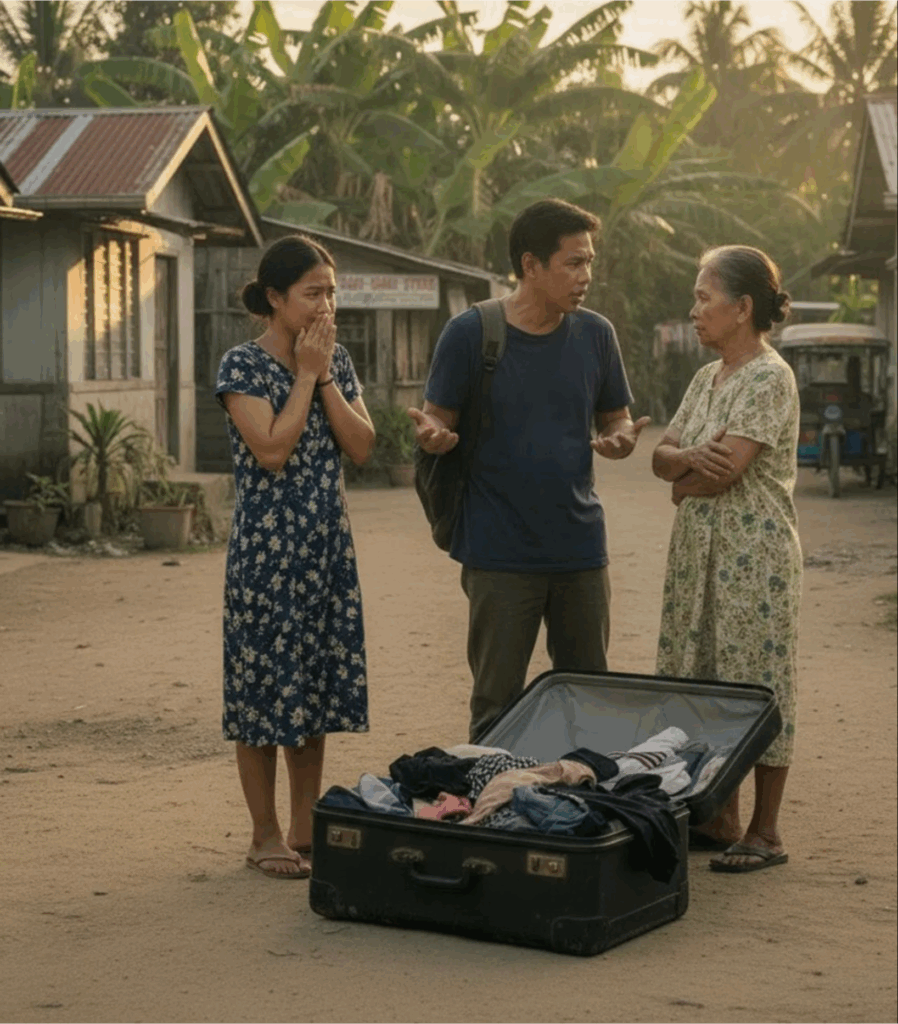
— “Another ‘elite’ dinner again?” Róbert’s voice cut through the kitchen, dry and dripping with sarcasm.
He inhaled sharply. The air was filled with lemon and rosemary—fresh, sharp, almost defiant. It clashed violently with the heavy, greasy scent he had brought home himself earlier that day: cheap sausages and overcooked pasta.
— “I finished a difficult report today,” Svetlana replied calmly, lifting the pan off the stove. “I wanted something good.”
Róbert dropped into a chair. The legs scraped loudly against the linoleum, as if even the apartment was protesting his mood.
— “I went through our expenses,” he said slowly, emphasizing every word. “And honestly? This is not normal. Artisan cheese, fish, vegetables in winter… You’re wasting money. I work myself to exhaustion, and you just burn through it all.”
Svetlana turned off the stove, placed the fish on a plate, then switched off the hood. The sudden silence felt heavy. Outside, rain hammered steadily against the metal balcony awning.
— “What do you suggest?” she asked, sitting opposite him.
Róbert slammed his palm on the table.
— “Separate food budget. Starting tomorrow. Everyone buys their own food.”
He expected resistance. Arguments. Emotion. Justification.
Instead, Svetlana simply nodded.
— “Alright. Separate it is.”
The next morning, Róbert found no coffee, no warm breakfast sandwiches. Only an instant coffee jar he had once bought on sale. Svetlana stood in the hallway, already dressed.
— “Breakfast is your responsibility now,” she said, and left.
The door closed with an unnaturally loud finality.
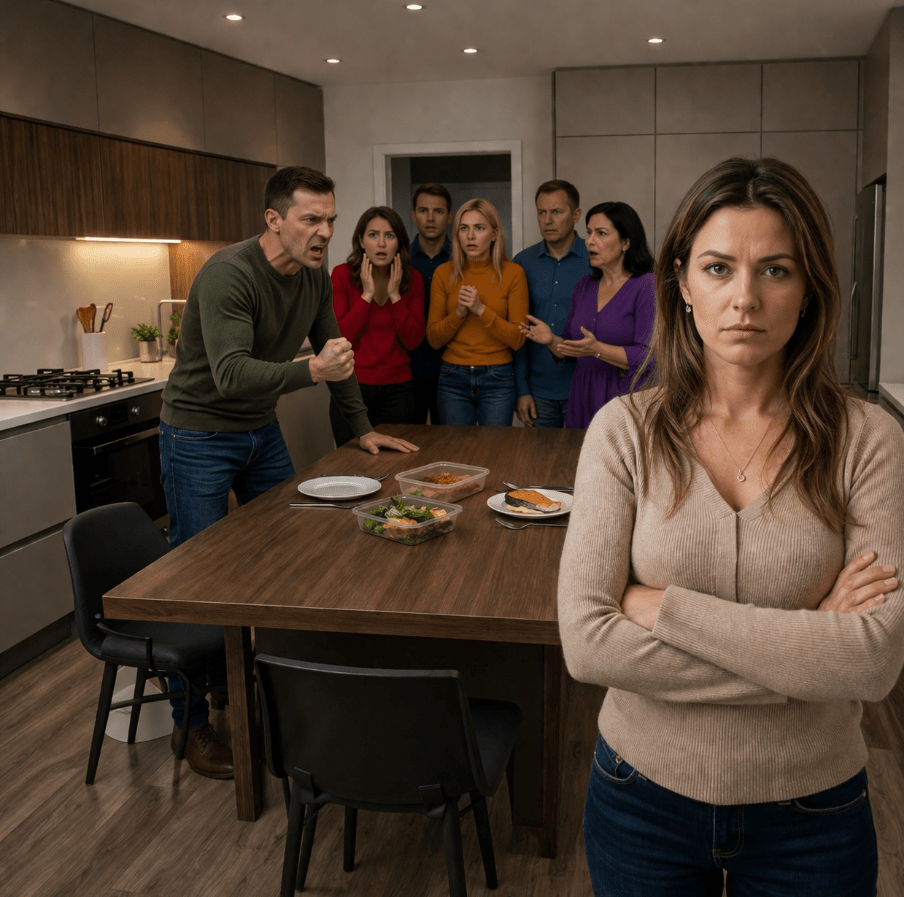
That evening, the refrigerator told a new story.
A bright red strip of tape ran straight through the middle shelf, dividing it perfectly in two.
On the left: neatly stacked containers labeled in tidy handwriting—“chicken breast,” “steamed vegetables,” “salad.”
On the right: a dried piece of cheese and an open pack of dumplings.
Róbert smirked.
Drama.
The next day, he went shopping too—cheap sausages, pasta, canned food. He placed everything deliberately so it crossed the red line.
At first, he enjoyed it. A sense of control, of “winning.” He cooked quickly, ate noisily, and avoided discussion.
Svetlana continued her routine: home, meal, dishes, bedroom. Silent efficiency.
But cracks appeared quickly.
— “Where’s the oil?” he snapped one evening.
— “On my shelf,” she replied without looking up.
— “You’re seriously making me go to the store for one spoon of oil?”
— “Yes. That’s the rule.”
No anger. Just certainty.
By the second week, the cheap food started to take its toll. His stomach protested. His mood darkened. Meanwhile, Svetlana ate fresh, balanced meals, calmly and without noise.
— “A proper wife waits with hot food,” he muttered once.
— “A proper husband doesn’t split a family into separate budgets,” she replied.
At the end of the month, his fiftieth birthday approached.
Normally, Svetlana handled everything—menus, shopping, guests, cakes, decorations.
This time, he simply said:
— “Twenty people are coming. Make a proper dinner.”
— “Give me the budget,” she answered.
He threw a crumpled stack of bills on the table.
— “Work with that.”
She said nothing. Just wrote something down in a notebook.
The next day she went to a warehouse-style discount store on the outskirts of town. Harsh lighting, cold floors, stacked cardboard boxes.
She bought the cheapest possible items: frozen meat patties, processed cheese, bulk pasta, canned vegetables, sugary drinks.
Everything calculated precisely. Every cent accounted for.
On the evening of the party, the apartment filled with noise—laughter, coats, greetings, movement.
Róbert stood proudly at the center.
— “Everyone, dinner is served!”
The guests walked into the living room.
And stopped.
On the tables covered with old plastic cloths sat two large bowls of sticky pasta, greyish frozen patties leaking oil, watery cucumber slices, and a cheap mayonnaise-corn mixture. Bottles of bright synthetic soda stood between them.
Nothing else.
No roast. No cake. No fresh food. No warmth.
Silence spread.
— “Is this a joke?” someone whispered.
— “Where’s real food?” another voice asked.
Róbert turned sharply.
— “Where’s the proper meal?”
Svetlana stepped forward.
— “This is exactly what your budget allowed,” she said calmly. “Every receipt is here.”
She placed a stack of receipts on the table.
— “You wanted financial independence. You got it. This is what it looks like when you price a celebration like a grocery list from a discount warehouse.”
The guests didn’t sit down. One by one, they began to leave—awkward, uncomfortable, avoiding eye contact.
Within minutes, the apartment was empty.
Róbert stood frozen in the middle of the room. The silence pressed on him.
— “You humiliated me,” he said quietly.
— “No,” Svetlana replied. “I simply followed your rules to the end.”
She collected the dishes and walked to the kitchen.
The sound of running water filled the space.
That night, Róbert sat alone in the dark kitchen. He stared at the red tape inside the fridge.
By morning, it was gone.
On the table the next day were shopping bags filled with fresh food and flowers. A note lay underneath:
“Budget is shared again. I’m sorry.”
Svetlana stood in the kitchen, looking at it all.
She didn’t smile.
But for the first time in a long while, the apartment felt quiet in a different way—no tension, no division. Just space to breathe.