My son was born on a rainy Thursday morning, when the sky itself seemed unsure whether to cry or stay silent.
I remember that moment very clearly — the smell of the hospital room, the soft hum of machines, and the way the nurse gently placed him in my arms and whispered:
— He’s here.
But there was no joy in that room. No laughter, no tears of happiness, no spontaneous celebration that usually fills such a moment. Only silence — heavy, thick silence, as if everyone was holding their breath.
The doctor spoke carefully, as though every word might break me:
— Your child has Down syndrome.
I didn’t fully understand what it meant at first. I only felt that something had shifted, and the world had quietly changed direction.
I looked at Daniel. He was standing by the bed, staring at our son. But there was no joy in his eyes — only shock, fear, uncertainty. As if he were looking at a life he hadn’t prepared for.
We named him Matthew.
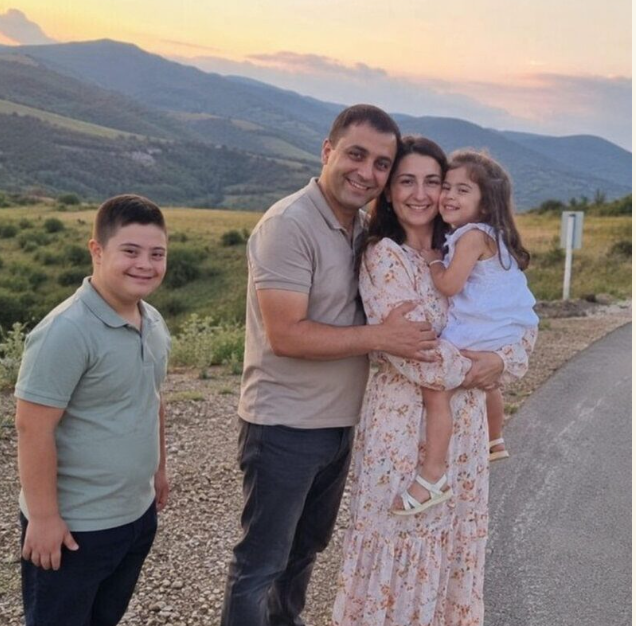
When he was little, people often called him “sweet,” “a blessing,” “an angel.” They offered gentle, easy words meant to comfort:
— What a lovely boy.
— He’s such a special gift.
— God gives special children to special parents.
I smiled, nodded, thanked them.
Then I would lock myself in the bathroom, turn on the shower, and cry so no one could hear me.
Not because I didn’t love him. I loved him more than anything in the world. But that love was mixed with fear, exhaustion, and a shame I didn’t know how to name.
Daniel never said he was ashamed of Matthew. He didn’t need to. His absence said enough — missing school events, skipping family gatherings, always having something “more important.”
Matthew felt it, even if he couldn’t name it.
Once, he brought Daniel a drawing.
— This is our family — he said proudly. — You, me, Mom, and Lily.
Daniel glanced at it and said only:
— Nice, buddy.
Without looking up from his phone.
Matthew waited for more. But nothing came. So he quietly walked away to his room.
I saw it. And I said nothing.
Because silence felt easier than truth.
As he grew, his younger sister Lily began to notice the looks from other people more and more. She used to defend him without hesitation. Then slowly, she began to feel the weight of others’ judgment — not of him, but of how the world treated him.
One day she asked me quietly if Matthew really had to come to her birthday dinner.
— Mom… my friends act weird around him — she whispered, embarrassed.
I should have said:
— Then they’re not good friends.
But instead I sighed and said:
— We’ll see.
Matthew was standing in the hallway. He heard everything.
That evening he didn’t eat his cake. He said his stomach hurt.
Over time, he became quieter. He stopped showing his drawings. Stopped asking Daniel to play. Stopped sharing his day with Lily.
One day he asked me:
— Mom… were you happy when I was born?
I was washing dishes.
— Of course — I answered too quickly.
He looked at me.
I turned back to the sink.
— Yes, Matthew.
But I could feel he didn’t believe me.
The worst day came when he came home from school holding his backpack tightly against his chest, his eyes red.
Boys in his class had recorded him reading aloud, and when he struggled with words, they laughed. The video had already been shared.
He stood in the kitchen doorway and asked:
— Mom… am I a shame?
I was exhausted. Dinner was burning. Lily was complaining. Daniel was late again.
And instead of going to him immediately, I said:
— Matthew, not now.
He went quiet.
— I’m sorry — he whispered.
That night he didn’t come out of his room. He didn’t come for his usual goodnight kiss.
I thought I would talk to him tomorrow.
But he was gone by morning.
His bed was empty. His hoodie was missing. His yellow socks were gone. And on his pillow lay a folded letter.
My hands shook as I opened it.
The first line hit like a blow:
“Mom, I know you’re tired of having a son like me.”
And then it kept going.
He wrote that he sees the way people laugh. That he notices when his father looks away. That he knows his sister is sometimes embarrassed.
And then the most painful line of all:
“I tried to be easy to love. I’m sorry I failed.”
That was when I understood — this wasn’t just a letter. It was a cry for help.
We found him at the old train station.
He was sitting alone on a bench, holding his childhood teddy bear in his lap. He looked like a child who no longer knew where he belonged.
When he saw me, he said softly:
— I didn’t want to disappear. I just didn’t know where I was supposed to go.
Daniel sat beside him and finally broke completely. He apologized, he cried, he held him like he was afraid of losing him in that very moment.
Lily cried too and hugged him without hesitation.
And I understood something that hurt more than anything: we had taken care of his body, but not always his heart.
That night we went home together.
And we began again. Not perfectly. Not quickly. But honestly.
Today, Matthew still sometimes asks:
— Mom, am I difficult?
And I answer differently now:
— You’re not difficult. We just learned too late how to love you properly.
And every time I say it, I see it in him — not just relief, but a quiet hope that maybe, finally, he is fully allowed to exist here.
Because what he never needed was to become “normal.”
He only ever needed to feel wanted.