Elana’s world had stopped on that rain-soaked afternoon when her eight-year-old son, Ethan, died. Heavy drops hammered against the windshield while the wipers fought desperately to clear the road ahead. Then, in a single horrifying second, a truck swerved across the lane.
Later, Elana could barely remember the screaming sirens or the feeling of her knees collapsing onto the wet asphalt.
What she did remember was Mark’s face — pale, bloodied, shattered with horror — and the empty child seat behind him.
After Ethan’s death, their home no longer felt like a home. It became a mausoleum filled with echoes. Ethan’s sneakers still sat beside the front door. His favorite blue sweater remained draped over the back of his chair. Elana couldn’t bring herself to move any of it. Touching those things felt too much like erasing him.
At night, she sometimes jolted awake convinced she had heard footsteps in the hallway. For one impossible heartbeat, she always thought it was Ethan coming back to her. Then reality crashed over her all over again.
Mark tried to survive the tragedy by staying practical. He talked about therapy, healing, taking things “one day at a time.” But Elana hated those words. Healing sounded too close to forgetting.
Only five-year-old Noah seemed to change in a strange, unsettling way. At first he became unusually quiet. Then he started saying things that made Elana’s blood run cold.
It began one Tuesday morning at breakfast. Noah sat swinging his legs beneath the kitchen chair, lazily stirring his cereal. Then he looked up.
“Mommy?”
Elana forced a tired smile. “What is it, sweetheart?”
“Ethan came to see me at school yesterday.”
The spoon slipped from Elana’s hand and clattered into the bowl.
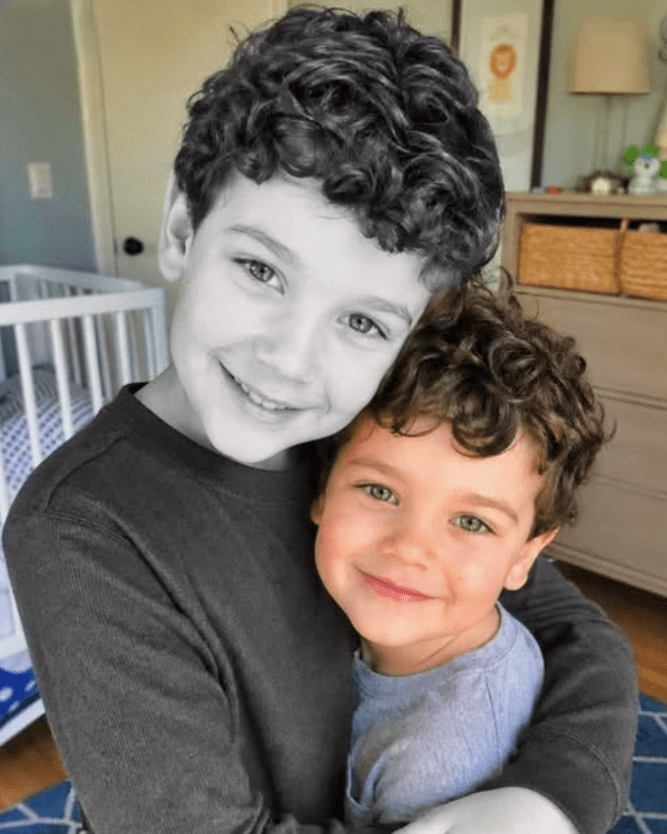
Mark immediately stepped in. “You probably dreamed about him, buddy.”
But Noah slowly shook his head.
“No. He was standing by the fence. He told me to tell Mommy not to cry anymore.”
A tight knot formed in Elana’s stomach. It wasn’t just the words that frightened her — it was the way Noah said them. Calmly. Seriously. As if he were describing something completely ordinary.
After that, the stories kept coming.
Noah said Ethan waved to him during recess. Said he talked to him when the teachers weren’t looking. Said Ethan promised everything would be okay.
And every single time, Elana felt that terrible unease growing stronger inside her.
Mark insisted it was grief. Children processed loss differently, he said. They created stories when reality became too painful to understand.
But Elana couldn’t shake the feeling that something was deeply wrong.
Noah began staring out the window for long stretches of time, as if waiting for someone to arrive. Sometimes he smiled at the empty backyard. Other nights, Elana heard him whisper in his sleep:
“Not now, Ethan…”
Fear slowly crept beneath her skin. Quiet. Constant.
Then came the day at the cemetery.
Gray clouds hung low above the rows of gravestones while cold wind hissed through the bare branches overhead. Noah clung tightly to Elana’s hand as they stood in front of Ethan’s grave.
Elana knelt down and brushed damp leaves away from the headstone. Even that tiny gesture felt like someone squeezing her heart inside their fist.
Beside her, Noah suddenly went still.
“Mom?”
“Yeah?”
He stared at the grave for several long seconds.
“Ethan isn’t in there.”
Elana froze.
“What did you say?”
Noah looked up at her, his small face pale and serious.
“He told me he’s not there.”
An icy chill crawled down her spine.
For the first time, this no longer sounded like a child’s imagination. It sounded specific. Real.
Over the following days, Noah became nervous and withdrawn. He startled easily whenever Elana asked questions. Then one night, while she tucked him into bed, he grabbed her wrist with trembling fingers.
“I wasn’t supposed to tell you.”
Her pulse quickened. “Tell me what?”
Noah’s lip quivered.
“Ethan said our meetings had to stay secret.”
At that moment, Elana’s grief transformed into terror.
Someone was talking to her son.
Someone was using Ethan’s name to get close to him.
The next morning, Elana drove straight to Noah’s school and demanded to see the security footage. Her hands shook so badly she could barely sign the paperwork.
At first, the video showed nothing unusual. Children laughing on the playground. Teachers chatting nearby.
Then a man appeared near the back fence.
Tall. Heavy work jacket. Baseball cap pulled low over his face.
He crouched beside Noah and pulled a small plastic dinosaur from his pocket — Noah’s favorite kind of toy. Then he began speaking to him. Calmly. Intently. For far too long.
The man lifted his head for only a second.
But it was enough.
Elana felt her heart stop.
She knew that face.
She had seen it in police reports. Insurance documents. Nightmares.
Raymond Keller.
The truck driver who had killed Ethan.
A sharp wave of nausea hit her so hard she nearly collapsed. Her entire body turned ice cold.
The police were called immediately. Raymond was arrested near the school later that afternoon.
At the station, the truth finally came out.
Not a supernatural haunting. Not a kidnapping scheme. Something somehow more disturbing: a broken man trying to escape the crushing weight of his own guilt.
Through tears, Raymond admitted he had caused the crash because of a medical condition he had ignored out of fear of losing his job. Since Ethan’s death, he said, he hadn’t been able to sleep. Couldn’t eat. Couldn’t stop seeing the little boy’s face.
So he started following the family.
He convinced himself he was helping Noah heal. That maybe, somehow, doing “something good” would ease his unbearable guilt.
But all Elana heard was the truth beneath his excuses.
A grown man had manipulated a grieving child to soothe his own conscience.
When Raymond broke down sobbing and whispered, “I just wanted to make things right,” Elana looked at him with cold, exhausted fury.
“You didn’t want to help my son,” she said quietly. “You wanted to save yourself.”
She filed for a restraining order immediately and demanded a complete review of the school’s security procedures.
But the hardest part came afterward.
Night after night, Elana sat beside Noah in bed and carefully untangled the lies he had been told. She explained that sad people could still do wrong things. That adults should never ask children to keep secrets. And that Ethan would never want Noah to feel frightened or confused. Never.
Slowly, the darkness inside their home began to loosen its grip. Not happiness. Not peace. But something quieter. Something survivable.
Weeks later, Elana returned alone to Ethan’s grave. The evening sky glowed pale violet above the cemetery while dry leaves skittered softly across the stone path.
This time, she wasn’t searching for signs from the afterlife. No voices. No miracles.
Only her son.
And standing there in the cold evening wind, she finally understood something painful and freeing at the same time:
Some people destroy lives in a single moment. But you do not have to let them take ownership of your grief, too.
Elana knew she would never forgive Raymond Keller. Never.
But she could make sure he never spoke in Ethan’s name again.
And for the first time in six long months, the silence around her no longer felt like an endless abyss — but the beginning of learning how to breathe again.