My Multimillionaire Grandfather Saw Me Going In and Out of a Shelter and Shouted:“Why Aren’t You Living in the House I Gave You?”I Had No Idea What He Was Talking About. Thirty Minutes Later, the Police Arrived.
My name is Elena Márquez. I am twenty-six years old, and for months my life had become a quiet, exhausting loop—tired footsteps, doors opening and closing, and long stretches of silence. Every day,
I walked in and out of a women’s shelter on the outskirts of the city, a gray building with high walls and narrow windows, a place where no one asked too many questions because everyone carried stories that hurt.
I wasn’t there because I wanted to be.I was there because I had nowhere else to go.I lost my job after a sudden round of layoffs. Shortly after that, a serious argument with my mother shattered something that had already been cracked for years.
Within days, everything collapsed—my job, my savings, my home. It all happened so fast that I didn’t have time to plan or react. I could only survive.I never asked my grandfather, Don Rafael Márquez, for help. He is one of the wealthiest and most powerful businessmen in the country.
Not because I couldn’t—but because I didn’t want to. I had lived my entire life in the shadow of his name, and I promised myself that my worth would never depend on his money. I wanted to prove—to myself more than anyone—that I could stand on my own, even when the ground disappeared beneath my feet.
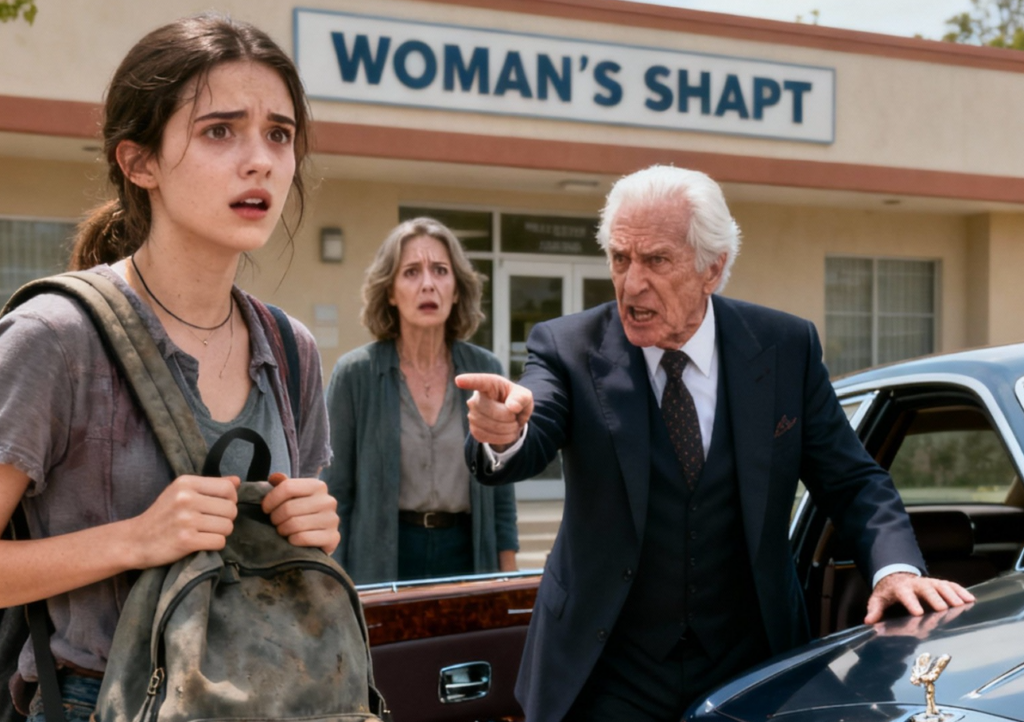
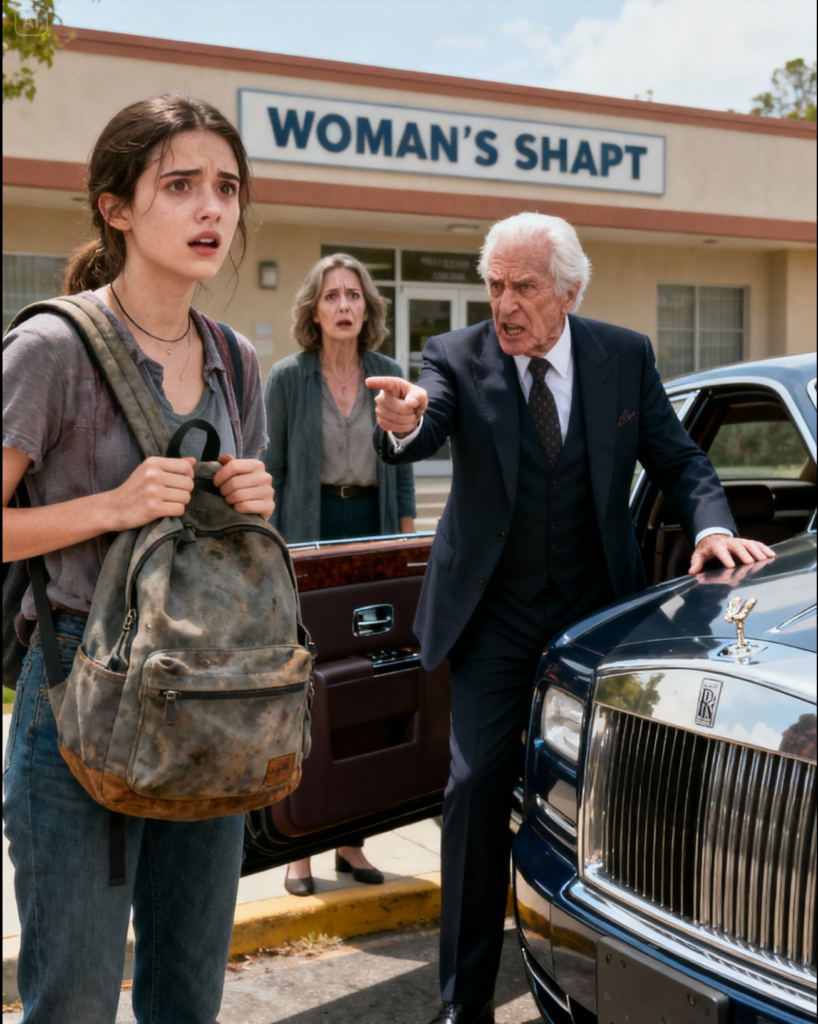
That afternoon, I stepped out of the shelter with my old backpack slung over my shoulder. Inside it was my entire life: two changes of clothes, a notebook, folded documents, and an old photograph. I was walking with my eyes on the ground when a harsh, violent sound cut through the air—the screech of brakes.
A black car stopped abruptly just a few meters away.I looked up, and my heart nearly stopped.I recognized the vehicle before the door even opened.It was my grandfather.He stepped out of the car with his face flushed, his jaw clenched, his eyes burning with a mix of anger and disbelief.
I had never seen him like that. He didn’t look like the calm, elegant man from magazine covers. He looked like someone deeply wounded.“What are you doing here?” he shouted, not caring who might hear.“Why aren’t you living in the house I gave you?”
The words hit me like a slap.“What house?” I asked, my voice barely above a whisper.My stomach dropped. I thought it had to be a mistake. A misunderstanding. But his expression left no room for doubt.
That was when my mother, Carmen, appeared behind him, walking quickly. The moment she heard the question, she froze. Her face drained of color, turning almost gray. Her hands trembled.“I… I was going to tell you today,” she stammered. “I really was.
But I gave it to your aunt Isabel. She needed it more.”The silence that followed was brutal—thick and suffocating.My grandfather didn’t shout. He didn’t argue. He didn’t raise his voice. He simply took out his phone, dialed a number, and said with a calm that made my blood run cold:
“Come now.”Thirty minutes later, several police cars pulled up in front of the house where my aunt was living.PART 2.The arrival of the police was neither a mistake nor an exaggeration.My grandfather had legally transferred the house into my name.
The documents were signed, registered, and protected by law. My mother had never had the right to give it to anyone else. What she did wasn’t a family favor or an act of generosity—it was, legally, misappropriation.
My aunt Isabel came outside in tears, insisting she knew nothing. She said my mother had promised everything was settled, that I had agreed, that “the family had decided.”The police took statements.I stayed silent.I listened to every word.
Then my grandfather spoke. His voice was calm, but each sentence carried the weight of a verdict. He explained that he had been investigating for months—noticed suspicious activity, properties being used without permission, quiet transactions disguised as “family help.”
That house wasn’t the only one.My mother began to beg. She said she only wanted to help her sister. That I was young. That I could endure a little longer. That I had “always been strong.”My grandfather looked straight at her.“Enduring is not the same as living,” he said.
That night, for the first time in months, I slept under a roof that was truly mine. I didn’t celebrate. I didn’t smile. I was too exhausted. I stared at the ceiling, listening to the silence, trying to understand how my life had changed in just a few hours.
PART 3.The legal process continued.My mother and aunt faced consequences—not severe criminal ones, but real financial and social ones. My grandfather cut off all financial support. Not out of revenge, but out of boundaries. Because help without responsibility also destroys.
I started over. I found a job. I repaired the house little by little. Every painted wall felt like a small victory. Every piece of furniture was a quiet declaration that I deserved to be there.I don’t carry hatred.But I don’t forget.
I learned that family doesn’t always protect you, and that setting boundaries doesn’t make you ungrateful. Sometimes, it’s the only way to survive.One night, my grandfather and I talked for a long time, without interruptions. He apologized for not realizing the truth sooner. I thanked him—not for the money, but for the truth.
Because this story isn’t about wealth.It’s about dignity. Justice.And the power of breaking silence before it’s too late.And now I ask you:What would you have done in my place?Do you believe family justifies every decision?Your answer might help someone who today believes they deserve nothing.Write it.