They took us to the seaside for two weeks. Back then, I honestly believed it would be a gift. A family holiday people talk about for years: the sound of waves, children laughing on the beach, slow warm evenings on the balcony when no one is in a hurry anymore. My daughter called me in the spring as if she was offering something special:
“Mom, come with us, you deserve a rest. The kids adore you, Pavel and I will finally get some rest after a hard year.” There was a lightness in her voice I hadn’t heard in a long time. For a moment, I didn’t doubt it at all. After thirty years of teaching and five years of retirement, I felt like the time had finally come when family doesn’t ask, but gives.
But the first day already began differently than I had imagined.
In the seaside apartment, a printed sheet was waiting on the table. Not a handwritten note, not a rough plan, but a carefully structured daily schedule broken down by the hour. It felt less like a holiday and more like arriving at an institution. Seven o’clock: breakfast for the children.
Nine: beach. One o’clock: lunch. Afternoon games, nap, bathing, dinner, bedtime. Every minute had its place, everyone had their role, everything had order. Only one thing was missing: rest. Especially mine.
At first I laughed. I thought it was a misunderstanding, maybe just a temporary plan we would adjust together. But the paper didn’t change, and neither did the days.
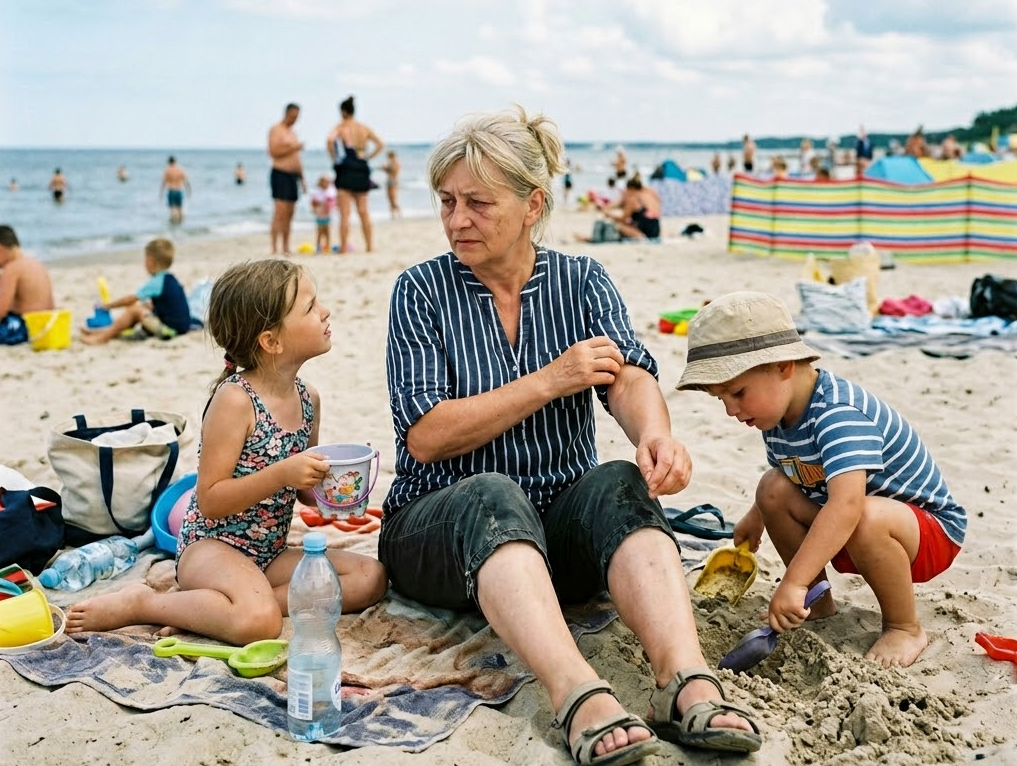
At seven in the morning I was already in the kitchen while the children were still rubbing their sleepy eyes. My daughter and son-in-law were getting ready, then left “for a short walk.” The short walk often lasted until late evening. And I stayed behind: sandy knees, scraped elbows, cocoa stains, scattered toys, repeating the same stories over and over, the same sentences, the same cycle.
What surprised me wasn’t the exhaustion. I knew exhaustion from a lifetime. Teaching was like that too: constant attention, discipline, presence.
What was different now was the feeling of invisibility. As if I wasn’t a person in this story, but an automatic function. Someone who “handles it.” A standby grandmother whose presence is taken for granted, while her rest is meaningless.
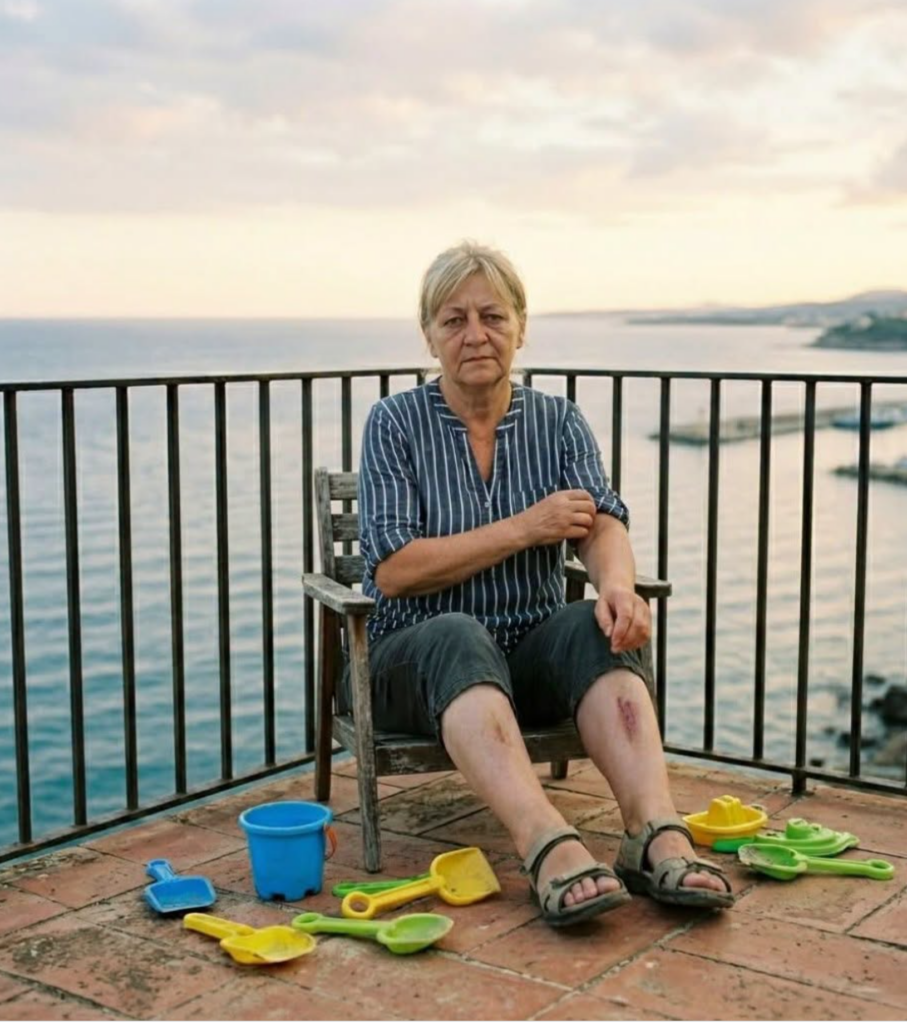
On the third day I noticed I hadn’t really seen the sea at all. It was there beside us, I heard the waves, felt the salty air, but it was as if it wasn’t meant for me. As if it was just the background to a life arranged by others.
In the morning I asked if I could go down to the shore alone for half an hour. Just to be alone with the water before the house woke up. My daughter looked at me—not angrily, but with confusion. “Mom, but he wakes up at six… who will stay with him?” The question wasn’t really a question; it was a closure. The conversation ended before it could begin.
On the fourth day my grandchild cut his foot on a seashell. It wasn’t serious, but there was crying, panic, blood in the sand. I immediately bent down, lifted him into my arms, calming him while also trying to soothe the other child who had been frightened. The world suddenly became small: only the children, the crying,
the burning sun, and my hands trying to hold everything together. When my daughter returned from her walk, she only said, “Good, so it’s fine now.” Then she went to change clothes. That was the moment something inside me shifted—gently, but irreversibly.
By the fifth day I was automatically peeling potatoes. And I thought how absurd it was: I had come “on holiday,” yet I was doing the same motions as at home, just between different walls, under different light. That evening I accidentally overheard a half-sentence: the apartment had been expensive, this trip was their rest, their recovery. It wasn’t meant for me to rest, but for them.
And then I understood.
In this story, I was not part of the rest. I was the condition.
I called my friend. I didn’t need to explain much. She listened, then said what I hadn’t dared to say yet: “You’re not on holiday. You’re on duty.”
That sentence didn’t hurt. It clarified things. Suddenly everything became simple and brutally clear.
On the seventh day I sat down opposite them. I didn’t shout, didn’t accuse. My voice was calm—maybe too calm. I told them I loved them, I loved the grandchildren, but that wasn’t why I came. Not to work without a single moment of rest while others rested.
My daughter’s face first showed surprise. Then defensiveness. Then exhaustion. She began talking about how tired they were, about work, about how they also deserved time together. I listened. Every word was true. And yet it wasn’t the whole truth.
Because it was also true that I am a human being. I don’t belong to anyone’s constant availability. Being a “nearby grandmother” does not mean being permanently on call, endlessly assignable, silently adaptable.
The next day not everything changed. Habit is stronger than spoken words. But something had cracked. Sometimes they came home earlier. Sometimes they brought ice cream, sat beside me, and didn’t rush through their own lives. Small gestures, but they began to create a new rhythm.
One morning I finally went down to the sea alone. The sand was cold, the water grey and still. Nothing special happened, yet it was the first moment when no one asked anything of me. I had no name, no role, no task. Only the waves.
And then I understood that rest is not a place, but a boundary.
We travelled home in silence. The children were asleep, my daughter was looking out of the window, and I was holding a warm little head in my arms. There was a strange calm in me—not emptiness, not exhaustion, but a new kind of completeness.
At the end of the journey she quietly said, “Mom, thank you.”
And I only replied:
“Good that we finally understood each other.”