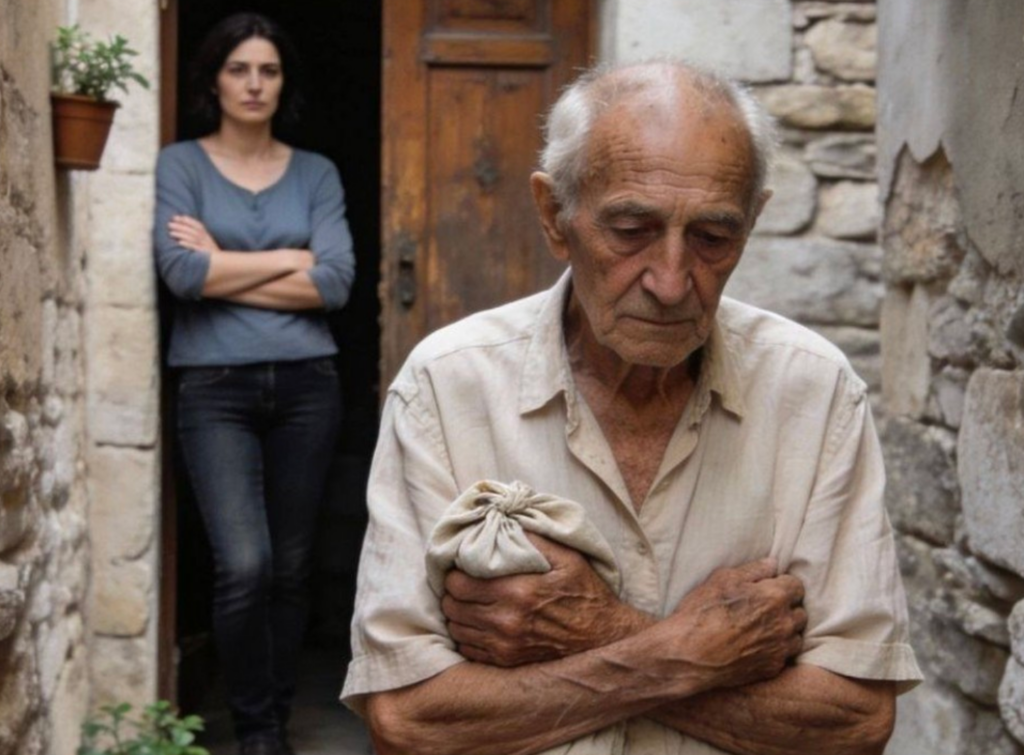
The poison in her voice struck me harder than any slap ever could.Not because of its volume.But because of its coldness.Cristina stood in the doorway of the small bedroom I had called home for three years. She didn’t step forward. She didn’t retreat.
She stood there like a judge who had reached the verdict long ago and was now merely delivering it. Her arms were tightly crossed over her chest, her face fixed in a mask of disgust—not the fleeting, impulsive kind, but the carefully cultivated, long-aged disgust that had been ripening for a very long time.
“It’s decided, Guillermo,” she said flatly.Then she continued, word by word, precise as knife cuts:“Go. Get out. Die on the street if you have to. But you will not live a single day longer in my house. My house. Not ours. David’s house. My house.”
With those sentences, she erased three years of my life—effortlessly, as if they had never existed.Three years in which my meager pension helped pay the bills so the lights wouldn’t go out.Three years in which I picked up my grandchildren from school, cooked soup for them, helped them with their homework.
Three years in which my hands fixed broken doors, repaired leaking pipes, reset loose tiles. Every crack, every creak in that house carried my mark. And now all of it was worthless.I was seventy-four.A retired carpenter.
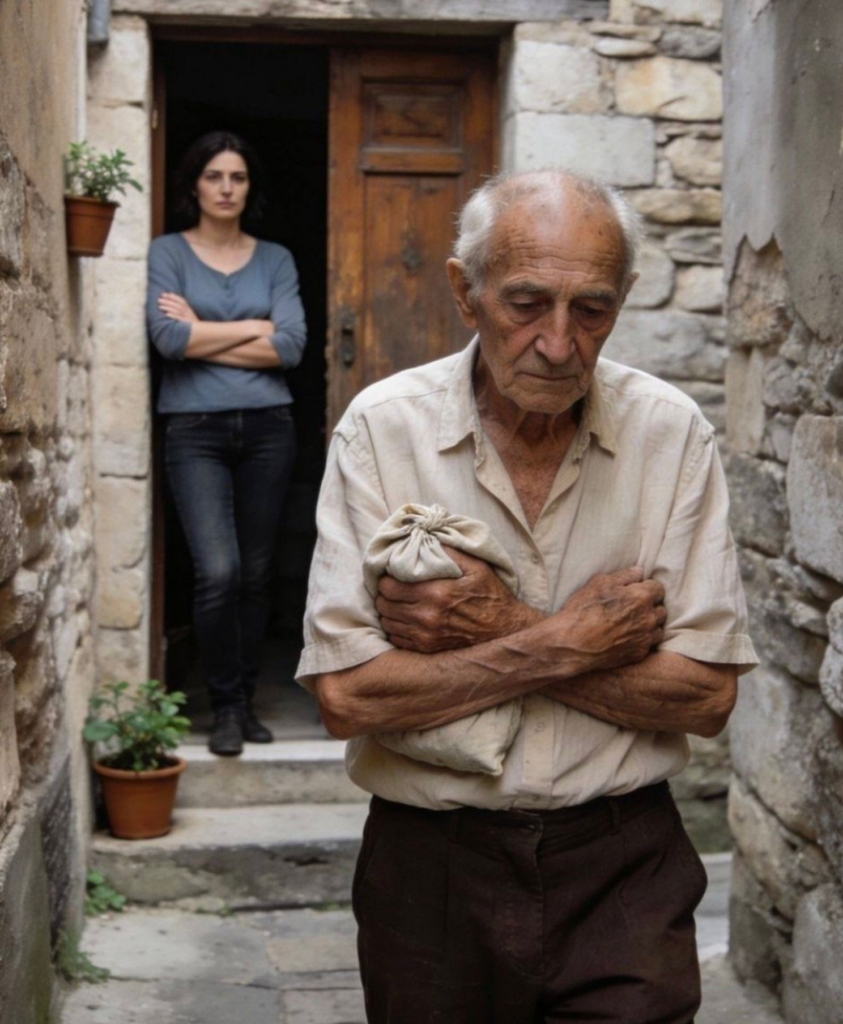
My fingers were twisted by arthritis, my back permanently bent by fifty years of labor, responsibility, and silence. And now my daughter-in-law—a woman I had known for barely five years—discarded me like a piece of furniture that no longer matched the décor.
“Cristina,” I said calmly. Not out of weakness. Out of dignity. “Does David know about this?”There was no hesitation. No glance away.“Of course. We talked about it yesterday. We’re tired of feeding an old man who does nothing but cause problems.”
Problems.I searched her face for a trace of shame, for irony, for the slightest flicker of doubt. There was nothing.“What problems have I caused?” I asked quietly.She laughed—short, sharp. “You breathe. That’s enough. This house is too small.
Three bedrooms. David needs an office so he can finally earn real money. For our children. Not to house a useless old man.”Her words burned. But they didn’t surprise me. Some people only reveal their true face when they believe they hold all the power.
“I understand,” I said.That unsettled her. “That’s it? You understand?”“Yes,” I replied. “You want me gone. So I’ll go.”Her mouth tightened. “Good. You have until tomorrow.”“Until tomorrow?” My voice remained steady. “I need at least a week.”
“I don’t care,” she snapped. “Tomorrow. Or I’ll call the police and tell them you threatened me. Who do you think they’ll believe? You? Or me?”Something shifted inside me.Not anger. Not panic.Clarity.“I was just thinking,” I said slowly, “that a gift will arrive for you tomorrow.”
She frowned. “A gift? Are you crazy?”“You’ll see,” I said. “Something special.”She scoffed, muttered something about my failing mind, and walked away. Her heels echoed across the wooden floor—the floor I had refinished myself just last year.
I sat down on my narrow bed. This room had been my refuge since Rosa died. Back then, David had insisted that I move in.“You shouldn’t be alone, Dad,” he’d said. “We’re family.”Family.A word that promises warmth—until it becomes a weapon.
I took out my old phone and dialed a number I had saved months earlier.“Mr. Ruiz? This is Guillermo Santos. It’s time. Activate the plan.”Everything was ready.That evening, I packed my life. Clothes. Tools. Books. Photos of Rosa.
Two suitcases. Three boxes. That was all that remained of an entire lifetime.David came home around seven. No knock. Laughter from the kitchen. The clinking of glasses. Maybe they were celebrating.At eight, my grandson Pablo knocked softly on my door.
“Grandpa,” he whispered. “Mom says you’re leaving.”“Yes,” I said. “It’s time.”His eyes filled with tears. “Did I do something wrong?”My heart shattered. “No. Never.”“Will I see you again?”“Of course,” I lied. I knew Cristina would make sure that didn’t happen.
The next morning, the moving truck arrived. I relocated to a damp studio apartment in a neighborhood that smelled of mold. Four hundred fifty euros a month. That was all my pension allowed.
Cristina watched it all with a smile she mistook for satisfaction.David muttered, “Dad… this is for the best.”“For whom?” I asked.He said nothing.As the taxi pulled away, I looked back. Cristinawas smiling.
At exactly 2:00 p.m., my phone rang.“The package has been delivered,” Mr. Ruiz said. “Signed for by Cristina Santos.”“Proceed,” I said.At 2:47, my phone exploded with calls. I ignored them.At 3:00, I listened to the first voicemail. Cristina was screaming.
Around five, I answered David’s call.“What are these documents?!” he gasped. “The ones saying the house belongs to you? That you’re evicting us?”“Yes,” I said calmly. “They’re valid.”Silence.“I bought the house four years ago,” I continued.
“With your mother’s life insurance. One hundred eighty thousand euros. You never asked.”“You manipulated us!”“No, David. Manipulation is throwing your father onto the street with one day’s notice. This was preparation.”“You’re throwing us out?”
“In thirty days. Thirty times more respect than you showed me.”Five days later, Cristina stood in front of me. Broken. Begging.“We’re sorry,” she sobbed. “Please.”I looked at her calmly.“You told me to die on the street.”
Words have weight.And consequences.Two weeks later, they were gone.I sold the house cheaply. Donated money to shelters for homeless seniors. Set up a trust fund for my grandchildren—with clear conditions.
Sometimes I wonder if I was too harsh.Then I remember her words.And I know: I wasn’t.Because family is not blood.Family is respect.And respect—once broken—always comes at a price.