The judge’s gavel struck with a dull, heavy sound — not just noise, but a dividing line that split my life into “before” and “after.”
— The court rejects the claim, — the judge said without emotion, as she neatly stacked the documents.
I sat on the hard bench, my fingers clenched so tightly I could no longer feel them. The air in the courtroom was heavy, as if I were breathing in decades of dust and old failures with every breath.
Next to me, Igor slowly buttoned his expensive cashmere coat. Twenty years. That’s how long we had shared our lives. A home, work, dreams — everything.
Yet now he looked at me as if I were a stranger.
— So what now, Sveta? — he leaned closer with a mocking half-smile. His perfume — the one I had bought him — hit me. — Go back to your drifters. That’s always who you loved anyway. The apartment, the house… everything stays with me. Clean and legal.
My throat tightened.
I was the chief orthopedic surgeon at the city hospital. He owned an elite private dental clinic. We had built our lives from nothing: I took on endless shifts, he bought equipment; I gave up everything to make his life easier.
I thought that was love.
Then, a month earlier, I came home from a conference.
A strange scent in the hallway. A woman’s dress in the bathroom. Igor in the kitchen, facing a young receptionist as if it were the most natural thing in the world.
— Don’t make a scene, — he said coldly. — You’re tired, you work all the time. She’s different. She’s alive.
And just like that, it was over.
The real blow came during the divorce.
The apartment, the house — everything was in Igor’s name.
— How? — I asked the lawyer.
— You signed a deed of gift a year ago.
In an instant, the memory struck back.
Rain. A theater. Hurry.
— Sveta, it’s just a formality, — Igor had said, pressing papers into my hands. — Sign it, or we’ll be late.
And I signed.
Because I trusted him.
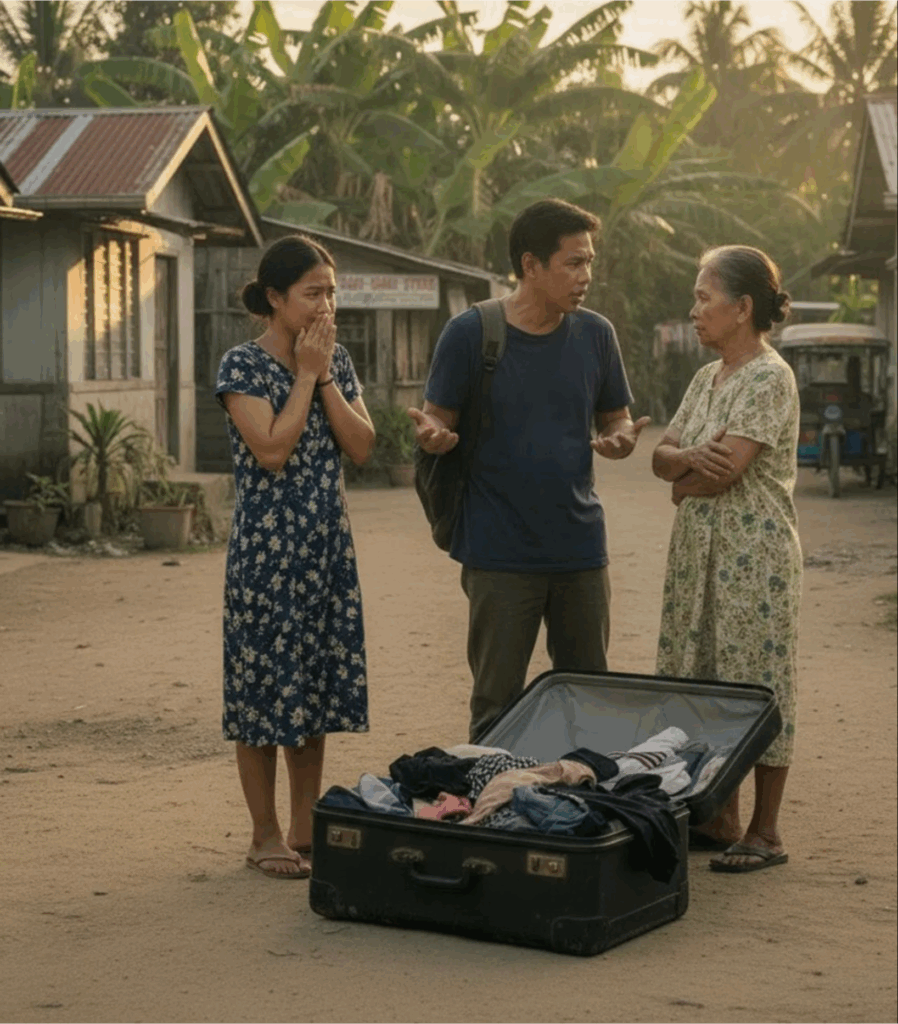
Then came the eviction. My belongings in plastic bags. The receptionist’s mocking laughter.
— The workers’ dormitory will suit you, — she said.
And Igor just watched.
He said nothing.
That was when I understood: I had already lost him long ago.
The dorm room was cold, cramped, and чужд (foreign). I was alone.
And then only work remained.
The hospital’s homeless care project became my refuge. People who had lost everything — just like me.
Slowly, I began to breathe again.
In the evenings, I read writings by an author called “The Wanderer” on a literary site. There was a strange warmth in them. I wrote to him.
He replied.
And that was how something began that was not love at first — but a lifeline.
A year passed.
It was winter when I first saw him.
He was sitting on a bench in the park, frozen fingers, bent over a notebook.
— You’re going to freeze, — I said. — Come, I’ll buy you tea.
He looked up.
A calm gaze. A broken life.
— I’m Roman, — he said.
And then something strangely familiar settled between us.
In the café, it turned out he was the “Wanderer.”
We both laughed at how cruelly and precisely life can piece people together.
From that day on, we walked the streets together.
He didn’t complain. He didn’t blame anyone.
He simply lived — with dignity.
In spring, a child who had ventured onto ice nearly drowned.
Without hesitation, Roman went after him.
He saved him.
And that changed everything.
The boy’s grandfather, a retired judge, personally came to the hospital.
— Ask for anything, — he said.
And we asked for only one thing: justice.
The case was reopened.
And then, suddenly, an old document appeared in my suitcase. A draft. The one Igor had once “accidentally” placed in front of me.
That was the key.
On the day of the hearing, Igor was still smiling.
He thought he had won.
Then witnesses came. Documents. Truth.
And the wall he had built collapsed.
— The contract is invalid, — said the judge.
Silence.
Then tears.
Not of joy, but of release.
Igor lost everything.
And I, for the first time, got myself back.
Years later, I lived in my own apartment. Roman was by my side. Together we created a foundation so others would not have to go through the same thing.
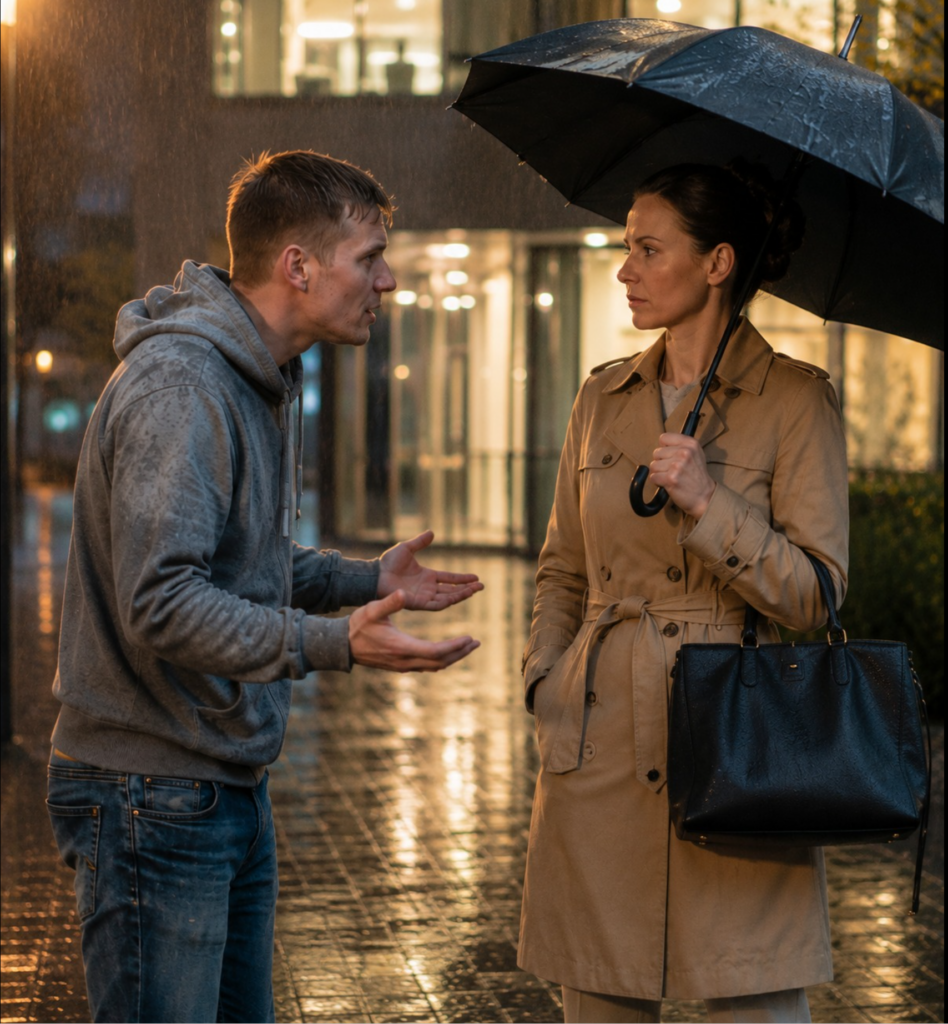
Then, on a rainy evening, I saw him again.
Igor.
Broken, empty, a stranger.
— Sveta… help me, — he said.
I looked at him.
Nothing moved inside me.
No pain. No anger.
Only silence.
— Go, — I said quietly. — That’s where you belong, where you always looked down on others.
And I walked away.
He stayed in the rain.
And I did not look back.
Because sometimes victory is not getting everything back.
It’s finally no longer needing to look back.