My husband, Artjom’s voice, which on ordinary days sounded in our apartment like that of a tired Roman patrician, was now radiating some cheap syrupy business enthusiasm. The phone was on speaker, and every word spread too loudly across the kitchen.
— Mom, you don’t understand the concept of scaling — he explained confidently, as if he were running an international holding company,
not holding a mid-level managerial position where “strategy” meant deciding which discounted robot vacuum cleaner to push onto customers. — Nataša’s apartment is dead capital. Just concrete, nothing more. We leverage it at the bank and get ten million.
Alka opens a premium dog grooming salon, and from the revenue we easily pay it back. Nataša won’t even feel it… she doesn’t understand these things, she’s a seamstress, you know. I’m her support, her compass.
On the other end of the line, Zhanna Arkadyevna, my husband’s mother, responded in a hoarse warehouse-manager voice, someone who had spent her life categorizing everything: people, goods, fate.
— Son, push it through the family values — she hissed. — Say it’s a joint effort. If she refuses, threaten her with divorce. Where would she go? Nearly forty, what choice does she have?
I stood barefoot in the hallway, in the dark. And in that moment, something inside me didn’t break — it clicked. Just like my tailoring scissors when they cut through the wrong edge of cheap, useless fabric. No drama. No tears. Just a clean, cold decision.
In the morning, the usual performance was already unfolding in the kitchen. Artjom was following his “important man” ritual:

drinking lukewarm lemon water, staring out the window as if reading the financial fate of the world in the fogged glass, rather than seeing a cracked courtyard-level reality.
Around ten o’clock, the doorbell rang.
The “family committee” had arrived: Zhanna Arkadyevna in a leopard-print blouse, and behind her Alka, the thirty-year-old eternal “finding myself” type, living entirely off her mother’s pension and her own resentment.
A heavy, sticky tension settled over the kitchen.
— Well, Nataša — the mother-in-law began, placing a rock-hard cheap gingerbread on the table as if it were some kind of peace offering. — Let’s sit down. Family matter.
We sat.
Artjom cleared his throat and put on his “I am a genius, listen to me” expression.
— Nataša, the world is changing. Alka has prepared a business plan. Premium dog salon chain. This is the future. But we need startup capital. Your apartment is currently an inactive asset. We take a loan against it, and within a year everyone profits.
I took a sip of my coffee.
— And who pays the installments until the dogs start producing gold bars? — I asked calmly.
— We are family! — Zhanna slammed her hand on the table. — We all pitch in, we endure it!
Artjom then switched to his “financial expert” tone.
— Your apartment is a passive asset. Leverage. Basic finance.
I smiled.
— Leverage only works if there is income. What you’re proposing isn’t investment. It’s gambling with someone else’s property.
Silence fell. The air seemed to thicken.
I continued, calmly:
— The bank doesn’t give the full value, it calculates a discounted collateral. If anything goes wrong, the apartment gets auctioned off, and I would still have to pay the difference. This isn’t business. It’s a trap.
Artjom started choking on his lemon water. He looked like an arrogant turkey that had accidentally swallowed a tennis ball and was now trying to regain dignity.
— How dare you speak to your husband like that?! — Zhanna screamed. — It’s joint property!
— No — I said quietly. — It’s separate property. I bought it before the marriage. And no bank can touch it without my signature.
Alka gasped dramatically.
— You’re selfish! You’re destroying my dreams!
Then Artjom stood up. He took the “final ultimatum” pose, the one he probably believed made the world tremble.
— If you’re not willing to live for the family… then it’s over.
Silence.
I looked at him.
And simply said:
— I know.
Then I pointed to the hallway.
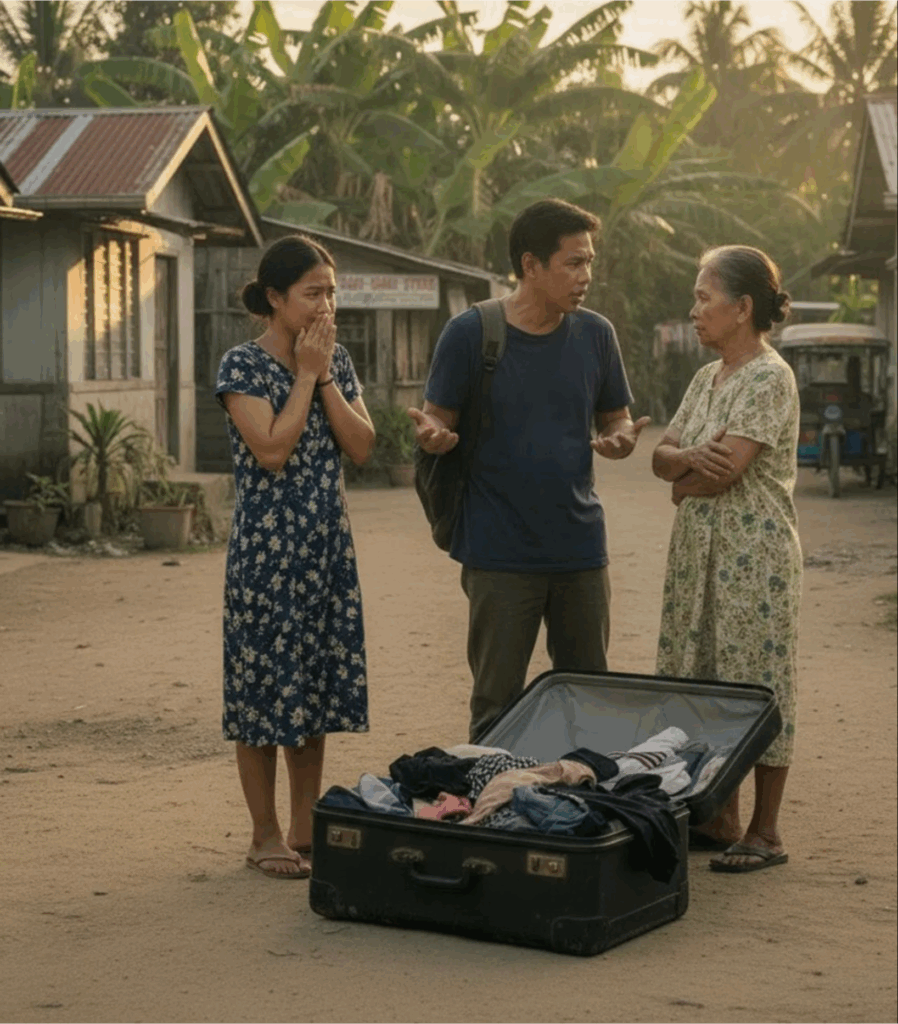
Three large checked suitcases were standing there.
Prepared.
At four in the morning, I had already packed everything.
The air froze.
Zhanna’s face slowly turned into a stunned fish. Alka’s mouth stayed open, as if she had forgotten how to replay her role.
Artjom lost all his confidence. There was no more “strategy,” just a man realizing that the apartment he had already spent in his head did not belong to him.
— Leave the keys on the table — I said. — You can take the gingerbread too, before it damages the furniture.
No one moved immediately.
Then, slowly, they stood up.
There was no shouting. No scene. Just collapse.
The door closed quietly behind them.
The apartment suddenly felt too big, too empty, and somehow, for the first time, truly mine.
I opened the window. Cold air came in and washed away the last traces of tension.
I sat down at the kitchen table and drank another coffee.
There was no feeling of victory.
Just peace.