I married a man forty years older than me because I believed he could give my children the stability I could never seem to build on my own—safety, security, and a future that didn’t feel like it was one missed paycheck away from collapse.
But on my wedding day, a stranger leaned in close and whispered something that froze my blood: “Check the bottom drawer of his desk before your honeymoon… or you’ll regret everything.”
That night, I did—and everything I thought I knew about my life shattered. I was thirty, raising two children alone—a daughter in kindergarten and a son in second grade.
Their father disappeared soon after our daughter was born, no calls, no letters, just absence. I worked full-time as an accountant, balancing numbers all day and survival all night, every month feeling like holding my breath underwater.
Then I met Richard. He was one of the company’s founders—older, composed, always perfectly in control. He never raised his voice, never rushed, never seemed rattled by anything. Around him, the world felt quieter.
We started with small conversations, coffee breaks that stretched a little too long, dinners that felt easy—just peaceful, not romantic. Until one evening, everything shifted.
I was complaining—half-joking, half-exhausted—about my daughter’s obsession with overpriced cereal when Richard leaned forward and said, “You don’t have to live like this.”
I laughed and said, “That would be nice,” but his expression didn’t change. “I mean it,” he said, taking my hands. “I can give you stability. A real home. Security for you and your children.
A life where you don’t have to struggle anymore.” My breath caught. “Richard… what are you saying?” He opened a small box, revealing a ring that looked unreal—diamond and sapphire catching the light like it belonged in another world.
“Marry me,” he said softly. “Let me take care of you.” I should have hesitated, but I was tired in a way sleep couldn’t fix, and for the first time in years, someone was offering a solution instead of sympathy, so I said yes.
At first, everything looked like the answer to my problems. Richard was kind to my children, patient and present, and they warmed to him quickly. One day they came home excited, saying,
“We met a nice lady! She had toys and games and a whole room!” Richard smiled when I looked at him and said, “A friend of mine works with children. I thought they’d enjoy it,” and something in me paused, but I let it go.
Then he began talking about their future—private schools, opportunities, Europe—and kept saying, “Money isn’t an issue,” which I foolishly associated with safety, not control. I had no idea it meant planning.
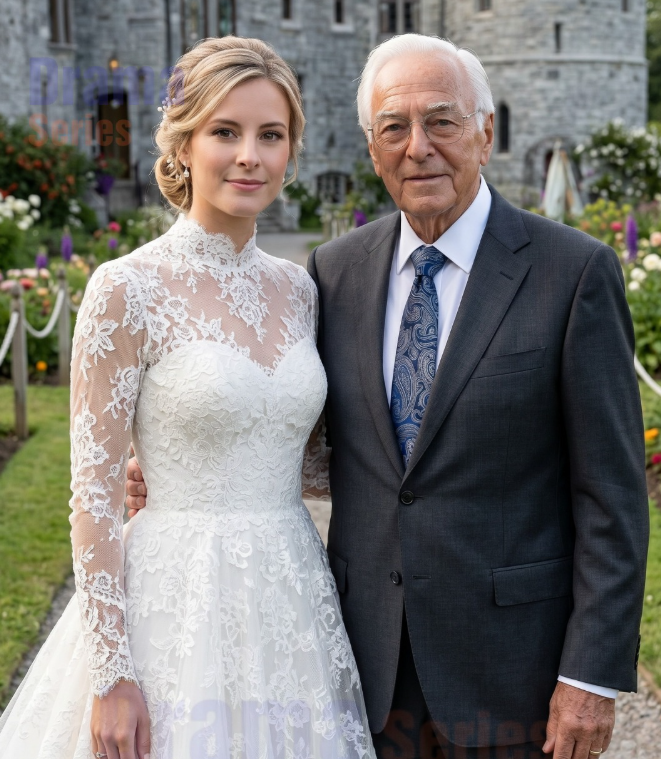
The wedding day was beautiful in a way that almost felt unreal—cream roses everywhere, soft lights, music drifting through the air like a dream I didn’t quite belong in.
My children ran between tables laughing, but I couldn’t shake the feeling that something was wrong, not in the room, but in me. In the restroom, an older woman stepped in beside me and said without hesitation,
“Check the bottom drawer of his desk before your honeymoon, or you’ll regret everything,” then walked out as if she had never spoken. That night, Richard fell asleep beside me, and I lay awake until curiosity became necessity.
I went to his study, opened his desk drawer, and inside were files, documents, and a folder labeled in neat handwriting: Ava and Mason.
My hands shook as I opened it and found psychological reports describing instability, notes analyzing me as a mother, and enrollment papers for boarding schools in Europe starting in less than a week—during my honeymoon.
Then I found the final document: legal authorization signed by my children’s absent father, granting Richard control over educational and custodial decisions. He had found him. He had convinced him. And he had done it without telling me.
I stood in my children’s rooms that night watching them sleep, realizing this wasn’t stability—it was removal disguised as opportunity. The next morning at brunch, I placed the folder on the table and said quietly,
“You arranged all of this behind my back,” and Richard calmly replied that he was giving them a future, that I had wanted stability. When I protested that it wasn’t stability but exile, he insisted it was one of the best schools in the world and I should be thanking him.
Then the woman from the restroom appeared again and revealed herself as his sister-in-law, saying she had overheard him call my children “distractions” and that he planned to remove them from my life.
Richard denied everything, but she didn’t back down. In that moment, I took off my wedding ring and placed it on the folder, telling him he didn’t want a wife or a family—just a perfect life where my children didn’t exist.
He accused me of wanting financial security, and maybe he wasn’t entirely wrong, but he was wrong about what I was willing to lose. I took my children’s hands and walked away.
The aftermath was a storm of lawyers and legal battles, but his control wasn’t as airtight as he believed. He moved too fast, left too many traces, and underestimated how far I would go to protect my children.
With testimony from his sister-in-law and pressure from investigators, the plan unraveled. What I learned is simple: stability is not something someone gives you in exchange for your family.
Anyone who asks you to trade your children for peace is not offering peace at all—they are offering absence with a pretty name. If I had gone on that honeymoon,
I might have come back to a life where my children no longer had a place in it, and I would have called it security. I almost made that mistake—but in the end, I chose them.