Two years after I lost my wife and my six-year-old son in a car accident, I stopped living and started only surviving. Then one night, a single Facebook post changed my life.My name is Michael Ross. I’m 40 years old, and two years ago my world ended in a cold hospital corridor.
The doctor looked at me with painful eyes and said, “I’m so sorry,” and in that moment, I understood everything.After the funeral, the house was no longer a home. Lauren’s coffee cup stayed by the machine as if she would come back any moment, and Caleb’s shoes waited by the door—but they never returned.
His drawings were still hanging on the fridge. I stopped sleeping in our bedroom and moved to the couch. The TV stayed on all night just so I wouldn’t hear the silence.People told me, “You’re strong,” but they were wrong. I wasn’t strong—I was just still breathing.
Then, a year after the accident, at 2 a.m., while mindlessly scrolling Facebook, I saw a post that stopped my heart.“Four siblings urgently need a home, likely to be separated.”I clicked on the photo. Four children were sitting tightly together on a bench. The oldest was holding the youngest.
One was caught mid-movement in the photo, and the little girl was clutching a teddy bear as if it was the last thing she had left.They didn’t look hopeful—they looked like they were already preparing to lose each other.
The comments were full of sympathy—“heartbreaking,” “shared,” “praying for them”—but no one said, “I will take them.”I put the phone down, then picked it up again, because I knew what it meant to lose everything—and they were about to lose each other.
In the morning, I called.“Social Services, Karen speaking.”“Hi, my name is Michael. I saw the post. Do they still need a home?”“Yes.”That same day, I was sitting in front of her.“They’re good kids, but they’ve been through a lot,” she said, opening the file: Owen 9, Tessa 7, Cole 5, Ruby 3.
“Their parents died in a car accident. There’s no family who can take all four of them.”“And what happens if nobody takes all four?” I asked.She took a deep breath. “They get separated.”I looked at her and said without thinking:
“I’ll take them.”“All four of them?”“Yes. All of them.”Months passed—background checks, interviews, paperwork. A psychologist asked, “How are you coping with grief?” and I answered, “Not well, but I’m still here.”Our first meeting was quiet.
“Owen asked, ‘Are you the man taking us?’” I said, “Only if you want me to.”Ruby asked, “Do you have snacks?” and I smiled, “Always.”The day they moved in, the house started breathing again. Suddenly there were shoes by the door, bags on the floor, voices, and life.
It wasn’t easy—nights of crying, moments of anger and fear—but there were also new drawings on the fridge, laughter in the hallway, and four words that changed everything: “Good night, Dad.”Then a year after the adoption, a woman knocked on the door—a lawyer.
She told me about a small house the biological parents had left for the children, money, and one clear request in the will: never separate them.I took them to see the house. They remembered everything—every corner, every smell.“Do we have to move here?” Owen asked quietly.
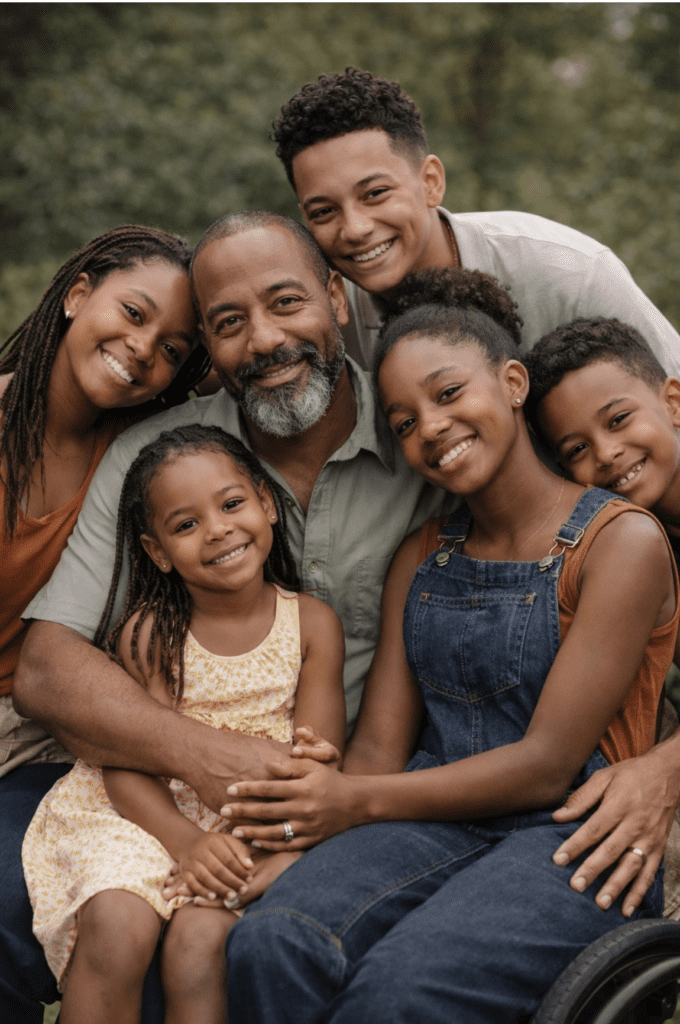
I looked at them and said, “No. We’ll decide together when the time is right.”That night I sat alone and thought how strange life is—I lost a wife and a son, but I was given four new souls.Now there are four toothbrushes in the bathroom, four voices in the house, and four children who call me “Dad.”
I am not their first father, but I am the one who chose all of them together—the one who said, “All four.”What would you have done in my place?