If you’re as fascinated by orchids as I am, you’ve probably asked yourself at least once: can a single leaf grow into a whole new orchid? It sounds possible—after all, many plants like succulents or African violets can do exactly that.
But orchids? They’re a little more complicated.After years of growing them, I can tell you the truth right away: a single orchid leaf on its own won’t grow roots or become a new plant. Orchids simply don’t work that way. However, don’t lose hope—if that leaf is attached to a small piece of stem,
or if you have a tiny offshoot called a keiki (a baby orchid), then propagation is absolutely possible.Can Orchids Really Grow from Just a Leaf?Unlike easygoing houseplants like pothos or jade, orchids rely on special structures to grow. Some develop from rhizomes (like Cattleyas and Dendrobiums),
while others grow upward from a single stem (like Phalaenopsis).These parts store energy and are responsible for producing new growth. A leaf alone simply doesn’t have what it takes to start a new plant.So when you hear someone say they grew an orchid from a leaf,
chances are they actually had a piece of stem attached—or they were working with a keiki.What Actually WorksThe good news? You can propagate orchids successfully—you just need the right starting material.1. Look for a Keiki or a Leaf with a Node
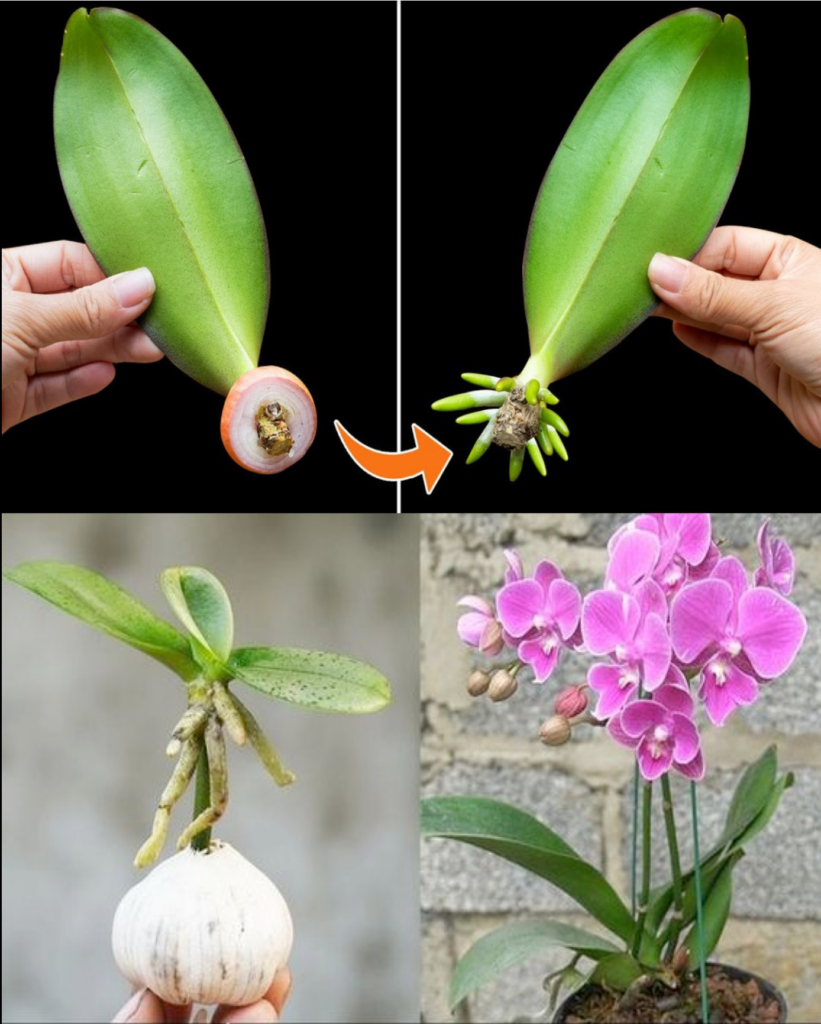
A keiki is a small clone that forms naturally on the flower spike or stem. If you spot one, you’ve hit the jackpot.No keiki? Then check for a healthy leaf still attached to a small stem section with a node. That node is where new roots can develop.2. Always Use Clean Tools
Orchids are sensitive to infections. Before cutting, sterilize your scissors or knife with rubbing alcohol or briefly heat the blade.3. Make a Careful CutIf you’re working with a keiki, wait until it has at least two leaves and small roots (around 1 inch long). For stem cuttings, make sure the node stays intact—that’s your plant’s growth point.
4. Let It Dry FirstFresh cuts can rot quickly. Let the cutting dry out for a few hours before planting.5. Choose the Right Growing MediumForget regular potting soil—orchids hate it. Instead, use a light, airy mix like sphagnum moss, bark chips, and a bit of perlite or charcoal.
6. Plant GentlyPlace the cutting so the node touches the moss. If you’re planting a keiki, set its roots gently into the medium without burying them completely.7. Create a Warm, Humid EnvironmentOrchids thrive in humidity and warmth.
Keep them in bright, indirect light, maintain temperatures around 70–80°F (21–27°C), and cover them with a plastic bag or humidity dome to lock in moisture.8. Be PatientMist lightly to keep the moss damp—not soaked. Then wait. Root growth can take weeks, sometimes even months.
Caring for Your Baby OrchidOnce roots appear, your new orchid will need a little extra attention:Humidity: Aim for 50–70%. Use a humidity tray or humidifier if needed.Feeding: Apply diluted orchid fertilizer every two weeks.Repotting:
When roots reach 2–3 inches, move the plant into a slightly larger pot with fresh orchid mix.Common Problems (and Simple Fixes)Yellow leaves: Usually caused by overwatering or too much sun. Reduce watering and move to indirect light.
No root growth: Often due to low humidity. Increase moisture and consider a diluted rooting hormone.Rotting cuttings: Too much water or poor airflow. Let cuttings dry longer and improve ventilation