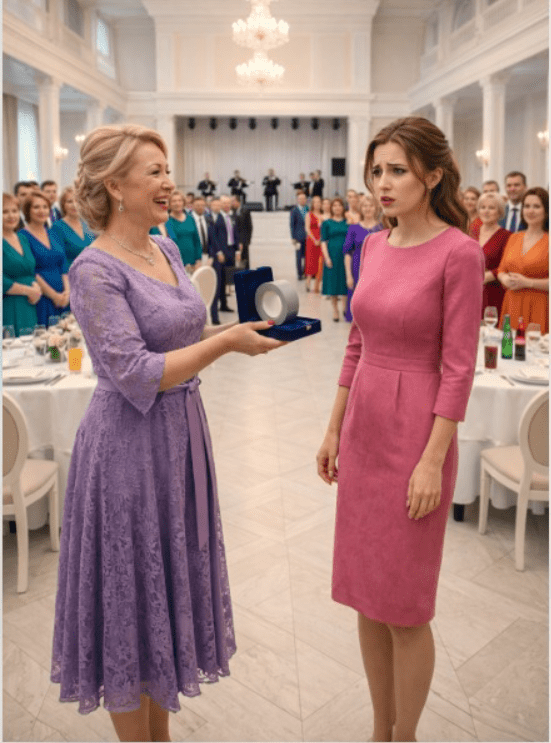
Tamara Nikolaevna, wearing a flawless porcelain smile, extended a small box wrapped in dark blue velvet toward me. In the vast hall of the countryside restaurant, around one hundred and fifty people fell silent at once.
My husband’s business partners, gallery owners, local officials—all eyes turned to us. Even the musicians on stage stopped playing. The air grew heavy, as if everyone were waiting for a single, decisive moment.
Almost mechanically, I took the box. When I opened it, I saw an ordinary roll of gray construction tape лежащий on a satin lining.
— This is for you, Yana, — my mother-in-law announced loudly, making sure even the farthest tables could hear. — Here, take it. Maybe you can use it to glue your worthless life back together. Because today my son will finally see who you really are.
A murmur rippled through the room. My mouth went dry, my tongue stuck to the roof of my mouth. I stood there in the center of the hall in a custom-made dress, yet felt completely exposed under dozens of judging eyes.
I had no idea then that this evening wouldn’t mark the end of my life as I knew it—but someone else’s.
Three years earlier, I had no idea what the inside of an elite world looked like. I grew up in a gray five-story apartment block on the outskirts of Syzran.
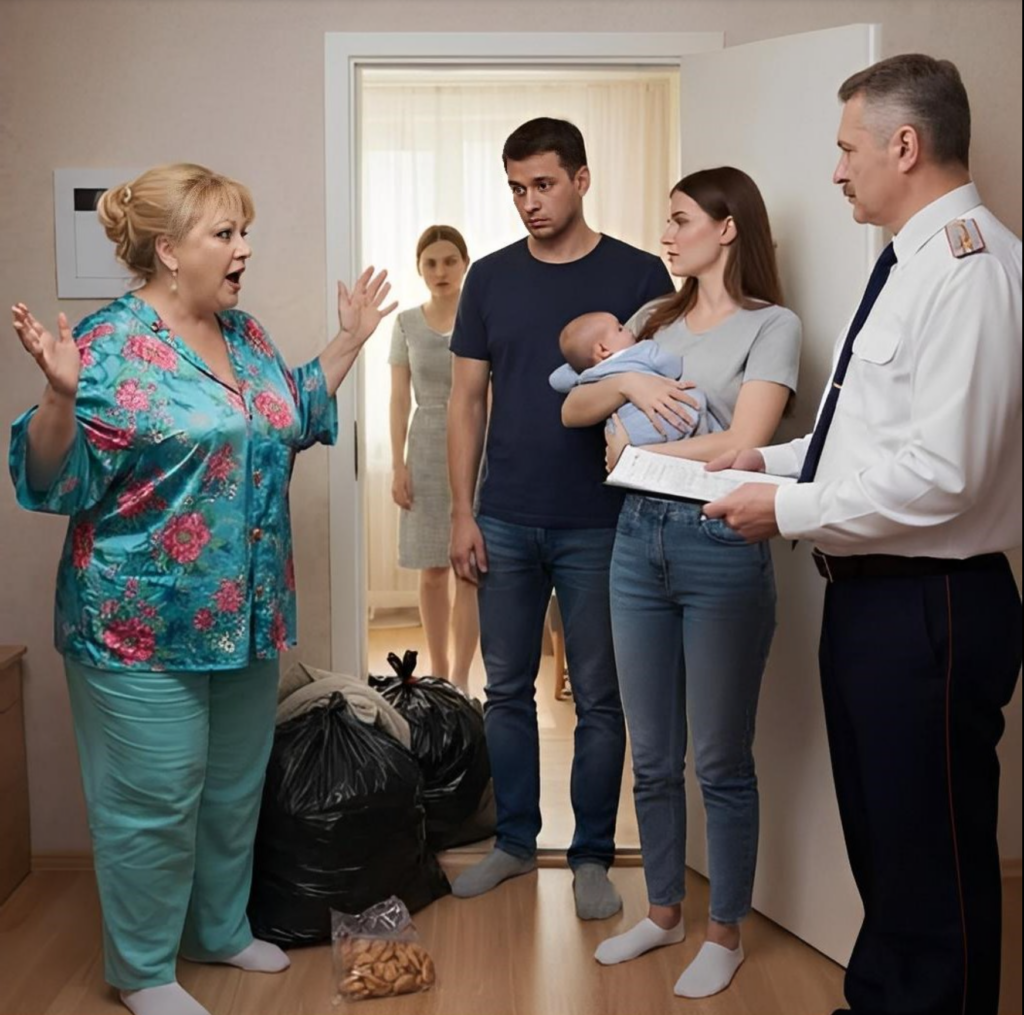
My mother, Nina, worked at a confectionery factory during the day and cleaned floors at a pharmacy in the evenings. Her wool cardigan always smelled of vanilla and chlorine.
She died when I was only twenty-three. The doctors just shrugged—her body had given up after years of relentless work.
I was left alone. I finished university and got a job in the rare books restoration department at a regional library. I loved the silence. The smell of old paper. The careful, patient work. There was no hypocrisy there.
One cold November day, the door to my workshop creaked open. Ilya stood in the doorway. He wore a simple dark gray sweater, his hair slightly tousled by the wind. He had brought his great-grandfather’s diaries for restoration.
We talked for nearly an hour about nineteenth-century bindings. He didn’t resemble the heir to a construction empire at all. He drank cooled tea with me from a chipped mug, joked, listened.
Our relationship developed quickly. He drove an unremarkable car, we walked through old parks, ate hot pastries from street kiosks. But after six months, sitting in my tiny kitchen, he grew serious.
— Yana, I need to warn you, — he said, nervously twisting a napkin. — My family… especially my mother. She’s obsessed with status. She won’t accept you. She’ll test you, hurt you with words. Just don’t take it to heart. I’ll always be on your side.
I nodded lightly, not really understanding.The first meeting with Tamara showed how wrong I was.Their house looked like a museum. She looked me up and down from my worn shoes to my collar.
— A restorer? — she said coldly. — What a rare and… poorly paid hobby.At dinner, she “accidentally” spilled red wine all over my blouse.— Oh, how unfortunate. Though judging by the fabric, it’s hardly a loss.
That night, Ilya silently took my hand and led me out. A month later, we got married. Tamara ignored the wedding.After that, everything turned into a quiet psychological war.
My belongings began disappearing. First my silver pendant—my only keepsake from my mother. Then my work pass. Then a flash drive. One day Tamara came over unannounced and “helped” me search—only to pull the flash drive out of the refrigerator.
— Yana, dear… you’re clearly overworked, — she said with fake concern.I started doubting myself.Soon Diana began visiting more often—a daughter of one of their business partners, someone Ilya had once been involved with.
Elegant, confident, perfectly at ease in our home. Tamara watched her with clear approval.— Ilyusha, remember our trip to the mountains? — Diana laughed.
Then Tamara would turn to me:— And you, Yana? Where did you spend your childhood vacations? Gardening back home?I endured it. Silently.
Then, suddenly, Tamara changed her tone. She called me one morning, her voice unusually soft.— Yana, I’ve been thinking. I behaved terribly. Let me make it right. I’ll organize a grand evening for you and Ilya. A proper celebration.
Ilya didn’t trust it. But I convinced him.And now I stood there, holding that roll of tape, as my past appeared on the screen behind me. Old photos. My mother. My childhood.
— Look who my son brought into this family! — Tamara declared triumphantly. — A girl from nothing. She even lied about being pregnant to keep him!
The world seemed to collapse around me.Ilya slowly stood up.— This morning, — he said quietly, — my security team brought me something interesting.
A video appeared on the screen.Tamara… entering our apartment. Taking my pendant. Hiding my flash drive in the refrigerator.Gasps filled the room.
— That’s fake! — she shouted.— Just like the pregnancy document, — Ilya replied, displaying messages. — Diana arranged it.Silence fell again, heavier than before.
Then another image appeared.A simple village girl standing by a wooden fence.— Everyone here knows my mother as Tamara Nikolaevna, — Ilya said firmly. — But meet Zinaida Kovshova.
The air froze.His father stood up.— Enough, Zina. Tomorrow my lawyers begin the divorce.Tamara’s world shattered in minutes.Six months have passed.
Tamara disappeared from society. Her circle abandoned her. Diana left the region. Ilya’s father moved to the countryside, living quietly.Recently, we received a letter. Fifteen pages. A confession. Fear, lies, a life built on pretending.
She didn’t ask for forgiveness.She simply wrote that, for the first time in thirty years, she could be herself.I put the letter away.I feel no anger. Only a quiet question:
why would someone choose to live in a prison made of their own lies?Ilya and I didn’t create foundations or make public gestures. We simply live. He runs his company. I restore old books.
And that gray tape?I threw it away that very night.Because a real life doesn’t need to be glued together.It doesn’t fall apart.