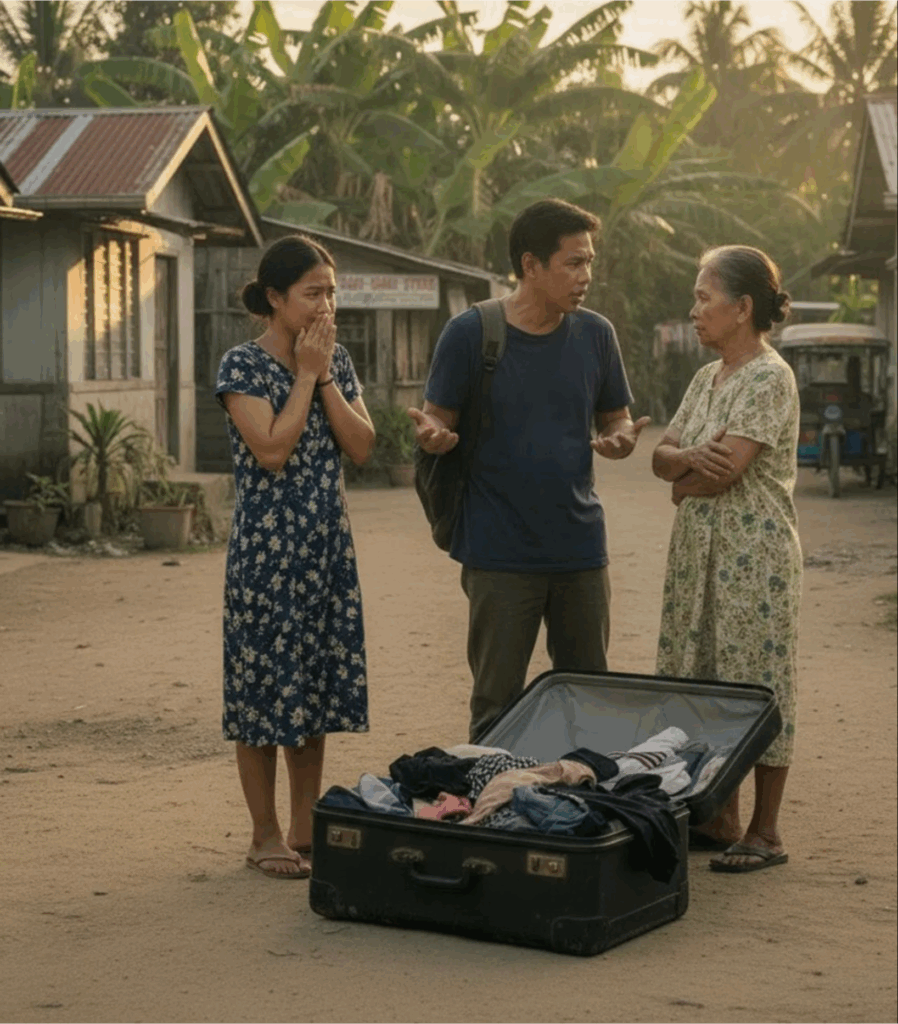
The image of our cramped kitchen is forever burned into my memory. That’s exactly how it looked on that November evening when my life split into “before” and “after.” I was fifteen.
I was sitting at the table, holding a cooled teacup between my fingers. The air was thick, heavy with tension, as if the house itself were holding its breath.
Opposite me stood my father, his face flushed red, breathing hard with rage. My mother stood with her arms crossed, looking at me with an expression as if I were not her daughter, but a stranger who had broken into their lives.
In the corner stood Sándor, my brother. He was eighteen, the pride of the family, the “golden boy,” the one who was forgiven everything. On his lips there was a barely noticeable, mocking half-smile that only I truly noticed.
— How could you?! — my mother’s voice broke out hoarsely. — We saved for half a year! We were saving for your father’s car! And you… you stole it!
Her words felt like blows.
— Mom, I swear it wasn’t me! — I jumped up, tears in my eyes. — I was at school all day, preparing for a competition! Ask the teacher!
— Enough! — my father shouted, slamming his hand on the table. The cups trembled. — Sándor saw you hiding the envelope under the bed!
I froze.
I looked at my brother.
He shrugged, as if nothing special had happened.
— I just went into her room… and saw she was nervous. Then I told our parents.
It was a lie. Every single word of it.
I knew Sándor was drowning in debt and desperately trying to get money. And now he was pinning everything on me, because he knew: I was easier to sacrifice.
— It was him! — I cried out. — He needed the money! He’s the one in debt!
But my mother’s face hardened.
— Don’t slander your brother! He works, he has a future! And you’re just jealous.
The words slowly turned into a verdict.
Then came the final one:
— Pack your things. Leave.
I didn’t understand.
— What?
— You have ten minutes. And don’t come back.
My father said nothing. Sándor smiled.
And then I understood: they had already decided.
That night I left. There was no goodbye. No explanation. Just cold rain, a dark stairwell, and a small bag with the remains of my life. I had two hundred forints in my pocket. In an instant, I became “nobody.”
At first, I slept on a distant relative’s couch, then came work: warehouse jobs, cleaning, night shifts at a small shop. I worked by day, studied by night.
Exhaustion was constant, hope was rare but stubborn. I learned that no one would save me. And that this was not a tragedy — but freedom.
Slowly, I rebuilt myself, like someone constructing walls out of rubble.
Ten years passed.
I was sitting in a glass-walled office on the twelfth floor of a skyscraper. My own company, “Transz-Vector,” had become one of the country’s largest logistics corporations.
More than a hundred employees, contracts, negotiations, responsibility. I was no longer that girl. There was no fear in me. Only control.
That morning I was preparing to close an important tender when my assistant entered.
— Dária Nikolaevna, a candidate has arrived for the position of head of the transport department. He passed the first round, but his past… is questionable.
I didn’t even look up from the papers.
— Send him in.
The door opened. And the world stopped.
Sándor walked in.
He had aged. Not physically, but inside. His face was tired, his clothes cheap and poorly fitting. The confidence that once surrounded him was completely gone.
At first, he didn’t recognize me. Then he did.
— D… Dasha? — his voice broke.
— Sit down, Mr. Vyacheslav — I said coldly.
He slowly sat down. His eyes darted around the expensive furniture, the window, the panoramic view. Then back to me. And that old smile appeared. That flattering, desperate, irritating smile.
— Wow, what a twist of fate! You’re… the boss! Listen, I really need this job. I’ve got debts, serious problems…
I listened. I felt nothing.
— Your professional record is not convincing — I said quietly.
The smile cracked.
— Don’t do this, Dasha… we’re family!
That word: “family” hit like an old wound.
I looked up.
— Family? The day you had me thrown out of the house, it stopped being that.
His voice rose.
— We just made a mistake!
— You lied — I said calmly. — And you sacrificed me.
He stood up.
— You made me who I am! Without you, I’d be nothing!
— Security — I said into the phone.
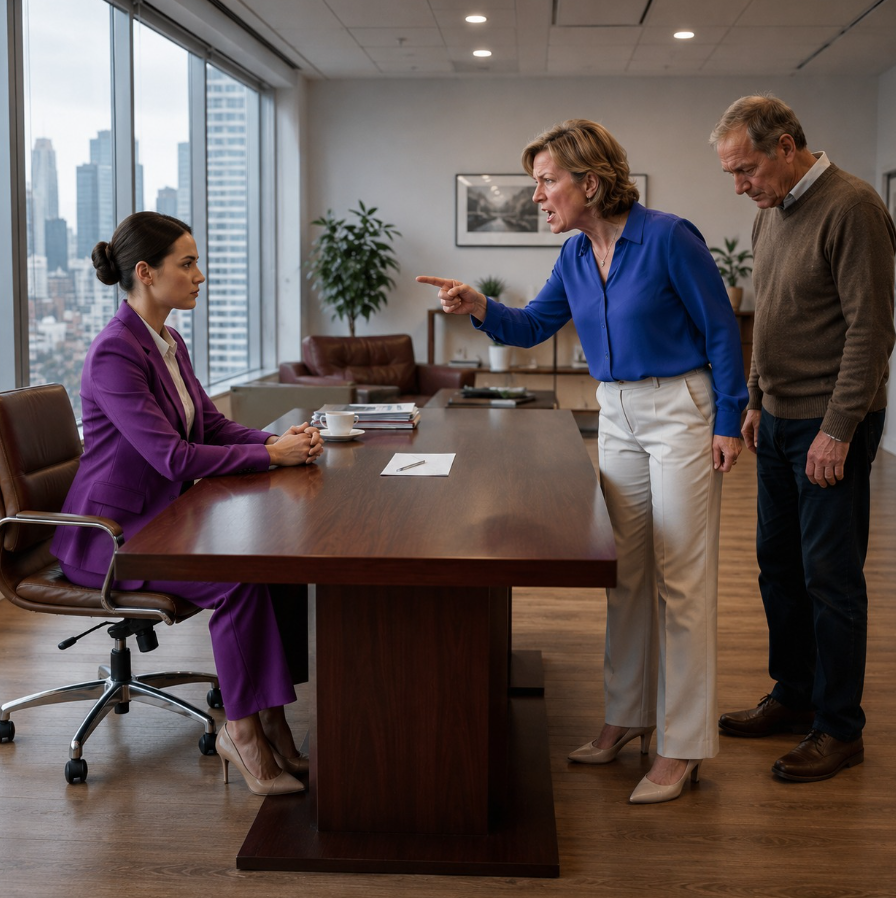
Two days later, more visitors arrived. My parents.
They had aged. Their eyes were tired, their clothes simple, their posture broken. But in their gaze there was still that old calculation.
— Dasha… my daughter… — my mother cried.
— No. — I said. — Don’t start.
They explained that Sándor was in trouble. Debts, bailiffs, the apartment at risk.
And then everything became clear. They weren’t looking for me. They were looking for a solution.
— You owe us! — my mother shouted. — We raised you!
I smiled. But this smile was no longer warm.
— No. You discarded me.
I took out an empty envelope and placed it on the table.
— This is what’s left of you.
The air froze.
— This is blackmail! — she screamed.
I pressed the button.
— Security. Please escort them out.
When the door closed, there was no anger left in me, no pain. Only silence. And something I hadn’t felt in years: closure.
Outside the window, the city was alive, sunlight slid across the glass wall, and for the first time I felt that I was not defined by my past. But by what I survived — and what I built from it.