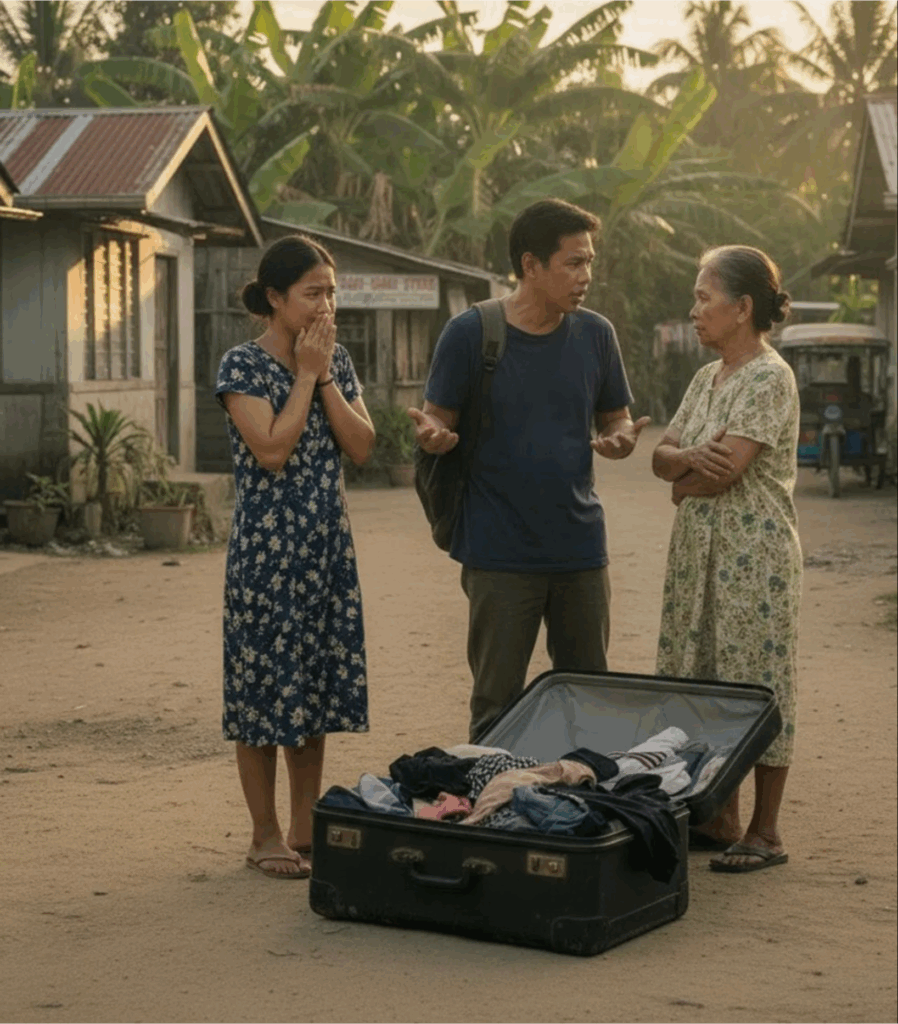
Veronika froze beside the slightly open kitchen door, as if her body had suddenly stopped belonging to her own home. Her fingers unconsciously tightened around a damp, waffle-textured dish towel, the rough fabric biting into her skin in small,
irritating reminders that she was still there, still standing, still listening. The kitchen air was stale and heavy. Above the worn oilcloth table, printed with faded sunflowers, a phone lay face-up, its speaker spilling out a voice that seemed to poison the room itself.
Tamara Ilyinichna.Her voice was sharp, cutting, merciless—each word delivered with deliberate precision, as though cruelty itself were something she had carefully practiced.
“Get rid of that barren woman. She will never give you a child,” she said coldly, as if discussing something trivial, something already decided.
Stanislav sat in the hallway with his back to the kitchen. His shoulders were hunched forward, tense, as though he were trying to make himself smaller. He scratched absentmindedly at the peeling paint on the leg of a chair, flaking it away bit by bit.
He didn’t turn around. He didn’t intervene. He didn’t even properly respond—only a vague, uncertain murmur escaped him, as if none of this required his real presence.
The silence he offered was worse than agreement. It was abandonment without words.On the stove, an old enamel pot of water simmered gently, the soft bubbling oddly peaceful against the tension filling the room. The sound rose and fell in uneven rhythms, like a nervous breath the house could not control.
Veronika felt a cold tightening in her chest. It wasn’t sudden—it was something that had been building for a long time, layer by layer, moment by moment. But now it had finally taken shape. The hope that Stanislav would one day defend her, stand beside her, choose her without hesitation… quietly collapsed inside her.
She was thirty-three. She worked in a small-town bakery, where her days began long before sunrise. She would wake in a dark, silent apartment, drink a quick cup of tea, and step out into the cold morning air. The bus rides were filled with half-asleep strangers, grey faces, fogged windows. But at the bakery, everything changed.
Warmth greeted her there.The scent of butter, vanilla, and fresh dough wrapped around her like something alive. Flour dusted her hands constantly, softening the edges of her exhaustion. There, she was useful. There, she was needed. There, she was not questioned.
At home, however, something inside her slowly wore down.Her desire for a child was not loud—it was persistent, aching, constant. Every month began with hope, fragile and bright, and ended the same way: standing in the bathroom, staring at a single line on a test that never changed its answer.
Once, gathering her courage, she suggested they both undergo medical testing. Not as accusation, but as shared uncertainty.Stanislav’s reaction was immediate and sharp.
“There’s nothing wrong with me,” he said. And with that sentence, he didn’t just reject the idea—he closed the door on every future conversation about it.
After that, silence became their language.The visit to Tamara’s home in November had been especially suffocating. The air inside the apartment felt stagnant, as though it had been trapped there for years.
Tamara’s words began as subtle mockery—questions about grandchildren that carried poison beneath their politeness—before turning openly cruel. She questioned Veronika’s worth, her body, her ability to be a mother at all.
And Stanislav said nothing.That silence settled between them like something final.Later, when Veronika overheard the phone call, something inside her finally broke cleanly. There was no confusion left. No excuses left to make.
When the call ended, she walked into the kitchen slowly, deliberately.“I heard everything,” she said quietly.The argument that followed was brief, but it carried the weight of years—unspoken resentments, ignored pain, and broken trust compressed into a few sharp exchanges.
And then she made her decision.“You need to leave.”Stanislav did.The door slammed behind him, and the apartment fell into a silence that felt different from before. Not tense. Not heavy.
Empty.But within that emptiness, Veronika felt something unexpected.Relief.Two days later, she filed for divorce.A new city gave her a new beginning. Her new apartment was bright, filled with natural light that softened the edges of everything it touched.
She found work in an elegant pastry shop, where she was treated with respect and calm professionalism. Life no longer felt like something she had to endure—it began to feel like something she could shape.
That was where she met Konstantin.He wasn’t loud or dramatic. He didn’t demand space or attention. His presence was steady, grounded, quiet in a way that made the world feel less sharp. With him, there was no pressure to prove anything. No fear of being dismissed.
Just stability.Their relationship grew slowly, naturally, like something that had always known where it was going. After a year and a half, they married.
Not long after, Veronika stood in their bathroom, hands trembling as she looked down at the test.Two lines.Clear. Undeniable.She cried—but not from pain this time. From something she had almost stopped believing she would ever feel again.
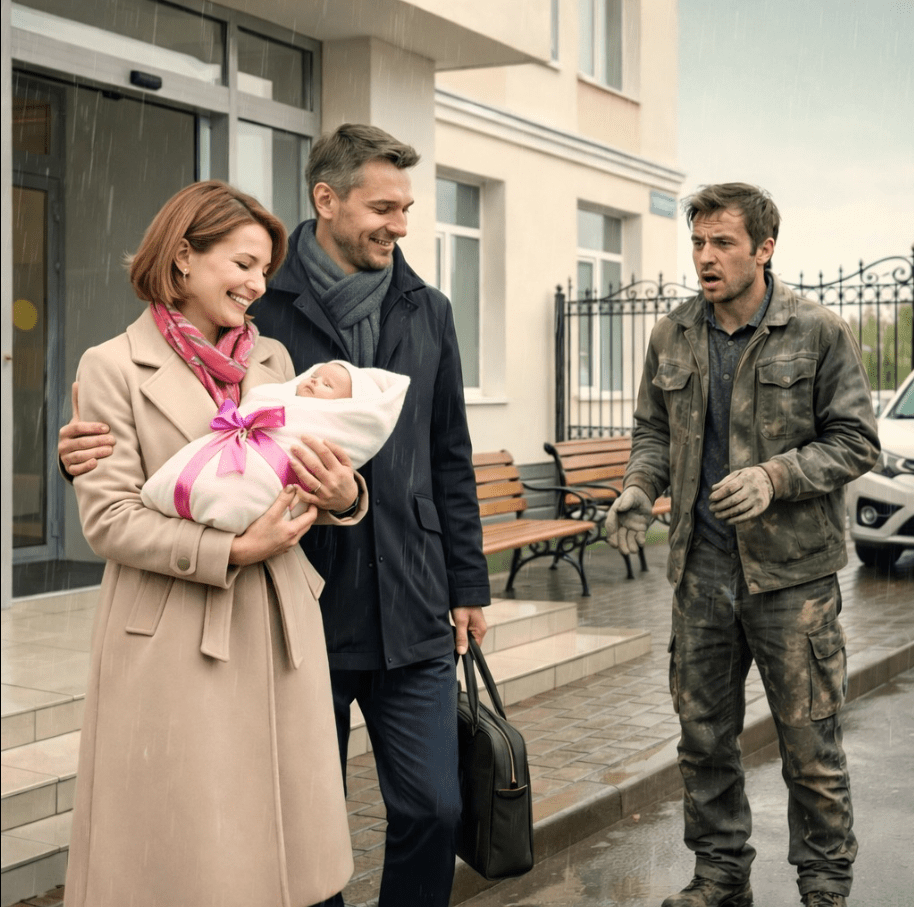
Happiness.Years passed.One day, outside a hospital, Stanislav saw her.Veronika.She looked different—not just in appearance, but in presence. There was a quiet strength in the way she stood, a calm certainty in her expression. Beside her was Konstantin, and in her arms, a newborn child.
Everything inside Stanislav tightened at once.For a moment, the past rushed back—the words, the accusations, the silence. But now they felt distant, hollow, stripped of power.
And then he understood.Veronika had never been barren.The truth was simpler—and far harsher.It was not her body that had failed.It was the life they had built together.And that was something he would never be able to undo.