A heavy, suffocating silence filled the apartment, thick with the bitter scent of incense and the fading perfume of wilting lilies. In the living room, Marina sat hunched at the edge of the couch, her back bent as if crushed by an invisible
weight pressing her down to the floor. The black mourning dress clung to her body, pricking at her skin like thorns, reminding her again and again why she was sitting in this frozen stillness: today, she had buried her grandmother,
Erojda Anatolyevna – the last living relative she had, the only anchor she had ever known in the world.
Across from her, sprawled comfortably in an armchair, sat her husband, Andrei. His very presence felt like mockery—for tomorrow was the day their divorce papers were to be filed. Not a single word of condolence left his lips, no gesture of comfort.
He only watched her, irritation barely concealed, as though waiting impatiently for this “boring performance” to end.
Marina’s gaze remained fixed on the faded carpet patterns, and with each passing moment she felt the final flicker of hope for reconciliation dying away, extinguished slowly but relentlessly. In its place spread only emptiness—cold, sharp, merciless.
“Well then, my condolences,” Andrei finally broke the icy silence, his voice dripping with mockery. “You’re officially the great heiress now! I’m sure your dear grandmother left you treasures… oh, pardon me, how could I forget?
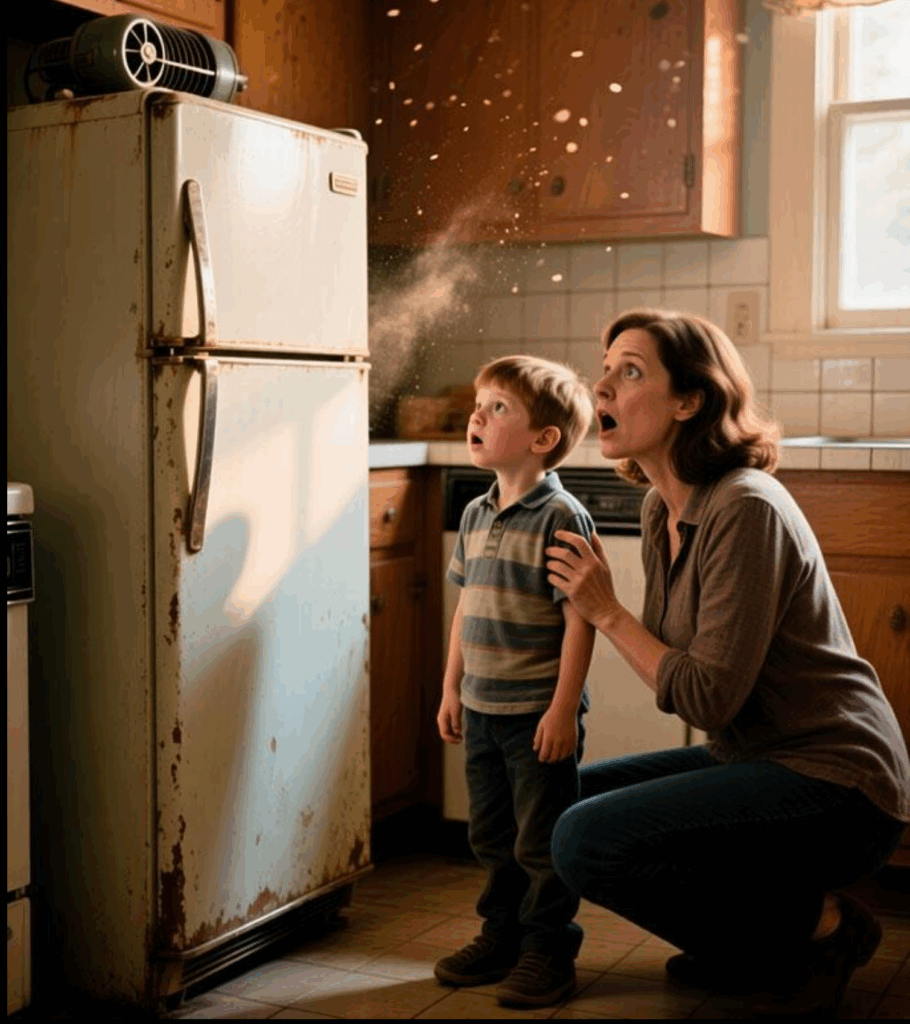
The grand inheritance: an ancient, stinking ZIL refrigerator. Congratulations! Truly a luxurious prize!”
His words cut deeper than any blade. Old wounds tore open in Marina’s heart: the endless quarrels, the shouting, the nights of tears. Her grandmother had never liked Andrei, warning her almost from the beginning:
“He’s a slick man, Marinka. Hollow, like an empty barrel. Beware—he’ll strip you bare and then cast you aside.” Andrei had only ever sneered at her warnings, calling the old woman a “witch.” Marina had stood between them so many times,
trapped between two fires, begging for peace. How many times had she wept in secret, clinging to the illusion that things might one day change? Now she saw it clearly: her grandmother had always been right, and she had only deceived herself for far too long.
“And just so you’re not left wondering about your future,” Andrei went on with cruel delight, adjusting his expensive jacket, “you won’t need to go to work tomorrow.
I signed your resignation this morning. So, my dear wife, soon even your precious ‘ZIL’ will feel like a luxury. You’ll be begging at garbage bins, and you’ll still owe me your thanks.”
That was the end. Not just the end of a marriage, but of an entire life Marina had built around this man. The last illusion within her died—that Andrei still held even a shred of humanity. Only one new feeling was born in its place—slow, cold, and implacable: hatred.
She looked at him with empty eyes, then rose silently. There was nothing left to say. She went to the bedroom, picked up the suitcase she had packed days earlier. She ignored his sneering comments, his laughter. She only tightened her grip on the old apartment key in her palm, and walked out. She didn’t look back.
The street welcomed her with a cold evening wind. Under the gray lamplight, she set her heavy bags down at her side and lifted her gaze toward the towering, somber nine-story building—the place where her childhood,
her youth, all her memories still lingered. Once, her parents had lived there; later, her grandmother moved in after tragedy had taken the rest of her family.
She had not been here in years. Since marrying Andrei, she had avoided the painful memories. But now, it was the only refuge she had left. Tears welled in her eyes as she thought of Erojda Anatolyevna—who had been mother,
father, and friend all in one. And Marina herself… in these past years she had come so rarely, consumed by work and a failing marriage. Now guilt cut through her like a knife, and the tears she had held back all day finally poured freely.
“Lady, need some help?” a thin, slightly hoarse boy’s voice suddenly asked beside her.
Marina startled, raising her head. In front of her stood a boy of about ten, drowned in an oversized coat and worn-out shoes. His face was smudged with dirt, but his eyes were clear, almost unnaturally mature. He pointed at her bags.
“Bet they’re heavy, huh?”Marina quickly wiped her tears away. The boy’s simple, direct tone unsettled her.“No… I can manage…” she whispered, but her voice broke.The boy studied her seriously.“Then why are you crying?”
he asked, calm and matter-of-fact. “Happy people don’t stand in the street with suitcases and tears.”The words struck so deep that Marina found herself looking at him differently. There was no mockery, no pity—only genuine understanding.
“My name’s Sergei,” the boy said.“I’m Marina,” she whispered, feeling something within her begin to ease. “Alright, Sergei… help me.”And so their story began.
The old apartment door creaked as they stepped inside. Dust floated in the air, the furniture slept beneath white sheets, and the rooms carried the bitter scent of time and loneliness. Sergei set down the bags, looked around, and remarked wisely:
“Well, this’ll take work. At least a week, if we do it together.” Marina smiled. The boy’s seriousness touched her as much as his presence itself: like a small spark flaring in the darkness. When she offered him to stay the night, he looked at her with suspicion at first, then nodded.
That evening they shared a simple meal—bread and cheese. Sergei, in his dry, matter-of-fact way, told his story: his parents had been alcoholics, who perished in a fire. He had survived. They sent him to an orphanage, but he ran away.
“From there it’s a straight road to prison,” he said grimly. With tears in her eyes, Marina answered: “No, Sergei. Where you are now doesn’t decide who you’ll become. Only you do.”
That night, a thread was woven between them—thin, but strong. And as the days passed, with cleaning, shared work, laughter, and quiet conversations, that bond grew ever closer.
One day Sergei pressed on something at the old ZIL fridge. “Something’s off here,” he muttered. And indeed, behind a double wall was a hidden compartment. Stacks of cash, old jewelry gleamed inside. Marina broke into sobs as realization dawned:
her grandmother had thought of her all along. She had not left her alone. She had left her a lifeline—an opportunity for a new life.
And Marina took it. She adopted Sergei. Together, they built a new home, a new future. Marina studied, worked, found success. Sergei grew, became an excellent student, and graduated with honors.
Ten years later, when Sergei stood tall, an elegant young man at his graduation ceremony, Marina’s tears flowed again—this time with pride. And when he faced Andrei boldly and declared: *“Thank you for your cruelty.
If you hadn’t thrown my mother out into the street, we would never have met,”* Marina knew: the moment of final victory had come.
Out of the ruins of the past, a new life had risen—stronger, purer, truer. And when Sergei, smiling, told her, “Mama, call Lev Igorevich, go to dinner with him,” Marina realized, for the first time in years, that she was happy. Truly, completely happy.