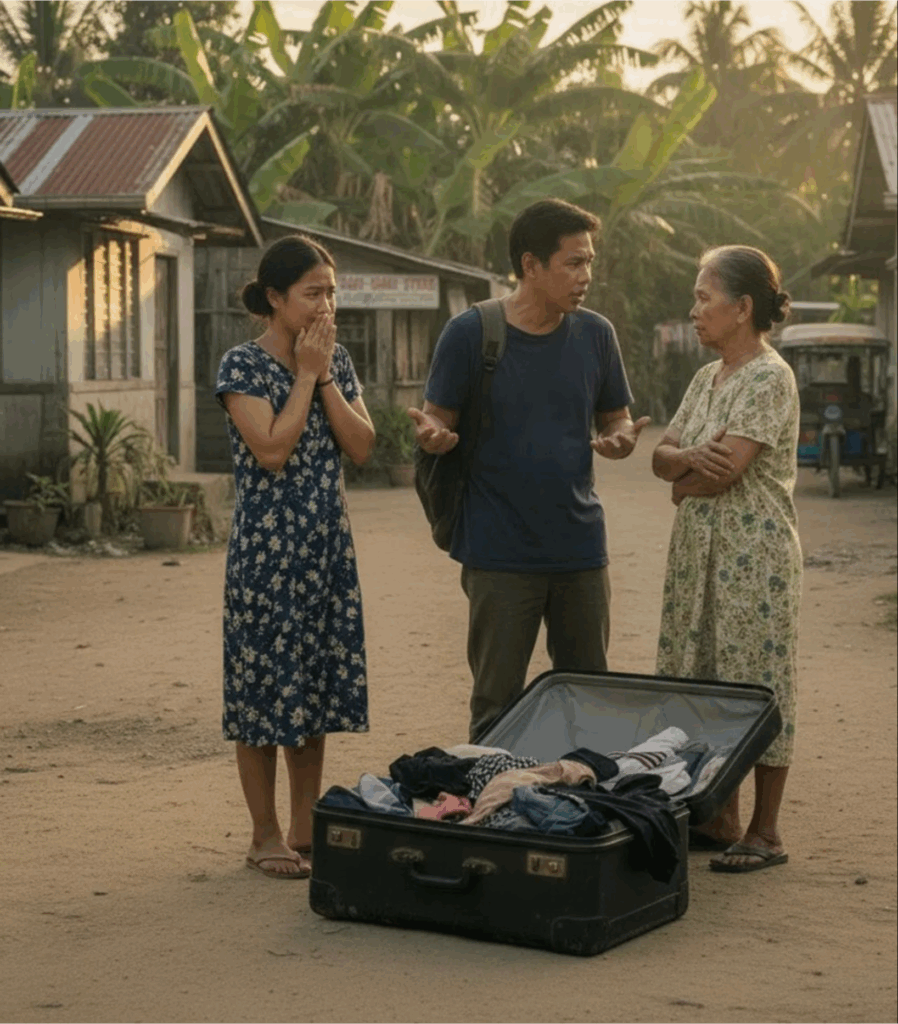
The third university student in a single month ran out of the same fourth-floor apartment in a Soviet-era block in Kharkiv’s Saltivka district. Her suitcase remained half-open on the stairwell while the door slammed shut behind her with such force that even the neighbors flinched.
Everyone in the area knew the apartment and the reputation of the elderly woman who lived there. People said that Lyudmila Stepanivna confiscated tenants’ phones at nine in the evening, forbade turning on the lights after ten, and inspected the soles of their shoes at the entrance to make sure no one brought mud into the flat. Even real estate agents avoided the address from afar.
“I never send anyone there,” one of them used to say. “That woman is a nightmare.”
On a rainy September evening, a new tenant arrived. Twenty-year-old Alyona had come to Kharkiv from a small town in Poltava region to study. She carried nothing more than a worn backpack and a folding sports bag.
At the door she was greeted by a stooped, gray-haired woman.
“You’ll learn the rules,” she grumbled immediately. “In my home there is no mess, no staying out late, and no arguing.”
Alyona quietly took off her shoes, placed her sneakers neatly side by side, and then suddenly stopped.
“Excuse me… something is burning in the kitchen. Maybe the milk.”
The old woman’s face tightened. A second later the unmistakable smell of scorched milk spread through the apartment.
“I’ll handle it…” she started to say, but pain shot through her leg and she nearly collapsed.
Alyona hurried to the stove, turned off the burner, and silently wiped up the milk that had boiled over.
Lyudmila Stepanivna watched her in confusion. She was not used to this. The previous girls had cried, argued, or fled almost immediately. This thin, dark-haired student behaved as if helping someone were the most natural thing in the world.
During the first week Alyona realized that behind the strictness there was not cruelty, but fear. The old woman could barely walk because of severe joint pain, often lived for days on dry bread, and used military-style rules to hide how vulnerable she had become.
What frightened her most was the thought that someone would see her weakness and send her to a nursing home.
On the third day Alyona began unpacking the old dresser in her room. At the back of one drawer she discovered a thick, dusty bundle of unopened letters. They had arrived over the previous five years, and every envelope bore the same sender’s name:
**Katerina. Kyiv.**
At dinner she asked cautiously,
“Why haven’t you opened these letters?”
The question struck the table like a slap.
Lyudmila Stepanivna set down her mug so hard that tea splashed across the tablecloth.
“Don’t touch them!” she shouted. “Her mother ran off abroad and left me alone. That girl remembers her grandmother only when she needs money!”
Alyona said nothing. Yet that evening curiosity proved stronger than caution. She carefully opened one of the yellowed envelopes.
The words made her throat tighten.
It was not about money.
*Grandma, please forgive me. I have been trying to find you for years. Mother won’t let me contact you. She says you hate us, but I don’t believe it. Please, just send me one reply.*
Alyona read the letter in shock. The young woman had desperately tried to find her grandmother, contacted offices, searched for old acquaintances, and followed every possible lead, only to run into closed doors again and again.
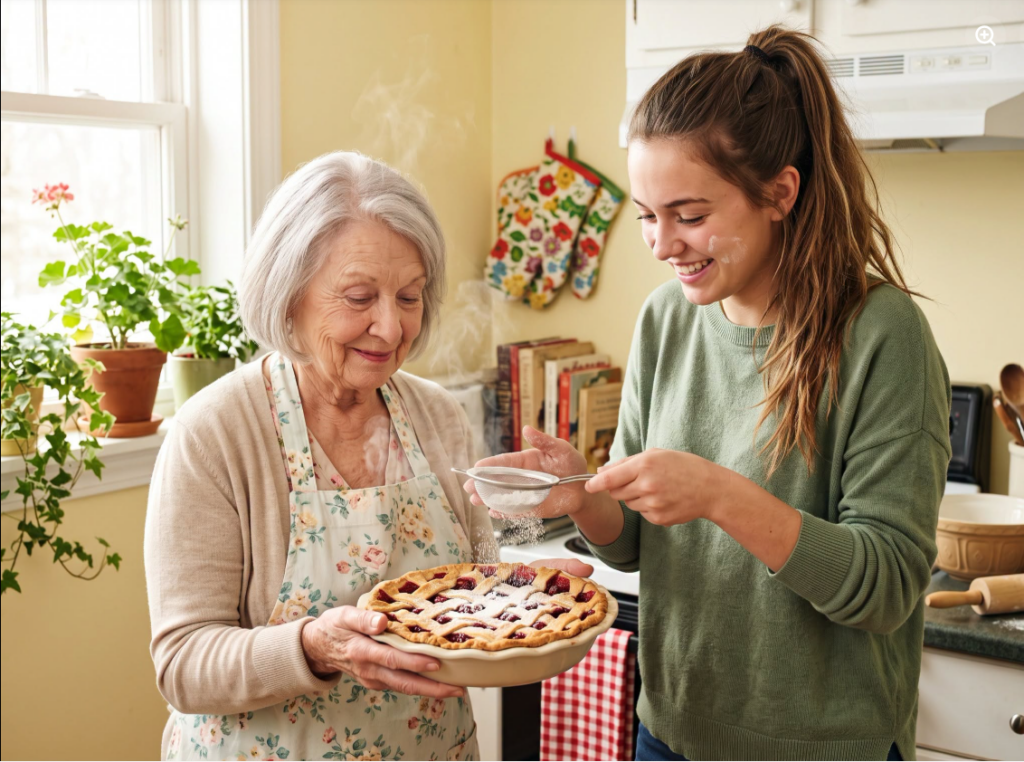
The next day Alyona did not mention what she had read. Instead, she began cooking in the evenings. First she made a simple potato soup, then cottage cheese dumplings, and finally an apple pie.
At first Lyudmila Stepanivna only grumbled.
“You cut the potatoes too thick.”
“That’s not how you knead dough.”
“Apples are perfectly fine without cinnamon.”
But slowly the bitterness disappeared from her voice.
One Sunday morning she unexpectedly pulled out a worn notebook stained with flour.
“These are my old recipes from the confectionery factory,” she said quietly.
From that day on, the kitchen filled with stories. The old woman spoke about her youth, postwar Kharkiv, her first job, and the husband she had lost far too early.
Alyona listened for hours.
The apartment that everyone considered a prison gradually became a home.
But the peace did not last long.
One October afternoon a heavy knock shook the door.
On the threshold stood a middle-aged man in an elegant coat, accompanied by a stranger in a suit carrying a briefcase.
“Hello, Mother,” he said coldly.
Lyudmila Stepanivna went pale.
“Viktor…”
The man had not visited his mother in years. Now he walked straight into the living room and spread several documents across the table.
“It’s time to settle the matter of the apartment. This power of attorney will make the sale much easier.”
When he noticed Alyona in the kitchen, he let out a mocking laugh.
“So that’s why you’ve suddenly become so friendly? Some strange girl has already moved in with you?”
“She is my tenant,” the old woman replied.
“Oh, please,” Viktor snapped, slamming his hand on the table. “She’s obviously after your apartment. A few pies, a little kindness, and she’s already won your trust.”
He stepped toward Alyona as if he intended to throw her out.
Then something happened that no one expected.
Lyudmila Stepanivna slowly rose to her feet. Her hands trembled, but her voice was firm.
“This girl has done more for me in one month than you have done in the last ten years. Get out of my house.”
Furious, Viktor gathered the papers.
“We’ll see what the court says about this! I’ll have you declared incompetent!”
That very night Lyudmila Stepanivna collapsed.
The ambulance siren echoed through the courtyard of the apartment block.
At the hospital Alyona stood helplessly in the corridor. The doctors could not give her any information because she was not a relative.
When she returned to the apartment at dawn, a new lock had been installed on the door. Viktor had already changed it.
Her belongings lay in a plastic bag on the landing.
Alyona sat on the stairs for a long time. Then she took the opened letter from her backpack.
For several minutes she stared at the phone number before finally dialing it.
“Hello? Katerina? We don’t know each other… but your grandmother is in the hospital.”
Four hours later a young woman ran down the hospital corridor. She had the same gray-green eyes and the same determined jaw that Alyona had seen in Lyudmila Stepanivna’s old photographs.
The meeting changed everything.
It turned out that Viktor had been manipulating both sides for years. He told his mother that her granddaughter contacted her only because she wanted the apartment. He told Katerina that her grandmother had disowned them and never wanted to see the family again.
When Lyudmila Stepanivna regained consciousness, two young women were standing beside her bed.
Katerina held her hand, crying.
Alyona leaned closer.
“You haven’t forgotten, have you? You promised to teach me how to make real puff pastry. We still have a lot of work to do.”
Tears glistened in the old woman’s eyes.
The following months were filled with legal battles. Neighbors testified about Viktor’s neglect, and medical experts confirmed that Lyudmila Stepanivna was completely mentally competent.
In the end, Viktor lost all rights to manage his mother’s property.
Together they renovated the old apartment. New curtains appeared at the windows, fresh paint brightened the walls, and the kitchen once again became a place of life and warmth.
Every weekend the scent of vanilla and baked apples drifts through the fourth-floor corridor.
Alyona remained in the same room she had once entered with fear. She no longer lives there as a tenant, but as a member of the family.
One evening, while they were folding layers of puff pastry together, Lyudmila Stepanivna spoke softly.
“You know, all my life I believed that everyone wanted to take something from me. My apartment, my money, my peace. You were the first person who came not to take, but to give something back.”
Alyona smiled.
“What did I give back?”
The old woman looked for a long time at the steaming apple pastry.
“My family,” she whispered.
And it truly raises a difficult question: was Alyona right to read the letter without permission? She violated someone’s privacy, and that is wrong in itself. Yet it was precisely that forbidden moment that broke through years of lies,
exposed the manipulation, returned a grandmother to her granddaughter, and restored a lonely woman’s will to live.
Perhaps there are situations in which a morally questionable decision becomes understandable not because it was unquestionably right, but because without it, everything good would have been lost forever.