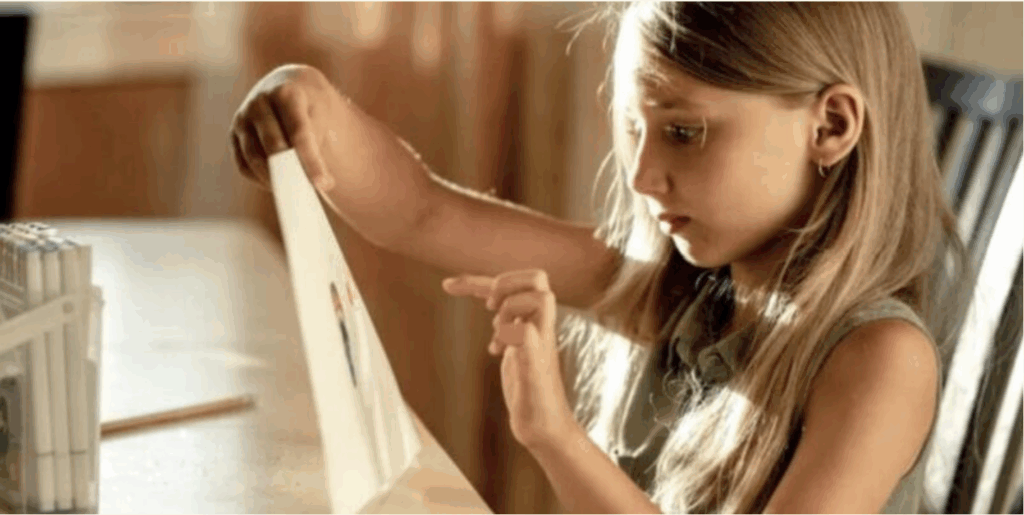
For months, Rachel counted every penny, saving each coin, accepting every small favor, just to give Emma a birthday she would never forget. She never imagined that the party a few streets over would fall apart, forcing the guests to wander into their tiny,
humble garden. But in that little garden, there was magic: handmade paper garlands, thrifted wreaths, and something that money could never buy—pure, unfiltered joy.
I realized something was wrong when Emma stopped asking for glitter. In the fall, she usually threw herself into preparations with abandon—scribbling guest names on scraps of paper, sketching balloon arches in the margins of her notebook,
and taping “reserved” signs on chairs for her self-proclaimed “planning team.” That unstoppable excitement was her signature, like the first golden rays of sunlight spilling across our small town.
At first, I blamed last year, when I had to cancel her party because an unexpected shift at the restaurant left me racing against time. But Emma just smiled and said, “It’s okay, Mom. Next year will be even better.”
This time, however, as the date drew near, she hardly mentioned it. Her eyes lacked their usual sparkle of anticipation.
So I took matters into my own hands. I stashed every coin I could spare, took extra jobs, gave up my morning coffee, even sold the earrings my mother had given me when Emma was born. I imagined her face lighting up at the handmade garlands,
the cupcakes sparkling with edible glitter, and the laughter of friends filling our small garden.It was going to be modest. But it was going to be hers.

Then Laurel appeared. Her daughter, Harper, shared the same birthday as Emma. Laurel always looked as if she had stepped straight out of a catalog advertising the perfect life—linen dresses, flawless hair, an SUV that screamed prosperity.
I watched her hand out extravagant gifts—layers of tissue paper, custom labels, perfect presentation—and felt a tightening in my chest.I thought maybe a joint party could bring us closer. Two moms, one plan. I texted her:
“Hi Laurel—Harper and Emma have the same birthday. Maybe we could do a joint party? Split the costs and preparations. Let me know what you think.” — Rachel
Silence. Hours passed. Only the next morning, after dropping the kids at school, did she reply:“Hi Rachel, thanks, but we’ve planned something more elaborate for Harper. Our guest list and theme don’t quite match. Wishing Emma a wonderful day.”
That word—“elaborate”—hit like a knife, polite yet deliberately cutting. I hadn’t felt so rejected since Emma’s father told me he wasn’t coming back.
Still, I pressed on. On the day of the party, I rose before dawn to hang balloons, straighten handmade garlands. Grandma Bea arrived with a folding table strapped to the roof of her car; slippers on her feet, rollers in her hair,
carrying the quiet determination of a grandmother who could always turn chaos into warmth.“You need more rest than glitter,” she muttered, eyeing the cupcakes.“I’ll rest tomorrow,” I laughed too loudly, trying to mask the flutter in my chest.
When I showed her Laurel’s message, her expression darkened. “‘Elaborate,’ huh? The only elaborate thing about her is her vanity.”“I just want Emma to be among friends,” I murmured, my heart pounding. Meanwhile, Laurel had a DJ, a professional baker, and an influencer documenting every moment.
Grandma cupped my face in her hands. “Your party has love. Pure, real love. Let them have their shine. We have heart.”
So we decorated: Emma’s paper garlands, a battered lemonade dispenser, number-shaped cupcakes, edible glitter that twirled in the air with every burst of laughter. Emma wore a rainbow tulle skirt I had sewn from scraps, her sneakers sparkling with each twirl.
“Welcome to my party!” she shouted, microphone in hand, completely in her element.I prayed it would be enough. At 2:30, I sat on the steps, watching the empty street. At 3:00, we served another slice of pizza. At 3:15, Emma slipped to the bathroom.
When she returned, her crown and smile were gone. Silence hung heavily where laughter should have been.
Then, at 3:40, a knock. Three children stood at the gate, holding balloons in trembling hands, dressed in shiny costumes. Their parents hesitated for a moment, then let them in. Minutes later, the garden exploded with laughter.
Harper’s party had fallen apart—a contest gone hysterical, a spilled cake, a magician’s trick failed, a missing crown. “It ended early,” one mother admitted. “My son begged to come here, so we did.”
Neighbors began arriving—some with hastily wrapped gifts, others drawn by the sound of laughter. I saw Laurel’s car drive by; she dropped off her child, cast a glance, and drove away. Emma didn’t even notice. She danced with Grandma Bea in a game of “statues,”
cupcakes disappeared, and the group sang “I Am Free” so badly everyone laughed until they cried. “Mom! They came!” she shouted, glowing with joy. I hugged her, burying my face in her messy curls. “Yes, sweetie, they came.”
By evening, when the last glitter was swept away and Grandma hummed “Happy Birthday” as she left, I texted Laurel:“Thank you for bringing the kids. Emma’s party was wonderful. I hope Harper had a good birthday too.”
No reply—and maybe that was better. A week later, Emma handed me a crumpled drawing: stick-figure people, cupcakes, a crooked garland, labeled “Emma’s Party.” In the corner, a smiling figure drawn in red crayon. “Harper?” I asked.
Emma shrugged. “She said her party wasn’t fun. She would’ve rather been here. So I gave her a unicorn piñata we forgot about. She didn’t have one.”“Is she your friend?” I asked.“Yes,” she said simply. “Friends share.”
And then I understood. True joy isn’t measured by sparkle or price. It radiates from honesty—from effort, from love, from the presence of people who show up. Laurel was right about one thing: our parties weren’t the same. Hers was elaborate.
Ours was authentic. And authenticity—messy, wholehearted authenticity—was priceless.