THE NIGHT I FINALLY SAID NO
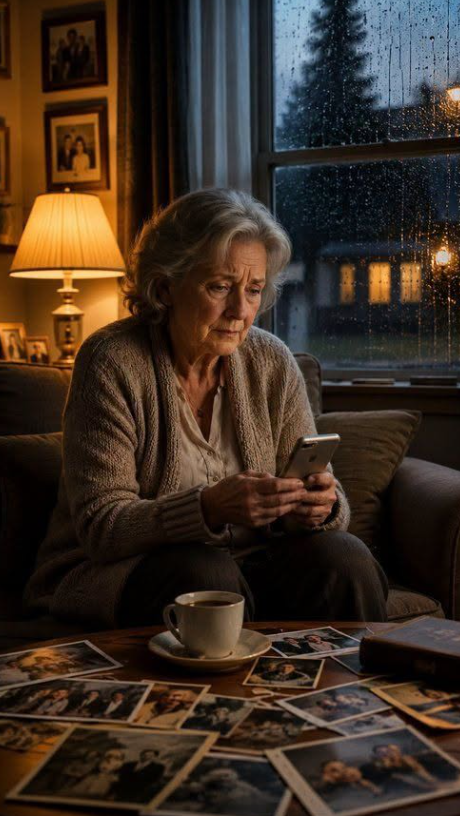
It was two o’clock in the morning when my phone lit up the darkness of my bedroom.
One name glowed across the screen.
Julian.
My son.
For one sleepy second, I thought it was Arthur. Grief does strange things after twenty years of widowhood. Sometimes it opens a tiny door and lets the past walk back in.
For a heartbeat, I could almost see my husband standing in our kitchen, making Sunday coffee the way he always had—too sweet for me, black for himself—humming an old jazz tune he never quite remembered.
Then the phone vibrated again, and the dream disappeared.
I sat up in bed. The room was cold, washed in the pale blue light of the screen. Arthur’s photograph rested on my nightstand beside a small lamp, smiling at me the way he had before the heart attack that took him far too soon.
I answered.
“Mom…” Julian’s voice was tense, rushed. “We’re in trouble.”
My heart didn’t race. Instead, it sank.
“What happened?”
“Your card was declined at the hotel.”
Silence.
Not *I’m hurt.*
Not *There’s been an accident.*
Not *We need help.*
The first thing he said was that my credit card had been declined.
“We’re stuck at the front desk,” he continued. “They won’t let us leave until we pay the bill. It’s nine thousand dollars, Mom. I need you to transfer it right now.”
Nine thousand dollars.
At two in the morning.
As casually as if he were asking me to pass the salt.
I looked toward Arthur’s picture.
Then something inside me—something that had been asleep for years—finally woke up.
“Call your wife,” I said quietly.
There was a long pause.
“What?”
“Call Caroline.”
“She’s standing right here!”
“Then figure it out together.”
“Mom, this is an emergency!”
“No,” I replied calmly. “It’s an expense you can’t afford.”
Then I hung up.
For years I had expected guilt to rush in whenever I disappointed my son.
That night…
It never came.
Only silence.
A peaceful, unfamiliar silence.
The next morning sunlight poured into my tiny apartment as if nothing had happened.
I moved slowly through my usual routine. At seventy-two, every joint reminded me how long I’d carried other people’s burdens. I brewed coffee, made toast with strawberry jam, and listened to the kettle whistle.
Then I turned my phone back on.
Thirty-seven missed calls.
Twenty-two text messages.
Every single one sounded the same.
How could you?
You’ve embarrassed us.
You always help.
Why are you doing this now?
That last sentence struck me the hardest.
*You always help.*
No.
I always paid.
There was a difference.
I walked into my bedroom and pulled an old shoebox from the top shelf of my closet.
Inside wasn’t a pair of shoes.
It was fifteen years of receipts.
Wedding.
Fifteen thousand dollars.
Down payment on their first house.
Thirty thousand.
Car.
Furniture.
European anniversary trip.
Private school tuition.
Emergency transfers.
Monthly deposits.
I spread every receipt across my bed until the blanket disappeared beneath the paper.
The total was over one hundred and twenty thousand dollars.
And while I had financed their dream life, I had postponed my own.
I wore worn-out shoes because I couldn’t justify buying new ones.
I delayed dental work.
I ignored the water stain growing across my bedroom ceiling.
I lived in a tiny apartment with an aging refrigerator while they remodeled the kitchen I had helped them buy.
That afternoon my phone rang again.
An officer from Las Vegas.
“Mrs. Brooks, your son listed you as his emergency financial contact. The outstanding balance is now eleven thousand two hundred dollars.”
I closed my eyes.
“I understand.”
“So… will you be covering the charges?”
For the first time in fifteen years, my answer was only one word.
“No.”
The officer hesitated.
“They may have to remain here until this matter is resolved.”
“My son is forty years old,” I answered. “His wife is an adult. They made these decisions. They can solve the consequences.”
When I hung up, I didn’t feel cruel.
I felt free.
Later that afternoon Julian and Caroline showed up at my apartment.
Julian looked exhausted.
Caroline looked furious.
“How could you do this to us?” Julian demanded.
“Come inside,” I said.
I placed the old shoebox on the coffee table.
Then, one by one, I laid every receipt in front of them.
Wedding.
House.
Car.
Furniture.
Vacations.
School.
Monthly transfers.
Julian’s face slowly lost its color.
“I… I didn’t know it was this much.”
“You never asked.”
Silence filled the room.
Finally I looked at both of them.
“I’ve given you over one hundred and twenty thousand dollars.”
Caroline folded her arms.
“You chose to help us.”
“Yes,” I said.
“And today I choose to stop.”
She stared at me as if I had spoken another language.
“You can’t just cut us off.”
“I can.”
“We depend on that money.”
“That’s exactly the problem.”
Julian lowered his head into his hands.
Then, quietly, he whispered something I hadn’t heard in years.
“I’m sorry, Mom.”
I believed he meant it.
But I also knew something important.
Feeling sorry is easy.
Changing is harder.
A few weeks later, I booked a ten-day trip to Santa Fe.
For the first time in years, I spent money on myself without apologizing.
I walked through colorful markets, watched sunsets paint adobe walls red and gold, climbed canyon trails, laughed with strangers, and remembered that before I was someone’s mother…
I had been my own person.
When I returned home, Julian was waiting at the airport.
He hugged me tightly.
This time, he didn’t ask for money.
Instead he smiled.
“You look happier.”
“I am,” I answered.
A few days later he invited me to dinner.
No emergencies.
No requests.
No hidden agenda.
Just dinner.
It wasn’t a perfect ending.
Caroline was still distant.
Julian still had much to learn.
Trust would take time to rebuild.
But for the first time in years, our relationship wasn’t built on my bank account.
That night, after I returned home, I placed a small wooden owl I had bought in Santa Fe beside Arthur’s photograph.
Then I opened my journal and wrote a single sentence:
“Today, I didn’t have to pay to be loved.”
I closed the notebook, turned off the light, and smiled in the darkness.
My name is Eleanor Brooks.
I’m seventy-two years old.
For fifteen years I believed that being needed meant being loved.
Then one phone call at two in the morning taught me the truth.
The most powerful word I ever spoke was simply…
No.