The Hidden Story Behind Chicken Color: What Your Grocery Cart Might Be Telling You
You stand in front of the meat aisle, comparing two packages of chicken.
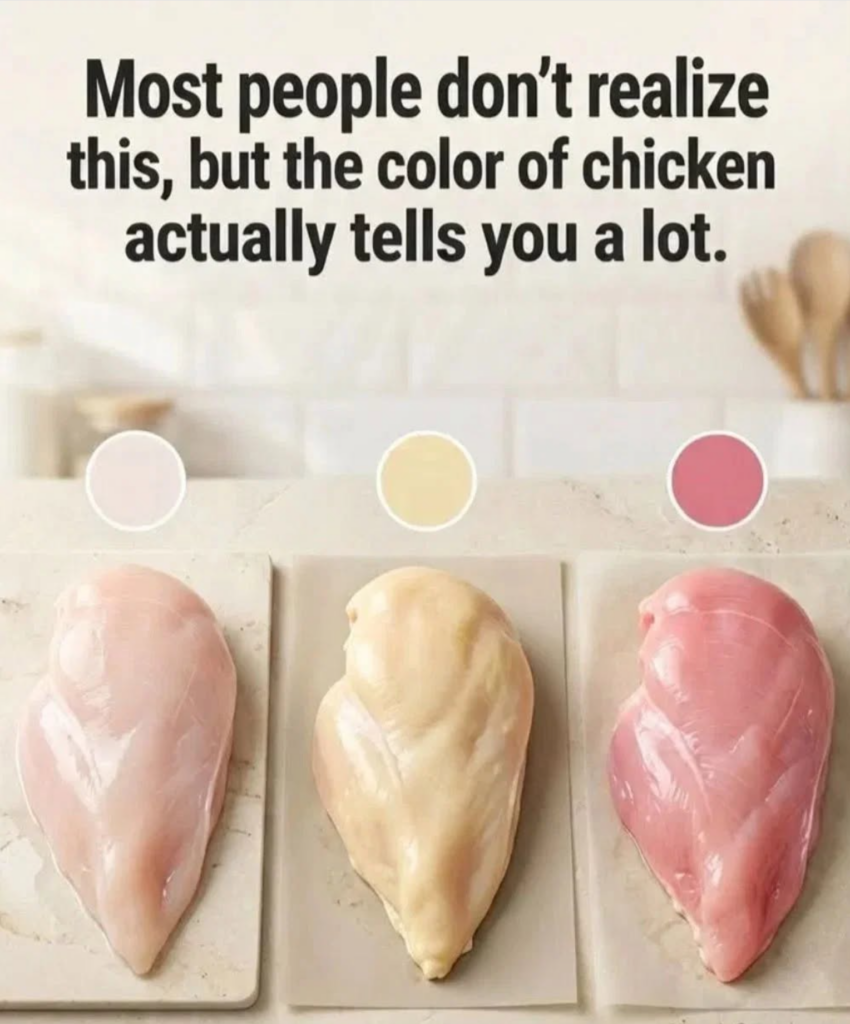
One is pale, almost pink. The other glows with a rich golden-yellow color. Same cut. Similar price. Yet they look as if they came from completely different animals.
Instinctively, many shoppers reach for the yellow one.
It seems more natural. More traditional. Maybe even healthier. The pale chicken often appears bland by comparison, leading many people to believe that color alone reveals quality.
But the truth is far more complicated.
The color of chicken can tell a story—but not always the story you think.
The First Impression Problem
Humans make decisions with their eyes long before reading labels. We associate bright vegetables with freshness, dark bread with whole grains, and golden eggs with superior nutrition. Chicken is no different.
A yellow-skinned bird often reminds people of backyard chickens, small farms, or meals prepared by grandparents decades ago. Pale chicken, meanwhile, has become associated with industrial farming and mass production.
These assumptions are understandable, but they don’t always reflect reality.
Color is only one piece of a much larger puzzle.
Why Some Chicken Is Pale
The light-colored chicken commonly found in supermarkets usually comes from large commercial farms. These birds are bred specifically to grow quickly and efficiently, reaching market weight in as little as six to eight weeks.
Their diets are carefully balanced to promote rapid growth and consistent meat production. Most spend their lives indoors in climate-controlled facilities designed to protect them from weather, predators, and disease.
This production system makes chicken one of the most affordable proteins available worldwide.
The pale appearance results largely from genetics, diet, and the amount of pigment deposited in the skin and fat. It does not automatically indicate poor quality, poor nutrition, or unsafe meat.
Millions of people consume pale chicken every day without issue.
In fact, modern farming methods have helped make chicken accessible to families who might otherwise struggle to afford animal protein.
Why Some Chicken Turns Yellow
Yellow chicken usually owes its appearance to carotenoids—natural pigments found in plants.
Ingredients such as corn, marigold petals, alfalfa, and certain grasses contain these pigments. When chickens consume them, the color accumulates in the skin and fat, producing the familiar golden appearance.
Birds raised outdoors may also forage for insects and vegetation, further increasing pigment intake.
Many slower-growing breeds naturally develop richer coloration because they live longer and have more time to deposit these pigments in their tissues.
These birds often exercise more, move greater distances, and build slightly firmer muscles. As a result, some consumers notice a stronger flavor and denser texture.
Many people describe yellow chicken as tasting “the way chicken used to taste.”
However, the connection between color and flavor is not absolute.
Not every yellow chicken is flavorful, and not every pale chicken is bland.
The Influence of Diet
Feed plays a major role in determining color.
Even chickens raised indoors can develop yellow skin if their diets contain enough carotenoid-rich ingredients. Likewise, free-range birds may remain relatively pale if their feed lacks these pigments.
Producers understand that consumers often prefer golden chicken, especially in certain regions and cultures. Because of this, feed formulas may be adjusted specifically to influence appearance.
This means color can sometimes function as a marketing tool.
A deeper yellow tone may encourage buyers to assume the chicken was raised naturally, even when production methods are similar to those used in conventional farming.
The package looks different, but the bird’s living conditions may not be.
The Cultural Factor
Preferences for chicken color vary dramatically around the world.
In some countries, yellow chicken is strongly associated with traditional farming and superior flavor. Consumers actively seek it out and may even pay higher prices.
In other regions, pale chicken is considered fresher or more appealing.
These preferences are largely cultural rather than scientific.
What looks appetizing in one country may seem unusual in another. Our expectations often shape our perception of quality before we even taste the food.
What Labels Reveal
The most important information about chicken usually isn’t visible through the plastic wrapping.
Labels often provide better clues than color.
Terms such as free-range , pasture-raised , organic , and certified humane can offer insight into how the birds lived and what they were fed.
These labels may indicate:
More outdoor access.
Different feeding practices.
Slower growth rates.
Higher animal welfare standards.
Reduced use of certain medications.
While labels are not perfect, they generally tell consumers much more than skin color alone.
Reading the package can reveal information that appearance simply cannot.
Freshness Matters More Than Color
Regardless of whether chicken is white, pink, or yellow, freshness remains critical.
Fresh chicken should feel firm and slightly moist but not sticky. The smell should be mild and clean.
Warning signs include:
Sour odors.
Sulfur-like smells.
Slimy surfaces.
Gray or green discoloration.
Excessive liquid in the package.
These indicators matter far more than whether the skin is pale or golden.
Even the most beautiful yellow chicken is undesirable if it is not fresh.
The Real Test Happens in the Kitchen
Ultimately, the true quality of chicken reveals itself after cooking.
Flavor, tenderness, juiciness, and texture depend on many factors:
The bird’s breed.
Its diet.
How much it moved.
Its age at processing.
Storage conditions.
Cooking methods.
A carefully cooked conventional chicken may taste excellent, while an expensive pasture-raised bird can become dry if overcooked.
Color disappears as an important factor once the meal reaches the table.
What matters then is how the chicken tastes.
So Which Color Is Better?
There is no universal answer.
Some shoppers prioritize affordability. Others seek stronger flavor. Some focus on animal welfare, while others want the best choice for specific recipes.
Those priorities cannot be determined by color alone.
The next time you stand in front of the meat counter, remember that the pale package and the yellow one are both telling stories. Color may provide the first chapter, but it never tells the entire tale.
The rest of the story lies in how the bird was raised, what it was fed, how fresh it is, and the choices you make as a consumer.
In the end, the smartest shoppers look beyond color and read the whole story before placing a package in their cart.