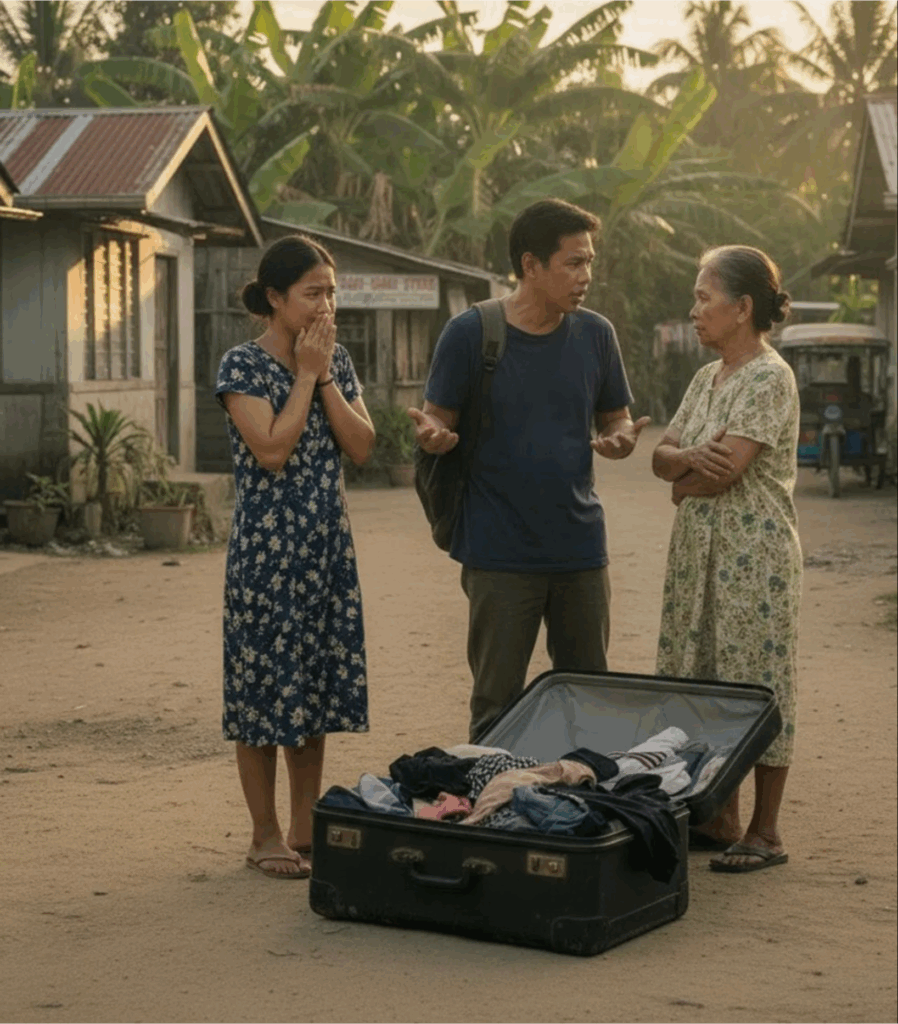
That Saturday I locked my own gate, sat out on the veranda with a book, and didn’t open it when two cars honked behind the fence, carrying women I didn’t know. My daughter-in-law called. I looked at the screen, listened to it ring, and didn’t pick up.
I am fifty-eight years old. And for the first time in three months, I refused to wash thirteen dirty plates left behind by people who treated my summer house like a free weekend accommodation. But to understand how it came to this, I have to go back to June.
My name is Valentina Dmitrievna, but everyone calls me Valya. I’ve lived like this for fourteen years: from April to October at the summer house, from November to March in a one-room apartment on Botanical Street, which my husband and I bought back in 1998, when he worked as a mechanic at the river port and I was a postal clerk.
Grisha died six years ago. Suddenly, at work. A year before that, he had transferred the apartment into my name, as if he had sensed something, though he never said it aloud. The land plot became mine in 2005, when we bought it from the neighboring Vorobyov family, who moved to Krasnodar.
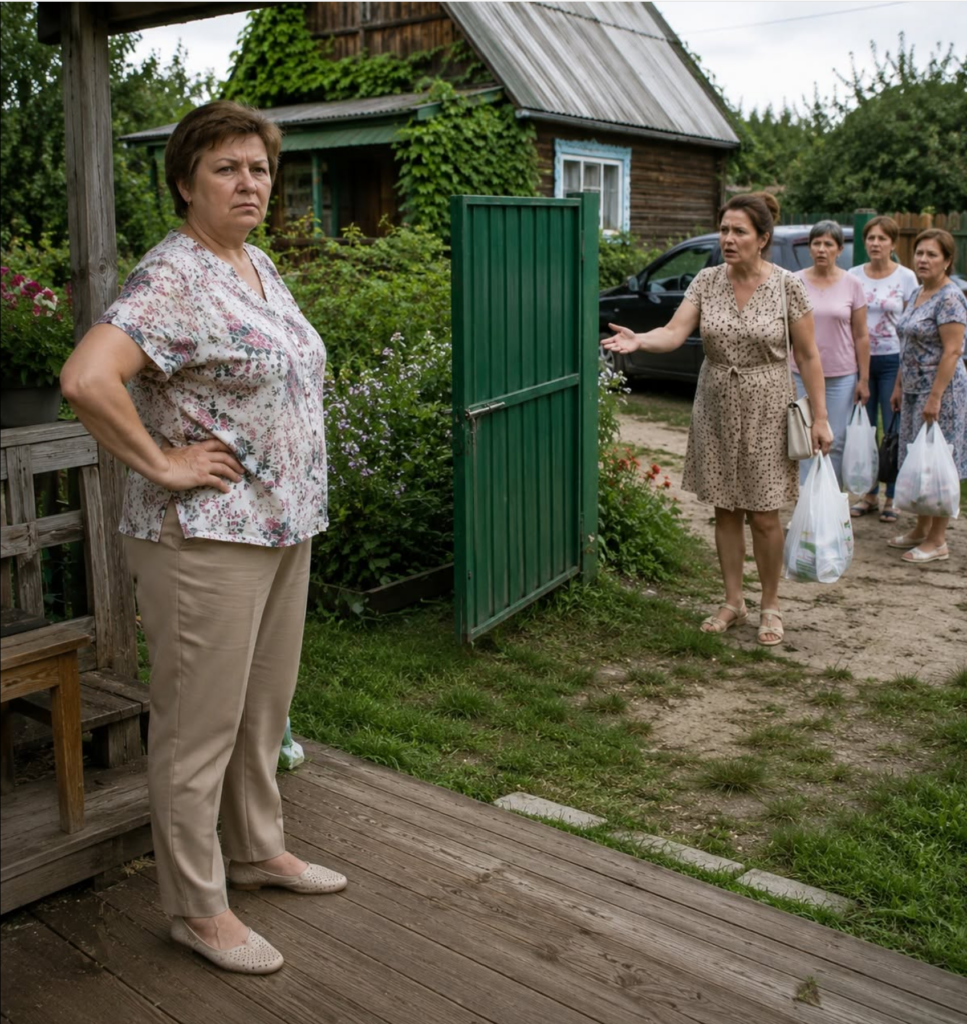
My son Anton is thirty-four. He works in freight transport along the Volga and Kama rivers, a respected man. He has been married for two years. His wife, Kristina, is thirty-two, an office manager at a shopping center: papers, spreadsheets, applications—everything passes through her hands. She has a firm voice. Sometimes I can clearly hear what she says on the phone even from two rooms away.
The first year was fine. They came to the summer house once a month, sometimes less often. Kristina brought prepared food, Anton helped in the garden, whitewashed the tree trunks. I served them cold soup, we sat on the veranda, and it was good. Simply good.
Then Kristina fell in love with the summer house.
The “invasions” began two years ago, on a Friday evening in June.
“Valentina Dmitrievna, can we come tomorrow? I’m bringing a friend too, she’s very tired and needs nature.”
I didn’t object. There was plenty of space—twelve acres, four rooms. Grisha used to say: “Let there be room for the grandchildren too.”
They arrived. Kristina, Anton, and a friend named Alisa. Loud, sun-tanned, hiding behind oversized sunglasses.
They laid out blankets on the grass, turned on music from a portable speaker. Not loud, but every note seeped into the garden. Anton grilled meat, Kristina chopped salad, Alisa sunbathed and photographed the clouds.
The next day they left.
In the kitchen, four dirty plates remained. A burnt pan on the stove. Plastic cups on the grass. A wet towel on the currant bush—turquoise, with an anchor pattern.
I took it down. The leaves still held the trace of it.
“They forgot,” I thought.
I washed everything.
A week later, another call.
And then it became routine: every Friday evening, a call. “We’re coming tomorrow.”
Sometimes three of them, sometimes five. Something was always left behind. A towel on a bush. A greasy plate in the sink. Crushed grass. As if the house was just a backdrop for their weekends.
I endured it for three months.
Then one Saturday I locked the gate.
And didn’t open it.
Around half past eleven they arrived. Honking, knocking.
“Valentina Dmitrievna! Open the gate!”
Anton called too.
“Mom, why is the gate locked?”
“Because I locked it.”
“But what happened?”
“That whoever doesn’t clean up after themselves doesn’t come in.”
Silence.
“They’re just guests…” he said.
“A guest doesn’t leave thirteen dirty plates behind.”
Silence again.
“I’ll talk to Kristina,” he finally said.
“Talk. I’m not angry. I’m just tired.”
A week passed. Kristina called.
“I didn’t think it bothered you that much.”
“I told you.”
“I didn’t notice.”
“That’s already a habit.”
Then they came—Anton and Kristina together. They cleaned the garden, washed the dishes.
At lunch Kristina asked:
“Can we still come… but properly?”
“Yes,” I said. “On one condition.”
“What condition?”
“Towels don’t hang on bushes. They hang on the clothesline.”
Since then, they’ve come three times.
Everything has been in order.
Everything has been washed.
The towels dry on the line.
And for the first time in years, I don’t feel like a servant on my own land.
Only one question remains:
At what point would you have said: enough?”