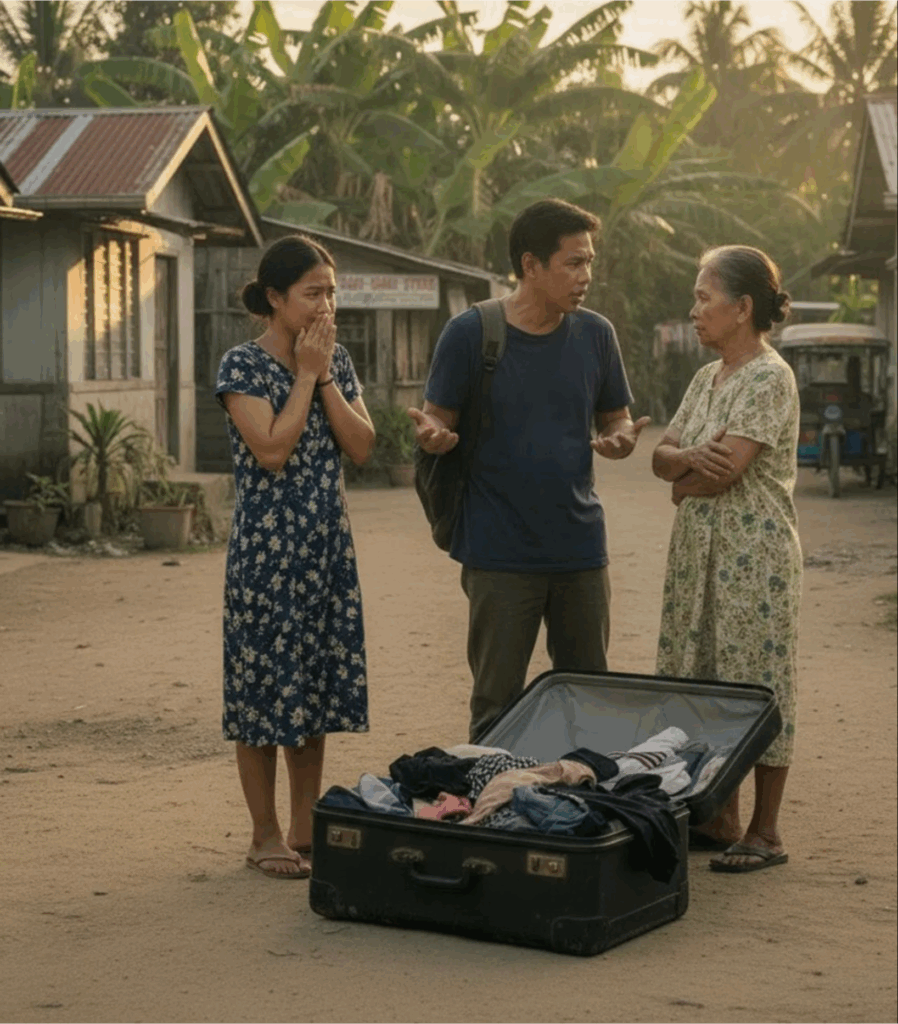
I agreed to take on the role of an elderly woman’s son at a nursing home for pay. Her real family was paying for it. Not because I was particularly heartless, and not because I thought it was easy money, but because my life at the time had narrowed into something suffocating and inescapable.
My mother’s medication was getting more expensive each month, the bills kept stacking up, and every day I asked myself the same question: how much longer can this go on? In that pressure, this arrangement didn’t feel like a choice. It felt like survival.
The agreement was simple.
I would go in, pretend to be her son, say a few prepared lines—“Mom, I’m here,” “How are you feeling?” “I came to see you”—sit with her for an hour, and leave. No emotional involvement. No connection. Just a transaction.
At least, that’s what I believed.
Her name was Rosie.
Her actual son paid for someone to replace him. It wasn’t unusual in places like this—guilt outsourced into money, presence replaced by arrangement, love reduced to scheduling.
I came every weekend. Always the same time. Always the same script.
“Mom, it’s me.”
Every time I said it, something inside me resisted. My voice felt чужer than it should have, as if it didn’t belong to me. But I pushed that feeling down. It was work. A role. A contract.
Rosie, however, did not react like someone being deceived.
She recognized me.
From the very first moment.
When I first stepped into her room, the air was thick with the smell of medicine, old wood, and something faintly floral that had long since dried out. She sat by the window, still, watching me with a steady gaze that didn’t flicker or doubt.
Then she smiled.
Not surprised. Not confused.
Familiar.
“You finally came,” she said softly.
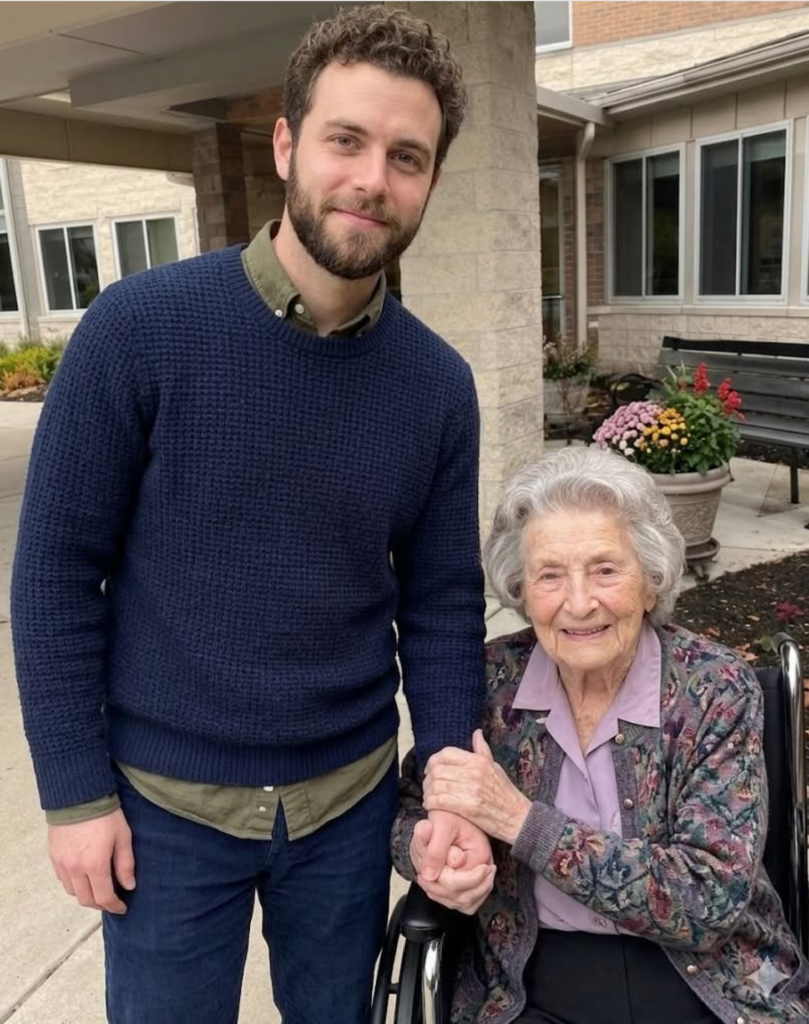
I froze.
That wasn’t part of anything I had been told. This wasn’t supposed to feel real.
I sat beside her. She immediately took my hand. Her grip was fragile, but firm, as if she had been waiting a long time to hold it again.
“You look tired,” she said. “Are you sleeping at all?”
No one had asked me that in years.
And something in me shifted.
The visits were supposed to be short, structured, paid.
But time behaved differently around Rosie. Minutes stretched. Hours blurred. I would look up and realize I had stayed longer than I was supposed to.
She told me stories.
A garden with apple trees leaning into each other like they were whispering. A seaside house where the light was always golden, even during storms. A dog she insisted we had once raised together—though I knew none of it had ever happened.
At first I thought it was dementia, memory loss blending past and imagination.
But over time, I wasn’t so sure.
She wasn’t losing reality.
She was choosing the one where she could still live.
And in that version of the world, I was her son.
I started bringing small things: tulips wrapped in paper, caramel candies, newspapers I marked with colored notes so she could follow stories like they mattered. She read them as if they were the most important headlines in the world.
Sometimes I stayed longer.
Sometimes I visited even when I wasn’t paid.
Without noticing, the boundary between job and presence began to dissolve.
I didn’t know when it stopped being work.
Or when it became something I couldn’t easily leave behind.
One day she looked at me for a long time—too long for comfort.
“You are a good man, son,” she said quietly. “I know more than you think.”
I wanted to ask what she meant, but the words never came.
For the first time, I felt seen—not as a role, not as a replacement—but as myself.
A tired, fractured person trying to hold his life together.
A few days later, the nursing home called.
“Rosie passed away in her sleep,” the director said.
The words arrived too neatly, as if rehearsed. I didn’t respond immediately. The room suddenly felt too silent, too large.
Then the director added:
“She left something for you.”
In the office, an envelope waited.
My hands were shaking as I opened it.
The handwriting was careful, deliberate.
“Dear boy who was not my son,” it began.
“My memory failed me in many ways. But my eyes did not. I knew who you were. And I let you stay anyway. Because sometimes what heals us is not truth, but presence.”
I read it again and again, unable to fully understand it.
Then something fell from the letter.
A small brass key.
And another line:
“What I kept all these years is yours now. Give half to those who have no one.”
From that moment, everything changed.
Rosie’s real son appeared days later.
Angry. Disoriented. Certain he had been robbed of something that belonged to him by right.
“Where is the key?” he demanded.
I looked at him calmly.
“It isn’t yours.”
“She was my mother!”
The silence that followed was heavier than his shouting.
“Then why weren’t you there?” I asked.
He had no answer.
Legal battles followed. Accusations. Contracts. Proof of payment. A carefully constructed argument that I had been nothing more than a hired impostor.
For a while, I almost believed them.
But Rosie’s letter remained.
And so did the witnesses.
Staff members from the home. And Margaret, Rosie’s friend, who testified:
“She knew. From the beginning. And she still waited for him. Because presence matters more than perfection.”
When it was my turn to speak, I didn’t defend myself.
I told the truth.
Yes, I was paid. Yes, I pretended. But something changed. And I stayed long after it stopped being necessary.
The judge was silent for a long time before delivering the verdict.
“The will stands.”
Inside the safe were bonds, money, and an old photograph: Rosie as a young woman holding a baby.
On the back, the same instruction:
“Give half to those who have no one.”
I did.
Half went to supporting residents in the nursing home. The other half went to my mother’s treatment.
For the first time in years, I wasn’t waking up to debt as my first thought.
But that wasn’t the end.
I kept returning.
Every Saturday.
Not because I was paid.
Not because I was obliged.
But because something in that place stayed with me—something I couldn’t quite name, and couldn’t quite let go.
Margaret always left a seat for me by the window.
Once, I brought tulips.
I placed them where Rosie used to sit.
“What did she teach you?” Margaret asked.
The light fell across the petals.
And I said:
“That sometimes, what matters most is simply not leaving.”