The smell of antiseptic and old paper hung heavily in the doctor’s office, sharp and almost suffocating, as if it clung to the fabric of my clothes. The fluorescent light above hummed with a cold, indifferent monotony, filling the silence with a mechanical tension.
The elderly doctor, his face half-hidden behind thick-lensed glasses, had already gone through my file three times. His fingers tapped nervously against the desk, as if searching for a softer way to deliver something that had none.
“Vadim Nikolayevich,” he finally said, slowly removing his glasses and rubbing the bridge of his nose in exhaustion. “I’ve reviewed the results repeatedly. There is no doubt.”
He paused.
“You are permanently infertile. The possibility of biological children is… zero. I’m sorry.”
The words didn’t fall like sentences. They fell like stones into deep water—heavy, final, and silent.
I was thirty-nine. My wife Oksana was thirty-four. We had been married nearly three years, and the past year had revolved around one thing: hope. Calendars, timing, diets, careful planning, and silent expectations.
And every time it failed, there was that quiet, disappointed sigh from her that slowly turned into guilt inside me.
I worked as a regional warehouse manager for construction materials. Stress, responsibility, long hours. I had convinced myself it was exhaustion, nothing more. So I went for tests in secret.
Now I knew the truth.
It wasn’t exhaustion.
It was me.
When I left the clinic, I sat in my car for a long time, watching rain slide in thin streams down the windshield, blurring the world into grey distortions. How do you tell a woman who wants a child so deeply that every failure already breaks her a little more?
I didn’t go home right away.
Three days later, I returned earlier than usual to our house outside the city. The moment I stepped inside, I was met with the warm smell of fresh baking and an almost staged sense of comfort. Everything looked perfect. Too perfect.
Oksana stood in the kitchen. She wore her best dress, her hair carefully styled, her cheeks flushed with excitement. Her eyes shone so brightly it was almost painful to look at her.
“Vadim!” she cried, throwing her arms around me. “Come quickly, I have the most wonderful news!”
I sat down at the table, feeling strangely detached, as if my body had arrived but nothing else had followed.
She paused, savoring the moment.
“I’m pregnant.”
A smile. A laugh of disbelief.
“Four weeks. It worked!”
For a moment, everything inside me went silent.
Impossible.
The doctor had said it clearly: no chance.
I forced my face into something resembling joy.
“That’s… incredible, Ksyusha.”
She didn’t notice anything. She was already living in a different world.
That night, I lay beside her listening to her steady breathing, and for the first time a question formed in my mind, cold and unavoidable:
*If not me… then who?*
The suspicion didn’t grow slowly. It arrived with precision.
A young man from the neighborhood. Roman. Twenty-eight. A barista. Always present in some casual, unnecessary way. Oksana often baked “extra” for him because “he’s alone.”
I started watching.
Then I started searching.
When I opened her laptop, there was no password. No resistance. Just access.
The emails hit harder than anything I had ever read.
“Everything is going according to plan. He believes everything. After the child is born, we secure the money, then divorce. The house, support payments, everything is legally prepared.”
No hesitation. No emotion.
Just strategy.
I read the messages again and again until they stopped making sense—and somehow made too much sense at the same time.
And then something inside me went still.
Not anger.
Clarity.
In the following months, I played my role perfectly: the happy expectant father. I smiled at ultrasound images, discussed strollers, agreed to expensive clinic plans paid with my money.
Behind the scenes, I prepared everything legally. Contracts, debts, financial structures—each step cold, precise, and deliberate.
Oksana grew more demanding, more entitled. I became, in her eyes, a resource rather than a person.
Roman kept coming around too often.
And I waited.
The birth began one night without warning. I drove her to a private clinic while already knowing this was not a beginning.
Only an ending.
When our son was born, Oksana lay in bed exhausted but triumphant.
“We are a real family now,” she whispered.
I placed my bag on the table.
“No,” I said quietly.
She didn’t understand at first.
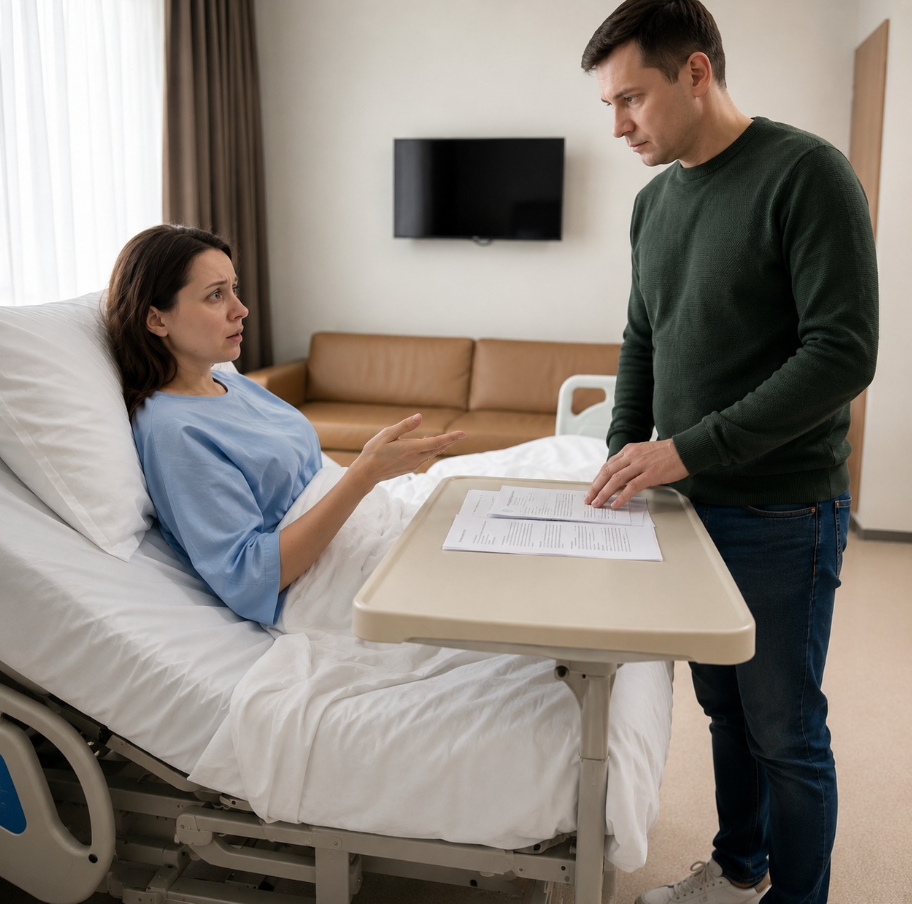
Then I laid out the documents: medical reports, printed messages, contracts.
Her face drained of color within seconds.
“You’re wrong… this isn’t true…” she whispered.
But I wasn’t listening anymore.
“The house is in debt. The loan is in your name. And the evidence is all there.”
The door opened. Her parents entered.
And everything collapsed.
A few days later, I left the house and started a new life in the city.
Roman disappeared quickly. People like him usually do when consequences appear.
Oksana was left behind—with debt, a child, and the weight of everything she had set in motion.
A year later, I saw her outside the courthouse.
She looked exhausted. The confidence was gone.
“Are you happy now?” she asked quietly. “You destroyed my life.”
I looked at her for a long moment.
“You destroyed it yourself, Oksana,” I said.
Then I walked away.