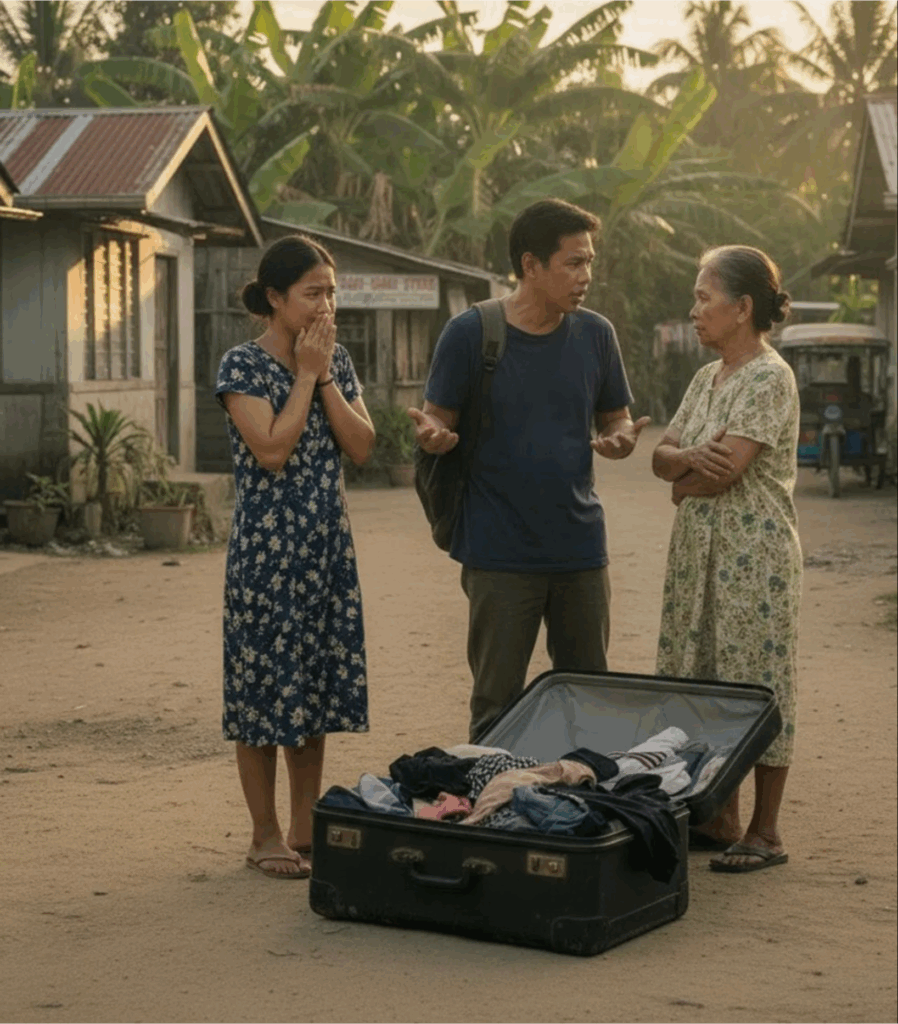
“Now then, my son, so you’ve brought into our home this… forgive me, Lord, a penniless drifter. No land, no house, only ambitions and a suitcase of faded pillowcases.”
Tamara Ignatyevna stood in the middle of the living room, her voice loud and cutting, as if she were delivering a verdict rather than speaking in a family home. With deliberate contempt, she turned over the few belongings Lena had brought from the student dormitory, as though they were worthless trinkets.
Lena stood in the doorway. Her fingers gripped the handle of her old bag so tightly her knuckles had gone white. She wanted to disappear. To vanish. To dissolve into the air—anything to escape that scrutinizing,
contemptuous gaze from her mother-in-law and Svetlana’s mocking giggle. Svetlana had already tried on Lena’s only decent scarf and was posing in front of the mirror as if it belonged to her.
Andrei, still young at the time and unable to firmly stand up to his mother, flushed deep red.
“Mom, stop it,” he managed, trying to take the towels from her hands. “Lena is my wife. We’re going to live separately, you know that. We just brought our things here while we look for an apartment.”
“Separately?” Tamara flung her hands up. “On what money, may I ask? Your engineer’s salary? Or did this penniless girl bring a fortune with her? Oh, Andryusha, you’ll suffer with her. A village girl—no taste, no manners, no means.”
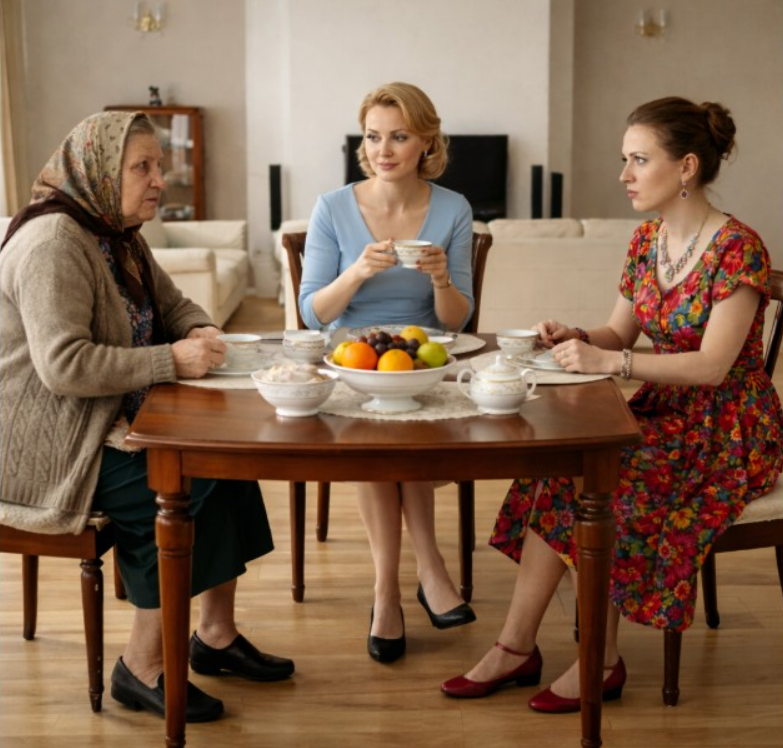
That word—“penniless”—stuck to Lena like a brand. It appeared at every family gathering where she was tolerated more than welcomed. Tamara and Svetlana never missed a chance to jab at her: her “coarse” salad cutting, her “old-fashioned” dress, her “cheap” gifts.
Lena stayed silent. She had been raised to respect elders and avoid conflict. And she loved Andrei deeply, which made her endure everything.
The early years of marriage were difficult. They lived in rented apartments, saving every penny. Lena worked two shifts in a textile factory, and at night she took sewing jobs at home. Andrei accepted any side job he could find—driving taxis, fixing computers.
His family remained a constant source of criticism but never support. Tamara Ignatyevna came from a wealthy background, with a city-center apartment and a country house. Svetlana had once married a businessman. They had money—but none of it reached the young couple.
Once, when their refrigerator broke, Andrei asked his mother for a small loan.
“No money,” she cut him off on the phone. “And even if there were, I’d think twice. You’re both irresponsible. Your wife probably spent it all on clothes.”
That night, Lena promised herself she would never ask them for anything again.
Years passed. The “penniless” Lena slowly built something of her own. Her talent became undeniable. She opened a small workshop in a shopping center. Her stitching was flawless, her tailoring precise, her sense of fabric exceptional.
Word spread. Customers came. Andrei took over administration and finances. They became a team.
Five years later, Lena owned a chain of high-end textile studios. They had a spacious apartment, a good car, and a house outside the city.
Her husband’s family faded from their daily life.
Then one day, the phone rang. Tamara Ignatyevna.
Her voice was unusually sweet—so sweet it immediately raised suspicion.
“Lenochka, dear… how are you? We were thinking of visiting you…”
Lena agreed.
On Saturday, they arrived.
The moment they entered the apartment, they froze. Their eyes scanned everything greedily—the furniture, the materials, the paintings. Not guests, but evaluators.
At the table, conversation started stiffly, then gradually slipped back into subtle jabs disguised as compliments.
After dessert came the real reason: a summer house project costing three million rubles.
“For you, that’s nothing,” Tamara said. “We’re family.”
Lena listened quietly, then stood up.
She reminded them of everything: the word “penniless,” the humiliation, the refusals when they once needed help.
The atmosphere tightened.
“You are obligated to help!” Tamara suddenly screamed. “I am your mother!”
“No,” Andrei said firmly. “You have a home. A dacha is a luxury.”
When they finally left, there were only shouted curses and slammed doors.
Silence filled the apartment.
Lena cleared the table, removing the ruined cloth. She didn’t cry. She just felt exhausted—and strangely relieved, as if a wound long festering had finally burst open.
Andrei sat beside her.
“I’m sorry,” he said quietly.
“There’s nothing to apologize for,” Lena replied. “You finally stood up for us.”
They sat together, drinking wine in their quiet home as night fell outside.
And for the first time, Lena truly felt it: the past was no longer holding them.