I bought my father a truck—six weeks before his sixtieth birthday—and even as I paid for it, I knew it was a mistake.
Not because he wouldn’t use it. My father loved trucks the way other men loved tools, authority, and the chance to deliver opinions no one asked for: loud, absolute, and delivered as if they were facts carved into stone. The problem wasn’t the truck.
The problem was that nothing in my family was ever just a gift.Everything was a test. A measurement. A quiet weapon wrapped in celebration.
Give too little, and you were selfish. Give too much, and you were showing off. Give exactly what someone wanted, and somehow you’d still be accused of manipulation for understanding them too well.
Still, I bought it.A black Ford F-250 King Ranch—leather seats, towing package, upgraded trim, the exact engine he had talked around for years without ever directly asking for it.
I used my company broker, paid in full, and held back the final paperwork. I wanted the moment of presentation at his birthday dinner. A single night where something I gave him wouldn’t be dissected into an argument.
Not because I believed a truck could fix anything between us. I was thirty-six, not sixteen. I understood people too well for that kind of hope.
But a part of me—the quiet, stubborn part—still wanted one evening where I could give my father something and he would simply receive it. No judgment. No commentary. No verdict.
The dinner was held at my parents’ house outside Fort Worth. A long walnut table, expensive steaks, too much wine. My brother Dean was already talking about his bonus before the plates were cleared.
My mother wore emerald silk and the practiced smile she reserved for occasions where she wanted the family to look more successful than it actually was. Aunts, uncles, cousins—everyone was there. Everyone watching.
When I slid the small box with the key across the table, the room actually went quiet.He opened it. Saw the logo.For one brief second, I thought—maybe.Then we went outside.
The truck stood under the driveway lights with a red bow across the hood. A low whistle from my uncle. A curse of approval from Dean. Even my mother looked impressed in the way she only ever allowed herself to be impressed when it benefited her image.
My father walked around it slowly, hand gliding over the paint.“This is mine?”I nodded. “Happy birthday.”An hour later, dinner resumed. The moment should have ended there.
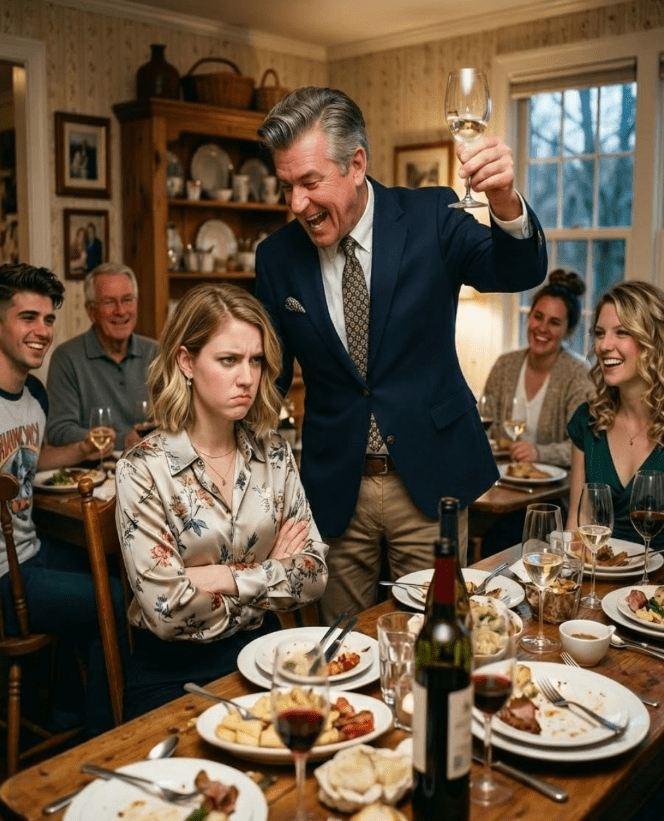
Instead, he raised his glass.Looked directly at me.And said, “Trying to buy love with money.”Laughter followed immediately.
My brother laughed the hardest. My aunt covered her mouth, still smiling. My mother lowered her eyes to her plate—not out of shame, but calculation, deciding which version of the story she would later support.
And suddenly I understood.The truck wasn’t a gift anymore.It was a verdict.I stood up, folded my napkin, smiled faintly as if I had just been confirmed in something, and left without saying a word.
The next morning, his driveway was empty.And my phone exploded.108 missed calls.My mother’s voicemail came first: “Savannah, call me immediately.” No question. Just command.
My brother: “What the hell did you do?”I didn’t finish listening to any of them.I sat at my kitchen island, coffee untouched, staring at the pale Texas morning, and something in me settled into clarity.I hadn’t stolen anything.
That was the point.The truck had never been fully transferred. No final signature. No completed acceptance. Just presentation—nothing legally closed.So I did what I always did when high-value assets were involved: I corrected the paperwork.
Broker. dealership. transport service.Clean. Quiet. Immediate.By 7:30 a.m., the truck was gone.No scene. No confrontation. No legal issue.Just consequence—handled professionally.
At 8:21, I answered my brother’s call.“You took Dad’s truck.”“No,” I said. “I took mine back.”He scoffed. “You’re insane.”I leaned back. “Was he clear last night?”
Silence.Then: “It was a joke.”“Then he should have laughed.”More silence.Then the predictable shift.“You embarrassed him.”I almost smiled.
“Good. Now he knows what that feels like.”My mother called next. Her voice was different now—colder.“Bring it back.”“No.”“You’re humiliating your father over a joke.”I looked out the window.
“No. I’m responding to a pattern.”That made her go quiet.Because she understood—at least enough to recognize it.
The decades of small cuts. The jokes about my education. My work. My money. My life choices. Every achievement reframed as luck, arrogance, or overcompensation.
The truck was just the loudest version of something familiar.By midday, he showed up at my door.My father.Dressed like he always was when he wanted authority to precede him: pressed shirt, polished boots, sunglasses pushed up on his head.
He looked at me.“You made your point.”“No,” I said. “You made yours.”His jaw tightened. “I was drunk.”“But you still spoke.”He glanced past me into the house.“You really had it taken back.”
“It was still mine.”A short, bitter laugh. “Over a joke.”I crossed my arms.“Say it again—and we’re done.”That made him pause.Not because he agreed.
Because for the first time, he realized I wasn’t negotiating anymore.I wasn’t the daughter who absorbed things to keep the peace.I was someone who could walk away.He looked off to the side.“Your mother is furious.”
“She’ll adjust to consequences,” I said.Silence again.Then he asked, quieter this time:“What do you want from me?”That was the real question.
A few years ago, I would have had answers. Apologies. Recognition. Respect. Something measurable.Now I didn’t.“Nothing,” I said.His brow furrowed. “That’s not true.”
“It is. I don’t want forced gratitude. I don’t want performance apologies. I don’t want another decade of buying expensive things for people who reduce me afterward.”
He studied me for a long moment.“You’re punishing me.”I shook my head.“No. I’m just done participating.”He left not long after that.Afterward, the calls slowed.
The story inside the family began to mutate, as stories do when responsibility becomes inconvenient.I was dramatic. Sensitive. Overreacting.Maybe.
Or maybe I had simply stopped funding disrespect.A week later, he texted me.Six words:“I shouldn’t have said that.”No apology. No humor. Just acknowledgment.
I didn’t reply.I didn’t need to.And I never bought him another gift again.Every time I see a black King Ranch on the highway now, I don’t feel loss.I feel something quieter.
The memory of the moment I stopped trying to earn respect.And started refusing to pay for its absence.