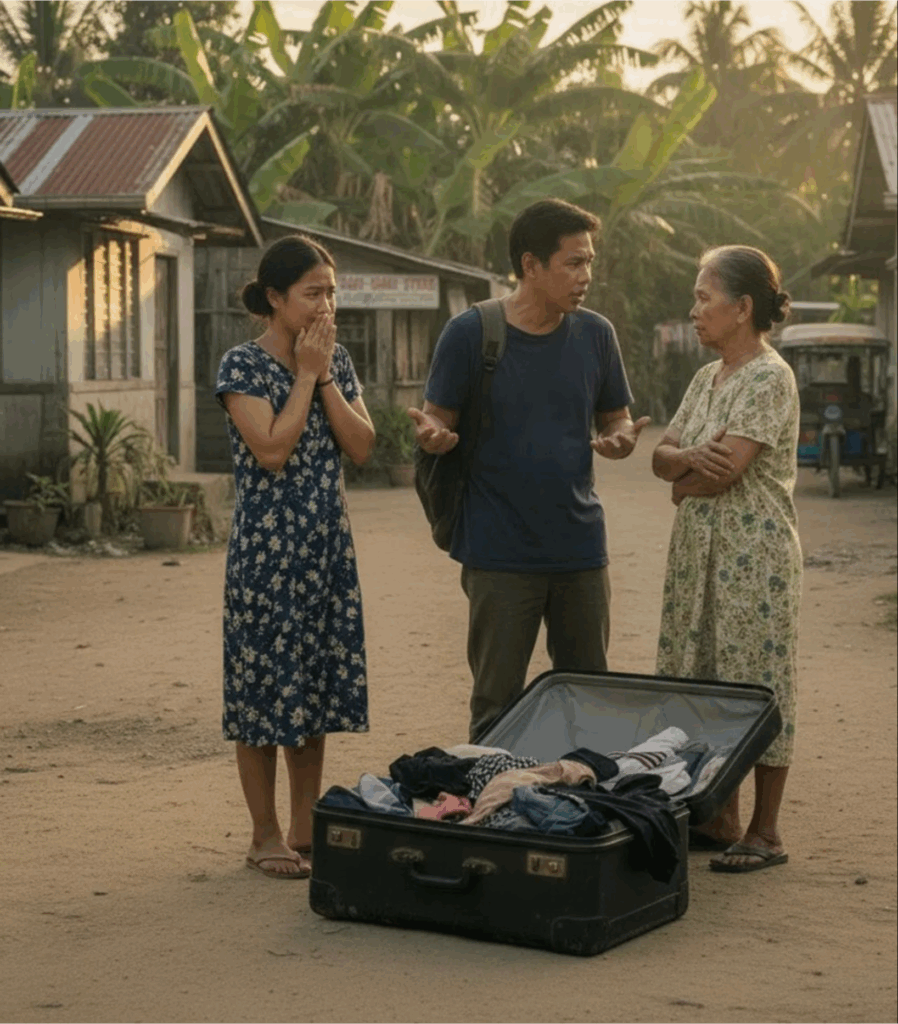
Leo stood in the doorway, and within seconds it felt as if the entire world he had known was quietly collapsing in front of him, breaking apart like a structure that had long been neglected.
The key was still in his hand, his suitcase rested by his feet, and his coat hung heavy on his shoulders after the long journey. His body was exhausted, but what he saw cut deeper than fatigue: the realization that he hadn’t come home, but had stepped into something unfamiliar, decaying, and almost unrecognizable.
Even in the entrance hall, the air was thick. Not just dirty, but heavy in a suffocating way—like neglect, indifference, and accumulated chaos had settled into the walls themselves. It wasn’t a smell you could simply ignore. It clung to everything, as if the apartment had stopped trying to be livable.
Leo didn’t move right away. He just stood there, taking it in.
The floor beneath his shoes felt slightly sticky, as if time itself had left residue behind. Jackets were thrown carelessly along the corridor, scattered without thought or care. An empty plastic bottle lay crushed in the corner, a dark stain slowly spreading beneath it.
Then he stepped into the living room.
The light was cold and artificial, cast by the flickering television that split the room into two worlds: the illusion of life on one side, and its aftermath on the other.
Boxes were stacked unevenly, forming unstable towers. Fast-food bags, empty bottles, dirty plates, and forgotten debris filled every surface. The sofa was no longer a piece of furniture—it had become an island in the middle of a sinking wreck.
And on it lay Zoya.
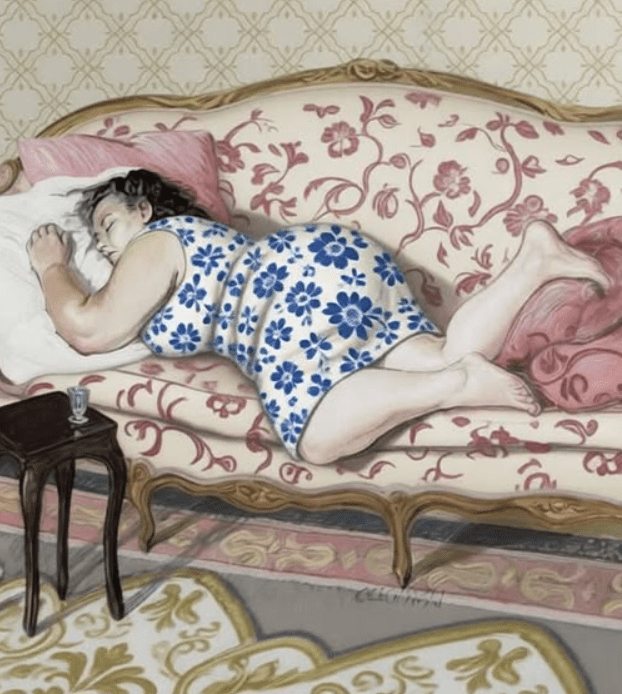
Half-embedded in cushions and clutter, she barely moved. A bag of chips in her hand, eyes fixed on the screen, face blank with exhaustion and detachment. She didn’t react. It was as if Leo’s return belonged to another reality entirely.
“Zoya…” Leo said.
His voice sounded чужer even to himself—hoarse, drained, uncertain.
She turned her head slowly, as if interrupting something far more important than him.
“Oh, you’re back,” she said flatly.
There was no warmth in it. No surprise. Only irritation, like he had interrupted a routine she had finally settled into.
Leo took a step forward. A crushed can shifted under his foot, echoing sharply through the room.“What happened here?” he asked quietly.
Zoya let out a short, humorless laugh.“What happened? Nothing. I lived. That’s what happened. Not everyone can keep everything perfect while you disappear for two weeks.”
Her voice sharpened.“You think you can just come back and judge everything?”Leo didn’t answer. His gaze drifted toward the kitchen.What he saw there made the rest of the apartment look almost tame.
The sink was buried under layers of dirty dishes. Old food had hardened into unrecognizable shapes. The air was heavy, sour, almost alive with rot. The counters were stained, sticky, abandoned.
Something inside him shifted—not loudly, not explosively, but with finality.He didn’t argue.He didn’t ask again.Instead, he walked to the corner and picked up a black garbage bag.
Zoya sat up on the sofa.“What now?” she sneered. “You’re going to fix everything in one dramatic moment?”Leo didn’t respond.He began cleaning.
But it wasn’t careful or gentle. It was mechanical, decisive, almost emotionless. Everything went into the bag—leftovers, containers, bottles, scraps of what used to be meals. There was no hesitation, no sorting, no saving anything.
The apartment started to empty, piece by piece, as if time itself was being reversed through force.The bag grew heavier.The smell grew worse.Zoya stood up abruptly.
“Stop it!” she shouted. “This is insane!”But Leo didn’t stop.When he returned to the living room, she was still there, watching him as if nothing had changed.
He stopped behind the sofa.The silence stretched tight between them.“Is this what you wanted?” he asked quietly.Then he tipped the bag over.
The contents spilled out in a wet, heavy crash—rotting food, damp waste, the remains of neglect. The smell exploded through the room instantly, thick and overwhelming.
For a moment, neither of them moved.Zoya sat frozen.Then slowly, she turned her head.Her expression changed. The emptiness disappeared.
Something raw ignited in her eyes.“You…” she whispered. “You destroyed everything.”She jumped up.
The tension that had been building finally snapped. She grabbed whatever she could reach, throwing things, breaking what was left of order. The apartment, already ruined, finally surrendered completely to chaos.
Leo didn’t step back.He waited until the storm reached its peak.Then he grabbed her wrist.Not violently. But firmly—final, undeniable.He led her toward the door.
She struggled, shouted, clawed at the walls, but the space around her no longer supported her resistance.The hallway outside was cold.Empty.Real.“This is my home!” she yelled.
Leo released her at the threshold.“Not anymore,” he said.The door closed.The lock clicked with quiet certainty.Silence followed.Not empty silence.Clean silence.
Leo stood alone for a while in the wreckage. The smell was still there, the destruction still visible, but something fundamental had changed. The space no longer felt like a trap.
He inhaled deeply for the first time in days.It wasn’t pleasant.But it was real.He pulled out his phone and started making calls—cleaning services, repairs, rebuilding.
Then he opened the window.Cold night air rushed in, pushing back the stench, carrying something distant and fresh.Leo stood there, looking not at what was ruined, but at what remained possible.
Not everything was fixed.Not everything was forgiven.But for the first time, the future didn’t feel like collapse.It felt like space.