She hummed, a sound that seemed older than memory itself, tender as the threadbare cotton of a favorite blanket. It rose slowly, unbidden, curling through the air until it filled the room like sunlight slipping through a cracked window.
The twins stirred. Not fully awake—just a ripple on the surface of their stillness—but it was the first sign of life in six months. Lily’s lips twitched. Grace’s fingers flexed, as if relearning their shape. Their eyes, once shuttered tight against the world, flickered with the possibility of listening.
Alexander, lingering near the doorway, felt a brittle shard of hope pierce him. He dared not move as Maya continued her quiet ritual: humming softly, narrating stories aloud while folding laundry, speaking the world into being. She did not quote studies or protocols; she did not push. She simply existed in their presence.
And the girls responded. At first, it was small things: Lily’s smile tipping at the corners, Grace tilting her head toward a sound. They followed her through the house like kittens chasing sunbeams. One night, Alexander wept in the garage—silent, raw, and ugly—astonished at how deep relief could carve itself into a human body.
Then, one golden afternoon, the miracle arrived fully. Laughter floated down the hall, fragile and incredulous. Alexander pushed open a door and saw Maya sprawled on a blanket like a patient in a make-believe hospital, the twins solemnly attending to her as if they wore stethoscopes.
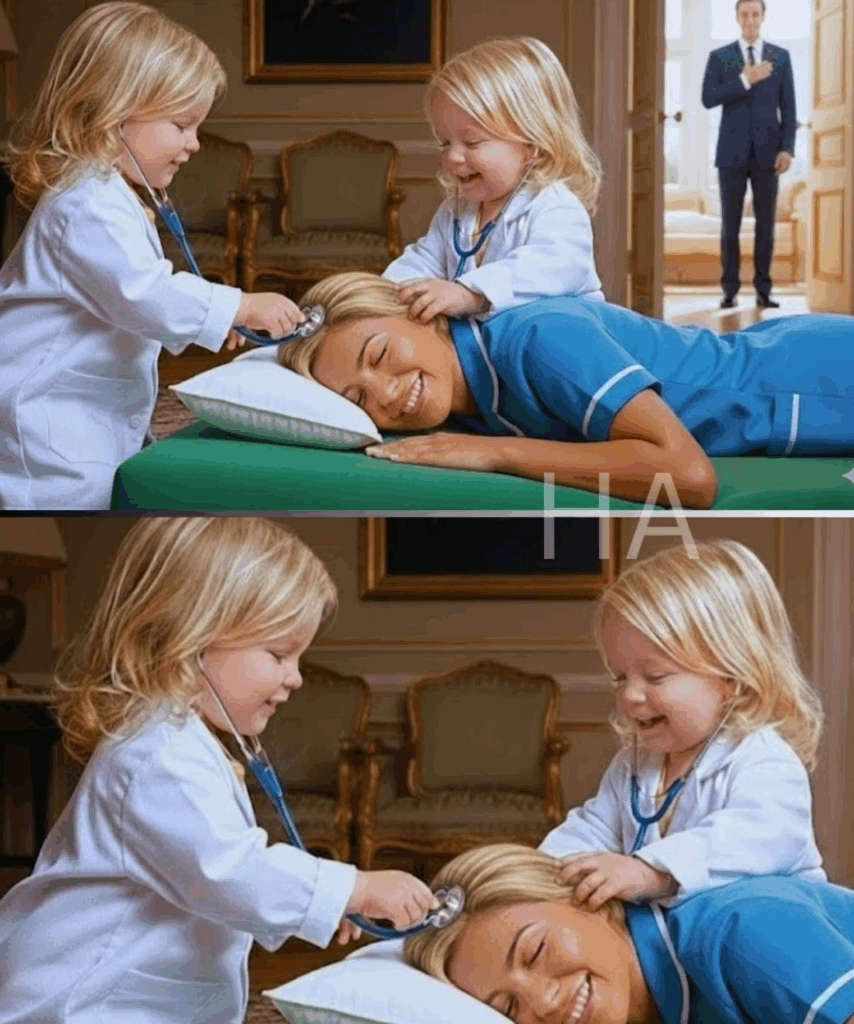
Grace held up a plastic bottle, her voice clear and astonishing: “Mommy, here’s your medicine.”Lily added, borrowing from some imagined script: “You have to take it so you can get better.”The sound of their voices—real, human, whole—shattered Alexander.
He dropped to his knees, sobbing for the first time since Laura’s funeral, as months of fear and grief poured free. Maya froze, panic etched across her face.“Mr. Reed, I—I’m so sorry. I didn’t mean to—”
He shook his head, finally understanding the weight of presence. “Don’t say anything. You brought them back.”Triumph was strange, borrowed from a miracle. He wanted to tell the world, to call Evelyn, to celebrate.
Her voice came cold through the phone. “Are you sure this is positive, Alexander? This could indicate distorted attachment. Children bonding too intensely with a non-professional caregiver—dangerous.”
Alexander faltered. Evelyn, his authority for months, planted doubt with her clipped certainty.“She’s a housekeeper,” he said. “The girls respond to her.”“You must not allow it. Background checks, safety measures…”
Against his instincts, he listened. Evelyn dug deep, presenting a narrative of tragedy in Maya’s past, of revoked credentials and supposed danger. Maya confessed—truthfully, quietly—her career ended by institutional betrayal, not malice.
“I needed work,” she said. “I needed a place to make a life again.”Alexander asked her to leave. She packed, shoulders stooped, eyes downcast. The girls wept in a silence so profound it carved through him. Days later, they were back behind their invisible walls.
In desperation, Alexander found a misfiled report from Dr. Noah Ramirez: the twins’ mutism was temporary, trauma-induced, expected to improve with calm, music, and a consistent caregiver. Forwarded, inexplicably, to Evelyn. She had hidden it.
Everything snapped into focus. Evelyn had orchestrated a costly, invasive path while ignoring the simplest solution: human presence. Alexander did not confront her. He drove to Chicago instead. He found Maya, weary but still luminous, and asked simply: “Will you help my girls?”
She hesitated. Then nodded.With her return, the house came alive: songs poured like water into dry soil, tea parties erupted with absurdity, stories were told in voices that made the girls laugh until their ribs ached. Dr. Ramirez confirmed: trust and consistency, not costly interventions, healed trauma.
Alexander wanted to shout the truth, but Evelyn acted first, spinning lies, leaking falsehoods, dragging Maya through courts and headlines. Lily and Grace clung to her during CPS removals, whispering “Don’t go” in a way that cleaved his chest.
Alexander fought back. Investigators traced fraud, suppressed reports, forged records. Evelyn was arrested; justice, slow and meticulous, began to unspool. Maya returned to the girls, the house breathing again, fragile but whole.
Years passed. Lily and Grace grew into confident, compassionate women, musicians and healers in their own right. The Reed Foundation, born from grief and correction, flourished—prioritizing human contact, music, and ritual over sterile intervention.
At the foundation’s first major conference, the twins told their story. Pain had existed, yes, but presence had triumphed. Maya’s lullabies had unlocked voices; ordinary human acts had healed what science could not.
Alexander watched from the back, a quiet joy settling into his bones. On slow evenings, the house hummed with life again. Music, laughter, and small acts of care—the ordinary miracles that required no title, no license, no validation.
He played Laura’s lullabies on the upright piano, the twins humming alongside him. He understood at last: presence could heal, patience could restore, and love—steadfast, ordinary, relentless—was the truest medicine.
And sometimes, as sunlight pooled in the garden, Alexander would lift his cup to the small, stubborn, everyday acts that had rebuilt his family. “We did it together,” he whispered.