The judge studied Emma for a long moment. There was no coldness in her gaze, no pity either — only calm determination, the kind that belongs to someone who knows their words can change lives.
John, who had once seemed so confident, now sat nervously twisting his fingers. The courtroom was thick with tension; only the faint rustle of papers and the quiet hum of the air conditioner disturbed the silence.
“Mrs. Emma, please present your documents,” the judge said evenly.
Emma opened her folder slowly. Her hands trembled slightly — not from fear, but from the emotion of realizing this moment had finally come. Inside were the papers that told the story of her last few years:
the house deed, the bank statements, the marriage certificate, the payment receipts. She placed them on the table, aware that each page represented a sacrifice, a fragment of her life.
John straightened suddenly, trying to recover some dignity. “Your Honor,” he began, “what she says isn’t the whole truth. I contributed too — not financially, but with my work at home. The repairs, the cleaning, the—”
“The cleaning?” Emma interrupted softly but firmly. “You spent your days on the couch, on your phone or playing video games. That’s not taking care, John. That’s running away from life.”
A murmur rippled through the courtroom. His mother, Mary, leaned toward him and hissed bitterly,“Don’t stay silent, my son. Tell them you have rights.”
The judge raised her hand, and the room fell quiet again.“I understand,” she said firmly, “but this court deals in proof, not words. Living in a house doesn’t make you its owner.”
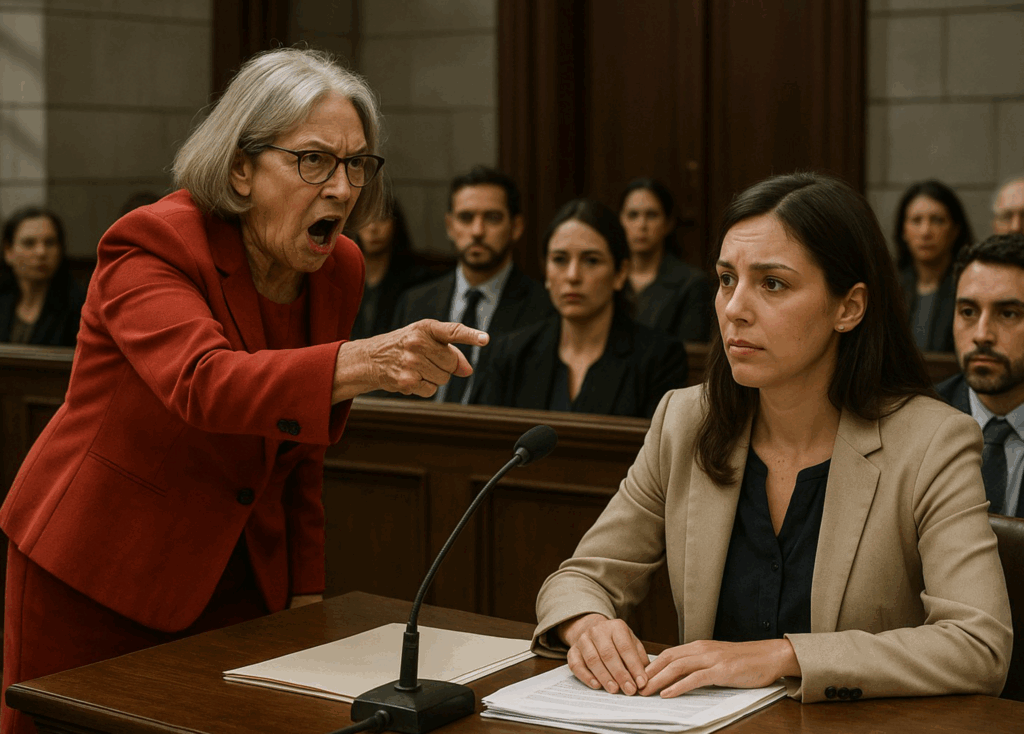
Mary jumped up, furious.“ This is an outrage! My son was sick, and she’s taking advantage of his kindness!” “Ma’am,” replied the judge in a neutral tone, “this isn’t a trial about feelings — it’s about facts.”
Emma sat still, eyes fixed ahead. Inside, she felt exhaustion mixed with relief. She knew this was both an ending and a beginning.
After a brief silence, the judge gave her ruling:“The house was purchased by Mrs. Emma before the marriage, with her own funds. The car is registered in her father’s name. There will be no division of property.”
John’s mouth fell open.“That’s it? After all these years, I get nothing?”“Not quite nothing,” Emma said softly. “You still have your mother. She’ll always take you in.”
Mary leapt to her feet, trembling with rage.“Ungrateful woman! We welcomed you into our home, and you destroy this family!”
“You never truly accepted me,” Emma replied calmly. “You judged me from the beginning. You can’t build a home on rotten foundations. ”Her words hung in the air like an echo. Even the judge seemed to pause, thoughtful.
An hour later, the trial was over. Emma stepped out of the courthouse and inhaled deeply. The autumn air was cool and sharp; the sky was gray, but on the horizon, a faint light glimmered. For the first time in years, she felt free to breathe.
Her phone buzzed — it was her father. “How did it go, sweetheart?” “It’s over, Dad. Everything’s fine.” “I’m proud of you. I’m coming to get you.”
Moments later, his car pulled up outside. Emma got in, and for the first time in years, she smiled — really smiled. They didn’t talk much on the way home. They didn’t need to. The silence between them said everything.
That evening, sitting by the window with a cup of hot tea, she watched the city lights flicker in the distance. There was no anger left in her, only a clear, quiet space — ready for something new.
Weeks passed, and her life found a new rhythm. At work, her colleagues looked at her differently — with respect, like someone who had the courage to say *enough*. Her boss offered her a promotion, and this time, she accepted without hesitation. For the first time, she was choosing for herself.
John, meanwhile, lived with Mary. At first, she pampered him, repeating again and again that Emma didn’t deserve him. But as time went on, even she grew weary. One evening, as John sat staring blankly at his phone, she sighed,
“John… maybe it’s time to start over. Life goes on.” “I know, Mom…” he murmured, realizing deep down that he hadn’t just lost a wife — he had lost himself.
Spring came, bringing light with it. Emma repainted the house, took down old photos, filled the rooms with fresh flowers. The air felt lighter, freer, as if even the walls could breathe again. One Saturday, as she adjusted a painting,
she thought of the day in court and smiled. The pain was gone — replaced by gratitude.
One afternoon, on her way home from work, she stopped at the park. The sun glowed through the trees; children laughed in the distance. On a bench, a young artist was sketching faces. When he noticed her, he smiled.
“May I draw you?” he asked. Emma hesitated for a moment, then nodded. “Of course. Maybe it’s time to remember what happiness looks like.”
The golden light of sunset touched her face. She looked like the same woman — yet somehow different. Free.
Three months later, the young man handed her the finished portrait. It was simple, yet full of life. Emma hung it in her living room, right where her wedding photo once hung.
When her friend Laura came to visit, she paused before the portrait and smiled. “It’s you,” she said, “but… different. Calmer. At peace.” “That’s exactly how I feel,” Emma replied softly.
That night, before going to bed, Emma opened the window and looked up at the stars. She didn’t know what the future held — maybe new love, maybe just the peace she’d been searching for. But for the first time, she wasn’t afraid.
“This isn’t the end,” she thought as she turned off the light. “It’s just the beginning.”