It was a gray, rainy afternoon in Quezon Province. The sky hung heavy with low clouds, and a fine drizzle slicked the muddy gravel road. Dolores, seventy years old, leaned heavily on her cane, each step a careful struggle against the wet earth.
Her bag, frayed and faded from years of use, contained only a few scattered pesos and a stack of medical papers—precious documents that detailed the urgency of her condition, yet offered little hope of payment. She clutched it close, as if holding onto it could somehow shield her from the harsh reality.
Her heart pounded—not merely from the long walk—but from the fragile, desperate hope that her only son, Ramón, could help her. The doctor had been clear: she needed urgent heart surgery. The price tag, tens of thousands of pesos, was an impossible sum for her humble means.
Ramón, meanwhile, had flourished. He was a successful businessman, managing a thriving building materials shop in Quezon City, living in a grand house, and driving a car that gleamed in the sunlight. Dolores had always believed that a mother’s plea
would be enough to open his heart. Perhaps she was naive. Perhaps she was faithful. Either way, she clung to hope.
When she finally arrived at the towering iron gates of Ramón’s home, she pressed the bell. Ting-ting.
A young woman appeared—Ramón’s wife—her eyes sharp, her expression impatient.
“What do you need, Nanay?” she asked, her voice curt as it swept over Dolores’ worn, soaked clothing.
“I… I came to see Ramón,” Dolores said softly, her fingers trembling around the medical papers.
The young woman disappeared inside, leaving Dolores shivering in the drizzle. Moments later, Ramón emerged, phone in hand, looking every bit the part of a busy executive.
“Mom, what brings you here? I’m busy right now,” he said, his tone polite but distant, a polite barrier between them.
Dolores’ voice quavered as she extended the report. “Son… the doctor says I need surgery soon. Could you help me? I’ll pay you back when your brother sells the rice.”
Ramón sighed, glancing briefly at his wife. “Things are tight at the business. I… I don’t have cash. Go home, and I’ll think of something.”
Tears pricked Dolores’ eyes, but she forced a gentle smile. “Just a little… enough for the hospital, please…”
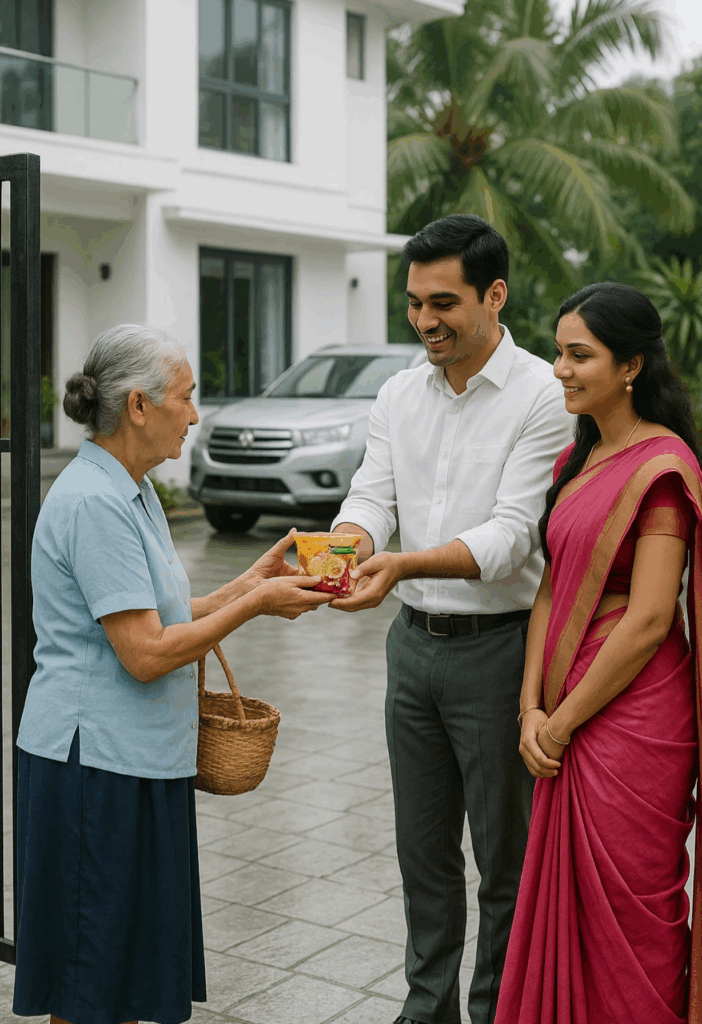
Ramón hesitated, as though struggling with a secret he could barely contain. Then, slowly, he opened the trunk of his car. From it, he pulled a single packet of instant noodles.
“For now,” he murmured, his voice low, almost ashamed. “I’ll send money later.”
He nudged her gently toward the gate. The rain had grown heavier, cold and relentless. Clutching the packet to her chest, Dolores began the slow walk home, her heart a tangled knot of sadness, shame, and lingering hope.
Once inside her small wooden house, soaked and shivering, she placed the noodles on the table. Hunger gnawed at her, but something made her pause. There was something unusual about the packet. Trembling, she opened it.
Beneath the noodles lay a small, sealed envelope. Her fingers shook as she tore it open. Inside were crisp bills—50,000 pesos—and a hastily scrawled note:
“Mom, forgive me for lying. I didn’t want my wife to know. I was afraid she’d think I favor my family. Please use this for your surgery. I love you more than I can say. Your unworthy son, Ramón.”
Dolores sank to the floor, tears blurring her vision. Relief and love flooded through her, mingling with understanding. Her son had never been indifferent—he had been trapped between love for his mother and fear of judgment.
The next morning, Dolores underwent surgery. Weak, frail, and trembling, she awoke to find Ramón sitting beside her, his eyes red and swollen from crying.
“Mom… I’m so sorry,” he whispered, voice breaking. “I shouldn’t have sent you away. I was scared… scared of what my wife would think.”
Dolores reached for his hand, smiling gently. “A mother never stays angry. Money can be earned again, but a mother’s heart, once broken, cannot be replaced.”
Ramón buried his face in her hand, overwhelmed by love and guilt. Outside, sunlight streamed through the window, warm and golden—a quiet symbol of forgiveness and renewed bonds.
From that day forward, Ramón changed. He visited his mother often, bringing food, medicine, and repairs for her old wooden house. Even his wife, once distant and sharp, began to understand the deep, unbreakable bond between mother and son.
The story of the noodle packet spread quietly through the barangay, a reminder that love often hides behind pride and fear.
For Dolores, the most precious gift wasn’t the money. It was the love that had endured—silent, hesitant, but unwavering. She would often sit by her window, smiling softly, whispering to herself:
“That packet of noodles… was the best gift my son ever gave me.”
No matter how far life takes us, we must never forget those who gave us life. A simple act, a word, a hug, a visit, can warm a parent’s heart for a lifetime.