The neon sign above the diner flickered lazily in the late afternoon gloom, its buzzing sound lost beneath the chatter of customers and the clinking of plates against porcelain. The place smelled of fried onions, coffee that had been reheated too many times,
and the faint sweetness of pie that lingered from the morning shift. It was just an ordinary day—or at least it should have been.
At one of the corner booths sat a girl, no more than sixteen. Her hair was a little unkempt, her sweater stretched thin over narrow shoulders, and her eyes carried a sadness that didn’t belong to someone so young. She was different, and everyone in the diner seemed to know it.
A disability had left her movements slower, her words softer, and her presence a target for cruelty in a world that thrived on finding weaknesses.
Three boys, loud and restless, slid into the booth across from her. They weren’t there for the food. Their laughter was sharp, the kind that cut through the air like broken glass. They whispered things at first, words just low enough that no one else could hear clearly,
but loud enough to make the girl shrink into herself. She tried to focus on her plate, pushing scrambled eggs around with her fork, hoping they would lose interest.
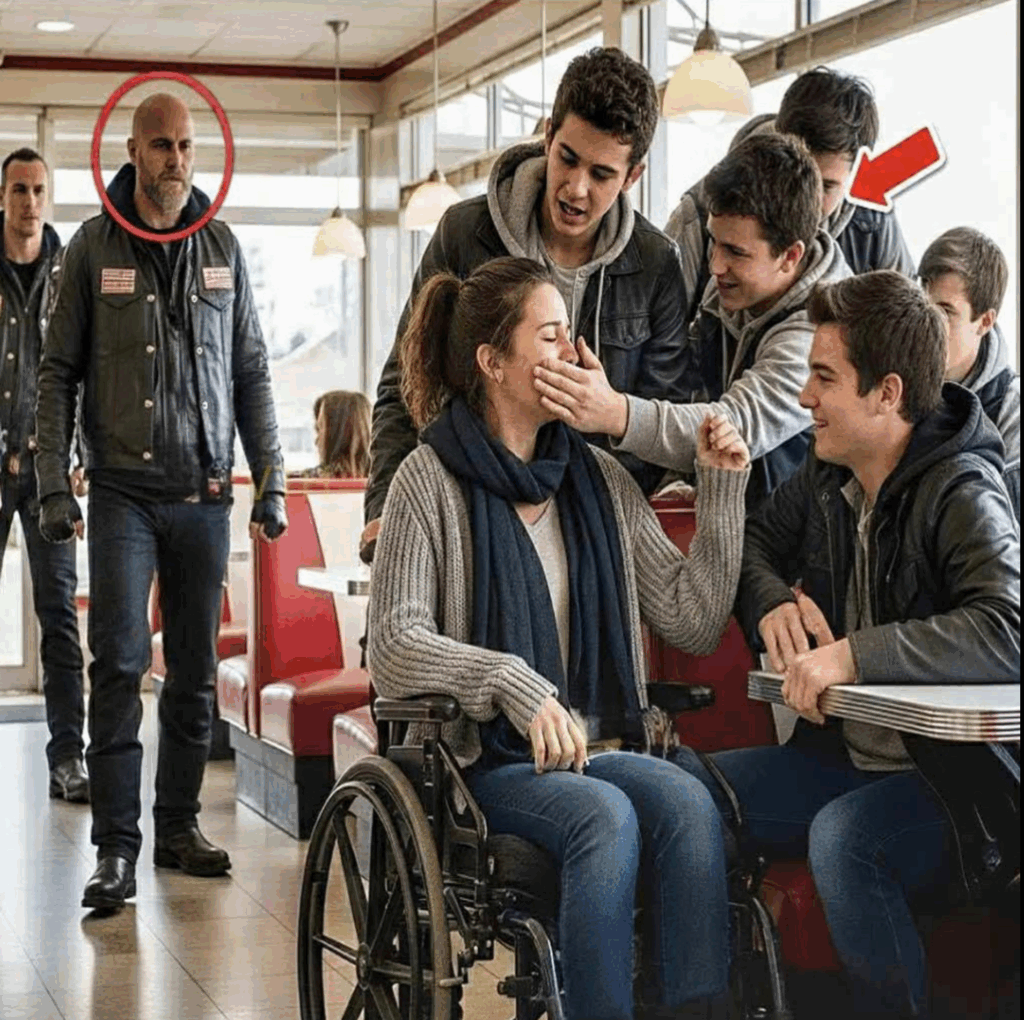
But cruelty rarely stops on its own. One of them leaned closer, his voice carrying mockery: “What’s the matter? Can’t even look at us?” Another snickered and knocked over her orange juice, letting it spill across the table and soak her napkin.
And then, as if the humiliation weren’t enough, one of them raised his hand and slapped her across the face. The sound cracked through the diner, shocking in its suddenness. The girl gasped, tears springing to her eyes, while the boys laughed, satisfied with their power.
For a moment, the diner froze. Some customers looked away, too uncomfortable to intervene. Others muttered, but no one stood. The girl, cheeks burning, tried to hide, but there was nowhere to go. She was trapped in the corner of the booth, wishing she could vanish.
An hour passed. The boys eventually left, leaving the diner filled with uneasy silence. The girl remained, wiping at her face, staring down at the table. But then the sound of engines shattered the quiet—deep, rumbling, powerful.
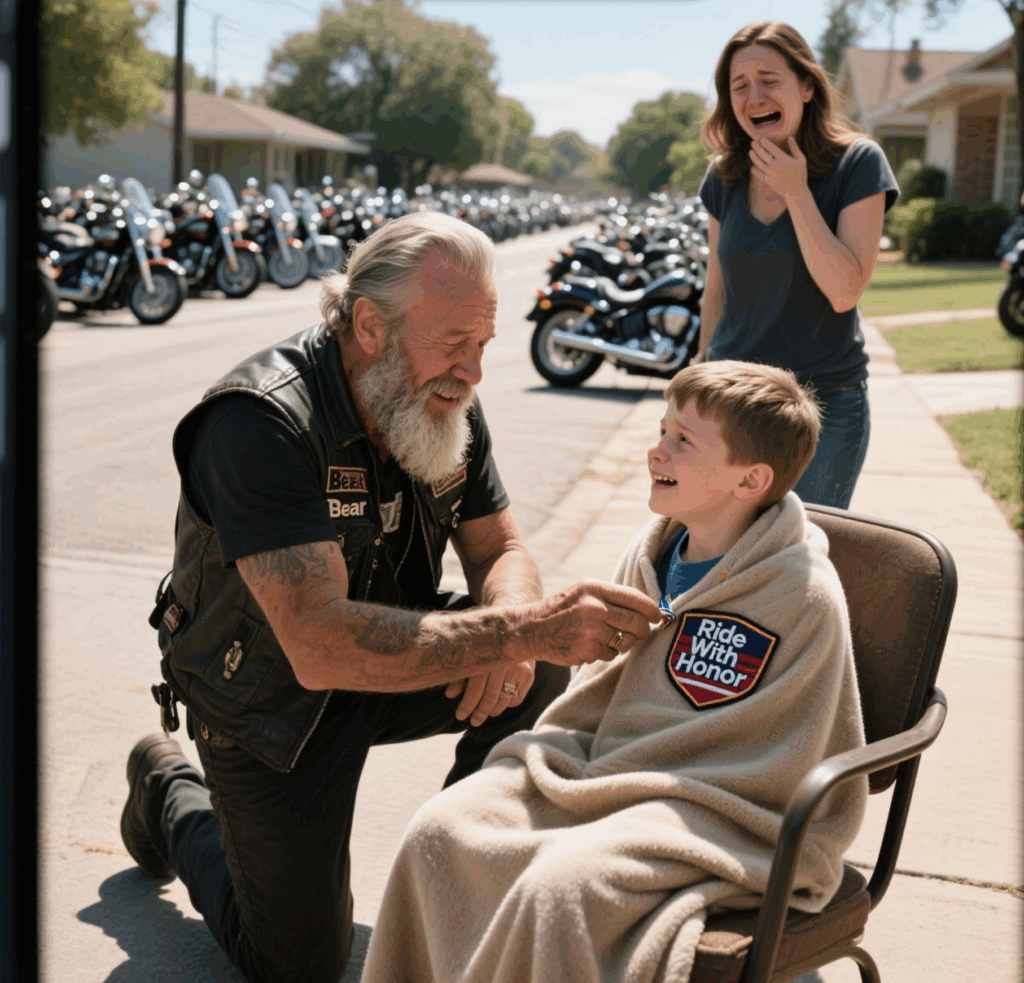
One after another, motorcycles rolled into the parking lot, their headlights cutting through the dusk. Leather vests glistened with patches, chains clinked, and heavy boots hit the pavement as a group of bikers strode toward the diner.
The door swung open, and the atmosphere shifted. The bikers filled the space with an energy that was impossible to ignore—part menace, part raw strength, but above all, presence. People whispered, eyes wide. The girl shrank back instinctively, unsure if this new storm would bring more pain.
The leader, a tall man with a beard streaked with gray, scanned the diner with sharp eyes. His gaze fell on the girl in the corner—her swollen cheek, her trembling hands still clutching a crumpled napkin. He didn’t need to ask what had happened;
the silence in the diner told him everything. He walked over, each step deliberate, his boots heavy against the floor.
Kneeling beside her booth, he spoke in a voice that was firm but gentle. “You okay, sweetheart?” The girl hesitated, unsure, but the kindness in his tone broke something inside her. She shook her head, unable to form words.
The biker’s jaw tightened. He stood, turning to the room. “Who did this?” he asked, his voice carrying a weight that demanded an answer. No one spoke. The customers kept their eyes down, but the bikers weren’t fooled.
One of them, younger and restless, muttered, “Bet it was those punks who left earlier.”
The leader nodded, his expression hardening. He didn’t shout, didn’t curse—he didn’t have to. The promise in his silence was enough. He sat down across from the girl, motioning for the waitress. “Bring her whatever she wants. On us.”
The girl blinked in disbelief. For the first time that day, she felt seen—not as a target, not as a burden, but as someone worth protecting.
The bikers stayed. They ate, they laughed among themselves, but always kept an eye on the girl, making sure she felt safe. When it was time to leave, the leader bent down once more and said softly, “Don’t you ever let anyone make you feel small. You got a whole army watching your back now.”
They filed out, engines roaring to life, disappearing into the night as suddenly as they had arrived. The girl sat there, a milkshake in front of her, the straw trembling between her fingers. But her heart felt steadier than it had in a long time.
She would remember the cruelty of that slap—but even more, she would remember the kindness that followed, carried on the rumble of motorcycle engines and the quiet strength of strangers who refused to look away.