On Highway 70, in the grip of a raging blizzard, Sarah Williams, owner of the Midnight Haven Diner, stood behind the counter, silently counting her last forty-seven dollars. Only seven days remained before she would lose everything.
The wrinkled bills in her hands felt heavy, as though time itself had pressed its wear into each crease, each cent. It wasn’t enough to cover the electric bill, let alone the three months of overdue payments the bank demanded.
She had already sold everything she could: her wedding ring, Robert’s keepsakes, every small treasure that twenty-three years of marriage had left her. All she had left was the diner.
Outside, the storm howled like the world’s fury had been funneled into the mountains. Snow slammed against the windows in relentless waves, turning the world beyond into a white void. Sarah, fifty years old and no stranger to storms,
felt this one was different. This one felt final—like an ending.She crossed the empty diner slowly, her footsteps echoing against the worn linoleum floor. Red vinyl booths sat vacant, their seams split from years of use.
The coffeemaker burbled weakly, half-filled with bitter brew that had sat untouched since noon. It was nearly 8 p.m., and not a soul had walked through the door in over three hours.
She stopped at Table Four—Robert’s table. Even two years after his death, she could still see him there, smiling softly, warming the cold room with his presence. Robert had been her dreamer, her encourager, the steady light through hard times.
“We’ll make it, Baby,” he used to say. “This place will be a home for those who need one.”
Now the lights above her flickered, threatening to go out entirely. The old furnace groaned and wheezed, fighting a hopeless battle against the mountain cold. Sarah pulled her cardigan tighter around her shoulders, returned to the counter,
and glanced at the foreclosure notices scattered there—official letters full of cold, merciless words.
In the corner, the old CB radio crackled faintly. Once it had been the truckers’ lifeline—warnings, jokes, heartfelt voices traveling across the miles. Now it was just another relic, a ghost of better days. Sarah counted the forty-seven dollars again. Nothing changed.
The storm outside only grew worse. The diner shook beneath the assault of wind, the neon sign outside buzzed and flickered nervously, like some anxious living creature. Through the frosted window, she could see snow burying the gas pumps, turning them into pale gravestones.
The highway was gone, swallowed by the storm. Sarah checked the clock on the coffee machine: 8:15. It was time to give in. Time to admit defeat. Tomorrow she would call the lawyer—maybe arrange some sort of payment plan—but the flicker of hope she held felt like it was dying.
And then—she heard it. A low, thunderous rumble that didn’t come from the wind. It wasn’t a snowplow, and it wasn’t the ordinary groan of the storm. It had rhythm. It had weight. It was the heartbeat of steel and chrome.
She moved to the window, squinting through the snow. At first, all she saw was white. Then, slowly, shapes emerged—headlights piercing the storm, the silhouettes of engines and riders. Harley-Davidsons. Fifteen of them.
They came in together, weary but unbroken, fighting the storm side by side. As they turned into the parking lot, their headlights poured light across the empty diner, banishing the shadows inside. Sarah’s pulse quickened, her breath caught in her chest.
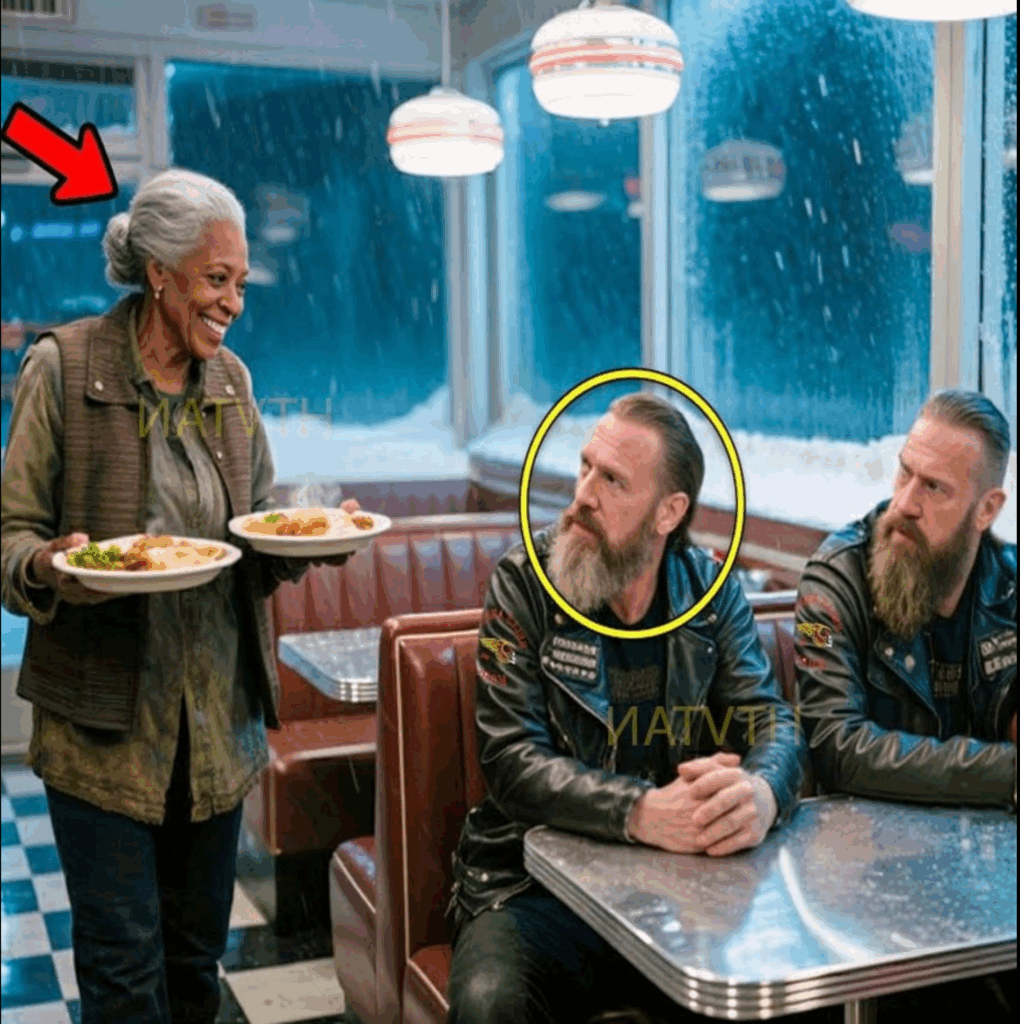
These were no ordinary bikers. These were Hell’s Angels. Leather jackets, heavy boots, helmets and tattoos—emblems of raw freedom and steel-hard toughness. Their leader was tall, broad-shouldered, with a beard streaked in gray and a face weathered by the road.
He carried both exhaustion and authority, the kind that made you respect him the moment you saw him.
“Ma’am,” he said, his voice rough, cracked from cold and years of hard living. “I’m sorry to trouble you. We’ve been riding for twelve hours straight. The highway’s shut down sixteen kilometers up. We can’t go any further. We need shelter.”
Sarah froze. Every instinct screamed: Run. Lock the door. Call the police. But something else stirred, deeper inside her. A voice, soft but steady, one she knew by heart. Robert’s voice, whispering from the past: “A light for the wanderer. A home for the ones far from home.”
She stepped toward the door. Her heart thudded so loudly she thought they must hear it. For a moment she hesitated—then turned the key.
The storm roared in with all its fury, snow sweeping across the floor, the temperature plunging in an instant. But behind the door stood fifteen men, exhausted and frozen, yet still carrying themselves with the unbreakable strength of survivors.
Their leather was stiff with ice, their beards dusted white with snow, but their eyes… their eyes held stories. Struggles. Losses. Fights for survival.And in that moment, Sarah understood.These men weren’t here to threaten. They were here to find refuge. And she could give it to them.
The forty-seven dollars, the foreclosure notices, the years of loss—all of it seemed to lose its weight. What mattered now was this: the diner could still be what Robert had dreamed. A place of warmth. A place of light in the storm.
She drew in a long, steady breath and nodded slowly. Yes, the storm raged, yes, life was cruel—but there was still room in the world for kindness, for courage, for humanity to shine against the darkness.
And tonight, in the heart of a blizzard, the Midnight Haven Diner became exactly what its name promised.