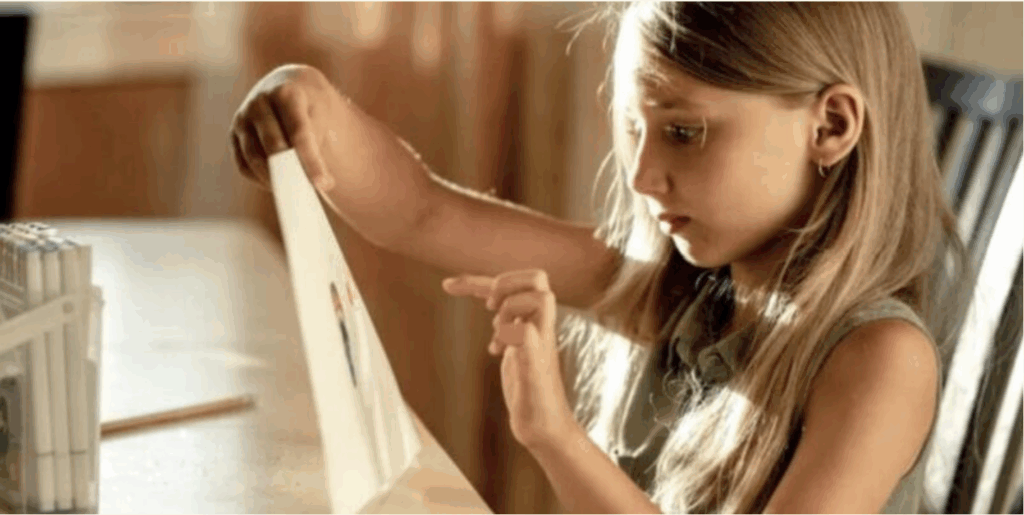
Part One: The day the text arrived, snow tumbled past my kitchen window in lazy spirals, like forgotten confetti drifting after a parade that no one bothered to clean. I had my red pen uncapped, poised above a stack of math quizzes, when my phone buzzed.
Mandy: Hey, can you watch the kids this weekend? Dan and I want to go look at houses by the lake.
I read it twice. Twice, because my mind refused to believe that grief could be so audacious as to dress itself as parody. My sister—my sister—was asking me to babysit while she and my husband—no, my ex-husband,
though my heart stubbornly clung to the old language—spent the weekend touring shoreline properties, just as we had once imagined doing together.
It had been eight months since I had borrowed Dan’s laptop to order a gift for our son and accidentally unearthed the evidence: first, a hotel confirmation; then a thread of messages; then the photos, the proof that my sister had let a camera witness what I had never imagined she would.
Eight months since he had said, “We’ve grown apart,” a phrase that had been meant like a ritual breaking, performed across the kitchen table. Eight months since my sister, three years my junior and always reaching for what wasn’t hers,
had moved her suitcase into his condo, posting a caption with a champagne-flute emoji that said, sometimes love surprises you.
I set my phone face down and capped the red pen, because neither object in my hand felt safe anymore.
What I remember from those first weeks was a symphony of noise and silence: the neighbors’ quiet pity as I passed them in the grocery store, the roar of my own blood in my ears when I tried to sleep, my nine-year-old son Jack’s solemn words:
“Dad loves Aunt Mandy now, but he’s supposed to love you.” My daughter Sophie’s small hand on my cheek at two a.m., asking in a whisper, Is Daddy coming home if I’m extra good?”
I learned to answer without lying, without shattering myself further: “Dad loves you. And our home has changed. That’s true. But love doesn’t leave, even when people do.”
Some nights, I believed it. Other nights, I pressed a dish towel to my face on the kitchen floor while the dishwasher hummed like a sympathetic animal.
It was my grandmother, Eleanor—Ellie to anyone who had ever sat at her table—who refused to let me drown quietly. At seventy-eight, she moved through her Victorian house with the authority of a general inspecting a field camp,
issuing orders to a roast chicken and a wobbly-legged great-grandson with equal command.“Come Sunday,” she said over the phone one evening, a command disguised as invitation. “You. The children. Wear something warm. Peter will be here.”
Uncle Peter, my father’s brother, was a broad-shouldered man with hands so gentle they seemed incapable of causing harm and a patience honed from decades of studying antiques, of knowing the difference between a small chip and a ruinous crack.
I almost said no. Talking required words, and I had rationed mine. But something in Ellie’s voice, the soft iron of it, made refusal impossible.
Her house smelled like rosemary and memory when we arrived. Jack and Sophie raced to the backyard, where a new swing set—one you could not assemble without swearing under your breath—gleamed under a delicate dusting of snow.
Their laughter hit me like medicine. Ellie poured me wine and placed a plate before me with the precision of a surgeon and the tenderness of a grandmother who has watched her family fracture and reassemble more times than a china teacup should endure.
“Now,” she said, sitting across from me, Uncle Peter at her side. “Tell me everything. No embroidery. No brave face.”
So I did. I told her about the hotel confirmation I had discovered, the thread of messages, the photos, the delicate fracture lines of trust that had run through our lives. I told her about guiding my children through separation,
about the performative happiness my sister displayed on social media, about the text requesting babysitting for a weekend they had stolen from us. When my voice finally failed me, Ellie’s blue eyes had turned steel.
“And the trust?” she asked.“The what?” She glanced at Peter. “The trust I set up for each of you girls when you married. Your grandfather insisted we protect what we built. You and Mandy both received funds—yours for your household, your children’s future.
Daniel convinced me three years ago to let him manage your portion, claiming he would invest it better. He sent reports. I didn’t trust him then. I trust him even less now.”
I stared at her. I am a schoolteacher. Twenty dollars in a coat pocket can lift my spirits for days. The thought that there was money meant for me, for my children, tucked into the framework of my life like a hidden beam, made my finger go numb.
“How much?” My voice sounded distant, like it belonged to someone on the other side of the house.Peter slid a folder across the table. “Enough that you shouldn’t have to choose between paying the gas bill and buying new snow boots,” he said gently.
Ellie nodded. “Lawrence will meet us tomorrow. He’s been your grandfather’s attorney since 1992. Don’t borrow trouble tonight. Eat. Sleep. We’ll handle daylight with daylight.”
Daylight revealed more than mismanaged trust. The money, nearly three hundred thousand dollars, had been siphoned away: hidden transfers, nonexistent investments, airfare to Bali, a down payment on a car that never arrived.
Prenup clauses I signed at twenty-three—because love makes paperwork feel like an insult—now shielded me: my house untouchable, no alimony owed, nothing owed to Dan beyond civility for our children. But the trust—our children’s trust—had been plundered.
“You’ll survive this,” Ellie said one night as we washed dishes, her hands veined but unwavering, passing me a casserole older than I am. “Green women have survived worse. Your mother survived losing your father at forty.
I survived the crash of ’87 with a shop full of people who couldn’t pay. We keep what matters. We outlast what doesn’t.”
I wanted to believe her. I wanted to be the heroine of a story where betrayal was only the preface, and resilience the plot. Some days I faked it. Other days, I watched neighbors’ Christmas lights blink and wondered if people could keep going with hands still trembling.
Then December crept toward Christmas, dragging dread behind it. The Green family’s Christmas at the lake house is a ritual, as traditional as gravy: a chaotic, joyful ring of cousins, aunts, uncles, orchestrating a gift-opening ceremony so meticulous you could hear tape tear.
After stockings and cinnamon rolls, Ellie always makes an announcement—sometimes business, sometimes property, sometimes simple gestures to tether legacies to faces while the faces can still blush.
“You’re coming,” she told me when I called, stomach twisting at the thought of Dan and Mandy under golden light. “You. The children. Wear the burgundy dress. Sit next to me. Bring the cranberry walnut bread. Its smell will matter.”
“You and your announcements,” I said, trying for calm. “What is it this year?”“You’ll find out with everyone else,” she said. “I do not play favorites out loud.”
My friend Liv offered a different strategy. “Devastatingly polite,” she said over coffee. “Go. Look phenomenal. Say please and thank you. Comment on the roast. Do not cry. Do not break. Be the mirror. Let them see themselves.”
I did. Burgundy dress, bread in hand, face fixed in the serene expression I save for small absurdities. The lake house doors opened and family poured in like warm gravy: cousins, aunts, uncles, life itself spilling into the room.
And then there they were: Dan, in a sweater I’d never seen, Mandy in an emerald dress. His hand settled on her back like a letter addressed to a new name. Her smile flickered at the sight of me. My stomach did nothing. Perhaps the bravest thing it had ever done.
They ignored me. Fine. I spoke to everyone else. Delivered my bread. Ellie kissed my cheek and said something that would become a hinge for my life: “Sometimes justice takes the long way around, but it does arrive.”
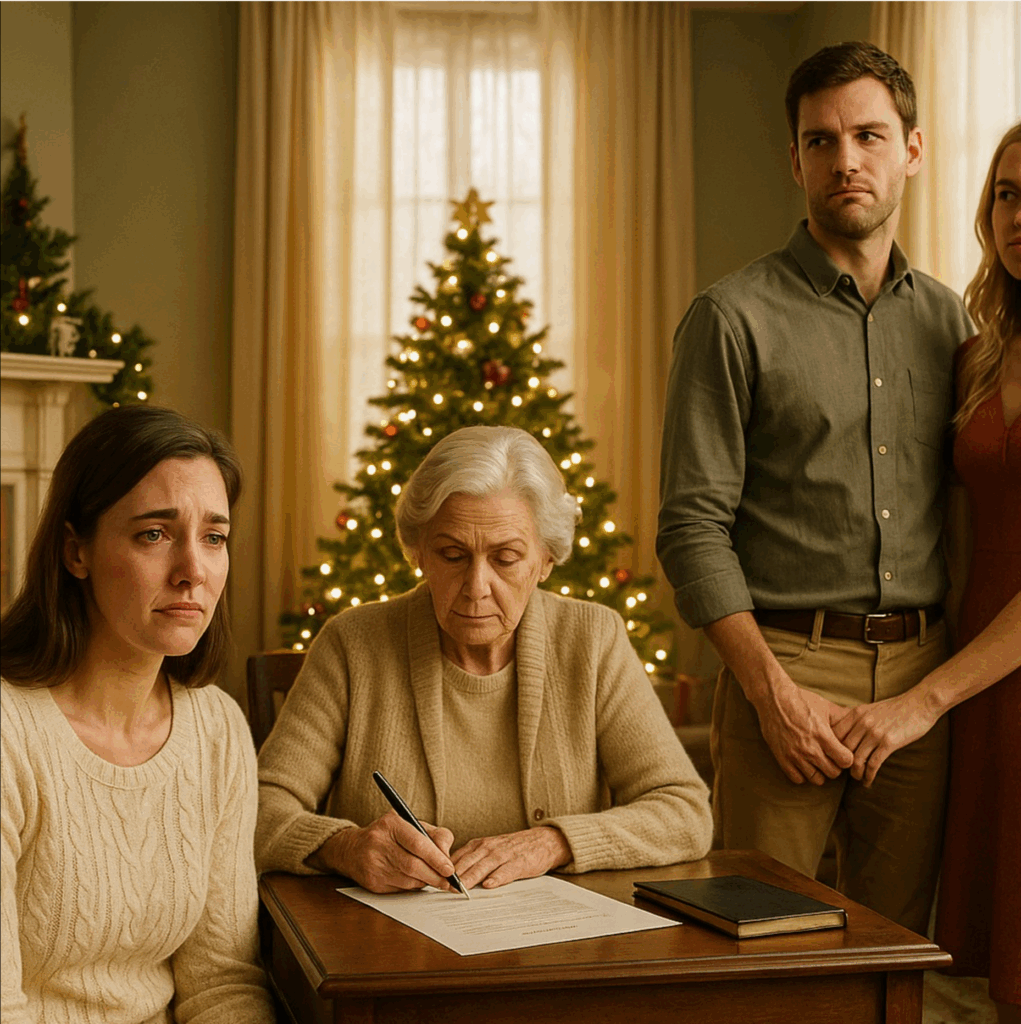
When gifts circled to Ellie, she didn’t reach for one. She stood, hair precise, apron festive but dignified. “Before I open anything with ribbon,” she said, “I have business.”The room listened.
“You all know I make one announcement a year. This year concerns the future. I have lived long enough to know who people are when they are full and when they are hungry.” Her gaze swept the room, landing on Dan and Mandy. “Betrayal can be forgiven.
Cruelty should not. Daniel, you took what was not yours in the dark and called it investment. Amanda, you took what was not yours in the light and called it love.”
She produced a folder. “Effective today, the lakefront property goes to Rebecca and her children. Business shares intended for Daniel and Amanda are reassigned to Rebecca, with a portion held in trust for Jack and Sophie.
A new educational trust replaces funds Daniel drained. Envelopes outline the rest.”Mandy choked. Dan’s face paled. Forks clinked. Silence held the room.“You can’t do that,” Dan said finally, ragged. “Watch me,” Ellie said with calm authority.
Explosions followed—predictable, messy, human—and then there were children, games, recovery, small moments. My son told his father, “Mom recorded my concert because she knew you wouldn’t come.” Dan hesitated, choosing decency over defensiveness.
That night, Uncle Peter handed me a warm mug on the dock. “You are not responsible for others’ dishonesty,” he said softly. The wind stung. The stars refused to dim. I let the frost in my lungs melt.
Part Two: January was paperwork and deep breaths. By March, the lake froze, and by May, it gleamed again like glass. Ellie invited me to a meeting at Green Antiques “just to observe.” By June, I was writing copy for the new online catalog,
learning the word provenance from people who pronounce it like a love language. I had been training to be a curator without knowing it—arranging second-graders and history into stories people could inhabit.
Dan called from Chicago in October. His apology carried the weight of his whole voice. It landed like a late truth, sometimes still real. “I miss the version of us that believed love made us better,” I said. “I don’t miss the version of me who shrank to fit your family.”
Mandy appeared on my porch one afternoon. “We broke up,” she said. “I’ve been in therapy. I’m sorry.”I let her in. She cried quietly, a humility I recognized. “I didn’t think through,” she whispered. “I just wanted. Wanting felt like needing. I told myself it was allowed. It wasn’t.”
“I can’t make you trustworthy with a speech,” I said.“I know,” she said.We sat at the kitchen island with our childhood spread between us like a table runner. She left without hugging me. It did not feel like the end or beginning. It felt like acknowledgment—the essence of an apology.
By late summer, we moved into the lake cabin full-time. The contractor expanded the kitchen to house my curiosity, my bread, my experiments. Jack built robots that passed salt. Sophie painted trees that seemed more alive with every brushstroke.
I cried in my car once, hidden, because sometimes relief is a private act.That Christmas Eve, our small dinner became a symphony of memory: Ellie issuing orders in three languages, Peter conducting a roast like an orchestra,
children constructing a gingerbread house reminiscent of our home. We shared lessons learned: Jack, that traditions can be rebuilt; Sophie, that painting teaches understanding; Ellie, that anger is not a plan, and forgiveness is learning to stop biting;
Peter, that human curiosity is universal; me, that I am seen.Hot chocolate warmed our hands after the children went upstairs. I dialed Chicago. Their father’s voice, gentle, asked about stockings, gingerbread walls. No pain in the laughter.
The week later, Peter introduced me as a curator of memory and material at the year-end meeting—recognition wrapped in humility and gratitude.Amanda sent a card. Volunteering. Quiet penance. I filed it in a drawer—a generous act for her, and for me.
Dan invited the children for spring break. We co-parented with care, discovering a version that did not punish to protect.On the barbecue anniversary, I made strawberry shortcake, recalling last year’s hot dog as a banner, a dare. Now, a benediction.
Amanda had been right: one can vanish, leave nothing behind. But disappearing from someone else’s small world is not failure. It is freedom. And if you are stubborn, loved, and guided by women who sign contracts with full names,
that freedom grows into a home where your presence breathes oxygen instead of apology.On Christmas Day, my grandmother changed her will—not to punish, but to realign gravity. In the year that followed, everything settled into orbit:
love remained with the children, boundaries became doors, wanting did not mean having, and starting over differed from running away.
I learned that when you stop begging to be seen and begin seeing yourself, people either adjust their gaze or drift away. Either way, the picture clarifies.
If you are holding a hot dog somewhere, laughing with your chest open, set it down. Pack a box for yourself. The opposite of disappearing is not being noticed—it is arriving, fully, for yourself. —Vanessa